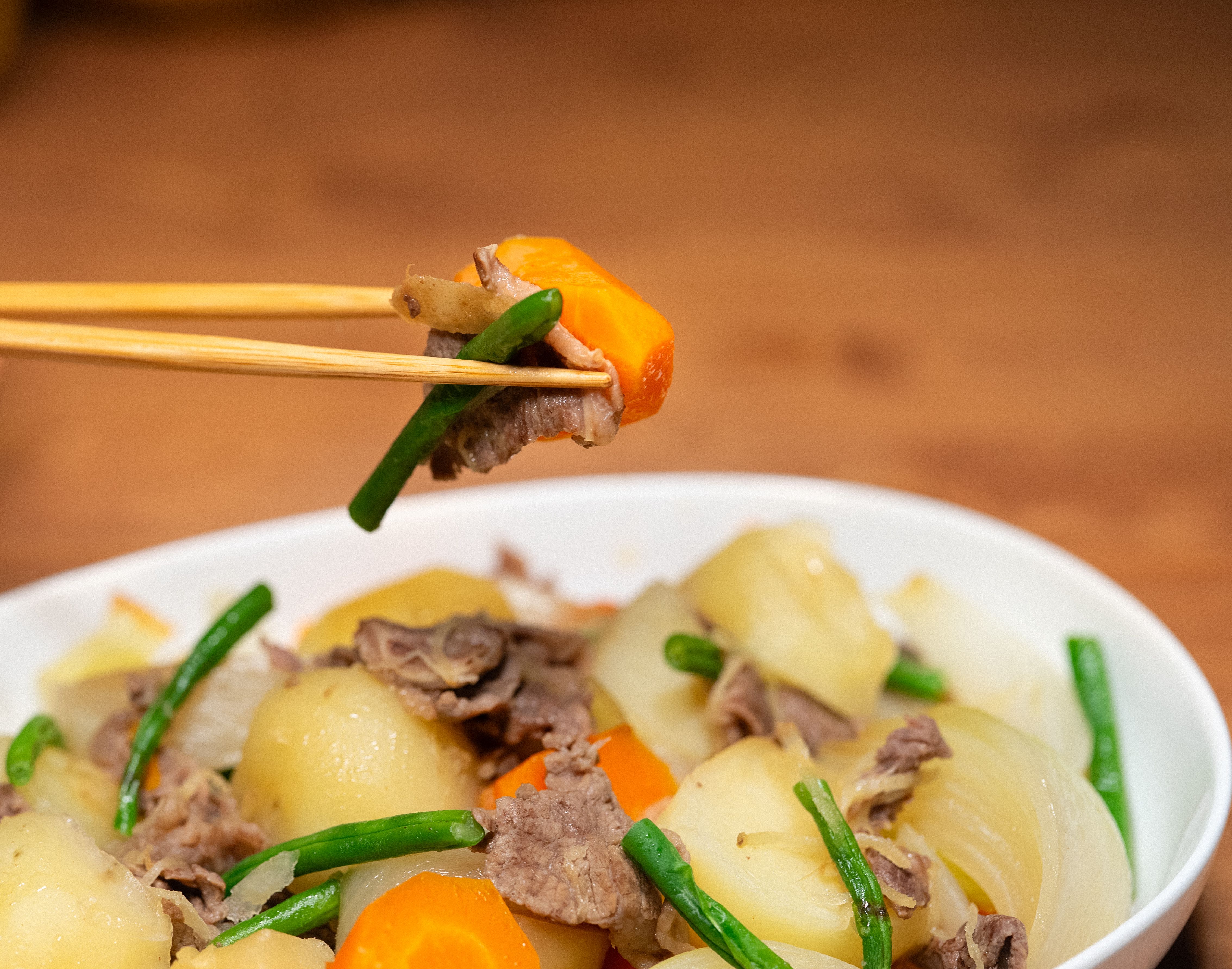
The diets react (see scores below)
Common Ingredients
- beef
- potato
- onion
- carrot
- soy sauce
- mirin
- sugar
- dashi
Specific recipes may vary.
Incompatible with 7 of 11 diets
Diet Ratings
Nikujaga is fundamentally incompatible with ketogenic eating. The dish is built around potatoes (a high-starch vegetable with roughly 15-17g net carbs per 100g) and carrots, both of which are starchy and sugar-containing vegetables strictly avoided on keto. Beyond the vegetables, the broth is seasoned with mirin (a sweet rice wine with significant sugar content) and added sugar, both of which directly spike blood glucose and break ketosis. Soy sauce and dashi contribute minimal carbs and are not the issue here. Even a modest serving of this dish would likely exceed the entire daily net carb allowance of 20-50g, making it entirely incompatible with maintaining ketosis.
Nikujaga is a Japanese meat-and-potato stew whose primary protein is beef, a direct animal product. Additionally, dashi (the Japanese stock base) is traditionally made from katsuobushi (dried bonito flakes) and/or niboshi (dried sardines), making it doubly non-vegan. Both beef and traditional dashi are unambiguously animal-derived ingredients that disqualify this dish entirely under any definition of veganism.
Nikujaga contains multiple non-paleo ingredients that make it incompatible with the paleolithic diet. Soy sauce is a fermented soy product (a legume derivative) and contains wheat, both of which are strictly excluded. Mirin is a sweet rice wine, making it grain-based and also containing refined sugars. Sugar is a refined sweetener, explicitly excluded. Dashi, while often made from fish flakes and kombu, is typically prepared with soy sauce components or in commercial form contains additives. White potatoes are already in a debated/discouraged category per The Paleo Diet's guide. The base protein (beef), onion, and carrot are paleo-approved, but the condiment and seasoning profile of this dish is fundamentally built on non-paleo ingredients that cannot simply be 'removed in moderation' — they define the dish's flavor.
Nikujaga is a Japanese meat-and-potato stew that conflicts with Mediterranean diet principles on multiple fronts. Beef is the primary protein, which the Mediterranean diet restricts to only a few times per month. The dish is also seasoned with soy sauce, mirin, and added sugar — none of which are traditional Mediterranean ingredients — contributing significant sodium and refined sugars. Dashi (typically from fish flakes or kombu) is the only element with any Mediterranean-adjacent quality. While potatoes, onion, and carrot are acceptable vegetables, they are overwhelmed by the problematic protein and the sweet-savory sauce high in added sugar and sodium. There is no olive oil, no legumes, no whole grains, and no plant-forward emphasis. This dish is fundamentally incompatible with Mediterranean diet staples and philosophy.
Nikujaga is fundamentally incompatible with the carnivore diet. While it contains beef as the primary protein, the dish is dominated by plant-based ingredients (potato, onion, carrot) and processed condiments (soy sauce, mirin, sugar, dashi). Potatoes and carrots are starchy vegetables explicitly excluded from carnivore. Soy sauce is a fermented plant-based product (soybeans and wheat). Mirin and sugar are both high-carbohydrate, plant-derived sweeteners. Even dashi, which can be animal-derived (from fish flakes/bonito), is typically combined with kombu (seaweed) in traditional preparation, adding another plant ingredient. The dish is essentially a sweet, starchy Japanese stew that happens to contain some beef — the beef is incidental to a heavily plant-based preparation.
Nikujaga contains three excluded ingredients: soy sauce (contains soy and often wheat, both excluded), mirin (a sweet rice wine — contains both alcohol and rice/grain-derived ingredients), and sugar (an explicitly excluded added sweetener). Dashi may also contain soy sauce or MSG depending on preparation, though plain kombu or bonito dashi would be compliant on its own. With soy sauce, mirin, and sugar all present as core flavoring components of this dish, it clearly fails Whole30 compliance. A compliant version could theoretically be made by substituting coconut aminos for soy sauce, omitting mirin and sugar entirely (or using a small amount of compliant fruit juice for sweetness), and using compliant dashi — but the traditional recipe as described is not compatible.
Nikujaga is a classic Japanese meat-and-potato stew, but its traditional recipe contains two major high-FODMAP ingredients that make it unsuitable for the elimination phase. Onion is one of the highest-FODMAP foods tested by Monash University, containing significant fructans at virtually any culinary serving — even small amounts cooked into a stew leach fructans into the broth, which is then consumed. Dashi, if made with onion or garlic (as some preparations include), adds further risk, though traditional kombu-and-katsuobushi dashi is low-FODMAP. The remaining ingredients are generally acceptable: beef is low-FODMAP, potato is low-FODMAP at a standard serve (150g), carrot is low-FODMAP, soy sauce is low-FODMAP in small amounts (up to 2 tablespoons), mirin is low-FODMAP in small amounts, and sugar is low-FODMAP. However, the onion alone is disqualifying — it cannot be reduced to a safe portion within a traditional Nikujaga preparation. The dish as standardly prepared must be avoided during elimination.
Nikujaga is a Japanese meat-and-potato stew with several DASH-compatible elements (vegetables like potato, carrot, and onion; potassium and fiber from produce) but notable concerns. The primary issues are sodium and red meat. Soy sauce is high in sodium — a single tablespoon contains ~900mg, and nikujaga typically uses 3-4 tablespoons per serving, pushing sodium content well above DASH thresholds. Mirin and sugar add significant amounts of refined sugar. Beef is a red meat, which DASH limits. Dashi (typically from kombu and bonito) adds additional sodium. On the positive side, the dish is vegetable-forward, relatively low in saturated fat if lean beef cuts are used, and not fried. However, the combination of high sodium from soy sauce and dashi, added sugar from mirin and sugar, and red meat makes this dish require significant modification to fit DASH guidelines. A modified version using low-sodium soy sauce, leaner cuts or substituting chicken/tofu, reducing sugar, and using low-sodium dashi could score considerably higher.
NIH DASH guidelines clearly flag high-sodium condiments like soy sauce and red meat as problematic. However, some DASH-oriented dietitians note that when nikujaga is prepared with low-sodium soy sauce, lean beef in small amounts, and portioned appropriately as part of an otherwise DASH-compliant day, the dish's vegetable density and potassium content from potatoes and carrots make it borderline acceptable — particularly in the context of overall dietary pattern rather than per-meal sodium analysis.
Nikujaga presents several Zone Diet challenges. The primary carbohydrate source is potato, which Dr. Sears explicitly categorizes as an 'unfavorable' high-glycemic carbohydrate to be avoided or severely limited in Zone eating. The seasoning base combines mirin and sugar, both of which add significant simple sugars that spike insulin — the very hormonal response the Zone Diet is designed to prevent. Onion and carrot are more acceptable Zone carbohydrates (low-to-moderate glycemic), but they are secondary to the potato. The beef component, depending on cut, may be moderate in saturated fat rather than a lean Zone-preferred protein. On the positive side, the dish does provide a reasonable protein-to-carb structure in its broth-based format, dashi adds umami without problematic macros, and the dish is whole-food based with no processed ingredients. With significant modification — replacing potato with a lower-glycemic vegetable like daikon or shirataki, using a leaner beef cut, reducing or eliminating the sugar, and substituting a small amount of mirin — nikujaga could be brought closer to Zone ratios. As written, the potato and sugar content make it difficult to fit standard Zone block targets without considerable portion restriction on the carbohydrate components.
Some Zone practitioners following Sears' later work (Toxic Fat, The Mediterranean Zone) would note that the anti-inflammatory polyphenols in vegetables and the omega-3 potential of dashi partially offset concerns. Additionally, potato portions can be reduced to 1 small block, making the dish a 'caution' rather than 'avoid' — the Zone's ratio-based flexibility means nikujaga isn't categorically excluded, just challenging to balance without recipe modification.
Nikujaga is a Japanese meat-and-potato stew with a mixed anti-inflammatory profile. On the positive side, it contains onion and carrot (antioxidants, quercetin, beta-carotene), dashi (typically from kombu and bonito, providing umami and some minerals), and soy sauce (fermented, contains some beneficial compounds in small amounts). The starchy potato base is a whole-food carbohydrate that is relatively neutral. However, beef is a red meat that is categorized as 'limit' in anti-inflammatory frameworks due to saturated fat content and arachidonic acid. The dish also contains added sugar and mirin (a sweet rice wine), both of which contribute to glycemic load and added sugar intake — a mild pro-inflammatory concern. The sugar content is meaningful enough to note but not extreme in a single serving. Overall, Nikujaga is a home-cooked, minimally processed dish with no trans fats, artificial additives, or seed oils, which keeps it from being flagged as 'avoid.' With moderate portions and lean beef cuts, it sits comfortably in 'caution' territory — acceptable occasionally but not ideal as a dietary staple for an anti-inflammatory approach.
Some anti-inflammatory practitioners (including those aligned with traditional Japanese dietary patterns, which are broadly associated with low inflammation and longevity) would view Nikujaga favorably given its whole-food ingredients and vegetable content — particularly if made with small amounts of lean beef. Conversely, stricter anti-inflammatory protocols would flag both the red meat and added sugar/mirin combination more harshly, potentially rating it lower.
Nikujaga is a Japanese meat-and-potato stew that has several redeeming nutritional qualities but notable drawbacks for GLP-1 patients. On the positive side, it is a broth-based dish with high water content, which supports hydration. The vegetables (potato, onion, carrot) contribute fiber and micronutrients, and the dashi base is low-fat and easy to digest. However, the primary protein source is beef, which depending on the cut used (typically thinly sliced fattier cuts like ribeye or chuck in traditional nikujaga) can introduce meaningful saturated fat — a concern for GLP-1 side effects like nausea and bloating. The protein density per serving is moderate but not high, as potatoes and broth dilute the protein concentration. The seasoning base of soy sauce, mirin, and sugar adds a significant sugar load and moderately high sodium, which is not ideal for blood sugar stability or overall metabolic health. Mirin alone adds concentrated simple sugars. Potatoes are a moderate-glycemic starch that, while not empty calories, are lower in nutrient density per calorie than non-starchy vegetables. This dish works best as an occasional meal when prepared with a lean beef cut (sirloin, eye of round) and reduced mirin/sugar, served in a small portion alongside a higher-protein side.
Some GLP-1-focused dietitians view traditional Japanese home cooking favorably due to its naturally small portion sizes, broth-based format, and vegetable variety — and would rate nikujaga more leniently on the grounds that the overall eating pattern matters more than individual dish composition. Others flag the sugar content in mirin-heavy Japanese sauces as a meaningful concern for patients using GLP-1s to manage blood sugar, and would recommend avoiding or significantly modifying the recipe.
*See how scores were generated at our methodology page.
Nutritional profile
Six traits that cut across every diet.
Fiber & Plants
How much whole-plant food and fiber it delivers.
Healthy Fats
The quality of its fats (unsaturated, omega-3).
Whole / Unprocessed
How close it is to its natural, unprocessed form.
Gut Gentle
How easy it is on digestion (low FODMAP, few irritants).
Low Glycemic
How little it spikes your blood sugar.
Protein Density
How much protein it packs per calorie.
Controversy Index
Higher controversy = more disagreement between diets.
Diet-Specific Tips
 DASH — 4/10
View tips
- High sodium from soy sauce (~900mg per tablespoon, multiple tablespoons used)
- Additional sodium from dashi stock
- Red meat (beef) is limited on DASH diet
- Added sugar from mirin and granulated sugar
- Positive: vegetable-rich ingredients (potato, carrot, onion) provide potassium and fiber
- Positive: stewed preparation without added oils or frying
- Low-sodium soy sauce substitution would significantly improve DASH compatibility
- Substituting tofu or chicken for beef would improve alignment with DASH protein recommendations
 Zone — 4/10
View tips
- Potato is a high-glycemic carbohydrate explicitly flagged as 'unfavorable' by Dr. Sears
- Mirin and added sugar contribute insulin-spiking simple carbohydrates
- Beef cut may carry higher saturated fat depending on preparation (typically thinly sliced fatty beef in traditional nikujaga)
- Onion and carrot are acceptable Zone carbohydrates that partially redeem the dish
- Dish lacks a clearly favorable fat source — no monounsaturated fat present
- Portion control of potato to minimal blocks could allow occasional Zone-compatible serving
- No processed or artificial ingredients — whole food base is a positive factor
 Anti-Inflammatory — 5/10
View tips
- Red meat (beef) is in the 'limit' category due to saturated fat and arachidonic acid
- Added sugar and mirin increase glycemic load and sugar content
- Onion and carrot contribute antioxidants (quercetin, beta-carotene)
- Dashi and soy sauce are fermented/minimally processed — neutral to mildly beneficial
- No trans fats, seed oils, or artificial additives — positive for a home-cooked dish
- Potato is a whole-food starch — neutral in anti-inflammatory context
- Overall a moderately processed, real-food dish appropriate in moderation
 GLP-1 Friendly — 5/10
View tips
- Beef cut is highly variable — fatty cuts (ribeye, chuck) worsen GLP-1 side effects; lean cuts (sirloin, round) are preferable
- Mirin and added sugar raise the simple carbohydrate load and may destabilize blood sugar
- Broth-based format supports hydration and easy digestibility
- Moderate fiber from potato, carrot, and onion but lower than ideal
- Protein density per calorie is moderate, not high — potatoes and broth dilute protein concentration
- High sodium from soy sauce warrants attention for cardiovascular health
- Small traditional Japanese serving sizes partially offset the glycemic and fat concerns