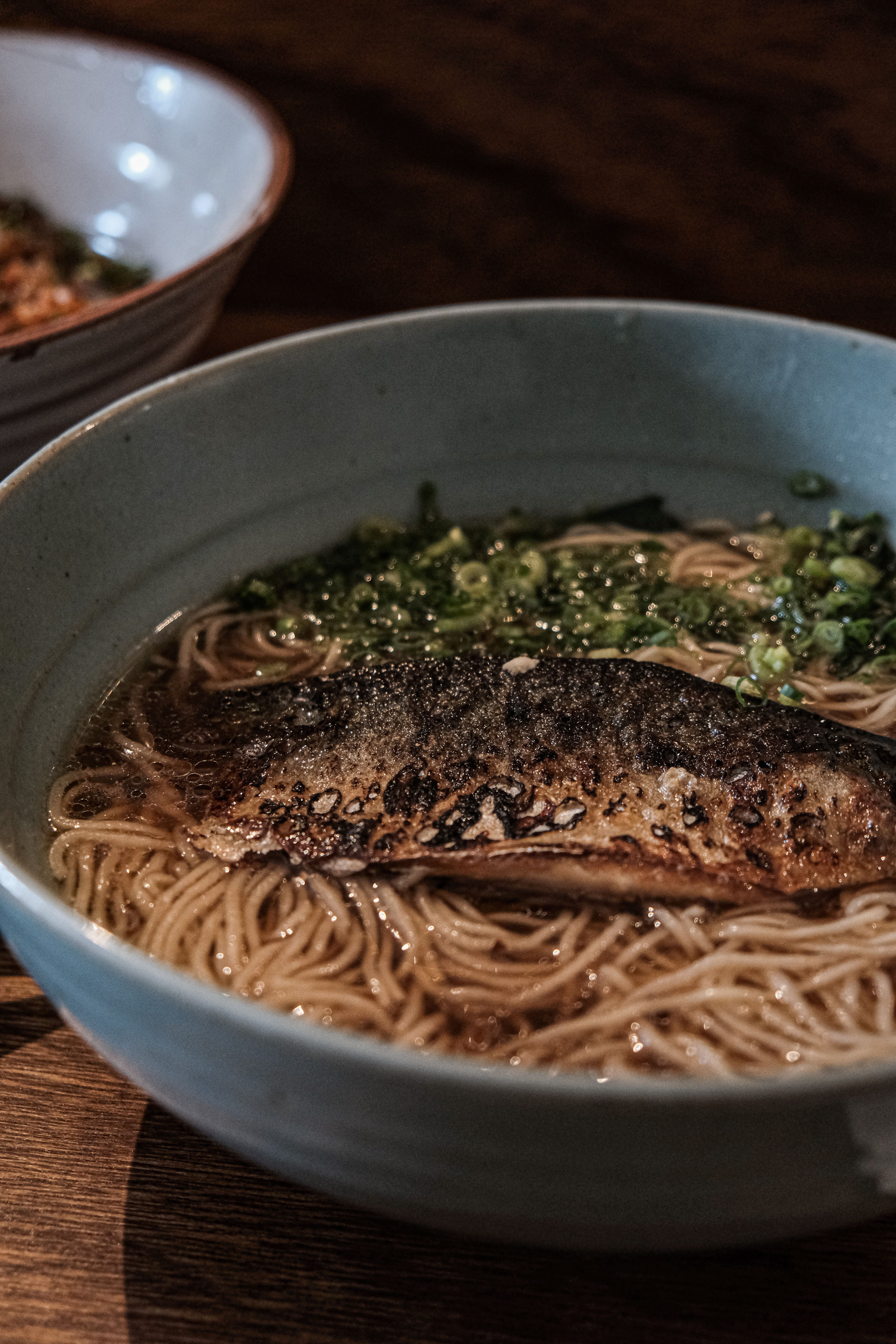
The diets react (see scores below)
Common Ingredients
- buckwheat noodles
- dashi
- soy sauce
- mirin
- nori
- green onion
- wasabi
Specific recipes may vary.
Incompatible with 5 of 11 diets
Diet Ratings
Zaru Soba is built around buckwheat noodles, which are a grain-based noodle with approximately 40g of net carbs per 100g serving. A standard serving of soba noodles (~200g cooked) delivers roughly 40-50g of net carbs alone, which would meet or exceed the entire daily keto carb budget in a single dish. Mirin in the dipping sauce also adds sugar. The remaining ingredients (dashi, soy sauce, nori, green onion, wasabi) are relatively low-carb, but they cannot offset the massive carb load from the noodles. This dish is fundamentally incompatible with ketosis.
Zaru Soba as traditionally prepared contains dashi, which is almost always made from katsuobushi (dried bonito fish flakes) or niboshi (dried sardines), making it non-vegan. While buckwheat noodles, nori, green onion, soy sauce, mirin, and wasabi are all plant-based, the dashi is the critical disqualifying ingredient in the standard recipe. A vegan version is achievable by substituting kombu dashi (kelp-only broth) or shiitake dashi, but the dish as listed with generic 'dashi' defaults to the fish-based preparation.
Some plant-based advocates would note that if kombu or shiitake dashi is used — which is a common and easy substitution — the entire dish becomes fully vegan and would score 8-9. The verdict hinges entirely on which dashi is used, and vegan-aware Japanese restaurants routinely offer this swap.
Zaru Soba is fundamentally incompatible with the paleo diet. The dish is built around buckwheat noodles, which — despite the misleading name — are a grain-like seed (pseudocereal) explicitly excluded from paleo. Beyond the noodles, soy sauce is a fermented soy product (a legume) and typically contains wheat, making it doubly non-paleo. Mirin is a sweetened rice wine, adding another grain-derived ingredient. Dashi in its traditional form (kombu and bonito flakes) is the only component that could be considered paleo-compatible, and nori, green onion, and wasabi are also acceptable. However, the three core structural and flavoring ingredients — buckwheat noodles, soy sauce, and mirin — are all clear paleo violations with no ambiguity.
Zaru Soba is a relatively wholesome dish built around buckwheat noodles, which are a whole grain with good nutritional profile and are not a refined grain. Buckwheat aligns reasonably well with Mediterranean whole-grain principles. The dish is plant-forward with no animal protein, low in saturated fat, and includes beneficial vegetables (green onion, nori). However, it lacks the hallmark Mediterranean components: there is no olive oil, no legumes, and the dipping broth (tsuyu) made from dashi, soy sauce, and mirin can be high in sodium and contains added sugar from mirin. Soy sauce and mirin are not traditional Mediterranean condiments. Dashi typically contains fish flakes (bonito), which would actually be a positive Mediterranean element, though here it is incidental. The dish is not inherently harmful but sits outside the core Mediterranean pattern due to the absence of olive oil as a fat source, moderate sodium load, and mirin's added sugar content.
Some Mediterranean diet practitioners take a broader 'whole food, plant-forward' view and would rate buckwheat-based dishes more favorably, noting that buckwheat is nutritionally superior to refined pasta and the dish is low in saturated fat. Traditional Japanese dietary patterns share longevity associations with Mediterranean diets, leading some researchers (e.g., those studying Blue Zone diets) to see Zaru Soba as compatible.
Zaru Soba is entirely plant-based and contains no animal products whatsoever. The primary ingredient, buckwheat noodles, is a grain-based carbohydrate that is strictly excluded on the carnivore diet. The dipping sauce components — dashi (typically fish-based, but the dish as listed appears to use a plant-based or ambiguous version), soy sauce (fermented legume), and mirin (rice-based sweetened wine) — are all plant-derived or processed plant products. Nori is seaweed, green onion is a vegetable, and wasabi is a plant root. Even if dashi were made from fish stock (bonito/kombu), the remaining ingredients disqualify this dish entirely. There is no animal protein source listed, and every component violates carnivore diet principles. This dish represents the opposite of carnivore eating.
Zaru Soba contains multiple Whole30-excluded ingredients. First and most critically, the dish is built on buckwheat noodles — buckwheat is an excluded grain on Whole30. Second, even if the noodle issue were resolved, soy sauce contains soy (an excluded legume) and wheat (an excluded grain). Mirin is a sweet rice wine, containing both rice (excluded grain) and alcohol (excluded). Dashi, while often made from kombu and bonito flakes, is frequently made with or combined with soy sauce in commercial preparations. Additionally, noodles themselves fall under the explicit 'no pasta or noodles' rule regardless of the flour used. This dish cannot be made Whole30-compliant without fundamentally changing its identity.
Zaru Soba presents a mixed FODMAP picture. The critical issue is the buckwheat noodles: pure 100% buckwheat soba is low-FODMAP at a standard serving (~100g cooked), as buckwheat itself is low-FODMAP. However, most commercial soba noodles sold in restaurants and supermarkets are blended with wheat flour (often 20–80% wheat), making them potentially high in fructans. Without confirmation of 100% buckwheat noodles, this is a significant risk. Dashi (kombu and bonito-based) is low-FODMAP. Soy sauce is low-FODMAP at standard amounts (2 tablespoons). Mirin is low-FODMAP in small culinary quantities. Nori (dried seaweed) is low-FODMAP at typical serving sizes (2–5 sheets). Wasabi is low-FODMAP at condiment amounts. The major FODMAP concern aside from noodle composition is green onion (scallion): the green tops are low-FODMAP, but if white bulb portions are included, fructans become a concern. Zaru soba is often served with a generous amount of green onion including white parts. Overall, the dish could be low-FODMAP if made with 100% buckwheat noodles and green tops only, but as typically served in restaurants it carries meaningful FODMAP risk.
Monash University rates 100% buckwheat soba as low-FODMAP at ~100g cooked, but most clinical FODMAP practitioners advise patients to verify noodle ingredients carefully or avoid restaurant soba during elimination, as wheat-blended soba is the norm and indistinguishable by appearance. The green onion garnish also frequently includes the white bulb, which many practitioners flag as a hidden fructan source.
Zaru Soba has several DASH-friendly elements: buckwheat noodles are a whole grain with fiber and magnesium, and the dish is low in saturated fat, cholesterol, and added sugar. However, the dipping sauce (tsuyu) made from dashi, soy sauce, and mirin is the critical concern. Soy sauce is extremely high in sodium — a typical zaru soba serving uses 2-3 tablespoons of soy sauce in the tsuyu, contributing roughly 800-1,200mg of sodium, which is a substantial portion of even the standard DASH sodium budget of 2,300mg/day and potentially most of the 1,500mg low-sodium DASH allowance. Mirin also adds modest sugar content. The nori, green onion, and wasabi are DASH-positive additions. Overall, the dish is borderline: the base is wholesome, but the sauce makes it difficult to recommend freely under DASH guidelines.
NIH DASH guidelines focus on overall sodium reduction and would flag traditional soy-sauce-heavy tsuyu as problematic. However, updated clinical interpretations note that reduced-sodium soy sauce (roughly 40% less sodium) or diluted tsuyu portions can bring this dish within acceptable DASH sodium limits, and some DASH practitioners highlight buckwheat's favorable nutrient profile and consider this dish acceptable with sauce modifications.
Zaru Soba is a carbohydrate-dominant dish with virtually no protein or fat, making it fundamentally unbalanced for Zone purposes. Buckwheat noodles are the base — while buckwheat has a lower glycemic index than white rice or wheat pasta, it is still a dense carbohydrate source. The dipping sauce (tsuyu: dashi, soy sauce, mirin) adds sodium and a small amount of sugar from the mirin, which is moderately high-glycemic. The dish as presented lacks any meaningful protein source (listed as 'none') and has negligible fat, so it cannot come close to the 40/30/30 Zone ratio on its own. However, buckwheat noodles are one of the more Zone-friendly noodle options due to their lower GI, higher fiber, and some protein content relative to white pasta. The condiments (wasabi, green onion, nori) are fine from a Zone perspective. The key issue is the macro imbalance — this is essentially pure carbohydrate. To fit into a Zone meal, it would need substantial lean protein added (e.g., tofu, shrimp, or sliced chicken) and some monounsaturated fat alongside it. As a standalone main, it fails the Zone ratio test. As part of a composed Zone meal, the buckwheat noodles can function as the carbohydrate block.
Some Zone practitioners note that buckwheat noodles, with roughly 6g of protein per 100g cooked and a GI around 54, are among the more 'favorable' noodle options compared to udon or white rice noodles. In Sears' later writings emphasizing polyphenols, buckwheat's rutin content would be viewed positively. A strict Zone practitioner would still flag the lack of protein and fat as the primary issue, but may rate the noodle itself more generously than traditional pasta.
Zaru Soba is a relatively clean, minimally processed Japanese dish with a favorable anti-inflammatory profile overall. Buckwheat noodles are the star ingredient: buckwheat is a whole grain (technically a pseudocereal) rich in rutin, a potent flavonoid antioxidant shown to inhibit inflammatory pathways, as well as magnesium and fiber. Soba noodles have a lower glycemic index than refined wheat pasta, which supports a more stable metabolic response. The dipping sauce (tsuyu) combines dashi, soy sauce, and mirin — dashi made from kombu and bonito contributes umami along with some omega-3s and iodine from seaweed; soy sauce provides isoflavone-related compounds but also contributes meaningful sodium, which warrants modest attention. Mirin adds a small amount of sugar but in typical culinary quantities it is not a meaningful concern. Nori is a strong anti-inflammatory ingredient, dense in antioxidants, iodine, and small amounts of omega-3s (EPA/DHA). Green onions contribute quercetin and polyphenols. Wasabi contains isothiocyanates (similar to those in horseradish and mustard) with demonstrated anti-inflammatory and antioxidant properties in research. The main limitation is that traditional soba noodles are often a blend of buckwheat and refined wheat flour (typically 80/20 or 70/30), diluting the whole-grain benefits — 100% buckwheat soba would score higher. The dish is also protein-light as presented (no primary protein listed), which is not a direct inflammatory concern but limits satiety and amino acid contribution.
Most anti-inflammatory frameworks would view soba favorably due to buckwheat's rutin content and low glycemic profile. However, some practitioners note that soy sauce — used in significant quantity in tsuyu — is a highly processed, high-sodium fermented product; while traditionally fermented soy is generally accepted on anti-inflammatory protocols, those following stricter AIP or low-sodium approaches would flag this dish. Additionally, many commercial soba noodles contain predominantly refined wheat, which would shift the assessment downward toward 'caution' if not prepared with high-buckwheat-content noodles.
Zaru soba is a light, low-fat, easily digestible dish that avoids most GLP-1 pitfalls — it is not fried, not spicy, not high in sugar, and not carbonated. Buckwheat noodles provide moderate fiber (roughly 2-3g per serving) and are gentle on the stomach, making them a reasonable choice when GI side effects are active. The dipping broth (tsuyu) is low in calories and fat. However, the dish has a significant weakness for GLP-1 patients: it is listed with no primary protein, and a standard serving of soba noodles provides only about 6-8g of protein — far short of the 15-30g per meal target. For patients who must prioritize protein at every meal to prevent muscle loss, this dish as composed is nutritionally incomplete. It is also relatively low in calorie density, which can seem positive but means the patient is spending appetite on a meal that does not meet protein needs. Wasabi in the small amounts typical of this dish is unlikely to worsen reflux for most patients, though individual sensitivity varies. The dish scores well on digestibility, low fat, and portion-friendliness, but the protein gap is a meaningful clinical concern that prevents an approve rating.
Some GLP-1-focused dietitians would accept zaru soba as a base meal if paired with a protein addition such as chilled tofu, edamame, or a boiled egg, arguing that the dish's light, easily tolerated profile is especially valuable on high-nausea days when protein-dense foods are difficult to eat. Others maintain that allowing low-protein meals as a baseline — even with suggested add-ons — reinforces a pattern that leads to cumulative daily protein shortfalls, which is the primary nutritional risk of GLP-1-induced appetite suppression.
*See how scores were generated at our methodology page.
Nutritional profile
Six traits that cut across every diet.
Fiber & Plants
How much whole-plant food and fiber it delivers.
Healthy Fats
The quality of its fats (unsaturated, omega-3).
Whole / Unprocessed
How close it is to its natural, unprocessed form.
Gut Gentle
How easy it is on digestion (low FODMAP, few irritants).
Low Glycemic
How little it spikes your blood sugar.
Protein Density
How much protein it packs per calorie.
Controversy Index
Higher controversy = more disagreement between diets.
Diet-Specific Tips
 Mediterranean — 6/10
View tips
- Buckwheat noodles are a whole grain, better than refined grains
- No olive oil or healthy fat source present
- Mirin contains added sugar, contradicting Mediterranean principles
- Soy sauce contributes high sodium
- Plant-forward with no red meat or processed ingredients
- Dashi (if bonito-based) provides a small seafood element consistent with Mediterranean diet
- Dish is low in saturated fat overall
 Low-FODMAP — 4/10
View tips
- Buckwheat noodles are low-FODMAP only if 100% buckwheat — most commercial soba contains wheat flour (fructans)
- Dashi is low-FODMAP at standard culinary servings
- Soy sauce and mirin are low-FODMAP in small amounts
- Green onion green tops are low-FODMAP but white bulb portions contain fructans
- Nori is low-FODMAP at typical serving sizes
- Wasabi is low-FODMAP at condiment amounts
- Restaurant preparation makes ingredient verification difficult
 DASH — 5/10
View tips
- Buckwheat noodles are a whole grain, providing fiber and magnesium — DASH-positive
- Soy sauce in tsuyu contributes high sodium (est. 800-1,200mg per serving), a significant DASH concern
- No saturated fat, cholesterol, or added sugar beyond mirin
- Mirin adds minor sugar content but is used in small amounts
- Low-sodium soy sauce alternative would meaningfully improve DASH compatibility
- Nori, green onion, and wasabi are low-sodium, nutrient-rich additions
- No lean protein included, missing an opportunity to enhance DASH nutritional profile
 Zone — 4/10
View tips
- Carbohydrate-dominant dish with no protein or fat — severely imbalanced macro ratio
- Buckwheat noodles have a lower glycemic index (~54) than white pasta or rice noodles, making them a more favorable carb choice
- No protein source listed — Zone requires ~25g lean protein per meal
- Negligible fat content — Zone requires 10-15g monounsaturated fat per meal
- Mirin in dipping sauce adds small amounts of high-glycemic sugar
- Condiments (wasabi, nori, green onion) are Zone-neutral or beneficial
- Requires significant additions (lean protein, avocado or olive oil) to become a Zone-balanced meal
 Anti-Inflammatory — 7/10
View tips
- Buckwheat is rich in rutin (flavonoid), fiber, and magnesium — supports anti-inflammatory pathways
- Lower glycemic index than refined wheat noodles — favorable for metabolic inflammation
- Nori contributes antioxidants, iodine, and trace omega-3s (EPA/DHA)
- Wasabi isothiocyanates have documented anti-inflammatory and antioxidant activity
- Green onion provides quercetin and polyphenols
- Soy sauce contributes high sodium and is a processed ingredient — mild concern
- Many commercial soba noodles are blended with refined wheat flour, reducing whole-grain benefit
- Mirin adds minor sugar but in small culinary quantities — not a significant concern
- No primary protein source — dish is carbohydrate-dominant, limiting omega-3 and amino acid contribution
 GLP-1 Friendly — 5/10
View tips
- Very low protein as composed — approximately 6-8g per serving, well below the 15-30g per meal target
- No primary protein ingredient listed; dish requires deliberate protein addition to be GLP-1 appropriate
- Buckwheat provides moderate fiber and is more nutrient-dense than refined grain noodles
- Low fat content — avoids nausea, bloating, and reflux commonly worsened by high-fat meals on GLP-1s
- Easy to digest — gentle on slowed gastric emptying
- Tsuyu broth is high in sodium, which may be a consideration for patients with blood pressure concerns
- Wasabi in typical serving amounts is generally tolerable but may worsen reflux in sensitive individuals
- Portion-friendly and light — works well for reduced appetite, but low caloric and protein density means nutritional value per eating occasion is limited