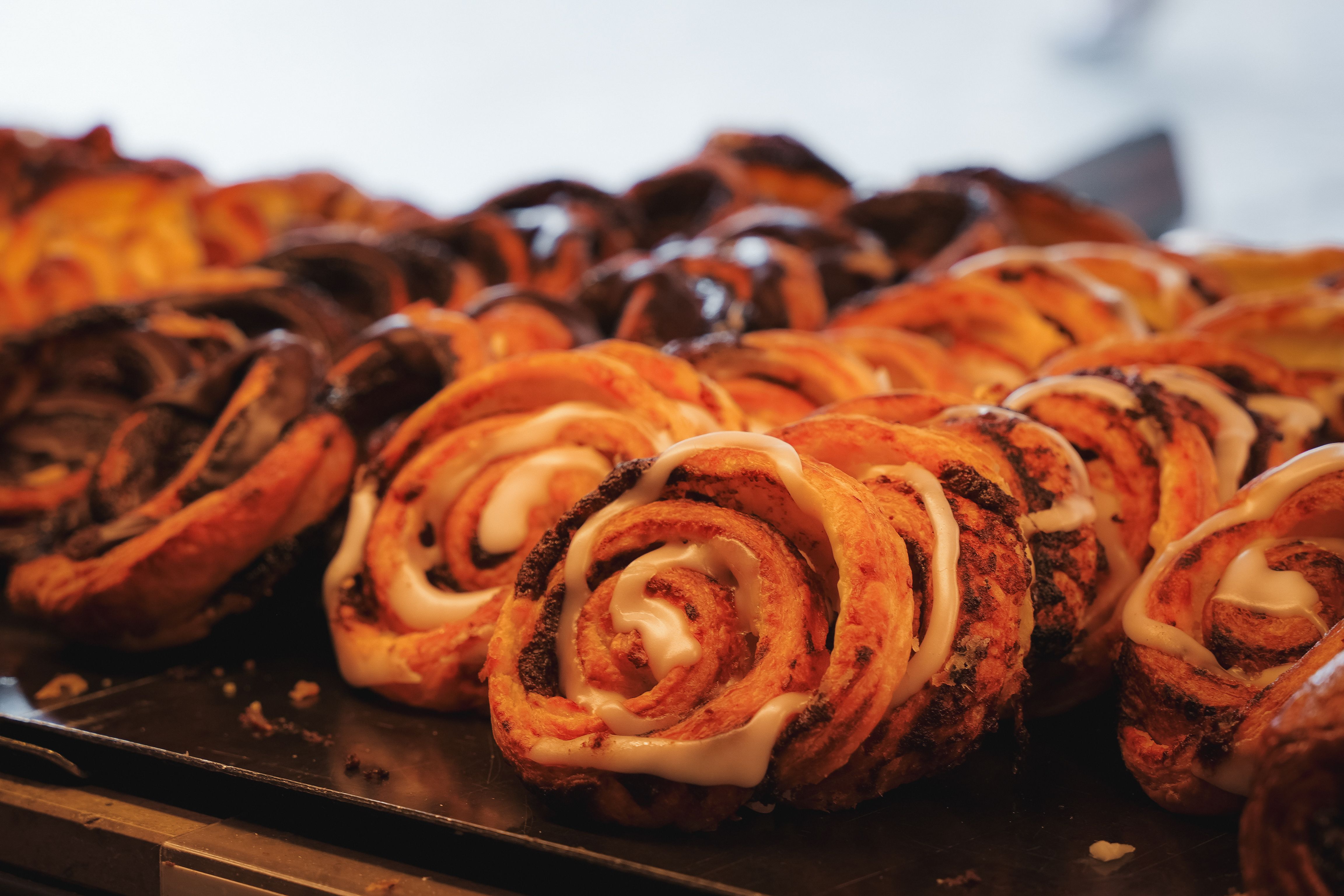
Photo: Nathan J Hilton / Pexels
The diets react (see scores below)
Common Ingredients
- wheat flour
- butter
- milk
- yeast
- sugar
- cinnamon
- salt
- cardamom
- pearl sugar
- egg
Specific recipes may vary.
Incompatible with 11 of 11 diets
Diet Ratings
Kanelbulle (Swedish cinnamon bun) is fundamentally incompatible with a ketogenic diet. Its primary ingredient is wheat flour, a high-carb grain that alone disqualifies it. Combined with sugar (in the dough and as pearl sugar topping), milk, and yeast, a single bun contains roughly 40-55g of net carbs — potentially exceeding an entire day's keto carb allowance in one serving. There is no reasonable portion size that makes this keto-compatible.
Kanelbulle (Swedish cinnamon bun) contains multiple animal-derived ingredients: butter (dairy), milk (dairy), and egg. These are all clear animal products excluded under any definition of veganism. The plant-based ingredients — wheat flour, yeast, sugar, cinnamon, cardamom, salt, and pearl sugar — are all vegan-compliant, but the presence of butter, milk, and egg makes the traditional recipe firmly non-vegan. Vegan versions of kanelbulle can be made by substituting plant-based butter, non-dairy milk (oat, almond, soy), and an egg replacer, and such versions are increasingly available in Swedish bakeries and cafes.
Kanelbulle (Swedish cinnamon bun) is fundamentally incompatible with the paleo diet. The base of the recipe is wheat flour, a grain that is strictly excluded from paleo. Beyond the grain issue, it also contains butter and milk (dairy), refined sugar, added salt, and yeast — all of which are non-paleo. Pearl sugar adds further refined sugar content. The only paleo-compatible ingredients in the entire recipe are cinnamon, cardamom, and egg. This dish is a highly processed baked good built almost entirely on paleo-excluded ingredients.
Kanelbulle (Swedish cinnamon bun) directly contradicts Mediterranean diet principles on multiple fronts. It is made primarily from refined wheat flour, contains butter as the primary fat (not olive oil), and includes added sugar both in the dough and as pearl sugar topping. This is a highly processed sweet pastry with significant amounts of saturated fat and refined carbohydrates — exactly the category of foods the Mediterranean diet minimizes. Cinnamon and cardamom are fine spices, but they cannot redeem a foundation of refined grains, butter, and sugar.
Kanelbulle (Swedish cinnamon bun) is almost entirely plant-based and processed, making it one of the most incompatible foods possible with the carnivore diet. The primary ingredient is wheat flour — a grain that is strictly excluded. Sugar is a direct carnivore violation. Cinnamon, cardamom, and yeast are all plant-derived. The only animal-derived ingredients are butter, milk, and egg, which are minor components in a baked good that is fundamentally built on grain and sugar. There is no scenario in any tier of carnivore eating where a wheat-flour pastry with sugar and spices is acceptable.
Kanelbulle (Swedish cinnamon bun) is entirely incompatible with Whole30. It contains multiple excluded ingredients: wheat flour (a grain), butter (dairy — only ghee/clarified butter is allowed), milk (dairy), and sugar (added sugar). Beyond the individual excluded ingredients, a cinnamon bun is precisely the type of baked good the Whole30 program explicitly prohibits recreating, even with compliant ingredients. This dish fails on nearly every Whole30 criterion simultaneously.
Kanelbulle (Swedish cinnamon bun) is made with wheat flour as its primary ingredient, which is high in fructans — one of the most problematic FODMAPs. A standard kanelbulle weighs roughly 80–100g and contains a substantial amount of wheat flour, making it unequivocally high-FODMAP during the elimination phase. Additionally, milk contributes lactose (a disaccharide FODMAP), compounding the issue. While butter, egg, sugar, cinnamon, cardamom, salt, yeast, and pearl sugar are all low-FODMAP, the wheat flour and milk are deal-breakers at any realistic serving size. Unlike long-fermented sourdough (where yeast fermentation can reduce fructan content), a standard yeast-leavened kanelbulle does not undergo the prolonged fermentation needed to meaningfully degrade fructans. This dish should be avoided during the elimination phase.
Kanelbulle (Swedish cinnamon bun) is incompatible with DASH diet principles. It is made with refined wheat flour (not whole grain), substantial butter (high saturated fat), added sugar and pearl sugar topping (high added sugar), and provides negligible potassium, magnesium, calcium, or fiber relative to its caloric load. DASH explicitly limits saturated fat, sweets, and refined carbohydrates while emphasizing whole grains over refined ones. A typical kanelbulle contains 300–400 calories, 8–12g saturated fat, and 15–25g added sugar — all of which conflict with DASH guidelines. It offers no meaningful lean protein, fiber, or micronutrient benefit aligned with DASH targets.
Kanelbulle (Swedish cinnamon bun) is essentially the opposite of a Zone-friendly food. It is built almost entirely from high-glycemic refined wheat flour and sugar, with butter as the primary fat source (saturated, not monounsaturated). The macronutrient profile is overwhelmingly carbohydrate-heavy with virtually no lean protein and the wrong type of fat, making it nearly impossible to incorporate into a Zone-balanced meal or snack without fundamentally altering what the food is. Even a small portion delivers a rapid glucose spike, promotes insulin release, and contributes pro-inflammatory arachidonic acid precursors via the butter. There is no meaningful protein block here, no low-glycemic carbohydrate, and no monounsaturated fat. While pearl sugar and refined flour could theoretically be counted as carb blocks, the glycemic load is extremely high and the food provides nothing else of Zone value. The small amount of egg contributes trivially to protein. Cinnamon and cardamom are polyphenol-rich spices that Sears would approve of in isolation, but they do not redeem the overall profile of this pastry.
Kanelbulle (Swedish cinnamon bun) is a traditional pastry that is predominantly pro-inflammatory in its nutritional profile. The base is refined wheat flour — a refined carbohydrate that drives rapid blood glucose spikes and promotes inflammatory signaling. Butter contributes significant saturated fat, which at regular intake is associated with elevated inflammatory markers. Added sugar (both mixed into the dough and as pearl sugar topping) is one of the most consistently pro-inflammatory dietary components, linked to increased CRP, IL-6, and AGE (advanced glycation end-product) production. Milk adds modest saturated fat. The egg is nutritionally neutral-to-mildly beneficial. The one genuine bright spot is cinnamon and cardamom, both of which have meaningful anti-inflammatory polyphenol content — but they are present in gram-level cooking quantities, far too small to offset the pro-inflammatory load of the surrounding dough. Yeast itself is benign. Taken together, this is a high-refined-carb, high-saturated-fat, high-sugar pastry with minimal fiber, no omega-3s, no meaningful antioxidant load, and no redeeming anti-inflammatory macronutrient profile. It belongs firmly in the 'limit or avoid' category of anti-inflammatory eating, consistent with how all major anti-inflammatory frameworks treat refined-flour baked goods with added butter and sugar.
A kanelbulle (Swedish cinnamon bun) is a poor fit for GLP-1 patients on virtually every key criterion. It is built from refined wheat flour and sugar, delivering a high glycemic load with minimal fiber. Butter is the primary fat source, adding significant saturated fat per serving. Protein content is negligible — egg and milk contribute trace amounts, but a standard bun (60–80g) provides roughly 4–6g protein at best against a per-meal target of 15–30g. Calorie density is high (approximately 300–350 kcal per bun) with very little nutritional return. Pearl sugar adds additional free sugars on top of the already sugary dough. The combination of refined carbohydrates, saturated fat, and sugar is precisely what GLP-1 dietary guidance targets for avoidance: it worsens blood sugar swings, contributes to nausea and reflux given slowed gastric emptying, and occupies caloric budget that patients cannot afford to waste on low-nutrient foods. Cardamom and cinnamon are benign spices and not a concern, but they do not offset the macronutrient profile.
*See how scores were generated at our methodology page.
Nutritional profile
Six traits that cut across every diet.
Fiber & Plants
How much whole-plant food and fiber it delivers.
Healthy Fats
The quality of its fats (unsaturated, omega-3).
Whole / Unprocessed
How close it is to its natural, unprocessed form.
Gut Gentle
How easy it is on digestion (low FODMAP, few irritants).
Low Glycemic
How little it spikes your blood sugar.
Protein Density
How much protein it packs per calorie.
Controversy Index
Higher controversy = more disagreement between diets.