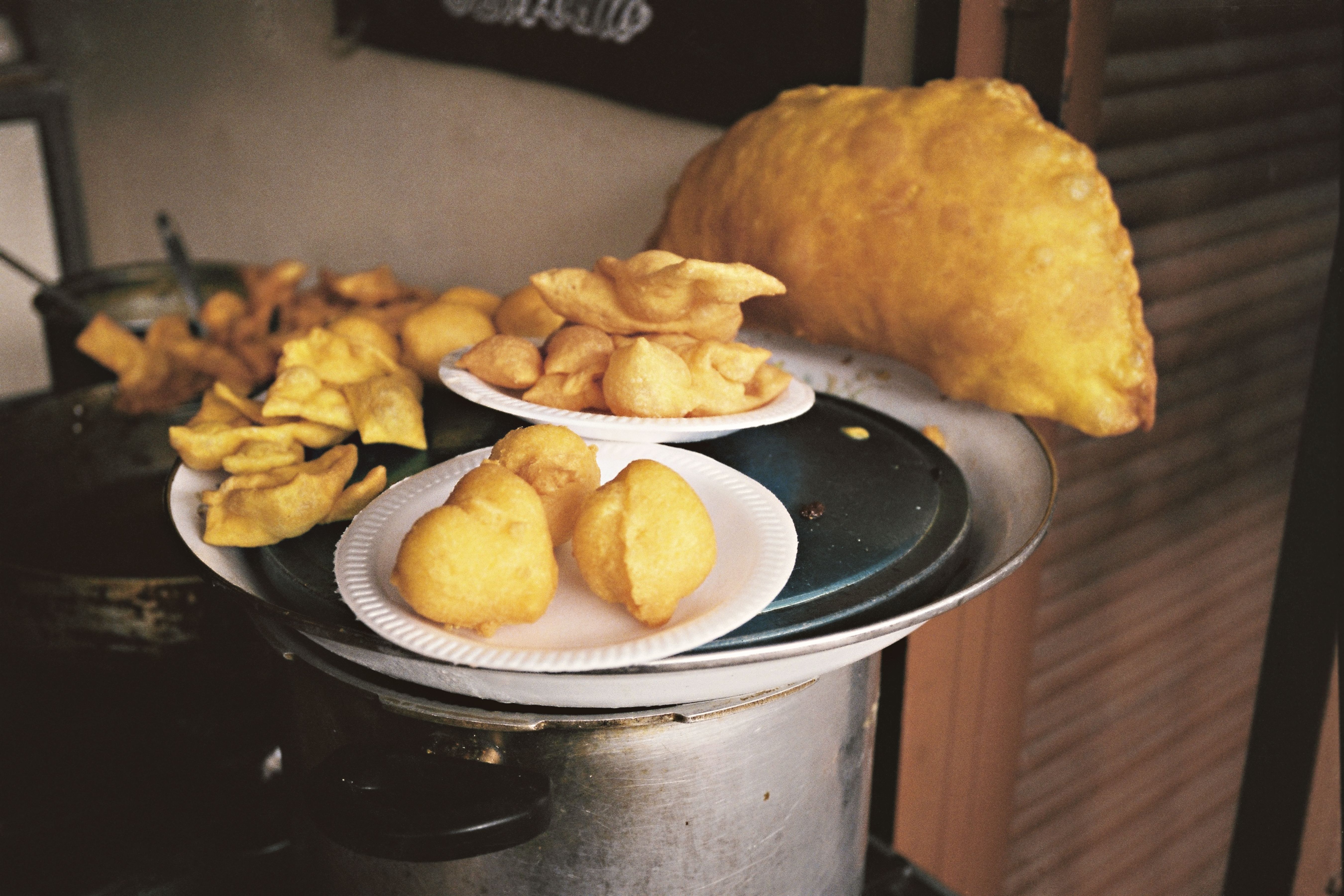
Photo: DΛVΞ GΛRCIΛ / Pexels
The diets react (see scores below)
Common Ingredients
- wheat flour
- milk
- yeast
- eggs
- sugar
- butter
- salt
- vegetable oil
Specific recipes may vary.
Incompatible with 11 of 11 diets
Diet Ratings
Baursak are deep-fried Kazakh doughnuts made primarily from wheat flour, yeast, and sugar — three major keto disqualifiers in a single dish. Wheat flour is a high-glycemic grain that alone contains roughly 70-75g of net carbs per 100g. The added sugar and yeast further spike the carbohydrate load. Even a small serving of 2-3 pieces would easily exceed the entire daily net carb allowance for ketosis. While butter and eggs are keto-friendly ingredients, they are minor components in a dish that is fundamentally carbohydrate-based. There is no practical way to consume Baursak within a ketogenic framework.
Baursak is a traditional Kazakh fried dough bread that contains multiple animal-derived ingredients: milk (dairy), eggs, and butter. All three are clearly excluded under vegan dietary rules. While the base of wheat flour, yeast, sugar, salt, and vegetable oil is plant-based, the dairy and egg components make this dish definitively non-vegan. A vegan version could theoretically be made by substituting plant-based milk, a flax or chia egg, and vegan butter, but the traditional recipe as listed is not vegan-compatible.
Baursak is a traditional Kazakh fried dough snack that is fundamentally incompatible with the paleo diet. Nearly every ingredient violates core paleo principles: wheat flour is a grain and one of the most strictly excluded foods in paleo; milk is dairy; yeast-leavened dough is a processed product; refined sugar is explicitly excluded; added salt is discouraged; and vegetable oil (used for frying) is a seed oil — all prohibited. The only paleo-compatible ingredient is eggs. This dish is essentially deep-fried bread, which represents the opposite of paleo philosophy at virtually every level.
Baursak is a deep-fried Kazakh dough snack made from refined wheat flour, butter, sugar, and vegetable oil (likely used for deep frying). This dish contradicts nearly every core principle of the Mediterranean diet: it is made from refined (not whole grain) flour, contains added sugar, uses butter rather than olive oil as the fat, and is deep-fried in vegetable oil. It is a highly processed, calorie-dense snack with minimal nutritional value from a Mediterranean diet perspective. There are no vegetables, legumes, whole grains, or other Mediterranean staple ingredients present. The combination of refined carbohydrates, saturated fat from butter, and deep-frying makes this a clear avoid.
Baursak is a traditional Kazakh fried dough snack made almost entirely from plant-based and processed ingredients. Wheat flour is a grain and a primary ingredient, making this fundamentally incompatible with the carnivore diet. Sugar adds further disqualification as a processed carbohydrate, and vegetable oil (plant-derived fat) is strictly excluded. Yeast, while microbial, is used in a plant-food context here. The only carnivore-compatible ingredients present are eggs, butter, milk, and salt — but they are minor components in a dish whose base is grain flour. No amount of the animal-derived minority ingredients redeems a dish built on wheat.
Baursak is a traditional Kazakh fried dough bread, and it contains multiple excluded ingredients. Wheat flour is a grain and explicitly excluded from Whole30. Sugar (added sugar) is excluded. Milk and butter are dairy products, both excluded. Even if these ingredients were somehow replaced with compliant alternatives, Baursak is a fried bread/dough product that falls squarely into the 'no recreating baked goods' rule — it is essentially a deep-fried bread roll analogous to donuts or biscuits, which are explicitly prohibited even with compliant ingredients.
Baursak is a traditional Kazakh fried dough made primarily from wheat flour, which is the dominant and defining ingredient. Wheat flour is high in fructans, one of the most problematic FODMAP categories, making this dish unsuitable during the elimination phase. A standard serving of baursak (typically 2–4 pieces) would deliver a substantial dose of fructans well above the safe threshold. Milk also contributes lactose, adding a second FODMAP category. While eggs, butter, salt, vegetable oil, and small amounts of sugar are low-FODMAP, the wheat flour and milk together make this dish clearly high-FODMAP at any realistic serving size. Yeast itself is low-FODMAP, but unlike long-fermented sourdough, standard yeast-leavened dough does not undergo the extended fermentation needed to significantly reduce fructan content.
Baursak is a traditional Kazakh deep-fried dough pastry made from refined wheat flour, butter, eggs, sugar, and milk, then cooked in vegetable oil. From a DASH diet perspective, this food presents multiple red flags: (1) Deep-frying significantly increases total fat content, and depending on the oil used and frying temperature, may introduce trans fats or oxidized fats. (2) Refined white wheat flour provides minimal fiber, potassium, magnesium, or calcium — nutrients DASH emphasizes. (3) Added butter contributes saturated fat, which DASH explicitly limits. (4) Added sugar and salt further conflict with DASH principles of limiting sodium and added sugars. (5) It is a calorie-dense, nutrient-poor snack with no meaningful contribution of the key DASH nutrients. The DASH diet strongly discourages fried snacks, refined grains, and foods high in saturated fat and added sugars. This dish embodies nearly all the categories DASH advises against.
Baursak is a traditional Kazakh deep-fried dough pastry made from wheat flour, milk, yeast, eggs, sugar, and butter, then fried in vegetable oil. From a Zone Diet perspective, this food is highly problematic. The primary macronutrient is refined white wheat flour — a high-glycemic carbohydrate that Sears explicitly categorizes as 'unfavorable' and discourages. The sugar adds further glycemic load. Deep frying in vegetable oil introduces significant omega-6 polyunsaturated fats, which are directly counter to the Zone's anti-inflammatory focus. The fat profile is dominated by saturated fat (butter) and omega-6-heavy seed oils — neither of which aligns with the monounsaturated fat preference. There is essentially no lean protein present (eggs contribute minimally). The macronutrient ratio is wildly skewed: very high in refined carbohydrates and fat, with negligible lean protein — the opposite of the 40/30/30 Zone target. While the Zone is ratio-based rather than exclusionary, baursak as a food category (fried refined-flour pastry with sugar) offers no practical path to Zone balance without fundamentally changing what it is. It scores a 2 rather than 1 only because eggs and milk contribute trace amounts of favorable nutrients.
Baursak is a traditional Kazakh fried dough snack with a strongly pro-inflammatory nutritional profile. It is deep-fried in vegetable oil (likely refined, high omega-6), made from refined white wheat flour (high glycemic, minimal fiber), and contains added sugar and butter. The combination of refined carbohydrates, added sugar, saturated fat from butter, and oxidized omega-6-rich frying oil hits nearly every category that anti-inflammatory frameworks flag as problematic. Deep frying also generates advanced glycation end-products (AGEs) and oxidized lipids, both of which are linked to elevated inflammatory markers such as CRP and IL-6. There are no meaningful anti-inflammatory ingredients present — no whole grains, no polyphenols, no omega-3s, no antioxidant-rich components. Eggs and milk contribute minor neutral or mildly beneficial nutrients, but these are vastly outweighed by the pro-inflammatory elements. This is essentially a fried refined-flour pastry, a category with consistent negative signals across anti-inflammatory nutrition research.
Baursak are deep-fried dough balls made from wheat flour, butter, milk, eggs, sugar, and vegetable oil. Despite containing eggs and milk, the dish is effectively a fried refined-carbohydrate snack with negligible protein per serving, high fat from deep frying, and no meaningful fiber. It fails on nearly every GLP-1 dietary criterion: it is fried (worsening nausea, bloating, and reflux), made from refined flour (empty calories, blood sugar spike), calorie-dense with no nutritional payoff, and offers no satiety benefit in small portions. The sugar content adds further concern. For GLP-1 patients who must maximize protein and fiber in every small meal, baursak offers almost nothing of value and actively worsens common medication side effects.
*See how scores were generated at our methodology page.
Nutritional profile
Six traits that cut across every diet.
Fiber & Plants
How much whole-plant food and fiber it delivers.
Healthy Fats
The quality of its fats (unsaturated, omega-3).
Whole / Unprocessed
How close it is to its natural, unprocessed form.
Gut Gentle
How easy it is on digestion (low FODMAP, few irritants).
Low Glycemic
How little it spikes your blood sugar.
Protein Density
How much protein it packs per calorie.
Controversy Index
Higher controversy = more disagreement between diets.