Photo: Эрнес Аметов / Pexels
The diets react (see scores below)
Common Ingredients
- horse meat
- horse fat
- garlic
- black pepper
- salt
- intestine casing
Specific recipes may vary.
Incompatible with 6 of 11 diets
Diet Ratings
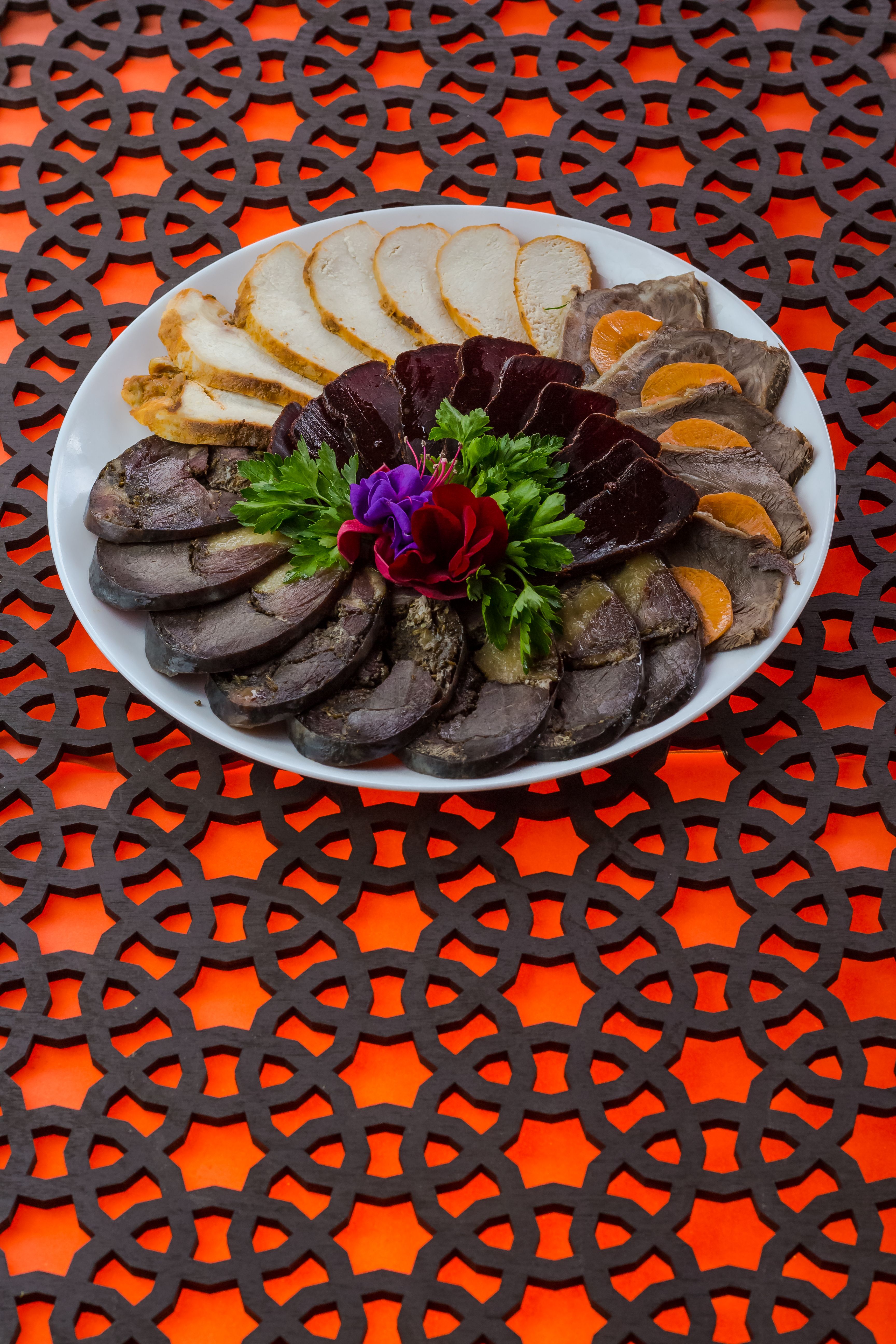
Kazy is a traditional Kazakh horse meat sausage made primarily from horse meat and horse fat stuffed into intestine casing, seasoned with garlic, black pepper, and salt. This composition is fundamentally keto-friendly: it is a high-fat, moderate-protein, near-zero net carb food. Horse fat is rich in unsaturated fats and provides the high fat content keto requires. The intestine casing contributes negligible carbs. Garlic and black pepper in the small amounts used for seasoning add minimal net carbs (well under 1g per serving). There are no grains, sugars, or high-carb fillers. A standard serving fits comfortably within daily keto macros.
Some strict keto practitioners flag horse meat and horse fat as potentially higher in glycogen than conventional meats, and a small camp within carnivore-adjacent keto circles questions the insulin response to organ-adjacent casings and richly processed traditional preparations, though evidence for concern is minimal.
Kazy is a traditional Kazakh horse sausage made entirely from animal-derived ingredients. Horse meat and horse fat are direct animal flesh and animal fat, both categorically excluded from a vegan diet. The intestine casing is an animal by-product derived from the digestive tract of the slaughtered horse. There is no plant-based component that could make this dish vegan-compatible in any form. This is unambiguously non-vegan with no meaningful debate within the vegan community.
Kazy is a traditional Kazakh horse meat sausage made by stuffing seasoned horse meat and fat into intestine casing. While horse meat, horse fat, garlic, black pepper, and intestine casing are individually paleo-compatible, the inclusion of added salt disqualifies this dish under strict paleo rules. Salt is explicitly excluded from the paleo framework as it is a processed/refined mineral additive not available in that form to Paleolithic hunter-gatherers. Additionally, Kazy is a cured/processed sausage product — the curing, stuffing, and fermentation or smoking process places it firmly in the processed meat category, which the paleo diet discourages alongside other processed meats like bacon and deli meats. The philosophy of paleo prioritizes whole, unprocessed foods, and sausage-style preparations inherently contradict that principle regardless of the base ingredients.
Kazy is a traditional Kazakh horse meat sausage made from horse meat and horse fat stuffed into intestine casing. While it is a whole, minimally processed food by artisanal standards, it fundamentally contradicts Mediterranean diet principles. Red meat (including horse meat) is categorized as an occasional food limited to a few times per month, and this dish is very high in animal fat, particularly saturated fat from the horse fat component. There are no plant-based components beyond minor spices, no olive oil, no vegetables, legumes, or whole grains. It represents a protein and fat profile that is the opposite of the plant-forward, olive oil-centered Mediterranean model.
Kazy is a traditional Kazakh horse meat sausage made from horse meat and fat stuffed into intestine casing — all of which are animal-derived and carnivore-compatible in principle. The intestine casing is itself an organ/animal product. However, the inclusion of garlic and black pepper introduces plant-derived compounds that strict carnivore practitioners exclude. Salt is universally accepted. Horse meat itself is not commonly discussed in mainstream carnivore circles (which focus on ruminants like beef and lamb), but it is an animal protein and would be acceptable to most practitioners. The spices are the primary concern, though many pragmatic carnivore practitioners tolerate small amounts of spices used in preparation.
Strict carnivore purists following protocols like the Lion Diet or Baker's meat-and-salt approach would exclude this due to garlic and black pepper, both plant-derived ingredients containing antinutrients and plant compounds the carnivore diet specifically aims to eliminate. Those adhering to a zero-plant-input standard would need a spice-free version to fully approve.
Kazy is a traditional Kazakh horse meat sausage made from fully Whole30-compliant ingredients. Horse meat and horse fat are unprocessed animal proteins and natural fats, both explicitly allowed on Whole30. Garlic, black pepper, and salt are compliant herbs and seasonings. The intestine casing is a natural animal product (not a processed synthetic casing) and is fully compatible. There are no excluded ingredients — no added sugars, grains, legumes, dairy, or other prohibited substances. This is a whole, minimally processed meat preparation consistent with the Whole30 framework.
Kazy is a traditional Kazakh horse sausage made from horse meat and fat stuffed into intestine casing. The primary FODMAP concern is garlic, which is high in fructans and must be avoided during the elimination phase at any meaningful quantity. Traditional Kazy recipes incorporate garlic as a seasoning directly into the meat mixture, making it impossible to remove. Horse meat itself is a plain protein and inherently low-FODMAP, as are black pepper and salt. The intestine casing is also not a FODMAP concern. However, the inclusion of garlic — a high-fructan food — makes this dish unsuitable for the elimination phase. If garlic were omitted or replaced with garlic-infused oil, the dish could potentially be low-FODMAP.
Monash University has not specifically tested Kazy, and the amount of garlic used per serving may be small in some recipes. Some clinical FODMAP practitioners suggest that trace garlic in cooked, diluted preparations may be tolerable for certain individuals, but strict elimination phase protocol advises avoiding any dish where garlic is an ingredient.
Kazy is a traditional Kazakh sausage made from horse meat and horse fat stuffed into intestine casing, heavily salted during preparation. While horse meat itself is relatively lean compared to beef, Kazy is specifically made from the rib fat strip, meaning it is intentionally high in animal fat. The combination of significant added salt (high sodium), high saturated fat from horse fat and intestine casing, and processed sausage format places this firmly in the 'avoid' category for DASH diet purposes. DASH guidelines explicitly limit high-sodium processed meats, fatty cuts, and foods high in saturated fat. The preparation method (curing/salting) further elevates sodium content well beyond DASH thresholds.
NIH DASH guidelines categorically discourage processed, high-fat, high-sodium meats. However, some updated clinical interpretations note that horse fat has a different fatty acid profile than beef or pork fat, with a relatively higher proportion of unsaturated fats — a small number of DASH-oriented nutritionists might consider horse meat (leaner cuts) as marginally more acceptable than pork sausage, though Kazy's specific fat-rich formulation and high salt content still disqualify it under standard DASH protocols.
Kazy is a traditional Kazakh horse sausage made from horse meat and horse fat stuffed into intestine casing. From a Zone perspective, the core issue is the fat profile and quantity. Horse meat itself is actually relatively lean compared to beef and has a favorable omega-3 to omega-6 ratio compared to most red meats, which aligns with Sears' anti-inflammatory principles. However, Kazy specifically uses horse fat (the rib fat section), making it a high-fat preparation where saturated fat is significant. The fat content is far above the Zone's target of 1.5g per fat block for animal proteins, making macro balancing difficult. There are no carbohydrate components, so this would need to be paired with substantial low-glycemic vegetables to approach the 40/30/30 ratio. Garlic and black pepper are Zone-favorable additions with polyphenol benefits. As a sausage-style preparation, portion control is challenging. It can technically fit a Zone meal as a protein-fat source if strictly portioned and paired with ample vegetables and a lean fat source adjustment, but the embedded horse fat makes it an 'unfavorable' Zone food requiring careful management.
Horse meat has a notably better omega-3 to omega-6 fatty acid ratio than conventional beef or pork, which aligns with Dr. Sears' later anti-inflammatory writings in 'Toxic Fat' and 'The Mediterranean Zone.' Some Zone practitioners following Sears' post-2000 anti-inflammatory framework might view horse fat more favorably than conventional saturated animal fats, particularly given horse fat contains a meaningful proportion of oleic acid (monounsaturated fat). This could push the assessment toward a slightly more favorable view for those prioritizing the anti-inflammatory dimension of Zone over strict block math.
Kazy is a traditional Kazakh fermented horse meat sausage made from horse meat and horse fat stuffed into intestine casing, seasoned with garlic, black pepper, and salt. The inflammatory profile is genuinely mixed. On the positive side, horse meat is notably leaner than beef and has a more favorable omega-6 to omega-3 fatty acid ratio than most red meats, with some studies showing horse fat contains meaningful amounts of omega-3s (particularly ALA), making it more favorable than pork or beef fat in this regard. Garlic and black pepper offer modest anti-inflammatory polyphenols. However, the dish is still a high-fat red meat product with significant saturated fat from the horse fat inclusion, and it is processed (cured/fermented in casing), placing it in the 'limit' category under anti-inflammatory frameworks. The intestine casing is nutritionally negligible. The traditional preparation often involves smoking or curing with salt, contributing to a high sodium load, which can indirectly promote inflammation. Overall, Kazy is better than a conventional pork or beef sausage from an anti-inflammatory standpoint due to horse meat's lipid profile, but it still represents a processed, high-fat red meat product that anti-inflammatory guidelines recommend limiting rather than emphasizing.
Some anti-inflammatory researchers and traditional food advocates argue that fermented, minimally processed animal foods like Kazy — made from a single animal source without industrial additives, trans fats, or seed oils — are far preferable to modern processed meats and should not be lumped in with the same concerns. Horse meat's unusually favorable omega-3 content and low saturated fat relative to beef give it a meaningfully different profile. Conversely, stricter anti-inflammatory and autoimmune protocols (e.g., AIP-adjacent frameworks) would flag any processed red meat product, regardless of source, as potentially pro-inflammatory due to heme iron load and advanced glycation end-products from curing.
Kazy is a traditional Kazakh cured/boiled horse sausage made from horse meat and horse fat stuffed into intestine casing. While horse meat itself is a lean protein source, kazy is specifically made from the fattiest cut of horse meat — the rib fat strip — meaning the dish is intentionally high in fat. The intestine casing adds additional fat. This combination of high saturated fat content, heavy processing (curing, stuffing), and large fat-to-protein ratio makes it a poor fit for GLP-1 patients. High-fat meals significantly worsen GLP-1 side effects including nausea, bloating, and acid reflux because slowed gastric emptying means fatty food sits in the stomach for an extended period. Additionally, kazy is typically served in substantial portions as a centerpiece dish, making small-portion eating difficult. The salt content is also high due to the curing process, which can contribute to water retention and is not ideal for patients managing metabolic health.
*See how scores were generated at our methodology page.
Nutritional profile
Six traits that cut across every diet.
Fiber & Plants
How much whole-plant food and fiber it delivers.
Healthy Fats
The quality of its fats (unsaturated, omega-3).
Whole / Unprocessed
How close it is to its natural, unprocessed form.
Gut Gentle
How easy it is on digestion (low FODMAP, few irritants).
Low Glycemic
How little it spikes your blood sugar.
Protein Density
How much protein it packs per calorie.
Controversy Index
Higher controversy = more disagreement between diets.
Diet-Specific Tips
 Keto — 8/10
View tips
- Horse meat is a lean-to-moderate protein source with near-zero carbs
- Horse fat provides high fat content aligning with keto macro targets
- Intestine casing adds negligible net carbs
- Garlic and black pepper in seasoning quantities contribute <1g net carbs per serving
- No grains, sugars, starches, or high-carb fillers present
- Whole, minimally processed traditional preparation preferred over commercial versions which may contain fillers
 Carnivore — 5/10
View tips
- Horse meat is animal-derived and carnivore-compatible
- Horse fat is a quality animal fat source
- Intestine casing is an animal product (organ/offal)
- Garlic is a plant-derived ingredient — excluded on strict carnivore
- Black pepper is a plant-derived spice — excluded on strict carnivore
- Salt is universally accepted on carnivore
- Horse is not a ruminant, which some strict practitioners de-prioritize
- Small spice quantities are tolerated by many pragmatic carnivore practitioners
 Whole30 — 8/10
View tips
- Horse meat is a compliant animal protein
- Horse fat is a natural, compliant fat source
- Garlic, black pepper, and salt are all approved seasonings
- Natural intestine casing is an animal product and Whole30-compatible
- No excluded ingredients present
- Homemade or traditional preparation avoids processed additives common in commercial sausages
 Zone — 4/10
View tips
- High fat content from intentionally included horse fat makes Zone block balancing difficult
- Horse meat itself has a favorable omega-3 to omega-6 ratio relative to conventional red meat
- Horse fat contains meaningful monounsaturated (oleic acid) content, partially mitigating saturated fat concerns
- Zero carbohydrate content requires substantial low-glycemic vegetable pairing to hit 40/30/30 ratio
- Processed sausage format makes precise portion control challenging
- Garlic provides Zone-favorable polyphenols
- No added sugars, seed oils, or high-glycemic ingredients
 Anti-Inflammatory — 4/10
View tips
- Horse meat has a better omega-6:omega-3 ratio than beef or pork, with meaningful ALA content in horse fat
- High horse fat content contributes significant saturated fat, which anti-inflammatory guidelines recommend limiting
- Processed/cured red meat product — anti-inflammatory frameworks recommend limiting all processed meats
- High sodium from salt curing may indirectly promote inflammation
- Garlic and black pepper provide minor anti-inflammatory benefit
- No trans fats, artificial additives, seed oils, or refined sugars
- Fermentation process may offer modest probiotic/gut microbiome benefit depending on preparation