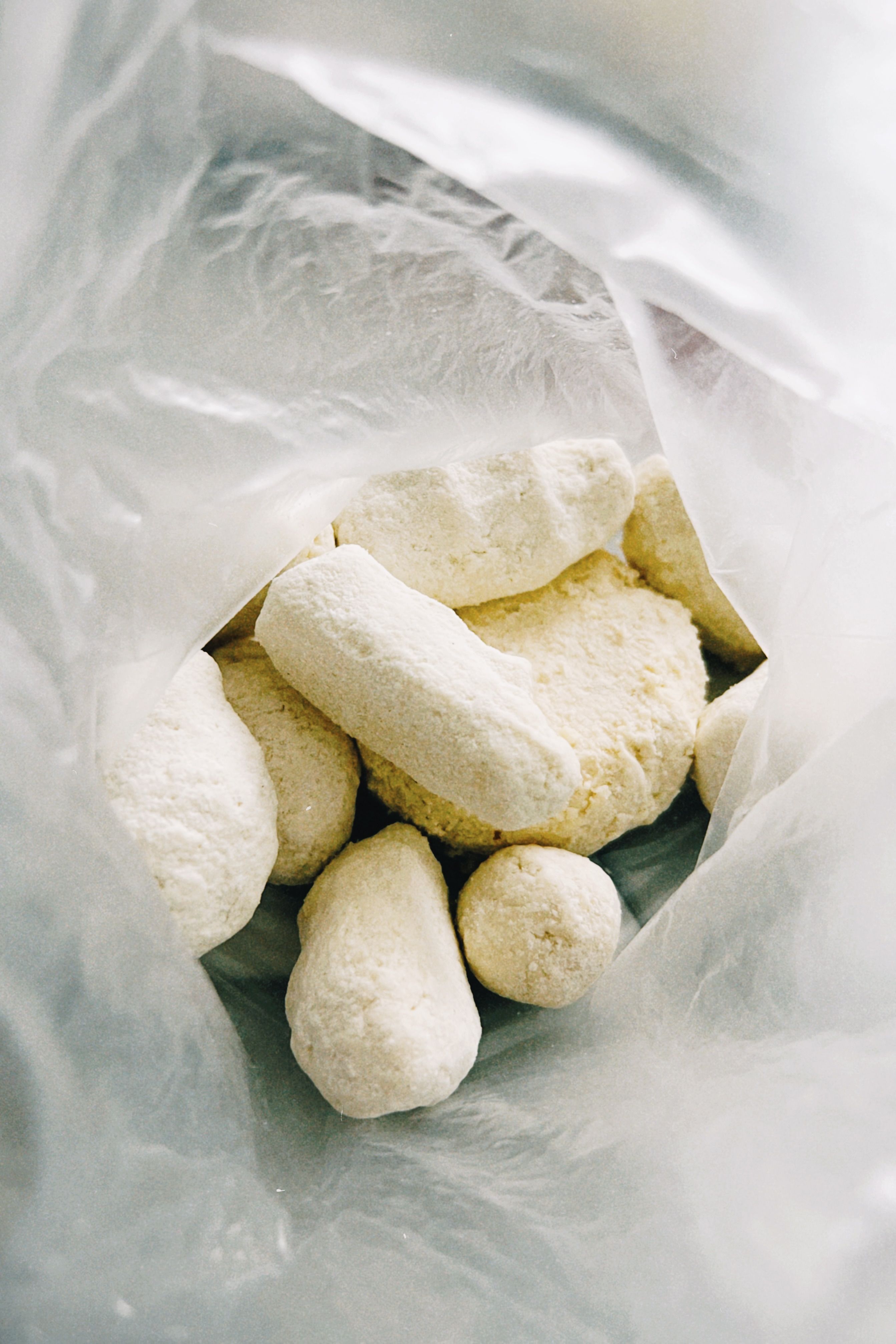
Photo: Aibek Skakov / Pexels
The diets react (see scores below)
Common Ingredients
- sheep milk
- yogurt culture
- salt
- cream
- water
Specific recipes may vary.
Incompatible with 4 of 11 diets
Diet Ratings
Kurt is a traditional Kazakh dried cheese made from strained and salted sheep milk or yogurt. It is naturally high in fat and protein, which aligns well with ketogenic principles. However, the fermentation and drying process concentrates the natural milk sugars (lactose), and the yogurt culture base means residual carbohydrates remain. Sheep milk is higher in fat than cow milk but also slightly higher in lactose. In its dried, hard ball form, kurt is very concentrated — a standard serving of 2-3 small balls (20-30g) likely contains 3-6g net carbs, which is manageable in small portions but can add up quickly. The presence of cream improves the fat profile. Kurt is generally acceptable on keto with strict portion control, but the concentrated lactose and moderate carb content prevent a full approval.
Some strict keto and carnivore-adjacent practitioners caution against all fermented dairy products including kurt, arguing that even small amounts of lactose and the insulinogenic response to dairy proteins can stall ketosis in metabolically sensitive individuals. Conversely, lazy keto practitioners may freely approve kurt given its high fat and protein density and low carb-per-serving count.
Kurt is a traditional Kazakh dried cheese or sour milk ball made from sheep milk. All of its ingredients — sheep milk, yogurt culture (used to ferment animal milk), and cream — are animal-derived dairy products. Sheep milk and cream are unambiguously excluded under vegan dietary rules. There is no plant-based version of this traditional food; it is definitionally a dairy product. This is a clear, unambiguous avoid with no meaningful debate within the vegan community.
Kurt is a traditional Kazakh dried cheese made from sheep's milk, yogurt culture, salt, cream, and water. Despite being a minimally processed, ancient food, it contains multiple paleo-excluded ingredients. Dairy (sheep milk and cream) is excluded from strict paleo, and added salt is also excluded per paleo guidelines. The yogurt culture itself is a minor concern but secondary to the dairy base. This is fundamentally a dairy product, which places it firmly in the 'avoid' category under mainstream paleo frameworks including Cordain's original guidelines.
Some modern paleo practitioners, particularly those following a more ancestral or 'primal' framework like Mark Sisson's Primal Blueprint, argue that full-fat, minimally processed dairy from grass-fed animals (especially sheep and goat) can be tolerated and even beneficial. They point to the long history of fermented dairy in traditional cultures as evidence of its ancestral legitimacy, and fermentation further reduces lactose content.
Kurt is a traditional Kazakh dried cheese/yogurt ball made from fermented sheep milk, salt, and cream. As a dairy product, it falls into the Mediterranean diet's 'moderate consumption' category alongside other cheeses and yogurt. The ingredients are clean and minimally processed — no additives, refined grains, or added sugars — which aligns well with Mediterranean principles. Fermented dairy (like yogurt) is generally viewed favorably for its probiotic content, and sheep milk cheese has parallels in Mediterranean traditions (e.g., feta, pecorino). However, kurt is high in salt and saturated fat (especially with added cream), and it is not a Mediterranean staple. As a snack consumed in small amounts, it is acceptable but not core to the diet.
Some Mediterranean diet authorities, particularly those drawing from traditional Greek and Middle Eastern practices, view fermented dairy products like yogurt-based cheeses favorably as probiotic-rich whole foods; from this perspective, kurt's clean fermented profile could be rated closer to 'approve' in small portions. Conversely, stricter modern clinical guidelines (e.g., PREDIMED-based protocols) emphasize limiting high-fat dairy and would place kurt at the lower end of 'caution' due to its cream content and salt load.
Kurt is a traditional Kazakh dried cheese made from sheep's milk, fermented with yogurt culture, and shaped into hard balls. All ingredients are animal-derived (sheep milk, cream, yogurt culture, salt, water), making it acceptable within the broader carnivore framework. However, it sits firmly in the dairy debate zone. Sheep milk is full-fat and nutrient-dense, and fermentation reduces lactose content significantly, which is actually favored by many carnivore practitioners. That said, it is still a processed dairy product, and the strict carnivore camp excludes all dairy. The fermentation and drying process also concentrates casein and other milk proteins that some practitioners react to.
Strict 'meat-only' carnivore adherents (following Baker's core framework or Mikhaila Peterson's Lion Diet) exclude all dairy products, arguing that casein and other milk proteins are inflammatory and that dairy is unnecessary when animal meat covers all nutritional needs. The 'animal-based' camp led by Saladino, on the other hand, embraces full-fat, traditionally fermented dairy like kurt as a highly nutritious ancestral food and would likely approve it enthusiastically.
Kurt is a traditional Kazakh dried cheese made from sheep milk. Dairy products — including all forms of cheese, milk, cream, and yogurt — are explicitly excluded on the Whole30 program. Even though the ingredients are otherwise simple and wholesome (sheep milk, yogurt culture, salt, cream, water), the core product is dairy-based cheese. Whole30 makes no exception for sheep or goat milk dairy versus cow dairy; all mammalian milk-derived cheeses are off-limits. Ghee and clarified butter are the only dairy exceptions explicitly permitted.
Kurt is a traditional Kazakh dried/fermented dairy product made from sheep milk and yogurt culture. Unlike aged hard cheeses where lactose is consumed during the aging process, Kurt is essentially a salted, dried sour milk or yogurt ball. Because it is made directly from fresh sheep milk fermented with yogurt culture and dried (rather than aged through a cheese-making process that eliminates lactose), it retains significant lactose content. Sheep milk is actually higher in lactose than cow's milk (approximately 4.7-5% lactose). The fermentation via yogurt culture does reduce some lactose, but not to levels considered safe during the low-FODMAP elimination phase — particularly at a standard snack serving of 2-3 balls. The cream component also adds additional lactose. This is fundamentally different from aged hard cheeses (cheddar, parmesan) where lactose is essentially eliminated. Kurt behaves more like a concentrated yogurt/soft cheese product, placing it firmly in the high-lactose category.
Monash University has not specifically tested Kurt, so the lactose content is inferred from its production method. Some FODMAP practitioners might argue that prolonged fermentation and drying could reduce lactose further than expected, and individual tolerance varies — but during the strict elimination phase, the presumption should be high lactose until proven otherwise. The absence of direct Monash data makes a precise serving-size threshold impossible to define.
Kurt is a traditional Kazakh dried cheese/fermented dairy snack made from sheep milk, yogurt culture, salt, cream, and water. As a full-fat dairy product (sheep milk is higher in saturated fat than cow milk, and cream is added), it conflicts with DASH's emphasis on fat-free or low-fat dairy. More critically, kurt is notably high in sodium — salt is a primary ingredient and the drying/preservation process concentrates sodium significantly, often reaching 800–1,500mg per small serving. This raises serious concerns under both standard (<2,300mg/day) and low-sodium (<1,500mg/day) DASH targets. However, it does provide calcium, protein, and probiotics (from yogurt culture), which align with DASH values. The full-fat dairy content and high sodium content prevent approval, but the fermented dairy base and nutrient density keep it from a full 'avoid' verdict for those consuming it in very small portions infrequently.
NIH DASH guidelines clearly restrict full-fat dairy and high-sodium foods, which would push kurt toward 'avoid.' However, updated clinical interpretations note that recent evidence does not consistently link full-fat fermented dairy to worse cardiovascular outcomes, and some DASH-oriented clinicians allow small portions of traditional fermented dairy products as part of a culturally inclusive dietary pattern, provided overall sodium intake is managed carefully.
Kurt is a traditional Kazakh dried cheese made from sheep's milk yogurt, salted and dried into small balls or pellets. As a fermented dairy product, it provides a reasonable protein source, but sheep's milk is naturally higher in fat — including saturated fat — than cow's milk, and the cream ingredient further elevates the saturated fat content. In Zone terms, kurt functions primarily as a protein-fat block combination, with minimal carbohydrate contribution (fermentation reduces lactose). The saturated fat content is the main Zone concern, as Dr. Sears historically emphasized limiting saturated fat in favor of monounsaturated fats. However, the high protein density and near-zero carb profile make it a workable Zone snack component when portioned carefully and paired with a low-glycemic carbohydrate source (e.g., vegetables or a small piece of fruit) to achieve the 40/30/30 ratio. As a snack, a small serving (1-2 protein blocks worth) can be incorporated into a Zone-compliant mini-meal. The fermentation process also contributes beneficial probiotics, which aligns with Sears' later anti-inflammatory dietary emphasis.
Earlier Zone methodology (Enter the Zone) would flag the high saturated fat from sheep's milk and added cream as 'unfavorable,' recommending lower-fat dairy alternatives. However, Sears' later work (The OmegaRx Zone, Zone Diet evolution post-2000s) softened the absolute stance on saturated fat, particularly from whole fermented dairy sources where the probiotic and nutrient density benefits may partially offset concerns. Some Zone practitioners treat full-fat fermented dairy as acceptable in controlled portions, while strict Zone followers would prefer a lower-fat cheese alternative.
Kurt is a traditional Kazakh dried cheese/yogurt ball made from sheep's milk, yogurt culture, salt, cream, and water. Its anti-inflammatory profile is mixed. On the positive side, sheep's milk is fermented here via yogurt culture, meaning Kurt contains live probiotic bacteria, which are well-supported for reducing gut inflammation and modulating immune response — a genuine anti-inflammatory benefit. Sheep's milk also contains a different casein protein profile (higher in A2-type beta-casein) compared to most commercial cow's milk, which some research suggests is less inflammatory. Additionally, sheep's milk has a relatively higher proportion of short- and medium-chain fatty acids compared to cow's milk. However, Kurt is made with cream (full-fat dairy concentrate), making it high in saturated fat. Anti-inflammatory guidelines consistently recommend limiting full-fat dairy and saturated fat, as these can promote inflammatory markers in excess. It is also typically high in sodium (salt), which at high intake is associated with inflammation and endothelial stress. Kurt does not provide omega-3s, antioxidants, polyphenols, or other strongly anti-inflammatory compounds. It falls into the 'low-fat dairy = moderate, full-fat dairy = limit' framework of anti-inflammatory eating. In small amounts as a snack it is acceptable — the probiotic content is a genuine benefit — but the cream and salt content prevent approval.
Some functional medicine and traditional food advocates (e.g., Weston A. Price Foundation) argue that full-fat fermented dairy from pasture-raised animals is actually anti-inflammatory due to fat-soluble vitamins (K2, A, D), conjugated linoleic acid (CLA), and the probiotic matrix — contrasting with mainstream anti-inflammatory guidance (Dr. Weil's pyramid, AHA) that recommends limiting saturated fat from full-fat dairy products.
Kurt is a traditional Kazakh dried/fermented sheep milk cheese, typically formed into small hard balls. It provides a meaningful protein contribution (roughly 10-15g per 30-40g serving) from sheep milk, along with calcium and probiotics from the yogurt culture. However, sheep milk is significantly higher in fat than cow milk — including saturated fat — which can worsen GLP-1 side effects like nausea, bloating, and reflux. The cream in the ingredient list further elevates the fat content per serving. On the positive side, kurt is a small, portion-friendly food that requires little volume to feel satisfying, and the fermented culture may support gut health. It contains no added sugar and minimal processing. The high salt content is worth noting for patients with hypertension or fluid retention concerns. As a snack, it can contribute to protein targets without triggering large caloric intake, but the saturated fat load from sheep milk plus cream places it firmly in the caution category rather than approve.
Some GLP-1-focused dietitians consider fermented dairy like kurt acceptable or even beneficial in small amounts due to its probiotic content, protein density, and high satiety per calorie — particularly for patients who struggle to meet protein targets on reduced appetite. Others flag high-fat sheep milk cheeses as a consistent GI trigger in GLP-1 patients and would advise avoiding them until GI side effects stabilize, especially early in treatment.
*See how scores were generated at our methodology page.
Nutritional profile
Six traits that cut across every diet.
Fiber & Plants
How much whole-plant food and fiber it delivers.
Healthy Fats
The quality of its fats (unsaturated, omega-3).
Whole / Unprocessed
How close it is to its natural, unprocessed form.
Gut Gentle
How easy it is on digestion (low FODMAP, few irritants).
Low Glycemic
How little it spikes your blood sugar.
Protein Density
How much protein it packs per calorie.
Controversy Index
Higher controversy = more disagreement between diets.
Diet-Specific Tips
 Keto — 5/10
View tips
- Sheep milk has higher fat content than cow milk, supporting keto macros
- Drying process concentrates lactose, increasing carb density per gram
- Yogurt culture fermentation reduces but does not eliminate lactose
- High protein and fat content align with ketogenic macronutrient goals
- Portion control critical — 2-3 small pieces (20-30g) is a manageable serving
- No added sugars or grains — whole, traditional food
- Salt content is actually beneficial for electrolyte management on keto
 Mediterranean — 5/10
View tips
- Dairy product — falls under moderate consumption category
- Fermented base (yogurt culture) provides probiotic benefit similar to Mediterranean staples like labneh or feta
- High salt content is a concern for cardiovascular health
- Addition of cream increases saturated fat beyond typical Mediterranean dairy
- No artificial additives, refined grains, or added sugars — clean ingredient profile
- Not a Mediterranean traditional food, but has functional parallels in the diet
- Small portion size as a snack mitigates concerns
 Carnivore — 5/10
View tips
- All ingredients are animal-derived — no plant foods present
- Sheep milk is full-fat and considered more digestible than cow milk by many practitioners
- Fermentation process significantly reduces lactose, favored by lactose-sensitive carnivore followers
- Traditional drying/fermentation aligns with ancestral food principles promoted by animal-based advocates
- Dairy remains the single most debated food category in the carnivore community
- Contains casein proteins which strict carnivore adherents flag as potentially inflammatory
- No artificial additives, sugar, or plant-based fillers — clean ingredient list
 DASH — 4/10
View tips
- Full-fat sheep milk and added cream conflict with DASH low-fat dairy recommendation
- High sodium content from salt concentration during drying — a significant DASH concern
- Fermented dairy provides probiotics and calcium, partially aligned with DASH
- Sheep milk is higher in saturated fat than cow milk, further limiting DASH compatibility
- Small serving sizes may mitigate sodium impact but are difficult to control
- Low-sodium homemade versions would score higher than commercial or heavily salted preparations
 Zone — 5/10
View tips
- High saturated fat from sheep's milk and cream — Zone caution for saturated fat
- Good protein density — functions as a protein-fat block combination
- Near-zero carbohydrate due to fermentation — must be paired with low-GI carbs to achieve 40/30/30
- Fermented dairy — beneficial probiotics align with Sears' anti-inflammatory focus
- Very salty — high sodium content may be a dietary consideration
- Portion control critical — small serving needed to avoid excessive saturated fat intake
- No sugar, no processed ingredients — clean whole-food composition
 Anti-Inflammatory — 4/10
View tips
- Fermented with live yogurt cultures — probiotic benefit supports gut health and may reduce systemic inflammation
- Made with cream (full-fat dairy) — high saturated fat content conflicts with anti-inflammatory guidelines
- Sheep's milk base — may be better tolerated than cow's milk; higher A2-casein proportion; richer in CLA
- High sodium content from salt — excessive sodium intake linked to inflammatory pathways
- No significant omega-3s, polyphenols, or antioxidants present
- Whole, minimally processed traditional food with no additives or trans fats
 GLP-1 Friendly — 5/10
View tips
- Moderate-to-good protein density per small serving
- High saturated fat from sheep milk and cream — may worsen GLP-1 GI side effects
- Fermented/probiotic content may support gut health
- Portion-friendly format — small servings are satisfying
- High sodium content — caution for hypertensive patients
- No added sugar, minimal processing
- Low fiber — does not contribute to fiber targets