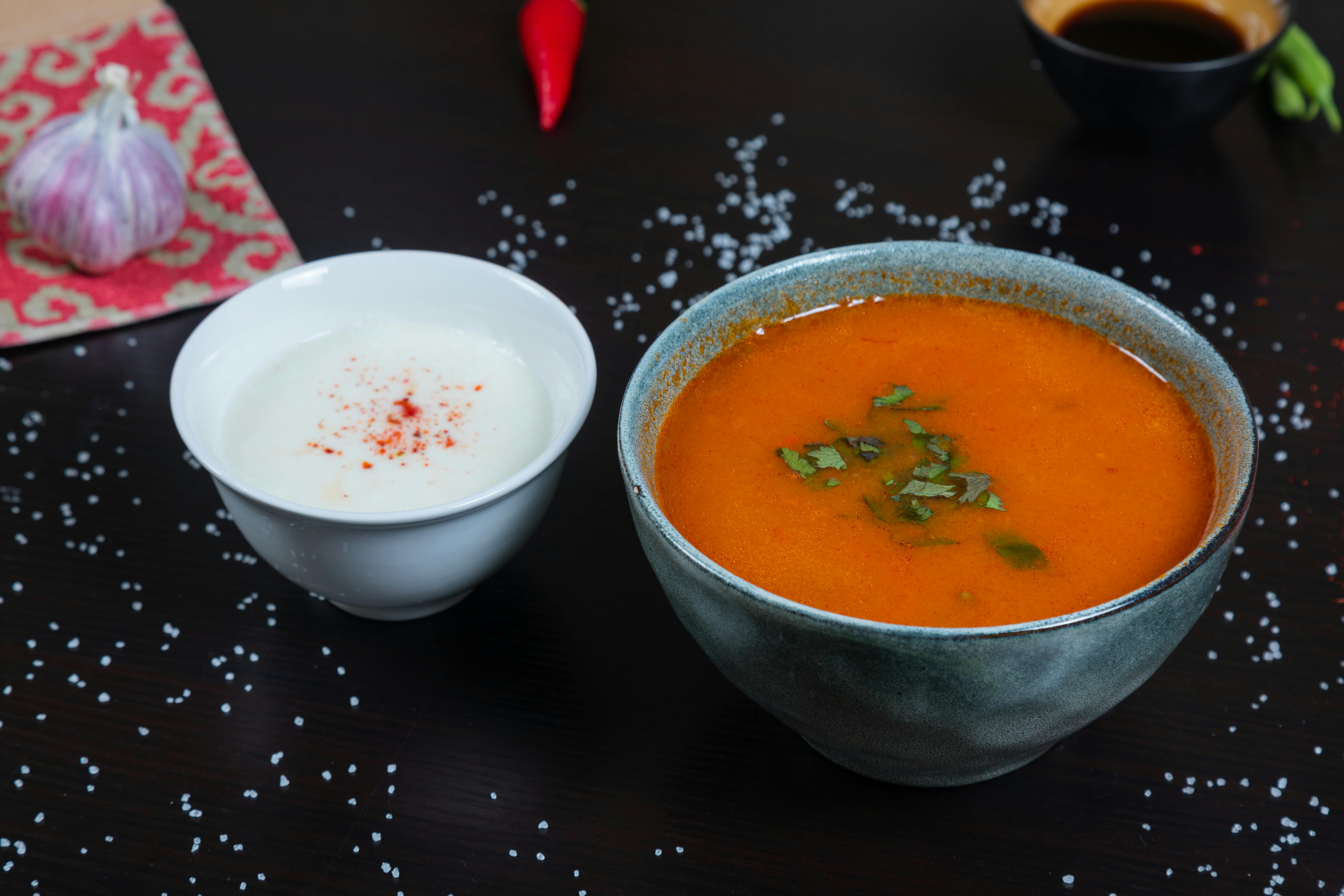
Photo: Collab Media / Pexels
The diets react (see scores below)
Common Ingredients
- raw camel milk
- fermentation starter
- water
- salt
- yeast
Specific recipes may vary.
Incompatible with 5 of 11 diets
Diet Ratings
Shubat is a traditionally fermented camel milk beverage from Kazakhstan. Camel milk contains approximately 4-5g of lactose per 100ml, similar to cow's milk. A standard serving of shubat (around 200-250ml) would deliver roughly 8-12g of net carbs primarily from lactose. Fermentation reduces lactose somewhat, but not dramatically — lactic acid bacteria convert some lactose to lactic acid, potentially lowering net carbs by 20-40%. The fat content of camel milk is moderate (~3-4% fat), and the beverage contains some protein. On keto, a small portion could fit within daily carb limits if carbs are carefully managed throughout the day, but a full traditional serving risks pushing total daily net carbs too high. The yeast component also contributes minimal additional carbohydrates from its metabolic activity.
Some strict keto and carnivore-adjacent practitioners argue that all mammalian milk — including fermented versions — should be avoided entirely due to lactose-driven insulin response and difficulty tracking carb content accurately in artisanal fermented products. Conversely, a minority of 'lazy keto' or metabolic-flexibility practitioners consider small portions of fermented dairy fully acceptable, citing reduced lactose from fermentation and probiotic benefits.
Shubat is a traditional Kazakh fermented camel milk beverage. Its primary ingredient is raw camel milk, which is an animal-derived dairy product and therefore strictly excluded under all vegan frameworks. No version of this dish can be made vegan without fundamentally changing its identity, as camel milk is not merely an incidental ingredient but the entire basis of the drink. The fermentation starter, water, salt, and yeast are all plant-compatible, but the camel milk alone renders this dish non-vegan without any ambiguity.
Shubat is a fermented camel milk beverage traditional to Kazakh cuisine. Despite its ancient origins and use by nomadic peoples, it fails standard paleo criteria on multiple fronts. Dairy — including camel milk — is excluded from the paleo diet, as milk consumption post-weaning and from animals was not part of the Paleolithic lifestyle according to mainstream paleo authorities like Loren Cordain. Additionally, the ingredient list includes added salt, which is explicitly excluded under paleo rules, and a commercial or cultured fermentation starter which may contain non-paleo additives. The yeast used in fermentation also raises questions about processing. Even setting aside the salt and starter concerns, the dairy base alone makes this a clear avoid under orthodox paleo guidelines.
Some ancestral health advocates, particularly those influenced by Weston A. Price Foundation principles or the work of researchers studying traditional nomadic diets, argue that fermented dairy from grass-fed animals — especially raw, traditionally fermented forms like shubat — may be more digestible due to reduced lactose and altered protein structures, and that nomadic peoples have consumed such foods for millennia. Paul Jaminet's Perfect Health Diet and some primal (Mark Sisson) frameworks are more permissive of fermented dairy, which could shift this toward a caution rating.
Shubat is a fermented camel milk beverage from Kazakh tradition. It is a dairy product, which the Mediterranean diet places in the 'moderate' category (a few servings per week). Fermented dairy foods like yogurt and kefir are generally viewed favorably within Mediterranean diet frameworks due to their probiotic content and lower lactose levels — fermented camel milk shares these characteristics. However, Shubat is entirely non-Mediterranean in origin, and camel milk is not referenced in any traditional or modern Mediterranean diet guidance. The dish is minimally processed (natural fermentation, simple ingredients, no added sugars or refined grains), which aligns well with Mediterranean principles. The primary concern is simply that it is a dairy-based food and should be consumed in moderation, not as a dietary staple.
Some Mediterranean diet authorities, particularly those aligned with traditional Greek or Turkish practices, would view fermented dairy (like ayran or strained yogurt) quite positively and might rate Shubat similarly, giving it a slightly higher score. Conversely, stricter modern clinical interpretations (e.g., PREDIMED-based guidelines) emphasize low-fat dairy and might express concern about the higher fat content of camel milk, though camel milk is actually lower in fat than cow milk.
Shubat is a traditional Kazakh fermented camel milk drink, analogous to kefir but made from camel milk. It is entirely animal-derived at its core, but falls into a heavily debated zone within the carnivore community. Camel milk is raw and full-fat, which is a point in its favor — raw dairy is generally better tolerated than pasteurized. The fermentation process also reduces lactose, which carnivore-leaning dairy consumers typically prefer. However, dairy as a category is the single most contested food in carnivore circles. Additionally, the yeast used as a fermentation starter is technically not animal-derived, and water is neutral. Salt is accepted universally. The fermented, slightly alcoholic, effervescent nature of shubat (it contains trace ethanol from yeast fermentation) may also raise concerns among strict practitioners. Overall, this is a borderline animal product with processing and fermentation variables that place it firmly in the caution zone.
Strict 'meat-only' carnivore adherents (including Lion Diet followers) reject all dairy — including raw or fermented camel milk — as unnecessary and potentially inflammatory, arguing that ruminant meat alone provides everything needed. On the other side, Paul Saladino's 'animal-based' framework would likely embrace raw fermented camel milk as a nutrient-dense traditional animal product, scoring it higher.
Shubat is a fermented camel milk drink, and camel milk is still dairy — a mammalian milk product explicitly excluded on the Whole30. The program's dairy exclusion covers all animal milks (cow, goat, sheep, camel, etc.), not just cow's milk. The fermentation process does not change the dairy classification. The remaining ingredients (water, salt, yeast) are individually compliant, but the foundational ingredient — camel milk — disqualifies the dish entirely.
Shubat is a traditional Kazakh fermented camel milk beverage. The primary FODMAP concern is lactose. Camel milk contains lactose at levels comparable to cow's milk (approximately 4-5% lactose by weight), making it a high-lactose food. While fermentation by lactic acid bacteria and yeast does reduce lactose content to some degree — similar to how yogurt fermentation reduces but does not eliminate lactose — the residual lactose in a standard serving of shubat is almost certainly high enough to be problematic during the FODMAP elimination phase. Monash University has not specifically tested camel milk or shubat, so there is no direct FODMAP rating available. However, based on the known lactose content of camel milk and the principles applied to other fermented dairy products, a standard serving would be expected to contain significant lactose. Unlike hard aged cheeses where lactose is nearly eliminated, fermented milks like shubat, kefir, and kumiss retain considerable lactose. The salt, water, and yeast are FODMAP-free, so the risk is concentrated entirely in the camel milk base.
Monash University has not tested camel milk or shubat specifically, so no direct FODMAP rating exists. Some FODMAP practitioners note that extended fermentation in traditional preparations may reduce lactose more substantially than in commercial yogurt, and a small minority of clinical practitioners may consider lightly fermented camel milk borderline; however, without testing data, the elimination phase default should be to avoid high-lactose dairy products.
Shubat is a traditional Kazakh fermented camel milk beverage, analogous to kefir but made from camel milk. From a DASH perspective, it occupies a nuanced position. Camel milk is a dairy product with a nutritional profile somewhat distinct from cow's milk: it is lower in fat and saturated fat than whole cow's milk, contains meaningful amounts of calcium, potassium, and magnesium (all DASH-favored nutrients), and provides probiotics through fermentation. However, DASH guidelines explicitly call for fat-free or low-fat dairy, and shubat is typically made from whole raw camel milk, making it a full-fat dairy product by default. The added salt is a concern for sodium intake, though the amount is typically modest. Raw milk also raises food safety considerations that fall outside strict DASH nutritional scoring but are worth noting. The fermentation process increases probiotic content, which is broadly compatible with DASH's emphasis on gut-healthy whole foods, and the relatively lower saturated fat content compared to full-fat cow's milk is a mild point in its favor. Overall, shubat is acceptable in moderation but is not an emphasized DASH food due to its full-fat dairy status and added sodium.
NIH DASH guidelines specify low-fat or fat-free dairy and would place full-fat fermented camel milk in a cautious or limited category. However, updated clinical interpretations note that recent evidence (including meta-analyses in the European Heart Journal and BMJ) has not consistently shown full-fat dairy to worsen cardiovascular outcomes, and some DASH-aligned dietitians now permit moderate full-fat fermented dairy — particularly fermented products like kefir analogs — given their probiotic benefits and lower net saturated fat compared to cheese or butter.
Shubat is a traditional Kazakh fermented camel milk beverage. From a Zone Diet perspective, it presents a mixed profile. Camel milk contains lactose (carbohydrates), protein, and fat in roughly dairy-like proportions, though camel milk tends to be slightly lower in fat and higher in certain micronutrients than cow's milk. The fermentation process partially reduces lactose content (improving glycemic impact) and adds beneficial probiotics, which aligns with Sears' later anti-inflammatory emphasis. However, the macro ratio is not naturally Zone-aligned — like regular milk, it skews toward carbs and fat relative to protein, and the fat content includes saturated fat. The absence of a listed primary protein source means this would likely be consumed without adequate protein for a Zone meal, which is a structural concern. It is not a 'favorable' Zone carb source per Sears' classical framework, but it is far from empty calories and has functional food properties. With careful portioning (treating it more as a dairy block contributor) and pairing with lean protein and low-GI vegetables, it could be incorporated into a Zone breakfast, albeit awkwardly.
Some Zone practitioners following Sears' later anti-inflammatory and polyphenol-focused work (e.g., The OmegaRx Zone, The Zone Diet) might view fermented camel milk more favorably due to its probiotic content, lower glycemic index compared to cow's milk after fermentation, and unique fatty acid profile that includes more unsaturated fats than bovine dairy. In this context, small servings could be rated higher as an anti-inflammatory, gut-health-supporting food. Conversely, strict classical Zone followers would flag the saturated fat and unbalanced macro ratio as 'unfavorable.'
Shubat is a traditional Kazakh fermented camel milk beverage, analogous to kefir but made from camel milk. Its anti-inflammatory profile is genuinely mixed and debated. On the positive side, camel milk has a notably different composition from cow's milk: it is lower in saturated fat, higher in vitamin C, contains lactoferrin and immunoglobulins with documented anti-inflammatory and immunomodulatory properties, and has a more favorable fatty acid profile with higher proportions of unsaturated fats. Emerging research (mostly small-scale) suggests camel milk may reduce oxidative stress markers and improve gut microbiota. Fermentation adds probiotic value — fermented dairy is generally better tolerated than fresh dairy and probiotics are associated with reduced systemic inflammation through gut-microbiome pathways. However, it is still a full-fat dairy product, and the anti-inflammatory framework places full-fat dairy in the 'limit' category due to saturated fat content. Raw milk also raises food safety concerns that are separate from but relevant to a dietary assessment. The evidence base for camel milk specifically is thin — most studies are small, conducted on special populations (diabetics, autistic children), and camel milk is not addressed by mainstream anti-inflammatory diet frameworks like Dr. Weil's pyramid, which defaults to low-fat dairy in moderation. Salt content is minimal and unlikely to be a significant factor. Overall, Shubat lands in 'caution': it has meaningful anti-inflammatory potential through fermentation and camel milk's unique bioactives, but full-fat dairy status, limited research, and raw milk safety concerns prevent an 'approve' rating.
Some integrative and functional medicine practitioners, as well as researchers studying traditional fermented foods, would rate camel milk products more favorably — citing lactoferrin, unique immunoglobulins, and a lower allergenic profile compared to cow's milk as genuinely anti-inflammatory advantages that outweigh the saturated fat concern. Conversely, strict anti-inflammatory protocols that heavily restrict all full-fat dairy (and particularly raw dairy) would place Shubat in 'avoid' territory, arguing that the saturated fat and potential for microbial contamination from raw milk negate the probiotic benefits.
Shubat is a traditional Kazakh fermented camel milk beverage with a nutritional profile that creates multiple concerns for GLP-1 patients. Camel milk is relatively high in fat (3-4g per 100ml, primarily saturated) with modest protein (~3.5g/100ml) and low fiber. As a fermented dairy product it contains naturally occurring alcohol (up to 0.5-1% ABV from yeast fermentation). The carbonation produced by yeast fermentation will cause bloating and GI discomfort, worsening the already common GLP-1 side effects of nausea and reflux. Raw (unpasteurized) camel milk also carries food safety risks that are especially relevant for patients who may be immunocompromised or managing comorbidities. Nutrient density per calorie is low relative to GLP-1 priorities — protein yield is insufficient to contribute meaningfully to the 100-120g daily target, and fiber is essentially zero. The combination of fermentation-derived alcohol, carbonation, saturated fat, and raw milk status makes this a poor fit for GLP-1 patients at a standard serving.
Some GLP-1 nutrition practitioners note that fermented dairy products with live cultures may support gut microbiome health and improve GI tolerability of GLP-1 medications, and camel milk specifically has been studied for anti-inflammatory and glycemic properties that could theoretically be beneficial in metabolic patients. However, the alcohol content from yeast fermentation and carbonation side effects are not individual-tolerance issues — they are structural concerns that apply broadly to GLP-1 patients regardless of these potential benefits.
*See how scores were generated at our methodology page.
Nutritional profile
Six traits that cut across every diet.
Fiber & Plants
How much whole-plant food and fiber it delivers.
Healthy Fats
The quality of its fats (unsaturated, omega-3).
Whole / Unprocessed
How close it is to its natural, unprocessed form.
Gut Gentle
How easy it is on digestion (low FODMAP, few irritants).
Low Glycemic
How little it spikes your blood sugar.
Protein Density
How much protein it packs per calorie.
Controversy Index
Higher controversy = more disagreement between diets.
Diet-Specific Tips
 Keto — 4/10
View tips
- Camel milk contains ~4-5g lactose per 100ml, contributing meaningful net carbs
- Fermentation partially reduces lactose, improving keto compatibility somewhat
- Standard serving size (200-250ml) likely delivers 6-10g net carbs after fermentation
- Moderate fat content is less ideal than high-fat keto staples
- No added sugars or grains — ingredients are whole and unprocessed
- Portion control is essential; small servings may fit within a 20-50g daily carb budget
- Yeast adds negligible additional carbohydrate impact
 Mediterranean — 5/10
View tips
- Fermented dairy product — fits the 'moderate consumption' dairy category
- Natural fermentation process is minimally processed and aligns with Mediterranean principles
- Camel milk has probiotic and nutritional benefits similar to kefir or yogurt
- Not a traditional Mediterranean food — no specific guidance exists for camel milk
- No added sugars, refined grains, or unhealthy fats
- Non-Mediterranean cuisine of origin (Kazakh) limits direct applicability of guidelines
 Carnivore — 4/10
View tips
- Raw camel milk is animal-derived and full-fat — a positive
- Fermentation reduces lactose, making it more tolerable for carnivore practitioners
- Dairy is the most debated food category in the carnivore community
- Yeast used as fermentation starter is not animal-derived
- Trace ethanol from yeast fermentation may concern strict carnivore adherents
- No plant-based fillers, sugars, or artificial additives — cleaner ingredient profile than many processed dairy products
 DASH — 5/10
View tips
- Full-fat dairy product — DASH specifies low-fat or fat-free dairy
- Camel milk is lower in saturated fat than whole cow's milk, partially mitigating full-fat concern
- Contains DASH-favorable minerals: calcium, potassium, magnesium
- Fermented product provides probiotics, broadly compatible with DASH principles
- Added salt increases sodium content — a concern for DASH, especially low-sodium variant (<1,500mg/day)
- Raw milk raises food safety issues not directly addressed by DASH guidelines
- Not an NIH/NHLBI explicitly addressed food — DASH guidance extrapolated from general dairy principles
 Zone — 5/10
View tips
- Fermented dairy — partial lactose reduction improves glycemic profile versus raw milk
- Camel milk has slightly lower fat and higher vitamin C content than cow's milk
- Saturated fat content conflicts with Zone's preference for monounsaturated fats
- No lean protein component — meal would require significant protein supplementation to achieve Zone ratios
- Probiotic/fermentation benefits align with Sears' later anti-inflammatory focus
- Not explicitly categorized in Dr. Sears' published materials — Zone classification inferred from dairy analogues
- Macro ratio of camel milk (~4% fat, ~3.5% protein, ~4.5% lactose) is closer to cow's milk than Zone-ideal ratios
 Anti-Inflammatory — 5/10
View tips
- Fermented dairy: probiotic content supports gut health and may reduce systemic inflammation
- Camel milk lactoferrin and immunoglobulins have documented anti-inflammatory and immunomodulatory properties
- Camel milk is lower in saturated fat and higher in unsaturated fats than cow's milk, a relative advantage
- Still a full-fat dairy product — anti-inflammatory framework places full-fat dairy in the 'limit' category
- Raw milk raises food safety concerns (pathogenic bacteria) independent of inflammatory profile
- Research on camel milk's anti-inflammatory effects is sparse, small-scale, and not yet consensus-level
- Not addressed by mainstream anti-inflammatory diet authorities (Dr. Weil, IF Rating system)
- Salt content is negligible and not a significant inflammatory factor