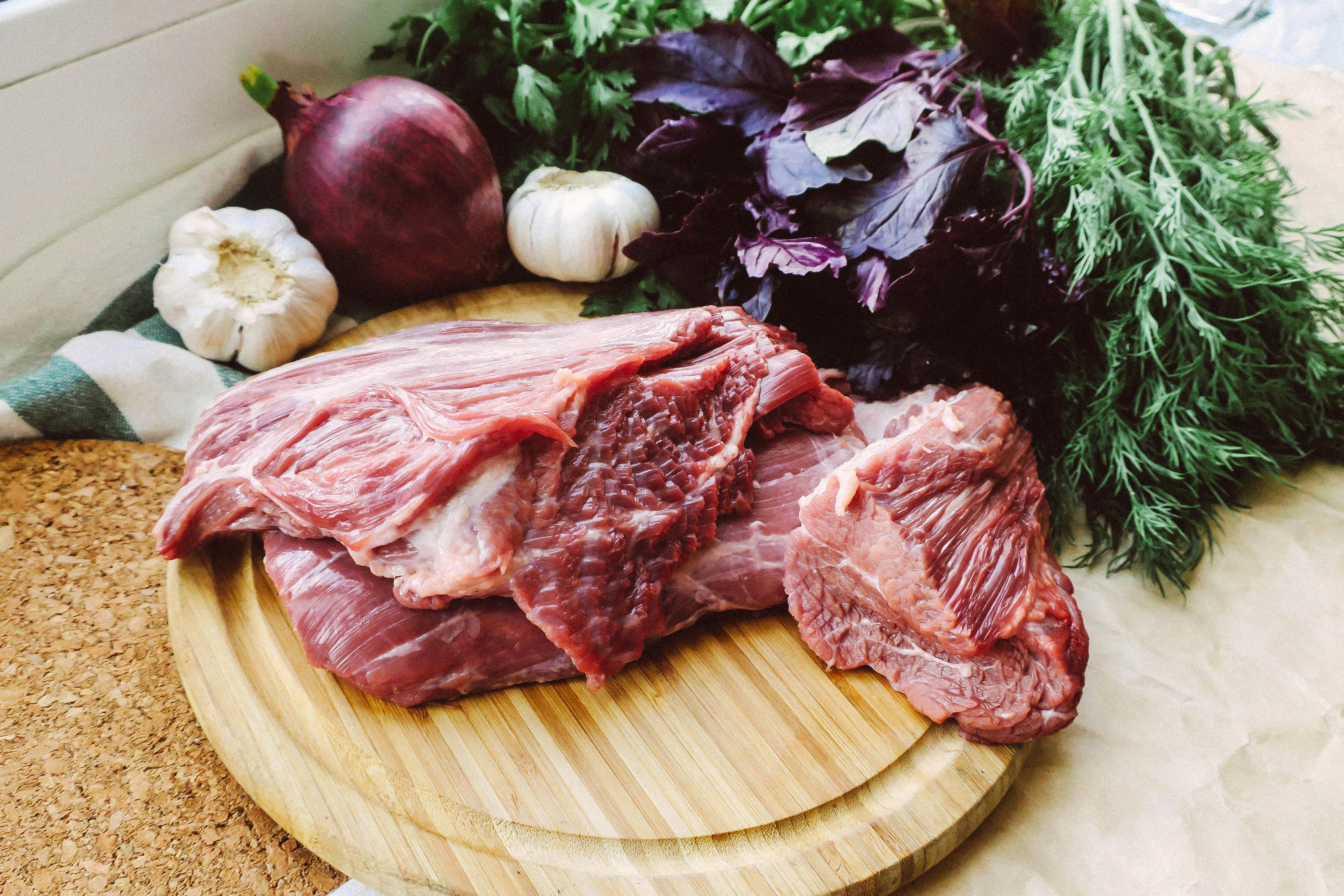
Photo: Christina Voinova / Pexels
The diets react (see scores below)
Common Ingredients
- horse meat
- salt
- garlic
- black pepper
- horse fat
Specific recipes may vary.
Incompatible with 6 of 11 diets
Diet Ratings
Zhaya is a traditional Kazakh cured or smoked horse meat dish, typically made from fatty cuts of horse meat and horse fat, seasoned with salt, garlic, and black pepper. The ingredient profile is nearly perfect for ketogenic eating: horse meat is a protein-rich, relatively lean meat, but the inclusion of horse fat dramatically increases the fat content, aligning well with keto macros. Net carbs are essentially zero — garlic in small seasoning quantities contributes negligible carbs, and salt and black pepper are carb-free. There are no grains, sugars, starches, or high-carb additives. The dish is whole and unprocessed in the traditional sense (cured/smoked), which is also preferred on keto. The high fat content from horse fat makes this an ideal keto main course.
Zhaya is a traditional Kazakh dish made from horse meat and horse fat, both of which are direct animal products. This dish is fundamentally incompatible with a vegan diet, which excludes all animal flesh and animal-derived fats. There is no plant-based version of this dish — its identity is entirely defined by animal ingredients.
Zhaya is a traditional Kazakh dish made from salted and smoked horse meat and fat. The core proteins — horse meat and horse fat — are fundamentally paleo-approved whole animal foods that Paleolithic humans would have consumed. However, two ingredients disqualify this dish: salt (added/refined salt is excluded from strict paleo) and the traditional preparation method, which involves curing and smoking with salt as a preservative, making it a processed meat product by paleo standards. Garlic and black pepper are fully paleo-approved. The dish fails primarily due to added salt and its processed/cured nature, not the protein source itself.
Some modern paleo practitioners, including those following Mark Sisson's Primal Blueprint approach, are more permissive about minimal salt use and lightly processed whole-animal preparations, arguing that the nutritional profile of the meat itself remains intact. In this view, Zhaya made with minimal salt could be treated as a borderline caution rather than an avoid.
Zhaya is a traditional Kazakh dish made from horse meat and horse fat, which places it firmly in the 'avoid' category under Mediterranean diet principles. Red meat (and horse meat falls into this category as a land mammal) is limited to only a few times per month in Mediterranean eating patterns. More critically, the dish is heavily reliant on animal fat (horse fat) as its primary fat source, directly contradicting the Mediterranean principle of using extra virgin olive oil as the main fat. The combination of high saturated animal fat with red/processed meat makes this dish fundamentally incompatible with Mediterranean dietary guidelines. The only positive elements are the use of garlic and black pepper, which are Mediterranean-friendly aromatics, but they are negligible in nutritional impact here.
Zhaya is a traditional Kazakh cured or smoked horse meat and fat dish. The core ingredients — horse meat, horse fat, and salt — are entirely carnivore-compliant animal products. Horse is a red meat with a favorable nutrient profile. However, the inclusion of garlic and black pepper introduces plant-derived spices, which are excluded on a strict carnivore diet. These are minor additions used for curing/flavoring rather than bulk ingredients, and many carnivore practitioners tolerate trace spices pragmatically, but purists would flag them. Without the spices, this dish would score 8-9 as a well-fatted, minimally processed animal-based preparation.
Strict carnivore adherents following the Lion Diet or Baker's purist approach would exclude this due to garlic and black pepper — both plant-derived compounds that carnivore eliminates entirely. A spice-free version cured with salt only would be fully acceptable to all camps.
Zhaya is a traditional Kazakh dish made from horse meat and horse fat, seasoned with salt, garlic, and black pepper. All ingredients are fully compliant with Whole30 rules. Horse meat is a protein source (meat is explicitly allowed), horse fat is a natural animal fat (allowed), and salt, garlic, and black pepper are all permitted seasonings. There are no excluded ingredients — no grains, legumes, dairy, added sugars, alcohol, or any other banned substances. This is a straightforward whole-food, protein-and-fat dish that aligns well with the Whole30 philosophy.
Zhaya is a traditional Kazakh cured/smoked horse meat and fat dish. While horse meat itself is a plain protein and would be low-FODMAP, this recipe includes garlic as a direct ingredient. Garlic is one of the highest-FODMAP foods tested by Monash University, containing significant fructans even at very small amounts. There is no safe serving size of garlic during the elimination phase — even 1/4 clove is high-FODMAP. Since garlic is incorporated directly into the curing/seasoning of the meat, it cannot be removed or avoided when eating the dish. Horse fat, salt, and black pepper are all low-FODMAP. The sole disqualifying ingredient is garlic, but it is a core seasoning component.
Zhaya is a traditional Kazakh dish made from horse meat and horse fat, typically salted and seasoned. While horse meat itself is a lean protein source with favorable fatty acid profiles compared to beef, this dish is problematic for DASH diet adherence primarily due to: (1) the inclusion of significant horse fat, which adds substantial saturated fat content; (2) salt as a primary ingredient used in curing/preservation, making sodium content high; and (3) the overall preparation style resembling cured/processed meat products, which DASH explicitly limits. The combination of high added fat and high sodium places this dish firmly in the 'avoid' category under standard DASH guidelines.
NIH DASH guidelines broadly restrict red and processed meats and high-sodium preparations, which would clearly apply here. However, some DASH-oriented nutritionists note that horse meat has a more favorable omega-3 to omega-6 ratio and lower saturated fat than beef, and that if prepared with minimal salt and fat trimmed, the lean meat portion could theoretically fit within DASH's lean protein allowance — though as traditionally prepared, the sodium and fat content remain disqualifying.
Zhaya is a traditional Kazakh dish made from horse meat and horse fat, seasoned with salt, garlic, and black pepper. From a Zone Diet perspective, this dish presents a mixed picture. Horse meat itself is actually quite lean relative to beef, with a favorable protein profile and meaningful omega-3 content — unusual for a red meat, making it more Zone-compatible than its categorization as red meat might suggest. However, the dish explicitly includes added horse fat, which is the primary concern. Horse fat is predominantly saturated and monounsaturated fat, with a saturated fat component that Zone methodology — especially early Sears writings — sought to limit. The fat content of this dish would be difficult to control in Zone block terms, as the fat is integral to the dish rather than a measurable add-on. There are no carbohydrate components, meaning this dish alone cannot form a Zone-balanced meal without pairing with low-glycemic vegetables and a modest fat adjustment. The garlic is a Zone-favorable polyphenol source. As a protein-and-fat component of a Zone meal, it can be incorporated with careful portioning — small serving of the meat, limiting fat intake from other sources — but the high and uncontrolled fat content, particularly saturated fat from horse fat, makes this a caution-level food requiring significant meal planning around it.
Some later-era Zone practitioners and Sears' anti-inflammatory framework acknowledge that not all saturated fats are equally problematic, and horse fat contains a notable proportion of oleic acid (monounsaturated), which would be viewed more favorably. Additionally, horse meat's higher omega-3 content relative to conventional beef aligns with Sears' anti-inflammatory emphasis. A Zone practitioner following the updated anti-inflammatory approach might rate this more favorably, viewing it as a reasonable protein-and-fat block source if portioned carefully and paired with abundant low-glycemic vegetables.
Zhaya is a traditional Kazakh cured/smoked horse meat dish made from the hip and fat sections of the horse. The profile is mixed from an anti-inflammatory standpoint. Horse meat is notably leaner than beef and has a more favorable omega-6 to omega-3 fatty acid ratio compared to conventional red meats — some analyses show horse meat containing meaningful amounts of omega-3s relative to its fat content, which is a genuine anti-inflammatory advantage. Garlic and black pepper contribute modest anti-inflammatory polyphenols and bioactive compounds (allicin, piperine). However, horse fat (the deposited subcutaneous fat used in this dish) is high in saturated fat, and the dish overall is a fatty, salt-cured red meat preparation — a category that anti-inflammatory frameworks consistently place in the 'limit' zone. The processing method (curing with salt) adds high sodium, which can contribute to inflammatory signaling at excess levels. There are no vegetables, herbs, or antioxidant-rich components to offset the pro-inflammatory elements. On balance, this dish sits in the caution range: better than conventional fatty beef preparations due to horse meat's lipid profile, but still a fatty, processed red meat that should be consumed in moderation.
Some traditional food researchers and proponents of ancestral or nose-to-tail eating argue that horse fat — like other animal fats from non-grain-fed animals — contains beneficial fat-soluble nutrients and a less distorted omega ratio than industrially produced meats, making Zhaya more neutral than standard anti-inflammatory guidance suggests. Conversely, stricter anti-inflammatory protocols (such as those for autoimmune conditions) would rate any fatty cured red meat as 'avoid' due to saturated fat load, high sodium, and potential advanced glycation end-products from curing and smoking.
Zhaya is a traditional Kazakh dish made from horse meat and horse fat (typically the fatty neck or rib section), salted and seasoned, often smoked or boiled. While horse meat itself is a relatively lean red meat with decent protein content, the defining characteristic of Zhaya is the substantial horse fat component — fat is not incidental here but is a primary, intentional ingredient and textural element of the dish. High fat content directly worsens GLP-1 side effects including nausea, bloating, and reflux by further slowing gastric emptying on top of what the medication already causes. The dish is also low in fiber, moderate-to-high in saturated fat, and not portion-friendly in its traditional preparation. Salt is high, which can contribute to water retention. Garlic and black pepper are benign in small amounts. The protein benefit of the horse meat is real but is outweighed by the fat load from the horse fat inclusion, making this a poor fit for GLP-1 patients.
Some GLP-1-aware dietitians working with patients from Central Asian cultural backgrounds may acknowledge that horse meat (without the fat) is actually a leaner red meat than beef and a culturally significant protein source worth accommodating in modified form — for example, consuming only the leaner meat portions and avoiding the fat. The disagreement centers on individual fat tolerance and cultural accommodation rather than a clinical dispute about the dish's overall fat profile.
*See how scores were generated at our methodology page.
Nutritional profile
Six traits that cut across every diet.
Fiber & Plants
How much whole-plant food and fiber it delivers.
Healthy Fats
The quality of its fats (unsaturated, omega-3).
Whole / Unprocessed
How close it is to its natural, unprocessed form.
Gut Gentle
How easy it is on digestion (low FODMAP, few irritants).
Low Glycemic
How little it spikes your blood sugar.
Protein Density
How much protein it packs per calorie.
Controversy Index
Higher controversy = more disagreement between diets.
Diet-Specific Tips
 Keto — 9/10
View tips
- Essentially zero net carbs — only trace carbs from garlic used as seasoning
- High fat content from horse fat aligns with keto's 70-80% fat target
- Horse meat provides quality animal protein with no hidden carbohydrates
- No grains, sugars, starches, or keto-incompatible ingredients
- Whole, minimally processed traditional preparation — no additives or fillers
- Salt, black pepper, and garlic are all keto-safe seasonings
 Carnivore — 6/10
View tips
- Primary ingredients (horse meat, horse fat, salt) are fully carnivore-compliant
- Horse meat is a nutrient-dense red meat accepted by carnivore practitioners
- Horse fat provides quality animal-derived lipids
- Garlic is a plant-derived ingredient excluded on strict carnivore
- Black pepper is a plant-derived spice excluded on strict carnivore
- Spices are minor/trace amounts used for curing, tolerated by many but not all practitioners
- Minimally processed traditional preparation — no fillers, sugar, or artificial additives
 Whole30 — 9/10
View tips
- Horse meat is a compliant protein — Whole30 allows all unprocessed meats
- Horse fat is a natural animal fat, fully allowed
- Salt, garlic, and black pepper are all compliant seasonings
- No excluded ingredients present (no grains, dairy, legumes, added sugar, or alcohol)
- Minimally processed, whole-food preparation consistent with Whole30 spirit
 Zone — 4/10
View tips
- Horse meat is relatively lean with a favorable omega-3 profile compared to conventional red meat
- Added horse fat increases saturated fat load significantly and is difficult to portion-control
- No carbohydrate components — must be paired with low-glycemic vegetables to achieve 40/30/30 ratio
- Garlic provides Zone-favorable polyphenols
- High total fat content makes Zone block balancing challenging
- Traditional preparation does not allow easy separation of fat from protein
- Zone Diet cautions against fatty red meat sources, though horse meat occupies a gray area
 Anti-Inflammatory — 4/10
View tips
- Horse meat has a more favorable omega-3 to omega-6 ratio than conventional beef, a genuine anti-inflammatory advantage
- Horse fat contributes significant saturated fat, which anti-inflammatory frameworks advise limiting
- Salt curing adds high sodium, associated with pro-inflammatory pathways at excess intake
- Garlic and black pepper provide minor anti-inflammatory bioactives (allicin, piperine)
- No vegetables, fruits, or antioxidant-rich ingredients to offset pro-inflammatory elements
- Processed/cured red meat category is consistently flagged in anti-inflammatory guidelines
- Acceptable occasionally in moderate portions; not suitable as a dietary staple under anti-inflammatory principles