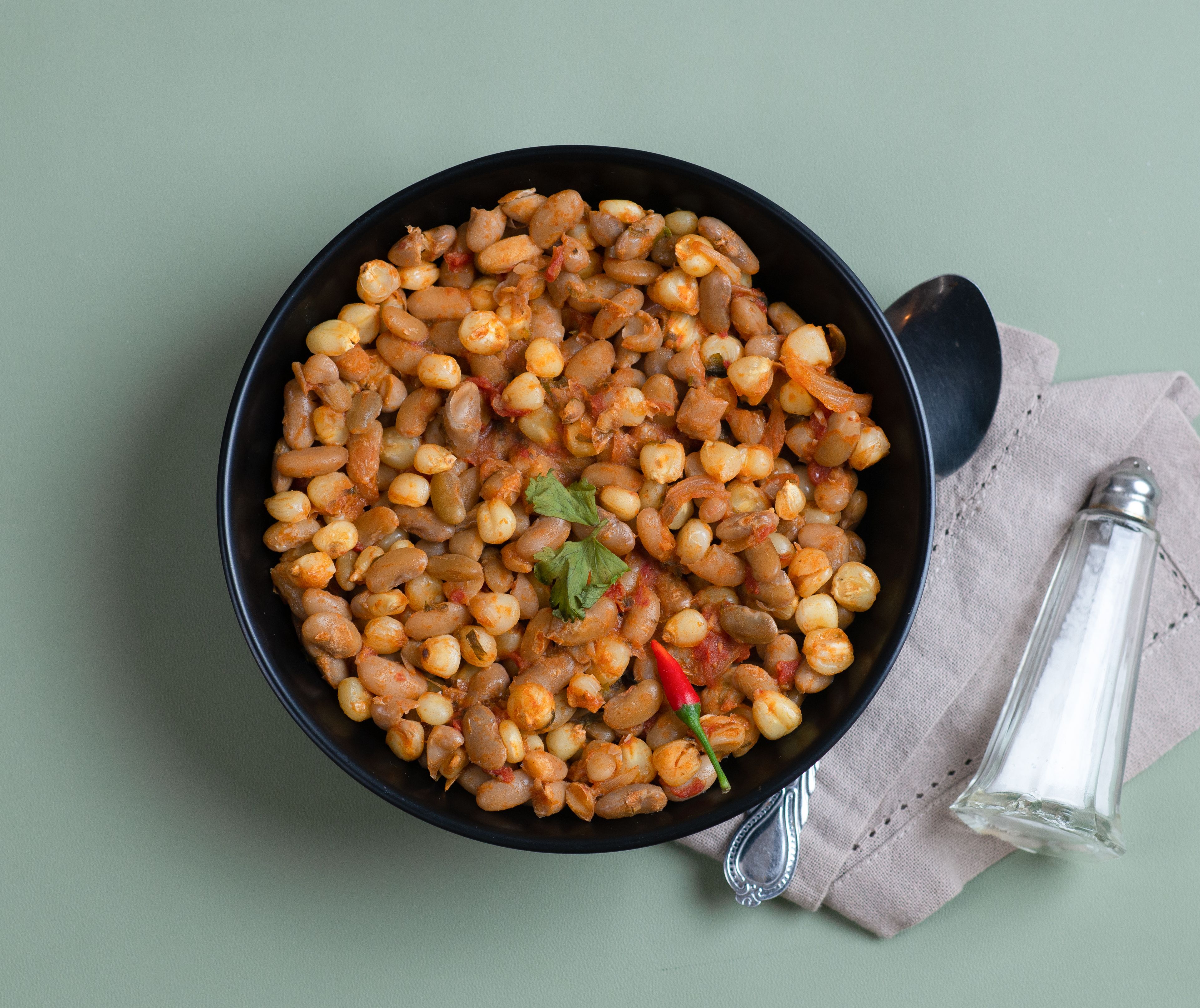
Photo: Lionel Ntasano / Pexels
The diets react (see scores below)
Common Ingredients
- maize
- beans
- onion
- tomato
- garlic
- carrots
- oil
- cumin
Specific recipes may vary.
Incompatible with 5 of 11 diets
Diet Ratings
Githeri is fundamentally incompatible with a ketogenic diet. Its two primary ingredients — maize (corn) and beans — are both high-carbohydrate foods that will almost certainly knock anyone out of ketosis in a single serving. Maize is a starchy grain with approximately 30g net carbs per 100g cooked. Beans (e.g., kidney or borlotti, as typical in Githeri) add another 15-20g net carbs per 100g cooked. Together, a standard serving of Githeri easily exceeds 50-80g net carbs, which is the entire daily keto limit in one dish. The supporting vegetables (onion, tomato, carrots) also add modest carbs. While the oil contributes fat, it cannot offset the massive carbohydrate load from the staple ingredients. There is no reasonable portion size that makes this dish keto-compatible.
Githeri is a traditional Kenyan dish made from whole maize and beans as its base, complemented by vegetables (onion, tomato, garlic, carrots) and spiced with cumin and oil. Every single ingredient in this dish is entirely plant-based with no animal products or animal-derived ingredients whatsoever. The dish is also predominantly whole food in character — legumes, whole grain maize, and fresh vegetables — making it an excellent fit not just for veganism but for whole-food plant-based eating. It is naturally protein-rich from the bean and maize combination, which together provide complementary amino acids. There is nothing contested about this dish from a vegan standpoint.
Githeri is a traditional Kenyan dish built on two core ingredients that are both explicitly excluded from the paleo diet: maize (a grain) and beans (a legume). These are not peripheral ingredients — they are the dish's foundation and primary protein/carbohydrate sources. Maize contains antinutrients including phytic acid and is a domesticated grain unavailable in its current form to Paleolithic humans. Beans are legumes, excluded due to lectins, phytates, and their agricultural origins. Additionally, the unspecified 'oil' is likely a seed or vegetable oil (e.g., sunflower or canola), which is also excluded. The paleo-approved ingredients — onion, tomato, garlic, carrots, and cumin — are minor supporting players that cannot redeem a dish structurally incompatible with paleo principles.
Githeri is a whole-food, plant-forward dish built on legumes (beans) and a whole grain (maize/corn), supplemented by vegetables (onion, tomato, garlic, carrots) and spiced with cumin. This profile aligns strongly with Mediterranean diet principles emphasizing legumes, vegetables, and minimally processed ingredients as daily staples. The oil used is unspecified — if substituted with or already using olive oil, the score would be even higher. Beans and maize together provide complementary proteins and fiber, mirroring the legume-grain combinations common in traditional Mediterranean cuisine (e.g., Tuscan ribollita, Greek fasolada). The dish is low in saturated fat, free of added sugars, and contains no refined grains or processed ingredients.
Some Mediterranean diet purists may flag whole maize (not a traditional Mediterranean grain) as a moderate concern, preferring whole wheat, barley, or farro. Modern clinical guidelines like those from Oldways emphasize traditional Mediterranean grains, though the overall legume-vegetable base remains exemplary regardless of grain choice.
Githeri is entirely plant-based and incompatible with the carnivore diet. Every single ingredient — maize, beans, onion, tomato, garlic, carrots, plant oil, and cumin — is explicitly excluded under carnivore principles. Beans and maize are legumes and grains respectively, both high in antinutrients (lectins, phytates) that carnivore advocates specifically cite as reasons to eliminate plant foods. There is no animal product whatsoever in this dish. This is not a borderline case; it is a complete and unambiguous violation of carnivore diet rules across all tiers, including the most lenient interpretations.
Githeri contains two excluded ingredients: maize (corn), which is a grain explicitly excluded from Whole30, and beans, which are legumes also explicitly excluded. While green beans, sugar snap peas, and snow peas are permitted legume exceptions, standard beans (such as kidney beans, black beans, or any common bean used in Githeri) are not. The remaining ingredients — onion, tomato, garlic, carrots, oil, and cumin — are all Whole30-compliant, but the two core structural components of this dish are both excluded categories. There is no compliant substitution that would preserve the identity of Githeri, as maize and beans are definitional to the dish.
Githeri is a traditional Kenyan dish that contains multiple high-FODMAP ingredients that make it unsuitable during the elimination phase. Beans (whether kidney, borlotti, or mixed) are high in GOS (galacto-oligosaccharides) and fructans, making them a primary FODMAP concern — even canned/rinsed beans remain high-FODMAP at typical serving sizes. Maize (corn) is low-FODMAP at small servings (half a cob or about 38g kernels) but the combined FODMAP load with beans is already prohibitive. Onion is one of the highest-fructan foods and is a avoid at any meaningful amount. Garlic is similarly extremely high in fructans and must be avoided entirely during elimination. Together, beans + onion + garlic create a triple-threat of high-FODMAP ingredients that cannot be mitigated by portion control in this dish. Tomatoes (low-FODMAP at standard serve), carrots (low-FODMAP), oil (FODMAP-free), and cumin (low-FODMAP at culinary amounts) are safe, but they cannot offset the core problematic ingredients. This dish is not suitable during the FODMAP elimination phase without major reformulation.
Githeri is a traditional Kenyan dish combining maize (whole grain) and beans (legume), both of which are core DASH diet foods. Beans provide plant-based protein, fiber, potassium, and magnesium — nutrients explicitly emphasized by DASH guidelines. Maize contributes complex carbohydrates and fiber. The vegetable aromatics (onion, tomato, garlic, carrots) add potassium, magnesium, and antioxidants consistent with DASH's emphasis on vegetables. Cumin is a sodium-free spice, aligning with DASH's preference for herbs and spices over salt for flavoring. The small amount of oil (likely vegetable oil) is acceptable within DASH guidelines. The dish is naturally low in saturated fat, contains no red meat, no added sugars, and — critically — no added sodium in its traditional preparation, making it an excellent DASH-compatible meal. The main consideration is that maize (corn) is a starchy grain/vegetable that contributes caloric density, so portion control is advisable, and preparation method matters: added salt during cooking would shift the score downward.
NIH DASH guidelines strongly support beans and vegetables but do not specifically address whole maize as a grain source; some DASH clinicians may prefer whole wheat or oats as better-studied whole grains with higher fiber density per serving. However, updated nutritional interpretations recognize maize as a whole grain when unprocessed, and the bean-maize combination provides a complete amino acid profile that aligns well with DASH's plant-protein emphasis.
Githeri is a traditional Kenyan dish combining maize (corn) and beans, which creates a macro imbalance from a Zone perspective. The primary concern is the carbohydrate load: maize is a high-glycemic, starchy grain that Zone classifies as an 'unfavorable' carbohydrate — similar to corn and potatoes — capable of spiking insulin. Beans provide both protein and carbohydrates, meaning the dish is heavily carbohydrate-dominant. The 40/30/30 Zone ratio would be difficult to hit without significant modification. On the positive side, beans offer vegetarian protein and fiber (which lowers net carbs), the vegetables (onion, tomato, garlic, carrots) add low-GI carbs and polyphenols, and cumin has anti-inflammatory properties. The oil, if olive oil, is a favorable monounsaturated fat. However, without an additional lean protein source (e.g., adding chicken or egg whites) and by significantly reducing the maize portion, achieving Zone balance is challenging. As served traditionally, the dish skews heavily toward carbohydrates with insufficient protein to meet Zone's 30% protein target, especially since beans' protein is diluted by their high carb content. A practitioner could portion-control Githeri as a small carb block side dish while pairing it with a lean protein, but as a standalone main, it falls short.
Some Zone-aware practitioners note that beans are a Zone-approved 'favorable' vegetarian protein source, and the fiber content in both beans and vegetables significantly reduces net carbs, making the glycemic impact more manageable than it first appears. Dr. Sears' later work on polyphenols and anti-inflammatory eating would also view the tomato, garlic, onion, and cumin favorably. A vegetarian Zone follower might consider a small, carefully portioned serving of Githeri as a reasonable mixed carb-protein block, supplemented with additional fat (more olive oil) to hit the fat target.
Githeri is a traditional Kenyan dish built on a strongly anti-inflammatory foundation. Beans (legumes) are explicitly emphasized in anti-inflammatory frameworks for their fiber, polyphenols, and ability to reduce CRP. Maize (whole corn) contributes fiber, carotenoids (lutein, zeaxanthin), and antioxidants, though it is a starchy grain and less celebrated than other whole grains in anti-inflammatory literature. Tomatoes provide lycopene, a potent anti-inflammatory carotenoid; onions contribute quercetin; carrots add beta-carotene; and garlic is a well-established anti-inflammatory spice. Cumin is an anti-inflammatory spice with antioxidant properties. The main uncertainty is the type of oil used — if a refined seed oil high in omega-6 (e.g., sunflower or corn oil, common in Kenya) is used regularly, this somewhat tempers the anti-inflammatory profile. If extra virgin olive oil or another favorable fat is used, the dish scores higher. Overall, this is a fiber-rich, plant-based, whole-food meal with multiple anti-inflammatory ingredients and no significant pro-inflammatory components beyond the oil question.
The type of oil used is a meaningful variable: most anti-inflammatory protocols caution against regular use of refined sunflower or corn oil (common in East African cooking) due to high omega-6 content and oxidation potential, which could reduce the dish's net anti-inflammatory value. However, mainstream nutrition science (AHA, most dietitians) considers these oils acceptable, and the overall plant-forward profile of the dish would still be considered beneficial in most frameworks.
Githeri is a traditional Kenyan dish of maize (corn) and beans cooked together, often with vegetables like onion, tomato, carrot, and garlic, finished with a modest amount of oil and cumin. It scores reasonably well for GLP-1 patients but has meaningful trade-offs. On the positive side, the bean and maize combination delivers solid plant-based protein (roughly 10-14g per cup serving) and high fiber (around 8-12g per serving), supporting two of the top GLP-1 dietary priorities. The vegetables add micronutrient density and water content, and the dish is low in saturated fat when prepared with a modest amount of oil. Cumin is generally well-tolerated and may support digestion. However, githeri falls short of the approve tier for several reasons: maize is a starchy grain that is moderate-to-high glycemic relative to legumes alone, which can be a concern for blood sugar management; the bean-maize combination is known to produce gas and bloating, which can significantly worsen GLP-1 GI side effects (particularly in patients already experiencing nausea or slowed gastric emptying); and protein per calorie density is lower than animal-based proteins, making it harder to hit the 15-30g per meal protein target without a large portion — which conflicts with the small portion requirement. The dish is nutritionally genuine and far preferable to processed or fried foods, but GLP-1 patients should eat it in small portions and ideally pair it with a lean protein source (e.g., eggs, grilled chicken, or fish) to boost protein density per meal.
Some GLP-1-focused dietitians view legume-and-grain combinations like githeri favorably as a complete plant protein source with sustained satiety, and may rate it higher for patients who tolerate beans well and are not struggling with GI side effects. Others caution that the high fermentable fiber load in beans and maize is disproportionately problematic on GLP-1 medications due to slowed gastric emptying, and would recommend limiting portion size significantly or substituting lentils, which are generally better tolerated and higher in protein per calorie.
*See how scores were generated at our methodology page.
Nutritional profile
Six traits that cut across every diet.
Fiber & Plants
How much whole-plant food and fiber it delivers.
Healthy Fats
The quality of its fats (unsaturated, omega-3).
Whole / Unprocessed
How close it is to its natural, unprocessed form.
Gut Gentle
How easy it is on digestion (low FODMAP, few irritants).
Low Glycemic
How little it spikes your blood sugar.
Protein Density
How much protein it packs per calorie.
Controversy Index
Higher controversy = more disagreement between diets.
Diet-Specific Tips
 Vegan — 9/10
View tips
- All ingredients are fully plant-based
- Maize and beans are whole food staples — no processing concerns
- Protein-complete combination of legumes and whole grain
- Fresh vegetables add nutritional density
- Oil is the only processed element, and plant oils are universally vegan-compliant
- No hidden animal-derived additives typical in processed foods
- Traditional preparation does not involve animal products
 Mediterranean — 8/10
View tips
- Beans are a Mediterranean staple legume — strongly encouraged
- Whole maize provides fiber and complex carbohydrates, though not a traditional Mediterranean grain
- Abundant vegetables (tomato, onion, garlic, carrots) align perfectly with Mediterranean principles
- Cumin is consistent with Eastern Mediterranean flavor traditions
- Unspecified oil — olive oil substitution would fully optimize the dish
- No processed ingredients, added sugars, or refined grains
- Entirely plant-based — no animal products present
 DASH — 8/10
View tips
- Beans are a DASH-emphasized food: high fiber, potassium, magnesium, plant protein
- Whole maize contributes complex carbohydrates and fiber consistent with whole grain servings
- No added sodium in traditional preparation — critical DASH advantage
- Vegetable-rich profile (tomato, onion, carrot, garlic) aligns with DASH vegetable servings
- No saturated fat, no red meat, no added sugar
- Cumin used as a sodium-free spice — ideal DASH seasoning approach
- Vegetable oil used in moderation is acceptable under DASH guidelines
- Portion control recommended due to caloric density of maize-bean combination
 Zone — 5/10
View tips
- Maize is a high-glycemic 'unfavorable' carbohydrate in Zone terminology, similar to corn
- Beans provide both protein and carbohydrates, making Zone block math complex for vegetarian protein
- Dish is carbohydrate-dominant, making 40/30/30 ratio difficult without modification
- No standalone lean protein source — beans alone are insufficient to meet 30% protein target as a main
- Vegetables (onion, tomato, garlic, carrots) contribute favorable low-GI carbs and polyphenols
- Oil (if olive oil) is a favorable monounsaturated fat source
- Bean fiber reduces net carbs, partially mitigating glycemic impact
- Could work as a small carb/protein block side dish if maize is minimized and a lean protein is added
 Anti-Inflammatory — 8/10
View tips
- Beans are a key anti-inflammatory legume, rich in fiber and polyphenols that reduce CRP
- Whole maize adds fiber and carotenoids (lutein, zeaxanthin) though it is a higher-glycemic starch
- Tomatoes supply lycopene, a well-researched anti-inflammatory carotenoid
- Garlic and cumin are anti-inflammatory spices with antioxidant and CRP-lowering properties
- Onions contribute quercetin, a flavonoid with anti-inflammatory activity
- Carrots add beta-carotene and other antioxidants
- Oil type is the key uncertainty — refined seed oils common in Kenyan cooking (sunflower, corn) add omega-6 load, while olive oil would be preferred
- No processed foods, refined sugars, trans fats, or additives present — whole-food plant-based profile
 GLP-1 Friendly — 6/10
View tips
- Good plant-based fiber content (~8-12g per serving) supports constipation prevention
- Moderate protein (~10-14g per serving) — falls short of 15-30g per meal target without a protein pairing
- Bean and maize combination is a known gas-producing combination that may worsen GLP-1 GI side effects
- Starchy maize raises glycemic load relative to bean-only dishes
- Low saturated fat when prepared with modest oil — favorable
- Vegetable additions (carrot, tomato, onion, garlic) improve micronutrient and water content
- Portion-sensitive: large servings increase bloating risk and starch load
- Benefits from pairing with a lean animal or plant protein to meet per-meal protein targets