Photo: Garley Gibson / Pexels
The diets react (see scores below)
Common Ingredients
- green peas
- potatoes
- maize
- onion
- salt
- butter
Specific recipes may vary.
Incompatible with 6 of 11 diets
Diet Ratings
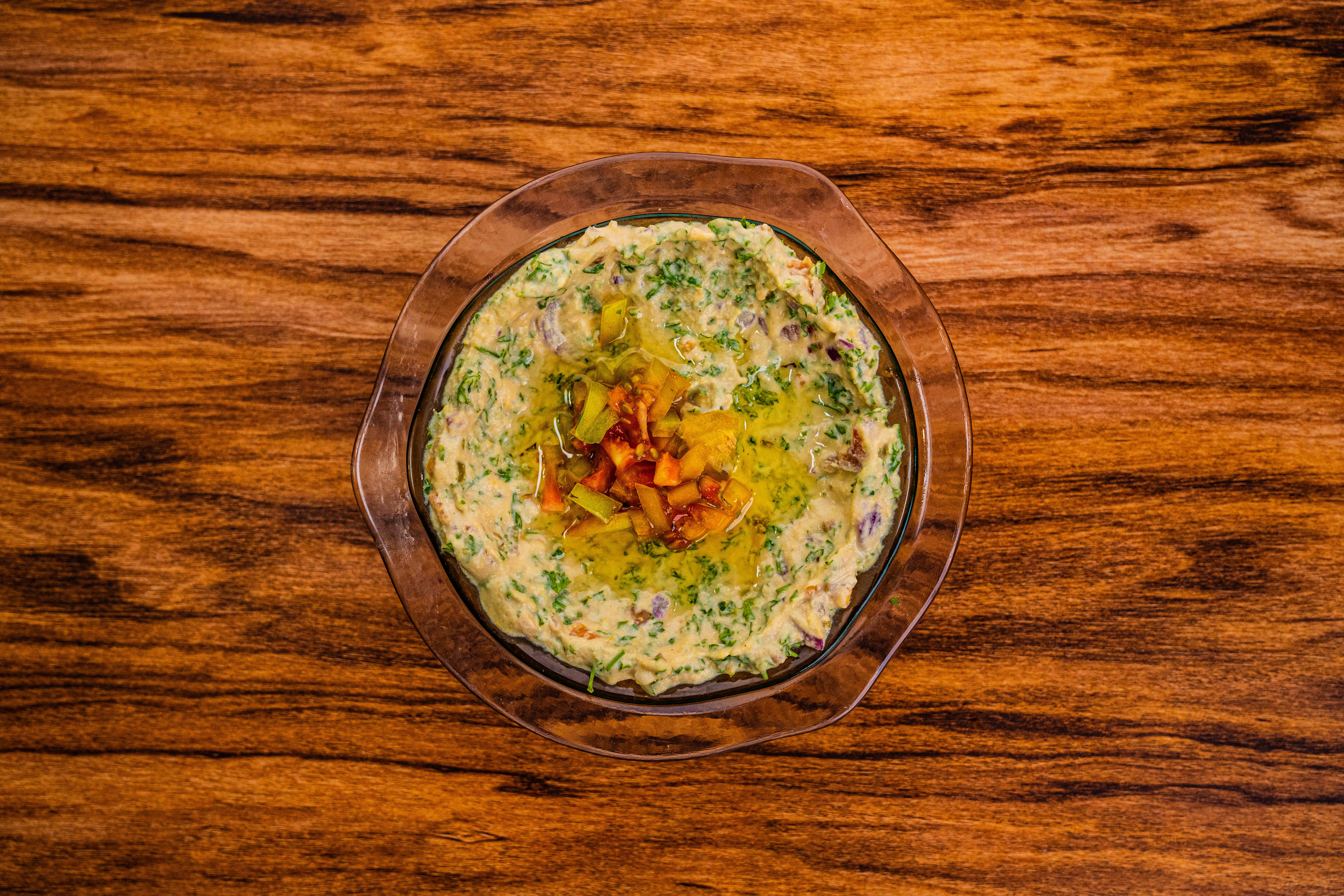
Irio is a traditional Kenyan dish made by mashing together potatoes, green peas, and maize (corn) — three of the highest net-carb ingredients possible. Potatoes alone contain roughly 15-17g net carbs per 100g, maize adds approximately 17-19g net carbs per 100g, and green peas contribute around 9-11g net carbs per 100g. Even a modest serving of Irio would easily exceed the entire daily keto carb budget of 20-50g in a single side dish. The small amount of butter is the only keto-friendly element, but it cannot offset the overwhelming carbohydrate load from the three starchy main ingredients. This dish is fundamentally incompatible with ketosis regardless of portion size.
Irio is a traditional Kenyan dish made from mashed green peas, potatoes, and maize — all of which are fully plant-based and vegan-friendly. However, the listed ingredients include butter, which is a dairy product derived from cow's milk and is excluded under all vegan standards. This single animal-derived ingredient disqualifies the dish as prepared. A vegan version is easily achievable by substituting butter with a plant-based alternative such as olive oil, vegan margarine, or coconut oil, which would make the dish highly compliant and nutritious.
Irio is a traditional Kenyan mash made from ingredients that are largely incompatible with the paleo diet. Green peas are legumes, which are explicitly excluded from paleo. Maize (corn) is a grain, also firmly excluded. Salt and butter are non-paleo (added salt is excluded, and butter is a dairy product). White potatoes are themselves debated in paleo circles. With multiple core ingredients — legumes, grains, dairy, and added salt — all violating paleo principles, this dish earns a firm 'avoid' verdict with high confidence.
Irio is a plant-based Kenyan dish combining green peas, potatoes, and maize — all whole, minimally processed ingredients that align reasonably well with Mediterranean principles. Legumes (peas) and vegetables are Mediterranean staples, and this dish is entirely plant-forward with no red meat or added sugars. However, butter is used as the fat rather than extra virgin olive oil, which is a notable departure from Mediterranean dietary principles where olive oil is the canonical primary fat. The starchy base (potatoes and maize) also limits the score, as the diet favors whole grains and legumes over starchy vegetables as staples. With a simple butter-for-olive-oil swap, this dish would score considerably higher.
Some Mediterranean diet practitioners, particularly those acknowledging regional European traditions (e.g., parts of southern France and northern Italy), do permit small amounts of butter, especially in otherwise wholesome plant-based dishes. In this context, Irio's strong legume and vegetable content could push it closer to 'approve' territory if butter is used sparingly.
Irio is a traditional Kenyan dish made almost entirely of plant foods: green peas, potatoes, maize, and onion. These are all excluded on the carnivore diet — legumes, starchy vegetables, grains, and alliums are strictly off-limits. The only carnivore-compatible ingredient present is butter, which is a minor dairy-derived component. No animal protein is present. This dish is fundamentally incompatible with carnivore principles at every level.
Irio contains multiple Whole30-excluded ingredients. Maize (corn) is explicitly excluded as a grain on the Whole30 program. Butter is excluded dairy (only ghee/clarified butter is permitted as a dairy exception). Green peas are a legume and, unlike green beans, sugar snap peas, or snow peas, are not among the explicitly excepted legumes allowed on Whole30. Potatoes, onion, and salt are all compliant, but the three excluded ingredients (maize, butter, green peas) make this dish non-compliant as traditionally prepared.
Irio contains multiple high-FODMAP ingredients that make it unsuitable during the elimination phase. Green peas are high in GOS and fructans at typical serving sizes (Monash rates them as high-FODMAP beyond about 1/4 cup). Onion is one of the highest-FODMAP foods tested by Monash, containing significant fructans at any meaningful amount. Maize (corn) is moderate — canned corn kernels become high-FODMAP at around 1/2 cup, and fresh corn is high-FODMAP due to fructose and polyols at standard servings. Potatoes and butter are low-FODMAP, but the combination of green peas, onion, and maize makes this dish clearly high-FODMAP at any standard portion.
Irio is a traditional Kenyan dish made by mashing green peas, potatoes, and maize together with onion, salt, and butter. The core ingredients — green peas, potatoes, and maize — are all whole, plant-based foods well-aligned with DASH principles, providing fiber, potassium, magnesium, and plant-based protein. Green peas in particular are a DASH-friendly legume. However, two factors lower the score: (1) butter is a source of saturated fat, which DASH explicitly limits — substituting with a small amount of unsaturated oil or omitting would be preferable; and (2) the addition of salt introduces sodium, the amount of which depends heavily on preparation. As commonly made at home, the sodium and saturated fat from butter are moderate concerns but do not categorically disqualify the dish. With butter replaced by a small amount of olive or canola oil and salt minimized, this dish would score closer to 7-8 and could be approved. As standardly prepared, it earns a cautious acceptance.
NIH DASH guidelines categorically limit saturated fat and recommend against butter, suggesting a strict DASH interpretation would flag this dish. However, updated clinical interpretations note that when butter is used in modest amounts in an otherwise predominantly whole-food, plant-based dish, the overall dietary pattern effect may remain favorable — some DASH-oriented dietitians would approve Irio with portion-controlled butter as an acceptable modification.
Irio is a traditional Kenyan mash of potatoes, maize (corn), and green peas — three ingredients that Zone diet classifies as 'unfavorable' carbohydrates. Potatoes are explicitly listed by Dr. Sears as a high-glycemic carb to avoid due to their rapid spike in blood sugar. Maize/corn is similarly classified as unfavorable in Zone terminology — high glycemic index and dense in starchy carbs. Green peas provide some protein and fiber which slightly improves the profile, but they are still a starchy legume with a moderate glycemic load. The combination creates a carbohydrate-dominant dish with very high glycemic impact and virtually no lean protein or favorable fat to balance the 40/30/30 ratio. Butter adds saturated fat rather than preferred monounsaturated fat. As a side dish with no protein component, incorporating this into a Zone meal would require extremely small portions and careful compensation with lean protein and monounsaturated fat on the plate. The dish as traditionally prepared is fundamentally incompatible with Zone ratios in any meaningful serving size.
Irio is a traditional Kenyan mash of green peas, potatoes, maize, and onion, finished with butter. The dish has a mixed anti-inflammatory profile. On the positive side, green peas contribute plant-based protein, fiber, and polyphenols including flavonoids with modest anti-inflammatory activity. Onions provide quercetin, a well-studied anti-inflammatory flavonoid. Potatoes, while sometimes mischaracterized as purely starchy, contain vitamin C, potassium, and chlorogenic acid, a polyphenol — though they are a high-glycemic food that can promote inflammation when consumed in large portions or by insulin-resistant individuals. Maize/corn adds fiber and some antioxidants (lutein, zeaxanthin) but is a refined starch in effect once mashed, contributing to glycemic load. The main concern is butter, a saturated fat that anti-inflammatory guidelines recommend limiting. Replacing butter with extra virgin olive oil would substantially improve the dish's profile. Overall, Irio is a whole-food, plant-forward dish with no processed ingredients, artificial additives, or trans fats, but the butter and high glycemic load from starchy ingredients keep it in caution territory rather than approval.
Some anti-inflammatory practitioners, particularly those following autoimmune or low-glycemic protocols, would flag the combination of high-glycemic starchy ingredients (potato + maize + peas) as problematic for blood sugar regulation and downstream inflammatory signaling. Conversely, mainstream anti-inflammatory nutrition — consistent with Dr. Weil's whole-foods emphasis — would view this as a reasonable plant-based dish, especially if butter were swapped for olive oil, and might rate it closer to approval given the absence of processed or artificial ingredients.
Irio is a traditional Kenyan mash of green peas, potatoes, maize, onion, and butter. It offers meaningful plant-based fiber from the peas and maize, and modest plant protein from the peas (roughly 5-7g per serving), but it falls short of GLP-1 dietary priorities in several ways. It is classified as a side dish with no primary protein, meaning it contributes little toward the 15-30g per-meal protein target. Potatoes and maize are starchy, moderate-to-high glycemic carbohydrates that can cause blood sugar fluctuations, which is a concern for many GLP-1 patients who have concurrent insulin resistance or type 2 diabetes. Butter adds saturated fat, which can worsen GLP-1 GI side effects like nausea and bloating. On the positive side, the dish is soft-textured and easy to digest, portion-friendly, reasonably nutrient-dense, and the peas and maize contribute fiber. It is not fried, not spicy, not carbonated, and not high in sugar. As a side dish paired with a lean protein (e.g., grilled fish or chicken breast), it is acceptable in moderate portions. Consumed alone or in large portions, it provides mostly starchy calories with limited protein payoff.
Some GLP-1-focused dietitians would view irio more favorably as a whole-food, minimally processed side with plant-based fiber and protein from peas, arguing it is far preferable to refined grain sides. Others would flag the starchy carbohydrate load and butter content as a concern for patients with diabetes or significant GI sensitivity, recommending it only in small portions alongside a high-protein main.
*See how scores were generated at our methodology page.
Nutritional profile
Six traits that cut across every diet.
Fiber & Plants
How much whole-plant food and fiber it delivers.
Healthy Fats
The quality of its fats (unsaturated, omega-3).
Whole / Unprocessed
How close it is to its natural, unprocessed form.
Gut Gentle
How easy it is on digestion (low FODMAP, few irritants).
Low Glycemic
How little it spikes your blood sugar.
Protein Density
How much protein it packs per calorie.
Controversy Index
Higher controversy = more disagreement between diets.
Diet-Specific Tips
 Mediterranean — 5/10
View tips
- Green peas are a Mediterranean-approved legume
- Potatoes and maize are starchy carbohydrates, less preferred than whole grains or legumes
- Butter used instead of extra virgin olive oil — a key deviation from Mediterranean fat principles
- No red meat, added sugars, or processed ingredients
- Entirely plant-based dish, consistent with Mediterranean emphasis on plant-forward eating
- Simple, whole-food preparation with minimal processing
 DASH — 5/10
View tips
- Green peas are a DASH-approved legume rich in fiber, potassium, and plant protein
- Potatoes and maize are whole, starchy vegetables acceptable in DASH with portion control
- Butter adds saturated fat, which DASH explicitly limits — a significant concern
- Salt/sodium content is variable and can be problematic if added liberally
- No red meat, added sugar, or heavily processed ingredients
- Substituting butter with olive oil and minimizing salt would improve DASH compatibility significantly
- Overall plant-based composition is strongly aligned with DASH dietary patterns
 Zone — 5/10
View tips
- Potatoes are explicitly 'unfavorable' high-glycemic carbs in Zone methodology — Dr. Sears lists them as foods to avoid
- Maize/corn is classified as an unfavorable carbohydrate in Zone due to high starch content and glycemic impact
- Dish is almost entirely carbohydrate-based with no lean protein, making 40/30/30 ratio extremely difficult to achieve
- Green peas offer some fiber and protein, slightly moderating glycemic load, but are still starchy
- Butter provides saturated fat rather than preferred monounsaturated fat (olive oil, avocado, almonds)
- No omega-3 or significant polyphenol content — misses Zone anti-inflammatory focus
- Could technically be used in very small portions as a minor carb block component alongside lean protein and monounsaturated fat, but this is impractical given the dish's identity
 Anti-Inflammatory — 5/10
View tips
- Green peas provide fiber, plant protein, and anti-inflammatory flavonoids
- Onions contribute quercetin, a potent anti-inflammatory polyphenol
- Butter is a saturated fat — limited on anti-inflammatory diets
- High glycemic load from potatoes, maize, and peas combined may promote inflammation at large portions
- No processed ingredients, trans fats, refined sugars, or artificial additives
- Potatoes contain chlorogenic acid and vitamin C but are a nightshade — relevant for autoimmune-sensitive individuals
- Substituting olive oil for butter would meaningfully improve the anti-inflammatory profile
 GLP-1 Friendly — 5/10
View tips
- No primary protein source — falls well short of 15-30g per-meal protein target
- Green peas contribute modest plant protein (~5-7g per serving) and meaningful fiber
- Potatoes and maize are starchy, moderate-to-high glycemic carbohydrates
- Butter adds saturated fat, which may worsen nausea and bloating on GLP-1 medications
- Soft, mashed texture is easy to digest — a positive for GLP-1 patients with slowed gastric emptying
- No fried ingredients, no added sugar, not spicy — avoids major GLP-1 irritants
- Best used as a small side paired with a lean protein to compensate for its protein deficit
- Portion-sensitive: larger servings increase glycemic and fat load without proportional protein benefit