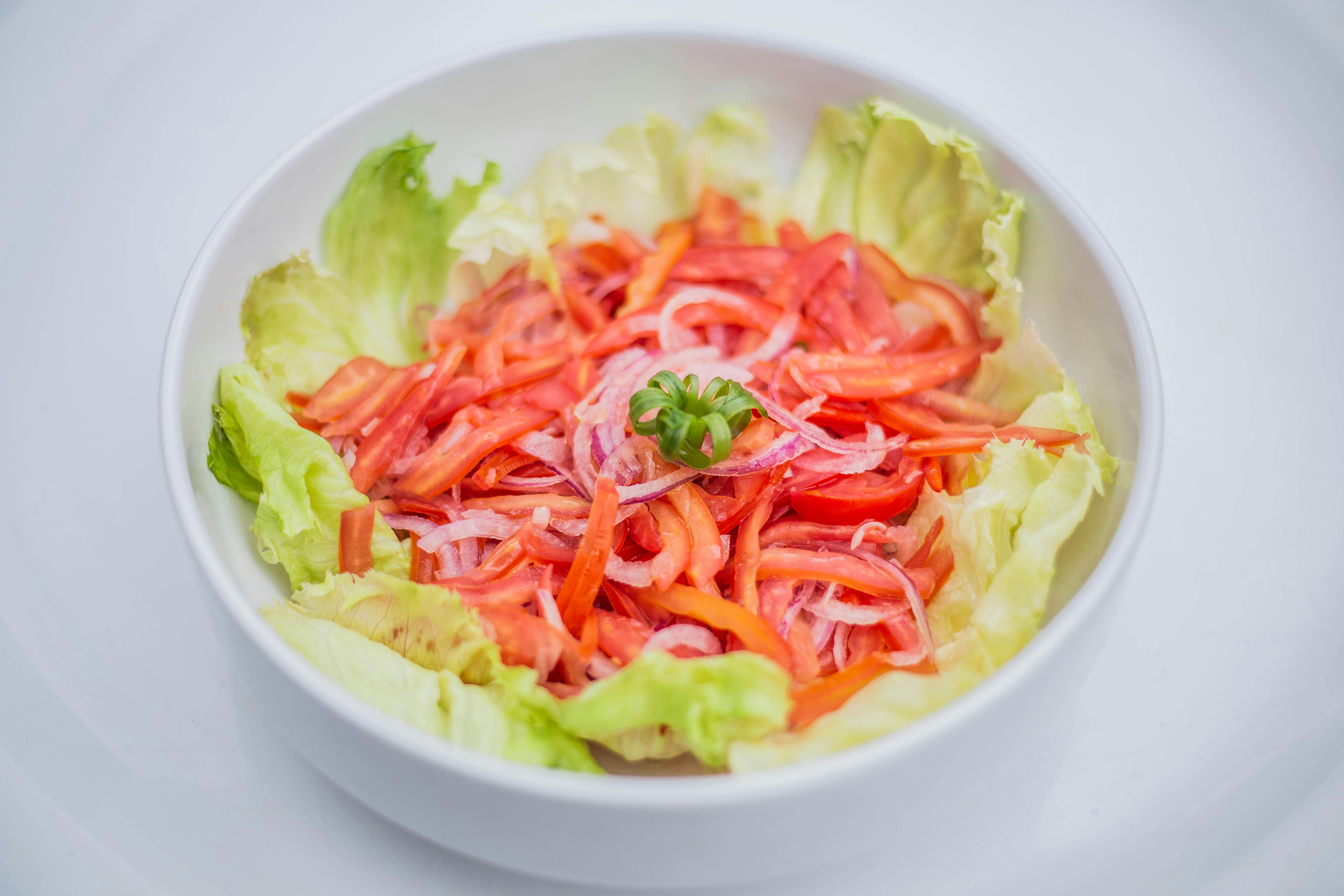
Photo: Speak Media Uganda / Pexels
The diets react (see scores below)
Common Ingredients
- tomato
- onion
- chili
- cilantro
- lemon
- salt
- avocado
Specific recipes may vary.
Incompatible with 2 of 11 diets
Diet Ratings
Kachumbari is a fresh East African salad made from whole, unprocessed ingredients that are largely keto-compatible. Avocado is a keto superfood — high in healthy fats and fiber, with very low net carbs. Tomatoes contribute some net carbs (~3-4g per 100g) but in typical salad portions remain manageable. Onion has moderate carbs (~7g net per 100g) but is used in small amounts as a flavor component rather than a bulk ingredient. Chili, cilantro, lemon juice, and salt are negligible in carb terms. The avocado addition shifts the macros favorably toward fat, aligning well with keto targets. A standard serving should comfortably stay under 8-10g net carbs, well within daily limits. The dish is whole-food, unprocessed, and contains no grains, sugars, or starches.
Stricter keto practitioners may flag tomatoes and onions as borderline nightshades or moderate-carb vegetables, cautioning that larger portions or multiple servings could accumulate carbs meaningfully. Some very low-carb (under 20g/day) followers monitor tomatoes closely due to natural sugars.
Kachumbari is a traditional East African fresh salad composed entirely of whole plant foods. Every ingredient — tomato, onion, chili, cilantro, lemon, salt, and avocado — is unambiguously plant-derived and minimally processed. There are no animal products, animal-derived additives, or ethically contested ingredients present. This is exactly the type of whole-food, plant-based dish that vegan and whole-food plant-based advocates alike would enthusiastically endorse. The avocado adds healthy monounsaturated fats, and the dish is nutritionally dense with vitamins C and K, fiber, and antioxidants.
Kachumbari is a fresh East African salad made almost entirely from paleo-approved whole foods — tomatoes, onion, chili, cilantro, lemon, and avocado are all unprocessed plant foods available to hunter-gatherers. However, salt is explicitly excluded under strict paleo rules as an 'added salt' processed ingredient. Most of the dish is clean and nutrient-dense, but the inclusion of added salt pulls it out of a full approval. Without salt, this would score a 9.
Kachumbari is a fresh vegetable salad composed entirely of whole, plant-based ingredients — tomato, onion, chili, cilantro, lemon, and avocado — all of which align perfectly with Mediterranean diet principles. Tomatoes and onions are staple Mediterranean vegetables consumed daily. Avocado, while not a traditional Mediterranean food, is a nutrient-dense source of monounsaturated fats comparable to olive oil in profile, and is widely accepted in Mediterranean diet frameworks. Chili, cilantro, and lemon serve as natural flavor enhancers requiring no added sugars or processed condiments. The dish contains no red meat, refined grains, added sugars, or processed ingredients. It is entirely plant-forward, minimally processed, and rich in fiber, vitamins, and healthy fats.
Kachumbari is a traditional Kenyan salad composed entirely of plant-based ingredients: tomato, onion, chili, cilantro, lemon, and avocado. Every single ingredient — with the exception of salt — is explicitly excluded on the carnivore diet. There are no animal products whatsoever in this dish. All vegetables, fruits, herbs, and plant oils/fats are prohibited on carnivore, regardless of how nutrient-dense or 'whole food' they may be considered in other dietary frameworks. This dish is fundamentally incompatible with carnivore eating at every level, including the most lenient interpretations.
Kachumbari is a simple East African fresh salad made entirely of whole, unprocessed vegetables and fruits — all of which are explicitly permitted on the Whole30 program. Tomatoes, onions, chili peppers, cilantro, lemon juice, salt, and avocado are all naturally compliant ingredients with no excluded components whatsoever. This dish is a model of whole-food eating and aligns perfectly with the spirit and letter of the Whole30 program.
Kachumbari contains two major high-FODMAP ingredients that make it unsuitable during the elimination phase. Onion is one of the highest-FODMAP foods tested by Monash University, containing significant fructans even in very small amounts — there is no safe serving size of raw onion during elimination. Avocado is low-FODMAP only at 1/8 of a fruit (30g), but a standard salad serving would typically use far more, pushing it into high-FODMAP territory via sorbitol. The remaining ingredients — tomato (up to 1 medium), chili (common red chili is low-FODMAP at small amounts), cilantro, lemon juice, and salt — are all low-FODMAP and unproblematic. However, the onion alone is disqualifying for elimination phase, and the likely avocado quantity compounds the issue. This dish cannot be made low-FODMAP without removing or substituting the onion (e.g., with green onion tops only) and controlling avocado portion strictly.
Kachumbari is a fresh East African salad composed almost entirely of DASH-friendly whole foods. Tomatoes, onions, chili, cilantro, and lemon juice are all low-sodium, nutrient-dense vegetables and herbs that align perfectly with DASH principles — they contribute potassium, magnesium, fiber, and vitamin C with essentially no saturated fat or added sugar. Avocado adds heart-healthy monounsaturated fat, potassium, and magnesium, which are all assets in the DASH framework. The one flag is added salt: if salted generously at home or in a restaurant, sodium can accumulate meaningfully, though the dish's base ingredients are inherently very low in sodium. Prepared with minimal or no added salt, this dish is an excellent DASH choice. Avocado also warrants a small portion-control note due to caloric density, but its fat profile is beneficial. Overall, this is a strongly DASH-compatible dish with one preparation-dependent caveat.
NIH DASH guidelines unconditionally support vegetables and fruits as foundation foods, which makes the core salad a clear approve. However, avocado sits in a nuanced space: some conservative DASH clinicians flag its high calorie density and recommend limiting portion size (e.g., 1/4 to 1/3 avocado per serving), while updated clinical interpretations increasingly recognize avocados as a net positive for cardiovascular risk factors given their monounsaturated fat and potassium content.
Kachumbari is a fresh East African salad composed almost entirely of Zone-favorable ingredients. Tomatoes and onions are low-glycemic vegetables with minimal net carbs, making them excellent Zone carbohydrate blocks. Chili peppers and cilantro contribute polyphenols and anti-inflammatory compounds that align perfectly with Dr. Sears' emphasis on micronutrient density. Lemon juice adds negligible carbs while boosting flavor and polyphenol content. Avocado is a standout Zone fat source — rich in monounsaturated fat, it represents exactly the type of fat Sears recommends. The dish has no protein, so it functions best as a carbohydrate-and-fat side component in a Zone meal, paired with a lean protein source (e.g., grilled chicken or fish) to complete the 40/30/30 block structure. The absence of any high-glycemic carbs, processed ingredients, or unhealthy fats makes this an easy approve. The avocado portion should be monitored (roughly 1/4 to 1/3 avocado per serving to stay within 1-2 fat blocks), but overall this is an excellent Zone-compatible side dish.
Kachumbari is a simple East African fresh salad that aligns exceptionally well with anti-inflammatory principles. Tomatoes provide lycopene and other carotenoids with documented anti-inflammatory effects. Onions are rich in quercetin, a potent anti-inflammatory flavonoid. Chili pepper contains capsaicin, which inhibits NF-κB and reduces inflammatory cytokines. Cilantro offers antioxidant polyphenols. Lemon juice provides vitamin C and supports the bioavailability of plant-based antioxidants. The addition of avocado elevates this dish further — avocados are explicitly emphasized in anti-inflammatory frameworks for their monounsaturated fats (oleic acid), fiber, and anti-inflammatory phytosterols. Salt is used minimally as seasoning. There are no pro-inflammatory ingredients: no refined grains, seed oils, added sugars, processed additives, or trans fats. This is essentially a whole-food, plant-based dish built almost entirely from anti-inflammatory staples. The only caveat is the tomato-nightshade consideration for certain individuals.
Tomatoes are a nightshade vegetable. While mainstream anti-inflammatory nutrition (including Dr. Weil's framework) strongly endorses tomatoes for their lycopene and antioxidant content, the Autoimmune Protocol (AIP) and practitioners like Dr. Tom O'Bryan exclude nightshades — including tomatoes and chili peppers — based on concerns that solanine and lectins may trigger inflammation in individuals with autoimmune conditions or gut permeability issues. For the general population, however, the evidence strongly favors tomatoes and chili as anti-inflammatory foods.
Kachumbari is a fresh East African salad made from tomatoes, onions, chili, cilantro, lemon juice, salt, and avocado. It is nutrient-dense per calorie, hydrating, and rich in fiber and micronutrients from the vegetables. The avocado adds heart-healthy monounsaturated fats and makes it more satiating in small portions. However, it contains essentially no protein, which is the top priority for GLP-1 patients. The chili content is a meaningful concern — even moderate chili can worsen nausea, reflux, or GI discomfort in GLP-1 patients whose gastric emptying is already slowed. Avocado, while nutritionally excellent, is calorie-dense due to fat content and should be portioned carefully. This dish works well as a side or accompaniment to a high-protein main, but cannot stand alone as a GLP-1-friendly meal due to the protein gap. Score reflects its value as a fiber-rich, hydrating side dish offset by zero protein, chili risk, and avocado portion sensitivity.
Some GLP-1-focused dietitians would rate this more favorably as a side dish, emphasizing avocado's healthy fats for satiety and the high fiber and water content from tomatoes and onions; others would flag the chili more strongly, as individual sensitivity to spicy foods varies considerably among GLP-1 patients and some clinical guidance recommends avoiding chili entirely during the early titration phase.
*See how scores were generated at our methodology page.
Nutritional profile
Six traits that cut across every diet.
Fiber & Plants
How much whole-plant food and fiber it delivers.
Healthy Fats
The quality of its fats (unsaturated, omega-3).
Whole / Unprocessed
How close it is to its natural, unprocessed form.
Gut Gentle
How easy it is on digestion (low FODMAP, few irritants).
Low Glycemic
How little it spikes your blood sugar.
Protein Density
How much protein it packs per calorie.
Controversy Index
Higher controversy = more disagreement between diets.
Diet-Specific Tips
 Keto — 8/10
View tips
- Avocado provides high healthy fat content — a core keto macro
- Tomatoes are moderate in net carbs (~3-4g/100g); portion size is key
- Onion used sparingly as seasoning, keeping carb contribution low
- No grains, added sugars, or starchy vegetables
- Whole, unprocessed ingredients align with keto food quality standards
- Lemon juice adds minimal carbs in typical dressing quantities
- Combined dish net carbs per standard serving estimated at 6-10g
 Vegan — 10/10
View tips
- All ingredients are whole, unprocessed plant foods
- No animal products or animal-derived ingredients of any kind
- No ethically contested vegan ingredients (e.g., honey, palm oil)
- Avocado provides healthy fats, making the dish nutritionally complete as a side
- Fresh herbs and citrus elevate nutritional profile
- Zero cross-contamination concerns by nature of preparation
- Exemplifies the whole-food plant-based ideal
 Paleo — 6/10
View tips
- Tomato, onion, chili, cilantro, lemon, and avocado are all fully paleo-approved whole foods
- Added salt is explicitly excluded under paleo rules as a processed/non-ancestral ingredient
- No grains, legumes, dairy, seed oils, or refined sugars present
- Simple, unprocessed preparation aligns well with paleo philosophy
- Easily made fully paleo-compliant by omitting salt or substituting with fresh herbs and citrus for flavor
 Mediterranean — 9/10
View tips
- All ingredients are whole, unprocessed plant foods
- Tomatoes and onions are quintessential Mediterranean staples
- Avocado provides heart-healthy monounsaturated fats analogous to olive oil
- No added sugars, refined grains, or processed components
- Lemon and fresh herbs replace salt-heavy dressings as flavor sources
- No animal products present — fully plant-based
- High fiber and micronutrient density consistent with Mediterranean guidelines
 Whole30 — 10/10
View tips
- Tomatoes: whole vegetable, fully compliant
- Onion: whole vegetable, fully compliant
- Chili pepper: whole vegetable/spice, fully compliant
- Cilantro: fresh herb, fully compliant
- Lemon juice: natural fruit juice/acid, fully compliant
- Salt: explicitly allowed including iodized varieties
- Avocado: whole fruit, natural fat source, fully compliant
- No grains, legumes, dairy, added sugars, or any other excluded ingredients present
- Dish is a whole-food preparation with no recreated junk food concerns
 DASH — 8/10
View tips
- Tomatoes, onions, chili, and cilantro are core DASH vegetables — low sodium, high potassium and fiber
- Lemon juice used instead of high-sodium dressings is ideal for DASH
- Avocado provides heart-healthy monounsaturated fat, potassium, and magnesium — DASH-compatible in moderate portions
- Added salt is the primary DASH risk factor; dish should be prepared with minimal salt to stay within 2,300mg/day limit
- No saturated fat, no added sugar, no processed ingredients
- Caloric density from avocado warrants portion awareness but does not disqualify the dish
 Zone — 8/10
View tips
- All vegetables (tomato, onion, chili) are low-glycemic and Zone-favorable carbohydrate sources
- Avocado provides ideal monounsaturated fat — a core Zone-recommended fat source
- Rich in polyphenols and anti-inflammatory compounds (chili, cilantro, lemon) consistent with Sears' anti-inflammatory focus
- No primary protein — must be paired with a lean protein to form a complete Zone meal or snack
- No processed ingredients, added sugars, high-glycemic carbs, or seed oils
- Avocado portion size should be controlled to manage fat block count (approx. 1/4 avocado per block)
 Anti-Inflammatory — 9/10
View tips
- Avocado: monounsaturated fats and phytosterols — explicitly emphasized in anti-inflammatory frameworks
- Tomatoes: lycopene and carotenoids with anti-inflammatory and antioxidant activity
- Onion: high quercetin content, a well-studied anti-inflammatory flavonoid
- Chili pepper: capsaicin inhibits NF-κB inflammatory signaling pathway
- Cilantro and lemon: polyphenols and vitamin C enhancing antioxidant activity
- No pro-inflammatory ingredients: no refined carbs, seed oils, added sugar, or processing
- Nightshade consideration (tomato, chili) for autoimmune-sensitive individuals
 GLP-1 Friendly — 5/10
View tips
- No protein — fails the #1 GLP-1 dietary priority; must be paired with a protein source
- High fiber from tomatoes, onions, and avocado supports digestion and constipation prevention
- Avocado provides healthy monounsaturated fats but is calorie-dense — portion sensitivity required
- Chili ingredient poses risk of worsening nausea, reflux, or GI discomfort due to slowed gastric emptying
- High water content from tomatoes and lemon juice supports hydration — a GLP-1 benefit
- Nutrient-dense per calorie — micronutrient-rich with minimal empty calories
- Works well as a side dish; not suitable as a standalone GLP-1 meal