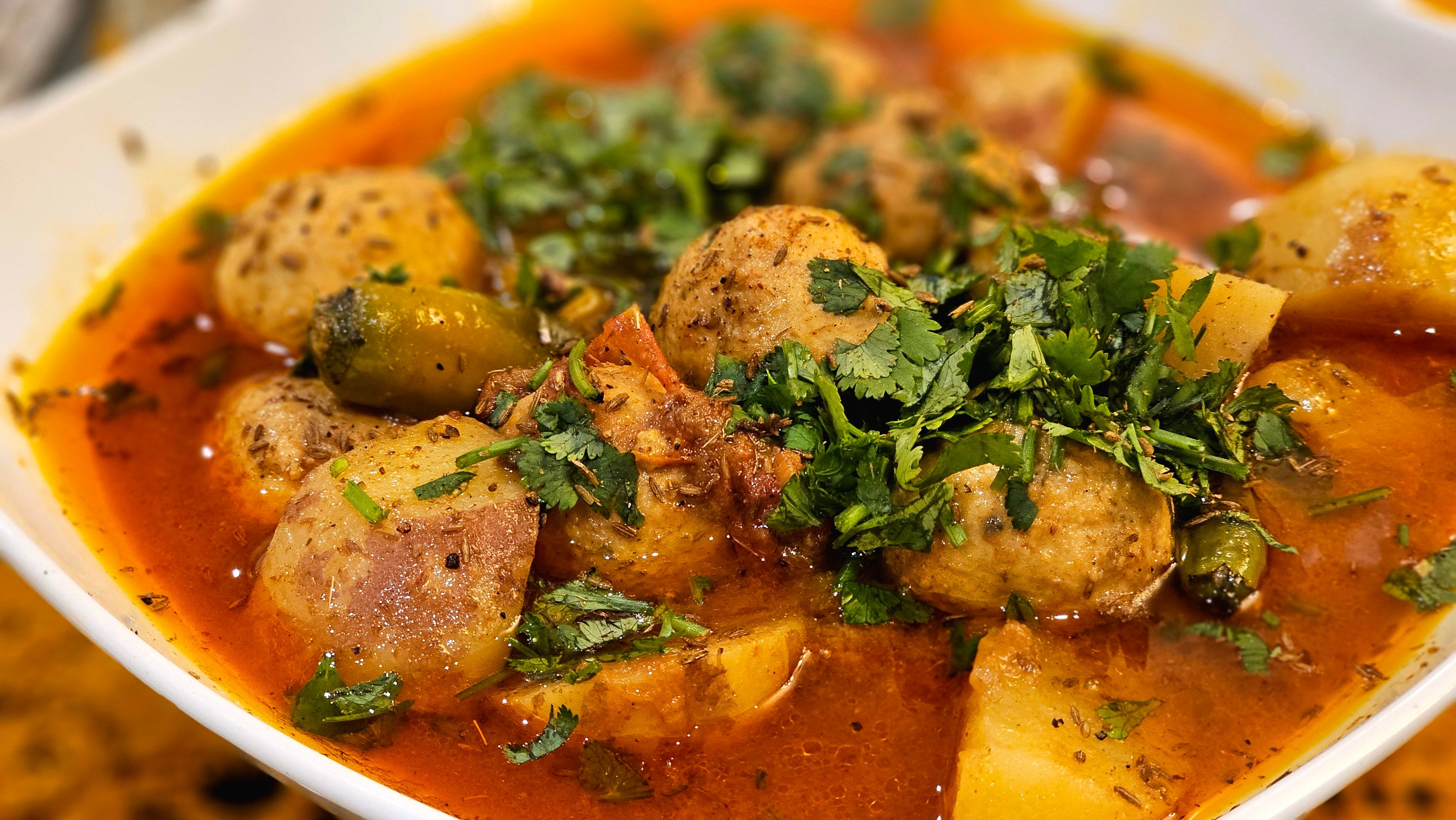
Photo: Muhammad Khawar Nazir / Pexels
The diets react (see scores below)
Common Ingredients
- green bananas
- tomatoes
- onions
- garlic
- vegetable oil
- coriander
- chili
- salt
Specific recipes may vary.
Incompatible with 4 of 11 diets
Diet Ratings
Matoke is a dish centered on green bananas (plantains), which are extremely high in starch and net carbs. A single medium green banana contains approximately 20-30g of net carbs, and a typical serving of matoke uses multiple bananas. Even accounting for the resistant starch in unripe bananas, the net carbohydrate load far exceeds the daily keto limit of 20-50g in a single serving. The remaining ingredients (tomatoes, onions, garlic) add additional carbs. This dish is fundamentally incompatible with ketogenic macros and would immediately disrupt ketosis.
Matoke is a traditional East African dish made from green cooking bananas (plantains) stewed with tomatoes, onions, garlic, vegetable oil, coriander, chili, and salt. Every ingredient in this preparation is entirely plant-based with no animal products or animal-derived ingredients present. The dish is predominantly whole foods — vegetables, fruit (green bananas), aromatics, and spices — with only vegetable oil as a minimally processed component. This makes it an excellent fit for both vegan and whole-food plant-based diets. The green bananas provide complex carbohydrates and resistant starch, while the tomatoes and aromatics add micronutrients, making this a nutritionally solid main dish.
Matoke contains three clear paleo violations that disqualify the dish. First, vegetable oil (a seed/processed oil) is explicitly excluded from paleo — the preferred cooking fats are animal fats, olive oil, coconut oil, or avocado oil. Second, added salt is excluded under strict paleo rules. Third, while green bananas themselves are a borderline-acceptable whole food (unripe bananas are starchier and less sweet, and some paleo adherents allow them), the combination of disqualifying ingredients pushes the dish into 'avoid' territory. The base ingredients — green bananas, tomatoes, onions, garlic, coriander, and chili — are otherwise whole, unprocessed foods that would be acceptable or debatable on their own, but the dish as prepared cannot be considered paleo-compliant due to the vegetable oil and salt.
Matoke is a whole-food, plant-based dish made primarily from green bananas (unripe plantains), which are rich in resistant starch and fiber. The supporting ingredients — tomatoes, onions, garlic, coriander, and chili — are all Mediterranean diet staples. The main concern is the use of vegetable oil rather than extra virgin olive oil, which is the canonical fat in the Mediterranean diet. However, the overall dish is unprocessed, vegetable-forward, and free of added sugars, refined grains, or animal products, aligning well with Mediterranean principles. A simple substitution of olive oil would make this a near-ideal dish.
Some Mediterranean diet purists may rate this lower because green bananas and plantains are not traditional Mediterranean ingredients and have a higher glycemic load than non-starchy vegetables, and because generic 'vegetable oil' may include refined oils (e.g., sunflower or palm) that are discouraged in favor of extra virgin olive oil. Traditional Mediterranean plant staples like lentils or chickpeas would be preferred as a starchy base.
Matoke is entirely plant-based with zero animal-derived ingredients. Green bananas are starchy plant carbohydrates, tomatoes and onions are vegetables, garlic is a plant bulb, vegetable oil is a plant-derived fat, and coriander and chili are plant spices. Every single ingredient violates carnivore diet principles. There is no animal protein, no animal fat, and no animal product of any kind in this dish. This is as far from carnivore-compatible as a dish can be.
Matoke is a East African dish made from green (unripe) bananas cooked with tomatoes, onions, garlic, vegetable oil, coriander, chili, and salt. All of these ingredients are explicitly compliant with Whole30 rules. Green bananas are a whole fruit and fully allowed. Tomatoes, onions, garlic, chili, and coriander are vegetables, herbs, and spices — all permitted. Vegetable oil (such as coconut, olive, or avocado oil) is an allowed natural fat. Salt is explicitly permitted. There are no excluded ingredients present: no grains, legumes, dairy, added sugar, or alcohol. This is a straightforward whole-food vegetable-based dish that aligns well with the program's spirit.
Matoke contains multiple high-FODMAP ingredients that make it unsuitable during the elimination phase. Onions are among the highest-FODMAP foods available, being rich in fructans and problematic even in small amounts — they are a definitive 'avoid' during elimination. Garlic is similarly very high in fructans and a clear 'avoid.' These two ingredients alone disqualify the dish. Green bananas (unripe bananas) are generally considered lower in FODMAPs than ripe bananas due to their resistant starch content, and Monash rates them as low-FODMAP at around 1 medium unripe banana — however, this benefit is entirely negated by the onion and garlic content. Tomatoes are low-FODMAP at standard servings (up to 1 medium/65g), coriander and chili are low-FODMAP as used in cooking, vegetable oil is FODMAP-free, and salt is FODMAP-free. The dish cannot be made low-FODMAP without fundamentally altering its flavor base by removing the onion and garlic.
Matoke (green banana stew) is fundamentally a plant-based dish built on whole, minimally processed ingredients that align well with DASH principles. Green bananas are rich in resistant starch, potassium, and fiber — nutrients DASH emphasizes. Tomatoes, onions, garlic, and coriander are DASH-friendly vegetables and aromatics that contribute micronutrients and antioxidants. Vegetable oil (likely sunflower or similar) is preferred over saturated tropical oils in DASH. The main concern is salt: home-prepared Matoke can contain variable amounts of added salt, which must be limited to stay within DASH sodium targets (<2,300mg/day standard, <1,500mg/day low-sodium DASH). With restrained salt use, this dish is a strong plant-based DASH option. The lack of animal protein is neutral — DASH does not require meat, and beans or legumes could be added to further align with the plan.
NIH DASH guidelines do not specifically address green bananas, which are starchier and have a lower glycemic index than ripe bananas; some DASH-oriented clinicians note this makes them particularly favorable for blood sugar control, while others caution that the higher starch content warrants modest portion control similar to other starchy vegetables in the DASH framework.
Matoke is a starchy green banana dish that presents significant challenges for Zone compliance. Green bananas, while less glycemic than ripe bananas, are still high in starch and carbohydrates, making them an 'unfavorable' carb source in Zone terminology. A typical serving of matoke is heavily carbohydrate-dominant with virtually no protein, directly violating the 40/30/30 macro ratio. The dish contains no lean protein component, which is a fundamental Zone requirement. The vegetable oil used is likely an omega-6-heavy seed oil (corn, sunflower, or palm), which conflicts with Zone's anti-inflammatory focus. On the positive side, tomatoes, onions, and garlic are favorable Zone vegetables, and the spices add polyphenols. However, as a standalone meal, this dish is essentially all carbohydrate with negligible protein and limited favorable fat. To fit Zone principles, it would need a substantial lean protein addition (chicken, fish, tofu) and the carb portion would need to be drastically reduced to perhaps a quarter of a typical serving. The score sits at 3 rather than 1-2 because the dish is not composed of pure refined sugar or processed junk — green bananas have some fiber and the vegetable accompaniments have merit — but as consumed traditionally it is very difficult to Zone-balance.
Some Zone practitioners note that green/unripe bananas contain significant resistant starch, which behaves more like fiber than digestible carbohydrate in the body — it has a lower glycemic impact than ripe bananas or cooked white starch. Dr. Sears' later work in 'The Zone Diet' emphasized glycemic load and anti-inflammatory eating over strict glycemic index, and resistant starch aligns reasonably well with those principles. Under this view, a small portion of matoke alongside a substantial lean protein source could be treated similarly to a moderate-GI starch block, pushing the verdict toward a 'caution' score of 4-5 rather than near-avoid territory.
Matoke is a East African dish of stewed green (unripe) bananas with a vegetable base that has a reasonably solid anti-inflammatory profile. Green bananas are rich in resistant starch, which functions as a prebiotic and supports gut health — a key pillar of reducing systemic inflammation. They have a lower glycemic impact than ripe bananas, avoiding the blood sugar spikes associated with inflammation. Tomatoes provide lycopene and other carotenoids with well-documented anti-inflammatory activity; cooking increases lycopene bioavailability. Onions and garlic are anti-inflammatory staples rich in quercetin, allicin, and organosulfur compounds that suppress NF-κB inflammatory pathways. Coriander and chili add polyphenols and capsaicin respectively, both of which have anti-inflammatory properties in research. The main uncertainty is the vegetable oil, which is unspecified. If it is a refined omega-6-heavy oil like sunflower or corn oil used generously, this would pull the score down meaningfully; if it is a modest amount of canola, avocado oil, or ideally extra virgin olive oil, the profile is much better. The dish has no red meat, no refined carbohydrates, no added sugar, and no processed additives, which is a strong baseline. Overall this is a predominantly whole-food, plant-based dish that aligns well with anti-inflammatory principles, contingent on the oil choice.
The unspecified 'vegetable oil' introduces meaningful uncertainty: most Kenyan home and restaurant cooking uses refined sunflower or corn oil, which are high in omega-6 linoleic acid. Most anti-inflammatory protocols (Dr. Weil, IF Rating system) recommend limiting or avoiding these oils due to their pro-inflammatory omega-6 burden and oxidation potential at cooking temperatures, which would reduce this dish's score toward 'caution.' Mainstream nutrition science (AHA) considers these oils acceptable, and some anti-inflammatory researchers argue modest amounts in an otherwise vegetable-rich dish do not meaningfully shift inflammatory load.
Matoke is a starchy green banana dish that provides moderate fiber and some digestive-friendly carbohydrates, but it is nearly devoid of protein — a critical shortcoming for GLP-1 patients who must prioritize 100-120g of protein daily to prevent muscle loss. Green bananas have a lower glycemic index than ripe bananas due to resistant starch, which supports blood sugar stability and gut health, and the tomatoes, onions, and garlic add micronutrient value. However, the dish contains no meaningful protein source, and the vegetable oil adds fat without nutritional compensation. The chili ingredient may worsen nausea or reflux in sensitive GLP-1 patients, particularly on higher doses or early in treatment. As a standalone main dish it falls short of GLP-1 dietary priorities, but it could function as a side dish paired with a high-protein source such as grilled fish, chicken breast, or legumes. Portion sensitivity applies — green bananas are calorie-dense relative to their protein and fiber payoff per serving.
Some GLP-1-focused dietitians may view resistant starch from green bananas favorably for its prebiotic and blood sugar-stabilizing properties, rating this dish more positively as a carbohydrate component of a balanced plate. Others flag starchy mains with no protein as structurally incompatible with GLP-1 meal planning given the reduced appetite window, arguing every meal must deliver protein above all else.
*See how scores were generated at our methodology page.
Nutritional profile
Six traits that cut across every diet.
Fiber & Plants
How much whole-plant food and fiber it delivers.
Healthy Fats
The quality of its fats (unsaturated, omega-3).
Whole / Unprocessed
How close it is to its natural, unprocessed form.
Gut Gentle
How easy it is on digestion (low FODMAP, few irritants).
Low Glycemic
How little it spikes your blood sugar.
Protein Density
How much protein it packs per calorie.
Controversy Index
Higher controversy = more disagreement between diets.
Diet-Specific Tips
 Vegan — 9/10
View tips
- All ingredients are fully plant-based
- Predominantly whole foods with minimal processing
- Vegetable oil is the only processed ingredient, keeping the score just below 10
- No animal products, animal-derived additives, or contested ingredients
- Nutritionally substantial due to complex carbohydrates from green bananas
- Traditional preparation aligns well with whole-food plant-based principles
 Mediterranean — 7/10
View tips
- Whole, unprocessed plant-based ingredients throughout
- Green bananas provide resistant starch and fiber, a positive nutritional profile
- Tomatoes, onions, garlic are core Mediterranean aromatics
- Vegetable oil used instead of extra virgin olive oil — a moderate concern
- No animal products, refined grains, or added sugars
- No legumes or whole grains to anchor protein/fiber content
 Whole30 — 8/10
View tips
- Green bananas are whole fruit and fully Whole30 compliant
- All vegetables and aromatics (tomatoes, onions, garlic, chili) are allowed
- Coriander and salt are permitted herbs/spices
- Vegetable oil is a compliant natural fat — label should confirm no additives
- No excluded ingredients present
- Whole, unprocessed dish that honors the spirit of the program
 DASH — 7/10
View tips
- Green bananas are high in potassium and fiber, core DASH nutrients
- All main ingredients are whole, plant-based, and DASH-compatible
- Vegetable oil preferred over saturated tropical oils in DASH
- Salt content is the primary risk — must be minimized to meet DASH sodium limits
- No saturated fat, cholesterol, or added sugar concerns
- No animal protein, but DASH accommodates plant-based meals; legumes could be added
- Portion control relevant as green bananas are calorie-dense starchy vegetables
 Zone — 5/10
View tips
- Green bananas are a high-starch, unfavorable carbohydrate source in Zone terminology despite being lower GI than ripe bananas
- No protein component — fundamental violation of the Zone 40/30/30 ratio requirement
- Dish is heavily carbohydrate-dominant; a typical serving would far exceed Zone carb block allowances
- Vegetable oil is likely an omega-6-heavy seed oil, conflicting with Zone's anti-inflammatory principles
- Favorable ingredients include tomatoes, onions, garlic, and spices which contribute polyphenols
- Would require dramatic portioning adjustments and addition of lean protein to approach Zone compliance
- Resistant starch in green bananas partially mitigates glycemic impact but does not resolve the macro imbalance
 Anti-Inflammatory — 7/10
View tips
- Green bananas provide resistant starch with prebiotic and gut-health benefits, supporting reduced systemic inflammation
- Tomatoes offer lycopene and carotenoids with anti-inflammatory properties; bioavailability enhanced by cooking
- Garlic and onions are high in quercetin, allicin, and organosulfur compounds that inhibit inflammatory pathways
- Coriander and chili contribute polyphenols and capsaicin with anti-inflammatory research support
- Unspecified vegetable oil is the primary risk factor — refined sunflower or corn oil would add pro-inflammatory omega-6 load
- No red meat, added sugar, refined carbohydrates, or artificial additives — strong whole-food plant-based baseline
- Dish is protein-light with no omega-3 sources, a missed opportunity to further enhance the anti-inflammatory profile
 GLP-1 Friendly — 4/10
View tips
- No protein source — fails the #1 GLP-1 dietary priority
- Resistant starch in green bananas supports blood sugar stability and gut health
- Moderate fiber from bananas, tomatoes, and onions is a positive
- Chili may worsen nausea or reflux in GLP-1 patients with GI sensitivity
- Vegetable oil adds fat without protein or fiber benefit
- Nutrient density per calorie is low relative to GLP-1 needs
- Works better as a side dish paired with a lean protein than as a standalone main