Photo: Alex Dos Santos / Pexels
The diets react (see scores below)
Common Ingredients
- beef
- blood
- intestine casing
- onion
- chili
- garlic
- cumin
- salt
Specific recipes may vary.
Incompatible with 8 of 11 diets
Diet Ratings
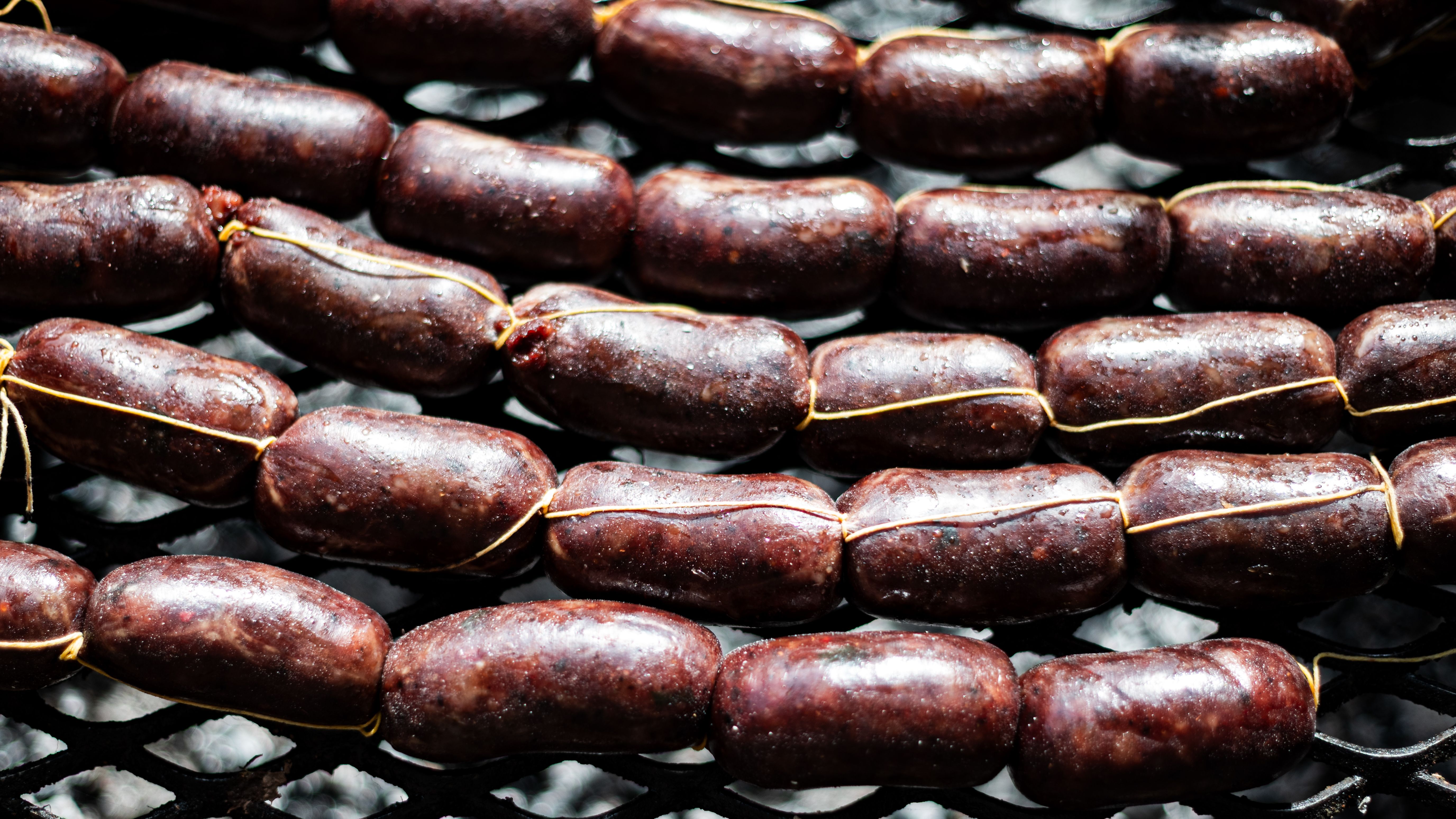
Mutura is a Kenyan blood sausage made with beef, blood, and offal in an intestine casing, seasoned with onion, garlic, chili, and cumin. The primary ingredients — beef and intestine casing — are high-fat, high-protein, and keto-friendly. However, blood contains a notable amount of glycogen/carbohydrates (approximately 5-7g net carbs per 100ml), which adds up meaningfully depending on the proportion used. The aromatics (onion, garlic) contribute minor carbs. In moderate portions, Mutura can fit within a keto framework, but the blood content introduces enough carbohydrates to warrant portion control. A small serving (50-80g) is likely manageable; a larger portion risks pushing net carbs higher. The dish is whole and unprocessed, which is a positive factor.
Some stricter keto practitioners flag animal blood as a hidden carb source that should be avoided or minimized, arguing that blood sausages can stealthily erode the daily carb budget, particularly for those targeting the lower end of the 20g net carb threshold. Conversely, carnivore-leaning keto advocates embrace nose-to-tail eating and consider blood a nutrient-dense whole food with acceptable carb levels in typical servings.
Mutura is a traditional Kenyan sausage made entirely from animal products. The primary ingredients — beef, animal blood, and intestine casing — are all direct animal-derived components. Blood is an explicit animal product, intestine casing is animal offal, and beef is red meat. There is no plant-based interpretation of this dish; it is fundamentally incompatible with a vegan diet by any definition.
Mutura is a Kenyan sausage made from beef, blood, and organ meats stuffed into intestine casings — ingredients that are individually paleo-approved and highly nutritious from a hunter-gatherer perspective. Beef, blood, intestines (offal), onion, chili, garlic, and cumin are all ancestral foods with no paleo objection. However, salt is a disqualifying additive under strict paleo rules, as refined/added salt was not available to Paleolithic humans. More significantly, the sausage format itself involves processing — grinding, mixing, and stuffing into casings — which edges toward processed meat territory. The combination of added salt plus the processed sausage form pushes this into avoid territory under strict paleo. Without salt and in a less processed preparation (e.g., simply grilled beef offal with the same spices), the core ingredients would easily approve.
Mutura is a Kenyan blood sausage made from beef, blood, and intestine casing — all components that conflict with Mediterranean diet principles. Red meat and organ meats are strongly discouraged, limited to only a few times per month at most. Blood sausage is a highly processed form of red meat with significant saturated fat content. While the aromatics (onion, garlic, chili, cumin) are Mediterranean-friendly, they are minor supporting ingredients that cannot offset the core protein sources. This dish is categorically at odds with the plant-forward, fish-and-legume-centered ethos of the Mediterranean diet.
Mutura is a traditional Kenyan blood sausage made with excellent carnivore-core ingredients — beef, blood, and intestine casing are all highly valued animal products on a carnivore diet. Blood is rich in heme iron and nutrients, and organ-adjacent preparations like this are generally encouraged. However, this recipe includes onion, chili, garlic, and cumin — all plant-derived ingredients that are explicitly excluded from the carnivore diet. These are not trace seasonings but structural flavor components of the dish. The salt is fine. The verdict is 'avoid' because the plant ingredients are integral to the traditional preparation, not incidental additives. A carnivore-modified version using only beef, blood, intestine casing, and salt would score 9-10.
Some carnivore practitioners, particularly those following a more flexible or 'animal-based' approach, tolerate small amounts of spices like cumin and garlic as negligible plant matter with minimal metabolic impact, and might consume this dish while picking out or ignoring the onion content. Paul Saladino's broader animal-based framework is more permissive about such trace plant additions.
Mutura is a traditional Kenyan sausage made with beef, blood, intestine casing, and spices — all of which are whole, unprocessed animal products explicitly permitted on Whole30. Meat (beef), organ meats, blood, and natural casings are all compliant. The seasonings (onion, chili, garlic, cumin, salt) are straightforwardly approved. There are no excluded ingredients in this dish as traditionally prepared. However, blood-based and organ-based preparations can raise eyebrows in the Whole30 community, and the sausage format — while not a 'baked good or junk food' recreation — may prompt some to question whether it fits the spirit of eating whole foods.
While the official Whole30 program permits all cuts and preparations of meat including offal and blood, some community members and coaches argue that processed/encased sausage formats push the boundaries of the 'eat whole foods' spirit, even when every ingredient is individually compliant. Melissa Urban's guidance, however, focuses the sausage concern primarily on added sugars and non-compliant additives rather than the casing format itself.
Mutura is a Kenyan blood sausage made with beef, blood, intestine casing, and critically, onion and garlic — both of which are high-FODMAP ingredients due to fructans. Onion is one of the highest-FODMAP foods tested by Monash University and is problematic even in small amounts when cooked into a dish, as fructans leach into the food matrix. Garlic is similarly high in fructans and is a major FODMAP trigger. These two ingredients alone make Mutura unsuitable during the elimination phase regardless of serving size. Blood and intestine casing are not well-tested by Monash but are protein/fat-based and not inherently high-FODMAP. Beef itself is low-FODMAP. Cumin and chili are low-FODMAP at typical culinary amounts. However, the onion and garlic content embedded in the sausage cannot be separated or removed, making this dish a clear avoid during elimination.
Monash University has not specifically tested Mutura or similar blood sausages with embedded alliums. Some FODMAP practitioners note that the fructan load per serving depends on the actual quantity of onion and garlic used in preparation — if minimal amounts are used, some individuals in the personalization phase who have tolerated fructan reintroduction may handle small portions, but this is not appropriate during the elimination phase.
Mutura is a Kenyan blood sausage made with beef, blood, and intestine casing — a combination that is highly problematic for the DASH diet on multiple fronts. Organ meats and blood are very high in saturated fat and cholesterol, directly opposing DASH's explicit guidance to limit saturated fat and choose lean proteins over red and organ meats. The intestine casing contributes additional saturated fat. Salt is listed as an ingredient and, as a street food snack typically prepared without portion measurement, sodium content is likely high and variable. Blood-based products are inherently rich in heme iron and cholesterol but lack the favorable nutrient profile (potassium, magnesium, fiber) that DASH emphasizes. While spices like onion, garlic, cumin, and chili are DASH-friendly, they do not offset the core nutritional concerns of the dish's primary components.
Mutura is a Kenyan street sausage made from beef, blood, and offal stuffed into intestine casing with aromatics. From a Zone perspective, it presents a mixed profile. The beef and blood provide meaningful protein, but the fat content is likely high and predominantly saturated given the use of intestinal tissue and blood, which is not the lean protein ideal (skinless poultry, fish) Dr. Sears favors. Blood is rich in iron and protein but also contributes to a higher saturated fat load alongside the intestine casing. The aromatics (onion, garlic, chili, cumin) are Zone-friendly low-glycemic carb contributors with polyphenol benefits. As a snack, the biggest challenge is that the fat profile skews saturated rather than monounsaturated, and the protein-to-fat ratio may be difficult to balance without additional Zone-favorable fat adjustments. There are no high-glycemic carbs, which is a positive. However, the lack of lean protein sourcing and likely high saturated fat content from offal make precise Zone block balancing difficult. It can fit in a Zone meal with careful portioning and pairing with low-GI carbs, but it is not a favorable Zone protein source.
Some Zone practitioners argue that whole-food animal proteins — even fattier or organ-based ones — are preferable to processed alternatives, and Sears' later anti-inflammatory writings acknowledge that whole-food saturated fats in moderate portions are not categorically excluded. On this view, mutura's nutrient density (iron, B12, complete protein from blood and beef) and absence of processed ingredients or high-glycemic carbs could push it toward a low-end 'caution' rather than a near-avoid classification, especially if portioned as one block of protein with complementary Zone carbs and monounsaturated fat.
Mutura is a Kenyan street food sausage made by stuffing beef, animal blood, onions, and spices into intestine casings. From an anti-inflammatory perspective, this dish is predominantly pro-inflammatory. The primary protein is beef (red meat), which anti-inflammatory guidelines recommend limiting due to its saturated fat content and arachidonic acid, a precursor to pro-inflammatory eicosanoids. Animal blood is high in heme iron, which in excess is associated with oxidative stress and increased inflammatory markers in research literature. The intestine casing (tripe) is an organ/offal product that is high in saturated fat and cholesterol. Together, these three core components create a concentrated source of saturated fat, heme iron, and arachidonic acid — a triple pro-inflammatory signal. On the positive side, the spice profile is notable: garlic, chili, cumin, and onion all carry meaningful anti-inflammatory properties (allicin, capsaicin, quercetin), which partially offset the dish's profile but cannot overcome the dominant pro-inflammatory base. As a street snack, Mutura is also likely cooked at high temperatures (grilling or pan-frying), which can generate advanced glycation end products (AGEs) in fatty red meat, adding another inflammatory concern. The dish is not the worst offender (no trans fats, no refined sugars, no artificial additives), but it sits firmly in 'avoid' territory for regular consumption under anti-inflammatory principles.
Some ancestral and traditional food advocates (e.g., Weston A. Price Foundation) would argue that organ meats and blood are nutrient-dense whole foods rich in bioavailable iron, B12, zinc, and CoQ10, and that saturated fat from whole animal sources is not inherently inflammatory when consumed in the context of a varied, minimally processed diet. Additionally, some anti-inflammatory researchers note that the inflammatory impact of red meat depends heavily on overall dietary pattern — occasional consumption in a diet rich in vegetables and omega-3s may not meaningfully raise inflammatory markers.
Mutura is a Kenyan street sausage made from minced beef and blood packed into intestine casing, seasoned with onion, chili, garlic, and cumin, then boiled and pan- or charcoal-grilled. While it does deliver meaningful protein from beef and blood, it is disqualifying on several GLP-1 criteria simultaneously. The intestine casing and blood are high in saturated fat and cholesterol. The full dish — fatty offal, blood, and a fatty beef mix — is heavy and difficult to digest, directly conflicting with the slowed gastric emptying caused by GLP-1 medications, making nausea, bloating, and reflux highly likely. Chili as a seasoning ingredient adds spice risk for reflux and GI irritation. As a street snack it is typically served grilled with charred fat, adding to its digestive burden. Nutrient density per calorie is moderate at best — the fat load is disproportionate relative to the protein delivered. There is no meaningful fiber. As a snack category item it competes poorly against high-protein, easy-to-digest alternatives like cottage cheese, hard-boiled eggs, or Greek yogurt.
Some GLP-1-focused dietitians working with patients from cuisines where organ meats are culturally central acknowledge that blood and offal deliver iron, B12, and zinc that are genuinely valuable during calorie restriction — nutrients at real deficiency risk on GLP-1 medications. The disagreement centers on whether the fat and digestive burden outweighs these micronutrient benefits, and tolerance varies considerably by individual GI sensitivity.
*See how scores were generated at our methodology page.
Nutritional profile
Six traits that cut across every diet.
Fiber & Plants
How much whole-plant food and fiber it delivers.
Healthy Fats
The quality of its fats (unsaturated, omega-3).
Whole / Unprocessed
How close it is to its natural, unprocessed form.
Gut Gentle
How easy it is on digestion (low FODMAP, few irritants).
Low Glycemic
How little it spikes your blood sugar.
Protein Density
How much protein it packs per calorie.
Controversy Index
Higher controversy = more disagreement between diets.
Diet-Specific Tips
 Keto — 5/10
View tips
- Animal blood contains glycogen contributing moderate net carbs (~5-7g per 100ml)
- Beef and intestine casing are high-fat, keto-compatible proteins
- Onion and garlic add minor carb load
- Whole, unprocessed traditional food — no added sugars or grains
- Portion size is critical: small servings fit keto, large portions may not
- Nose-to-tail offal eating aligns with many keto nutritional philosophies
 Whole30 — 8/10
View tips
- Beef is explicitly allowed on Whole30
- Blood and intestine casing are animal products with no excluded ingredients
- All spices (onion, chili, garlic, cumin, salt) are fully compliant
- No grains, legumes, dairy, or added sugar present
- Sausage/encased format is acceptable as long as ingredients are compliant
- Traditional preparation uses no preservatives or fillers
 Zone — 4/10
View tips
- Protein source is beef and blood — complete protein but not lean; offal and blood carry significant saturated fat
- Intestine casing adds additional saturated fat, making monounsaturated fat ratio unfavorable
- No high-glycemic carbohydrates; aromatics (onion, garlic, chili) are Zone-friendly low-GI carbs
- Polyphenol contribution from garlic, chili, and cumin aligns with Sears' anti-inflammatory focus
- As a street snack, portion control is difficult and macro ratios (40/30/30) are hard to verify or achieve
- Lacks complementary carbohydrate component to balance Zone blocks as a standalone snack
- Whole-food, minimally processed ingredient list is a positive versus ultra-processed alternatives