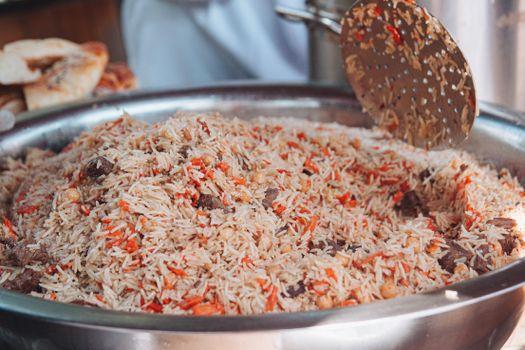
Photo: Oleskandra Biliak / Pexels
The diets react (see scores below)
Common Ingredients
- rice
- beef
- onion
- garlic
- ginger
- cumin
- cardamom
- cinnamon
- cloves
Specific recipes may vary.
Incompatible with 7 of 11 diets
Diet Ratings
Kenyan Pilau is fundamentally built on rice, which is a high-carb grain that is entirely incompatible with ketogenic eating. A single cup of cooked rice contains approximately 45g of net carbs, which alone exceeds or meets the entire daily net carb allowance for ketosis. The spices (cumin, cardamom, cinnamon, cloves), aromatics (onion, garlic, ginger), and beef are all keto-friendly in isolation, but the rice base makes this dish an absolute avoid. There is no version of traditional Pilau that can be considered keto-compatible without fundamentally replacing the primary ingredient.
Kenyan Pilau contains beef as a primary protein ingredient, making it clearly incompatible with a vegan diet. Beef is an animal product and is unambiguously excluded from veganism. The remaining ingredients — rice, onion, garlic, ginger, and the spices (cumin, cardamom, cinnamon, cloves) — are all plant-based, but the inclusion of beef disqualifies the dish entirely.
Kenyan Pilau is built on rice, a grain that is categorically excluded from the Paleolithic diet. The foundational ingredient — rice — is a cereal grain domesticated during the agricultural revolution and explicitly off-limits under all mainstream paleo frameworks (Cordain, Sisson, Wolf). While the remaining ingredients (beef, onion, garlic, ginger, cumin, cardamom, cinnamon, cloves) are all paleo-approved whole foods, the dish cannot be separated from its rice base. The protein and spice profile are excellent, but rice as the primary bulk ingredient disqualifies the dish entirely.
Kenyan Pilau combines two problematic elements from a Mediterranean diet perspective: red meat (beef) and refined white rice. Beef is a red meat that should be limited to only a few times per month in a true Mediterranean dietary pattern, and it is typically consumed in small portions as a condiment rather than as a primary protein. White rice, while not as harmful as ultra-processed foods, is a refined grain that lacks the fiber of whole grains preferred by the Mediterranean diet. The spices (cumin, cardamom, cinnamon, cloves) and aromatics (onion, garlic, ginger) are positive elements, but they cannot overcome the two core incompatibilities. The dish has no olive oil, no vegetables of substance, no legumes, and centers on a combination the diet explicitly discourages.
Some Mediterranean diet interpreters note that rice-based dishes are traditional in parts of the Middle East and Eastern Mediterranean (e.g., Turkish and Lebanese pilaf traditions), and that modest portions of beef alongside aromatic spices and onions mirror how red meat is used in regional Mediterranean stews. If beef were replaced with lamb or chicken and served with vegetables or legumes, this dish structure could be adapted to a 'caution' level.
Kenyan Pilau is fundamentally incompatible with the carnivore diet. The dish is built on rice, a grain that is entirely excluded from carnivore eating. Beyond the rice, it contains multiple plant-based ingredients: onion, garlic, and ginger (plant aromatics), plus a full spice blend of cumin, cardamom, cinnamon, and cloves — all plant-derived and prohibited on a strict carnivore protocol. While beef is included as the protein source, it represents only a minor component of what is overwhelmingly a grain-and-plant-based dish. No substitution or modification short of removing every ingredient except the beef would make this carnivore-compatible.
Pilau contains rice, which is explicitly excluded on the Whole30 program as a grain. All other ingredients — beef, onion, garlic, ginger, cumin, cardamom, cinnamon, and cloves — are fully compliant. However, rice is a core, non-negotiable component of this dish, making the dish as a whole non-compliant. There is no compliant substitution that would still constitute Pilau in any traditional sense.
Kenyan Pilau contains multiple high-FODMAP ingredients that make it unsuitable during the elimination phase. Onion and garlic are among the highest-FODMAP foods tested by Monash University, both containing significant fructans at any culinary quantity. These two ingredients alone are sufficient to classify the dish as high-FODMAP. Rice and beef are both low-FODMAP, and spices like cumin, cardamom, cinnamon, and cloves are low-FODMAP at typical culinary doses. However, onion and garlic are structural, flavor-defining ingredients in Pilau — not incidental traces — and cannot be reduced to a safe threshold while maintaining the dish's character. Ginger is low-FODMAP at small amounts (up to 1 teaspoon fresh). The combination of onion AND garlic makes this a clear avoid.
Kenyan Pilau is a spiced rice dish with beef that has several DASH-compatible elements but also notable concerns. On the positive side, the aromatic spices (cumin, cardamom, cinnamon, cloves, garlic, ginger) add flavor without sodium, onions provide potassium and fiber, and white rice provides carbohydrates. However, beef is a red meat that DASH recommends limiting due to saturated fat content — the cut used matters significantly (lean beef like sirloin is more acceptable than fatty cuts). White rice, while not harmful, is a refined grain that DASH de-emphasizes compared to whole grains like brown rice. The dish as traditionally prepared often uses cooking fat (ghee or oil) in substantial amounts to fry the spices and onions, which can add saturated fat if ghee is used. Sodium content depends heavily on preparation — if stock, bouillon, or added salt is used liberally, sodium can climb. The dish lacks vegetables, dairy, and legumes that would make it more DASH-aligned. With lean beef, minimal added salt, and portion control, this can be an acceptable occasional DASH meal, but it is not a core DASH dish.
NIH DASH guidelines classify red meat as a food to limit due to saturated fat and recommend lean poultry or fish as preferred proteins; however, updated clinical interpretations note that lean cuts of beef used in moderation (2–3 oz portions) can fit within DASH's weekly red meat allowance, and some DASH practitioners now focus more on overall dietary pattern than strict exclusion of any single red meat serving.
Kenyan Pilau is a flavorful spiced rice dish with beef that presents moderate Zone Diet compatibility challenges. The primary carbohydrate source — white rice — is a high-glycemic, unfavorable carb in Zone terminology. A typical serving of pilau is rice-dominant, meaning the carbohydrate block load will be heavily skewed toward high-GI carbs rather than the preferred low-GI vegetables. The beef protein is workable but needs to be lean cuts to fit Zone protein guidelines; traditional pilau may use fattier beef cuts, which adds saturated fat. On the positive side, the aromatic spices (cumin, cardamom, cinnamon, cloves, ginger, garlic, onion) are anti-inflammatory and polyphenol-rich, aligning well with Sears' later anti-inflammatory Zone framework. With careful portioning — a small amount of rice (1 block ≈ ~1/3 cup cooked), lean beef as the protein anchor, and pairing with a large side of low-GI vegetables — pilau can technically be incorporated into a Zone meal. However, as traditionally served (rice-dominant, generous portions), it significantly disrupts the 40/30/30 ratio and is categorized as 'unfavorable' due to white rice. A Zone practitioner would treat this as an occasional, carefully portioned meal rather than a staple.
Some Zone practitioners in Sears' later writings (particularly post-2000 anti-inflammatory Zone work) show more flexibility with small amounts of whole grain or even white rice when the overall meal's protein-to-carb ratio is maintained. The spice profile of pilau (ginger, cinnamon, cumin, cloves) is exceptionally polyphenol-rich, which Sears increasingly emphasized in his later work. If pilau is made with brown rice, lean beef, and served alongside vegetables, some Zone coaches might rate it slightly more favorably (score 5-6).
Kenyan Pilau is a mixed dish from an anti-inflammatory perspective. On the positive side, it features an impressive spice profile — cinnamon, ginger, garlic, cumin, cardamom, and cloves are all well-documented anti-inflammatory ingredients with antioxidant and polyphenol content. Garlic and ginger in particular have strong evidence for reducing inflammatory markers like CRP and IL-6. Onions provide quercetin, a potent flavonoid. The aromatics alone give this dish meaningful anti-inflammatory value. However, the primary protein is beef (red meat), which is categorized as 'limit' in anti-inflammatory frameworks due to its saturated fat content and association with increased arachidonic acid and inflammatory markers when consumed regularly. The rice base is a refined or semi-refined carbohydrate (depending on whether white or brown rice is used), which is neutral to mildly pro-inflammatory — white rice has a higher glycemic load and lacks the fiber of whole grains. The dish is not inherently problematic, but the beef is the key limiting factor. Occasional consumption is acceptable; regular consumption of beef-based pilau works against anti-inflammatory goals. If prepared with brown rice and a leaner cut of beef, the score would improve.
Some anti-inflammatory practitioners, particularly those influenced by Ayurvedic and traditional medicine frameworks, would view this dish more favorably — the warming spice combination (cardamom, cloves, cinnamon, cumin, ginger) is considered deeply anti-inflammatory in those traditions, and the modest amount of beef in a spiced, rice-based dish may be considered less impactful than isolated red meat consumption. Conversely, stricter anti-inflammatory protocols (such as those emphasizing plant-based protein) would score this lower and suggest replacing beef with legumes or tofu.
Kenyan Pilau is a spiced rice dish with beef that presents a mixed profile for GLP-1 patients. The warming spices (cumin, cardamom, cinnamon, cloves, ginger, garlic) are generally well-tolerated and even mildly beneficial for digestion at typical culinary quantities. However, the dish has two significant drawbacks: (1) Beef as the primary protein source carries a higher saturated fat burden than lean proteins like chicken breast or fish, and the cut of beef used in traditional pilau is often a fattier braising cut, which can worsen nausea and bloating in GLP-1 patients. (2) White rice is the dominant ingredient — a refined grain with low fiber content and high glycemic load, delivering largely empty carbohydrate calories with minimal nutritional density per calorie. The protein content from beef is a genuine positive, but the fat-to-protein ratio is less favorable than leaner alternatives. The dish is also moderately heavy and filling in typical serving sizes, which can be uncomfortable given slowed gastric emptying on GLP-1s. If made with a lean cut of beef (such as sirloin or eye of round, trimmed) and served in a small portion alongside a fiber-rich vegetable side, it becomes more acceptable. The spice profile is a mild plus — none of the spices here are irritating in typical cooking quantities.
Some GLP-1-focused dietitians would rate this more leniently, noting that beef provides complete protein with iron and B12 — micronutrients commonly deficient in patients eating very small quantities of food — and that the cultural context makes this a sustainable, satisfying choice worth accommodating. Others would rate it more strictly, pointing out that white rice contributes to blood sugar spikes that undermine GLP-1 metabolic benefits, and that fatty beef cuts are among the most common triggers for nausea and delayed gastric emptying complaints in clinical practice.
*See how scores were generated at our methodology page.
Nutritional profile
Six traits that cut across every diet.
Fiber & Plants
How much whole-plant food and fiber it delivers.
Healthy Fats
The quality of its fats (unsaturated, omega-3).
Whole / Unprocessed
How close it is to its natural, unprocessed form.
Gut Gentle
How easy it is on digestion (low FODMAP, few irritants).
Low Glycemic
How little it spikes your blood sugar.
Protein Density
How much protein it packs per calorie.
Controversy Index
Higher controversy = more disagreement between diets.
Diet-Specific Tips
 DASH — 5/10
View tips
- Red meat (beef) should be limited on DASH — lean cut choice is critical
- White rice is a refined grain; substituting brown rice would improve DASH alignment
- Spices add flavor without sodium — a DASH-positive feature
- Potential use of ghee or excess oil adds saturated fat
- No vegetables, legumes, or low-fat dairy present to boost nutritional profile
- Sodium level depends heavily on added salt and use of stock or bouillon
- Portion control essential — a smaller serving as part of a larger vegetable-rich meal is more DASH-compatible
 Zone — 4/10
View tips
- White rice is a high-glycemic, unfavorable Zone carbohydrate — primary compatibility concern
- Rice-dominant dish structure makes 40/30/30 ratio difficult to achieve without significant modification
- Beef protein is Zone-acceptable but must be lean cuts; fatty beef adds unfavorable saturated fat
- Rich anti-inflammatory spice profile (ginger, cinnamon, cloves, cumin, cardamom) aligns with Sears' polyphenol emphasis
- Onion and garlic are favorable low-GI Zone carb contributors
- Can be Zone-incorporated with small rice portions, lean beef, and a large vegetable side dish
- Traditional serving portions are too carb-heavy and rice-dominant for Zone balance
 Anti-Inflammatory — 5/10
View tips
- Beef (red meat) is classified as 'limit' in anti-inflammatory frameworks due to saturated fat and arachidonic acid
- Exceptional anti-inflammatory spice profile: cinnamon, ginger, garlic, cumin, cardamom, cloves
- Garlic and ginger have strong research support for reducing CRP and IL-6
- Onions contribute quercetin, a potent anti-inflammatory flavonoid
- Rice base is likely white rice — higher glycemic load, lower fiber than whole grains
- No seed oils, trans fats, refined sugars, or processed additives
- Overall dish is anti-inflammatory in its seasonings but moderated by protein and grain choices
 GLP-1 Friendly — 4/10
View tips
- White rice is a refined grain — low fiber, high glycemic load, low nutrient density per calorie
- Beef protein is a positive but saturated fat content depends heavily on cut — fattier cuts worsen GLP-1 GI side effects
- Dish is calorie-dense relative to its protein and fiber yield — poor nutrient density per calorie
- Spice blend (cumin, cardamom, cinnamon, cloves, ginger) is not irritating at culinary doses and may support digestion
- Slowed gastric emptying makes heavy rice-and-meat dishes sit uncomfortably — portion control is critical
- No fiber-rich vegetables in the base recipe — a significant gap for GLP-1 patients targeting 25-30g fiber daily
- Improvable: substituting lean beef cut, reducing rice portion, and adding a vegetable side would meaningfully raise the rating