Photo: Rachel Claire / Pexels
The diets react (see scores below)
Common Ingredients
- collard greens
- onion
- tomato
- garlic
- oil
- lemon
- salt
Specific recipes may vary.
Incompatible with 3 of 11 diets
Diet Ratings
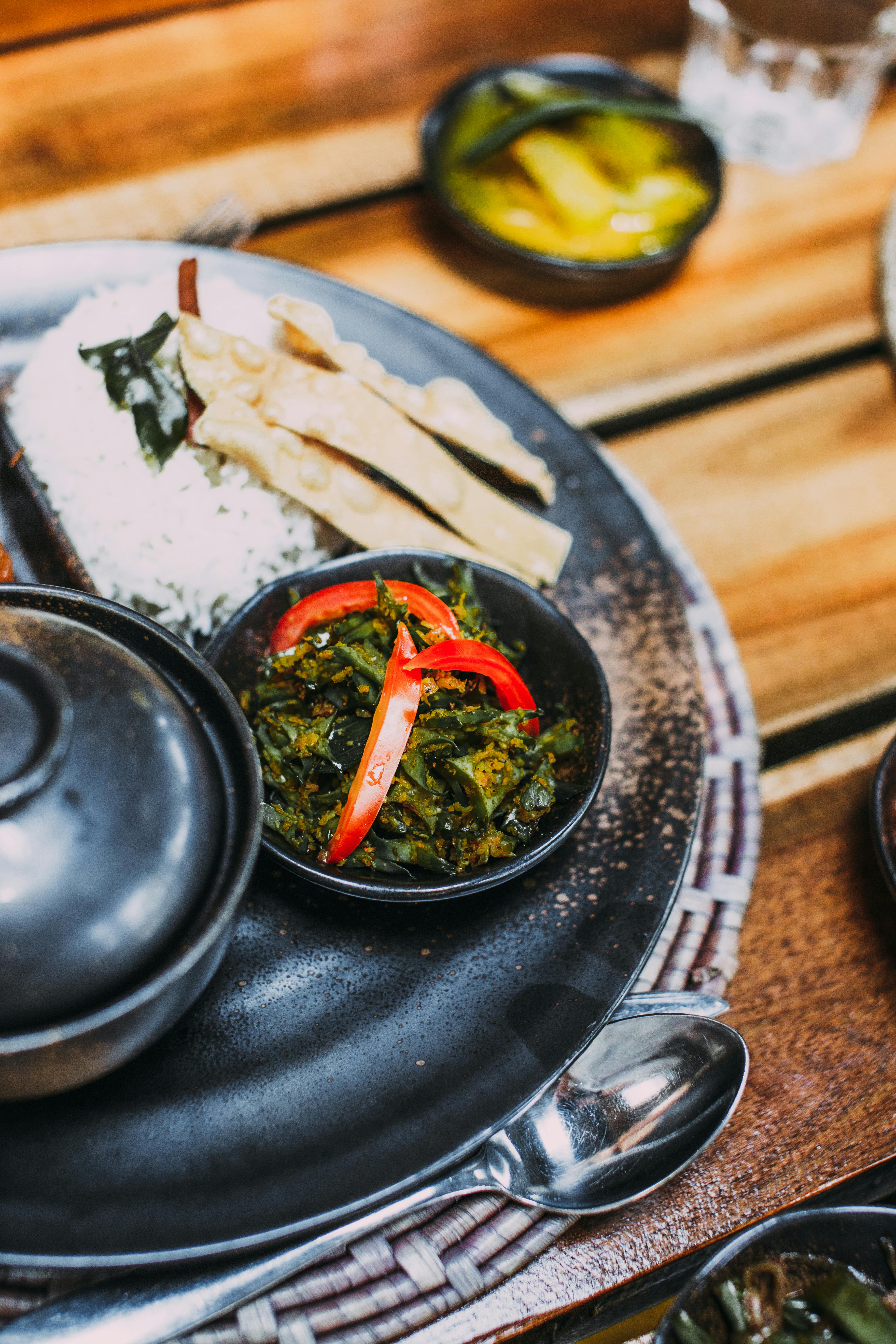
Sukuma Wiki is a leafy green vegetable dish that is fundamentally keto-friendly in concept — collard greens are low net-carb and fiber-rich. However, the addition of tomato and onion adds moderate carbohydrates that require portion awareness. A standard serving (~1 cup cooked) would contribute roughly 6-9g net carbs depending on quantities of tomato and onion used. The oil used for sautéing adds healthy fat, which is a positive. As a side dish consumed in reasonable portions, this fits within a keto framework, but generous servings or multiple portions could push daily carb limits, especially when combined with other carb-containing foods throughout the day.
Some strict keto practitioners would classify this as an approve-level dish, arguing that the tomato and onion quantities used in a typical serving are negligible and that collard greens' high fiber content makes the net carb impact minimal — placing it firmly in the 'keto vegetable' category without caution.
Sukuma Wiki is a traditional Kenyan braised collard greens dish made entirely from whole plant foods. Every ingredient — collard greens, onion, tomato, garlic, oil, lemon, and salt — is unambiguously plant-derived. The dish is naturally vegan and requires no substitutions. It is also nutritionally strong, featuring dark leafy greens rich in iron, calcium, and vitamins K and C, with lemon enhancing iron absorption. The minimal processing and whole-food profile earn it a high score within vegan standards.
Sukuma Wiki is a simple Kenyan dish of sautéed collard greens with onion, tomato, garlic, and lemon — most of which are fully paleo-compliant vegetables. However, two ingredients disqualify it under strict paleo rules: added salt and an unspecified 'oil.' Added salt is explicitly excluded from the paleo framework, and the generic 'oil' in a traditional Kenyan recipe almost certainly refers to a seed oil (commonly vegetable, sunflower, or corn oil), all of which are on the avoid list. The underlying dish concept is sound and could easily be made paleo by substituting a compliant fat (coconut oil, avocado oil, or ghee) and omitting the salt, but as traditionally prepared it fails on these two counts.
Sukuma Wiki is an excellent fit for Mediterranean diet principles. The dish is entirely plant-based, featuring collard greens (a nutrient-dense leafy vegetable), onion, tomato, and garlic — all staple ingredients in Mediterranean-style eating. Lemon juice adds brightness and antioxidants. The use of oil (ideally olive oil) as the cooking fat aligns with the Mediterranean emphasis on plant-based fats. There are no processed ingredients, added sugars, refined grains, or animal proteins that would raise concerns. This dish exemplifies the plant-forward, vegetable-rich foundation that the Mediterranean diet prioritizes daily.
Sukuma Wiki is entirely plant-based with zero animal-derived ingredients. Collard greens, onion, tomato, garlic, lemon, and plant oil are all explicitly excluded on the carnivore diet. There is no protein source listed, and every single ingredient violates carnivore principles. This dish is fundamentally incompatible with the carnivore diet at every level — not a single component is acceptable.
Sukuma Wiki is a simple Kenyan braised collard greens dish. Every ingredient listed — collard greens, onion, tomato, garlic, oil, lemon, and salt — is explicitly compliant with Whole30 rules. These are all whole, unprocessed vegetables and natural seasonings with no excluded ingredients whatsoever. This dish is a straightforward, nutrient-dense vegetable side dish that aligns perfectly with the spirit of the Whole30 program.
Sukuma Wiki contains two high-FODMAP ingredients that make it unsuitable during the elimination phase: onion and garlic. Both are among the highest-FODMAP foods tested by Monash University, rich in fructans, and problematic at virtually any culinary quantity. Onion is one of the most concentrated sources of fructans and is high-FODMAP even in small amounts used for flavoring. Garlic similarly contains significant fructans and is rated high-FODMAP by Monash at even a single clove. The remaining ingredients — collard greens (low-FODMAP at standard servings), tomato (low-FODMAP up to one medium tomato), oil, lemon juice, and salt — are all low-FODMAP. However, the presence of both onion and garlic as core aromatic ingredients renders this dish unsuitable in its standard preparation for the elimination phase.
Sukuma Wiki is an excellent DASH diet dish. Collard greens are a core DASH vegetable — rich in potassium, calcium, magnesium, and fiber, all nutrients the DASH diet specifically emphasizes. Onion, tomato, and garlic add additional vitamins, antioxidants, and potassium with virtually no sodium naturally. The use of vegetable oil (likely in small amounts) aligns with DASH guidance on healthy fats. Lemon juice provides flavor without sodium. The only potential concern is added salt; however, since the dish is otherwise so nutrient-dense and sodium-favorable, it can easily be prepared with minimal salt and still remain well within DASH sodium targets. As a plant-based vegetable side dish with no saturated fat, no added sugar, and no processed ingredients, it closely mirrors the DASH dietary pattern.
Sukuma Wiki is an excellent Zone-compatible side dish. Collard greens are a quintessential Zone 'favorable' carbohydrate — dark leafy, low-glycemic, high-fiber, and rich in polyphenols. Onion, tomato, garlic, and lemon are all low-glycemic Zone-approved vegetables and flavor enhancers. The oil (likely vegetable or olive oil) contributes fat blocks; if olive oil is used, this becomes near-ideal as it provides monounsaturated fat in line with Zone fat recommendations. The dish is plant-based with no protein source listed, so it functions well as a carbohydrate-and-fat side to be paired with a lean protein (e.g., grilled chicken or fish) to complete a Zone-balanced meal. Portion control is straightforward — collard greens have a very low net carb density, allowing generous servings while staying within carb block targets. The anti-inflammatory profile is strong: polyphenol-rich vegetables, garlic, lemon (vitamin C), and (assuming olive oil) monounsaturated fat. The only minor consideration is the type of oil used — if a seed oil like sunflower or corn oil is substituted, the omega-6 burden increases slightly, but the overall dish remains Zone-friendly.
Sukuma Wiki is an excellent anti-inflammatory dish. Collard greens are the star ingredient — a cruciferous vegetable rich in vitamins K and C, beta-carotene, calcium, and glucosinolates, all of which are associated with reduced inflammatory markers. Garlic contains allicin and organosulfur compounds with well-documented anti-inflammatory and immunomodulatory effects. Tomatoes provide lycopene and vitamin C, potent antioxidants. Onions contribute quercetin, a flavonoid with strong anti-inflammatory properties. Lemon adds vitamin C and polyphenols. The only minor consideration is the oil — if extra virgin olive oil is used, it adds oleocanthal (a COX-inhibitor similar to ibuprofen), making this dish even stronger. If a refined seed oil like sunflower or corn oil is used (common in Kenyan cooking), that introduces some omega-6 concern, though the small quantity used for sautéing is unlikely to significantly undermine the dish's overall anti-inflammatory profile. Overall, this is a whole-food, plant-based dish with no refined carbohydrates, no added sugars, no processed ingredients, and a dense concentration of antioxidants, polyphenols, and fiber — fully aligned with anti-inflammatory dietary principles.
Sukuma Wiki is a nutrient-dense East African staple made primarily from collard greens sautéed with onion, tomato, garlic, oil, and lemon. As a side dish for GLP-1 patients, it performs well across most key criteria. Collard greens are an excellent source of dietary fiber, vitamins K, A, and C, calcium, and folate — delivering strong micronutrient density per calorie, which is critical when appetite is suppressed. The fiber content supports digestion and helps counter GLP-1-associated constipation. The dish is low in calories and carbohydrates, easy to digest when cooked soft, and the lemon adds brightness while supporting hydration and iron absorption from the greens. The oil used in sautéing is the main consideration — if kept to a moderate amount (1–2 tsp), the fat content remains acceptable and the unsaturated fat profile is favorable. The dish contains no primary protein source, which is its main limitation for GLP-1 patients who must prioritize protein at every meal. As a side, it should be paired with a high-protein main (e.g., grilled chicken, fish, lentils, or eggs) rather than consumed alone. Portion size is naturally small-meal friendly. No ingredients are known to worsen GLP-1 side effects.
*See how scores were generated at our methodology page.
Nutritional profile
Six traits that cut across every diet.
Fiber & Plants
How much whole-plant food and fiber it delivers.
Healthy Fats
The quality of its fats (unsaturated, omega-3).
Whole / Unprocessed
How close it is to its natural, unprocessed form.
Gut Gentle
How easy it is on digestion (low FODMAP, few irritants).
Low Glycemic
How little it spikes your blood sugar.
Protein Density
How much protein it packs per calorie.
Controversy Index
Higher controversy = more disagreement between diets.
Diet-Specific Tips
 Keto — 6/10
View tips
- Collard greens are a keto-approved leafy green with high fiber offsetting carbs
- Tomato adds ~3-4g net carbs per medium tomato, raising total carb load
- Onion contributes additional net carbs (~5g per half cup); quantity matters significantly
- Oil content adds beneficial fat, improving macronutrient profile
- Standard single serving is likely within daily carb budget, but portion control is necessary
- No grains, added sugars, or starchy vegetables present
 Vegan — 9/10
View tips
- All ingredients are whole plant foods — no animal products present
- Collard greens are a nutrient-dense leafy green, highly valued in whole-food plant-based eating
- Lemon juice enhances non-heme iron absorption from the greens — a nutritional synergy
- No processed or refined ingredients beyond oil, keeping the score high
- Traditional preparation contains no hidden animal-derived additives (e.g., no dairy butter or meat stock)
- No ethical or environmental controversies associated with any ingredient in this dish
 Mediterranean — 9/10
View tips
- Collard greens are a highly nutritious leafy green, strongly encouraged in plant-forward diets
- Onion, tomato, and garlic are classic Mediterranean aromatic vegetables with strong health profiles
- Lemon juice provides acidity and antioxidants consistent with Mediterranean flavor traditions
- Oil as cooking fat aligns with Mediterranean principles, especially if extra virgin olive oil is used
- No processed ingredients, refined grains, or added sugars
- Entirely plant-based with no animal products raising moderation concerns
- Dish supports the multiple-daily-servings-of-vegetables guideline
 Whole30 — 9/10
View tips
- Collard greens are a whole vegetable and fully compliant
- Onion, tomato, and garlic are all compliant vegetables
- Oil (any common cooking oil such as olive, avocado, or coconut) is compliant
- Lemon juice is a natural compliant acid/flavoring
- Salt is explicitly allowed including iodized salt
- No excluded ingredients present — no grains, legumes, dairy, or added sugars
- Dish honors the whole-food spirit of Whole30 as a vegetable-forward side
 DASH — 9/10
View tips
- Collard greens are a DASH-ideal vegetable — high in potassium, calcium, magnesium, and fiber
- All ingredients are whole, unprocessed plant foods with no saturated fat
- Naturally very low sodium; added salt should be minimized to stay within DASH targets (<2,300mg/day or <1,500mg/day)
- Lemon juice substitutes well for salt, enhancing flavor while supporting sodium reduction
- Vegetable oil is DASH-appropriate; portion should be modest (1-2 tsp) to control total fat
- No added sugar, no red meat, no full-fat dairy — fully aligned with DASH principles
 Zone — 8/10
View tips
- Collard greens are a highly favorable Zone carbohydrate — dark leafy, very low glycemic index, high fiber reducing net carbs
- Onion, tomato, and garlic are all Zone-approved low-glycemic vegetables adding polyphenols
- Lemon juice contributes minimal carbs and adds vitamin C and anti-inflammatory properties
- Olive oil (if used) provides ideal monounsaturated fat blocks; seed oils would reduce but not eliminate Zone compatibility
- No protein source — must be paired with lean protein (chicken, fish, tofu) to complete a Zone meal
- Very low calorie density allows generous portions well within Zone carb block limits
- Strong anti-inflammatory profile aligns with Dr. Sears' later Zone dietary emphasis on polyphenols and omega-3/omega-6 balance
 Anti-Inflammatory — 9/10
View tips
- Collard greens are a cruciferous vegetable rich in glucosinolates, vitamin K, and beta-carotene with strong anti-inflammatory evidence
- Garlic provides allicin and organosulfur compounds that reduce NF-κB inflammatory signaling
- Onions supply quercetin, a well-studied anti-inflammatory flavonoid
- Tomatoes contribute lycopene and vitamin C
- Lemon adds polyphenols and vitamin C
- No refined carbohydrates, added sugars, or processed ingredients
- Oil type matters — EVOO is ideal; refined seed oils are less optimal but quantity is small
 GLP-1 Friendly — 7/10
View tips
- High fiber from collard greens supports digestion and helps prevent GLP-1-associated constipation
- Excellent micronutrient density per calorie — vitamins K, A, C, calcium, folate
- No primary protein source — must be paired with a high-protein dish to meet GLP-1 protein targets
- Oil quantity matters — moderate use keeps fat content GLP-1-friendly; excess oil increases fat load and nausea risk
- Easy to digest when greens are cooked tender
- Lemon adds flavor without sugar and supports iron absorption from the greens
- Low calorie density makes it a strong volume side for small meals
- No ingredients that are carbonated, high-sugar, fried, or known GLP-1 irritants