The diets react (see scores below)
Common Ingredients
- rice
- coconut milk
- salt
- water
- coconut cream
Specific recipes may vary.
Incompatible with 6 of 11 diets
Diet Ratings
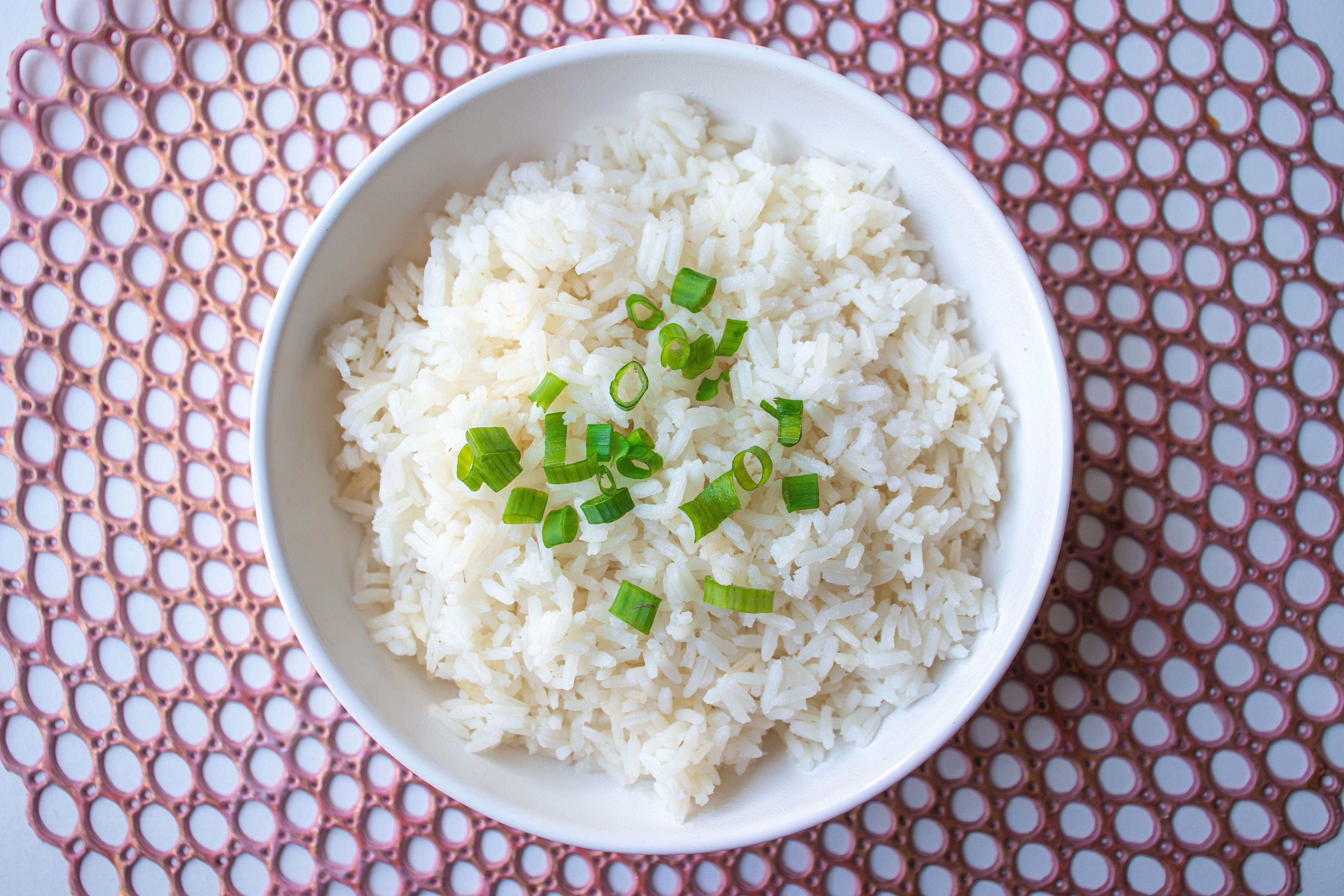
Wali wa Nazi is a Kenyan coconut rice dish where rice is the dominant ingredient. Rice is a high-glycemic grain with approximately 45g of net carbs per cooked cup serving, which alone exceeds or meets the entire daily carb limit for ketosis. While coconut milk and coconut cream are keto-friendly fats, they cannot offset the massive carbohydrate load from the rice. This dish is fundamentally incompatible with a ketogenic diet in any reasonable portion size.
Wali wa Nazi is a traditional Kenyan coconut rice dish consisting entirely of plant-based ingredients: rice, coconut milk, coconut cream, salt, and water. All components are derived from plants with no animal products or animal-derived ingredients present. Coconut milk and coconut cream are whole-food plant-based ingredients extracted directly from coconut flesh. This is a minimally processed, nutritionally wholesome side dish that aligns strongly with both vegan and whole-food plant-based principles.
Wali wa Nazi is a Kenyan coconut rice dish whose primary ingredient is rice, a grain that is categorically excluded from the paleo diet. Rice was not available to Paleolithic hunter-gatherers in its cultivated form and contains anti-nutrients. Additionally, salt is added, which is also discouraged on strict paleo. The coconut milk and coconut cream are paleo-friendly ingredients, but they cannot redeem a dish built on a non-paleo grain foundation.
Wali wa Nazi combines two Mediterranean diet concerns: white rice (a refined grain offering little fiber) and coconut milk/cream (a saturated fat source entirely outside the Mediterranean tradition, where olive oil is the canonical fat). White rice alone might earn a 'caution' rating in moderate portions, but the heavy use of coconut milk and cream significantly increases saturated fat content without any of the beneficial polyphenols found in olive oil. This dish is not plant-forward in the Mediterranean sense, contains no legumes, vegetables, or whole grains, and relies on a fat source that contradicts the diet's core principles. The combination pushes this firmly into 'avoid' territory.
Some modern Mediterranean diet interpreters argue that whole, minimally processed plant-derived fats — including coconut milk used in traditional cuisines — can be incorporated occasionally, noting that the saturated fat in coconut (lauric acid) may behave differently metabolically than animal saturated fats. Additionally, white rice is a staple in some Eastern Mediterranean and Middle Eastern traditions, and moderate portions have been accepted by researchers like those behind the PREDIMED-adjacent studies examining regional variations.
Wali wa Nazi is a Kenyan coconut rice dish consisting entirely of plant-derived ingredients: rice (a grain), coconut milk, coconut cream (both plant-based fats from coconut), salt, and water. There are no animal products whatsoever. Rice is a high-carbohydrate grain explicitly excluded from the carnivore diet, and coconut milk/cream are plant-based fats that violate the animal-products-only rule. This dish is fundamentally incompatible with the carnivore diet at every level.
Wali wa Nazi is a Kenyan coconut rice dish. While coconut milk, coconut cream, salt, and water are all Whole30-compliant ingredients, the primary base ingredient — rice — is explicitly excluded on the Whole30 program. Rice is a grain, and all grains are eliminated for the 30-day period with no exceptions. The dish cannot be made compliant by substitution without fundamentally changing what it is.
Wali wa Nazi is Kenyan coconut rice made with white rice, coconut milk, coconut cream, salt, and water. White rice itself is a well-established low-FODMAP food with no FODMAP concerns at standard servings. The complication comes from coconut milk and coconut cream. Per Monash University, canned coconut milk is low-FODMAP at 1/2 cup (125ml) but becomes high-FODMAP at larger servings due to polyols (sorbitol). Coconut cream is similarly dose-dependent — low-FODMAP at 2 tablespoons (60ml) but high-FODMAP in larger quantities. Wali wa Nazi is traditionally made with a generous amount of coconut milk and coconut cream as the primary cooking liquid, meaning the total coconut-derived FODMAPs absorbed into a standard serving of this dish could exceed safe thresholds. A small portion may be tolerable, but a typical side-dish serving carries meaningful risk of exceeding polyol limits, particularly if coconut cream is used liberally as a finishing ingredient in addition to coconut milk during cooking.
Monash University rates coconut milk as low-FODMAP at 1/2 cup and coconut cream at 2 tablespoons, so some FODMAP practitioners consider this dish acceptable in small controlled portions. However, because coconut milk and cream together form the cooking base of this dish, clinical FODMAP dietitians often advise caution during the strict elimination phase, as the cumulative polyol load across a standard serving is difficult to estimate and likely exceeds safe thresholds.
Wali wa Nazi (coconut rice) is problematic for DASH diet adherence primarily due to its heavy use of coconut milk and coconut cream, which are tropical oils/fats explicitly limited under DASH guidelines due to their very high saturated fat content. Full-fat coconut milk contains approximately 24g of saturated fat per cup, and coconut cream is even more concentrated. DASH guidelines specifically call out tropical oils (coconut, palm, palm kernel) as foods to limit. Additionally, the base ingredient is white rice rather than a whole grain, providing minimal fiber and fewer micronutrients compared to brown rice. Salt is added, contributing sodium. The dish lacks the potassium, magnesium, calcium, and fiber that DASH emphasizes. While portion size could theoretically mitigate some concerns, as commonly prepared this dish is high in saturated fat relative to DASH targets.
NIH DASH guidelines explicitly restrict tropical oils including coconut products due to saturated fat content. However, some updated clinical interpretations note that the saturated fats in coconut (medium-chain triglycerides) may have a different metabolic profile than long-chain saturated fats found in animal products, and a small portion of coconut rice as an occasional side dish may be acceptable within an otherwise DASH-compliant dietary pattern — though the AHA and most DASH clinicians still recommend limiting coconut-based saturated fats.
Wali wa Nazi is coconut rice — white rice cooked in coconut milk and coconut cream — presenting multiple Zone Diet challenges. White rice is a high-glycemic, 'unfavorable' carbohydrate in Zone terminology, causing rapid blood sugar spikes and disrupting the eicosanoid balance Dr. Sears emphasizes. Coconut milk and coconut cream are very high in saturated fat, which conflicts with Zone's preference for monounsaturated fats. The dish is essentially pure carbohydrate and saturated fat with no protein component, making it structurally incompatible with the 40/30/30 block ratio. As a side dish, it would need to be paired with substantial lean protein and low-glycemic vegetables to even approximate Zone balance, and the portions would need to be extremely small (a few tablespoons) to keep carb blocks in check. The saturated fat load from coconut cream further compounds the problem since Zone explicitly discourages saturated fat in favor of monounsaturated sources. While technically not 'impossible' to incorporate in a tiny portion alongside a full Zone plate, the dish as typically served offers very little Zone-compatible value and actively works against the diet's core principles. A score of 3 reflects that it is not pure sugar or a processed food, but it is a very poor Zone fit.
Wali wa Nazi is a Kenyan coconut rice dish made with white rice, coconut milk, and coconut cream. It presents a mixed inflammatory profile. White rice is a refined carbohydrate with a high glycemic index, which can promote inflammatory markers (CRP, IL-6) when consumed regularly in large portions, though it lacks added sugars or artificial additives. Coconut milk and coconut cream are high in saturated fat — primarily medium-chain triglycerides (MCTs), especially lauric acid — which sits in a contested space within anti-inflammatory nutrition. Dr. Weil's framework categorizes coconut products as foods to limit due to saturated fat content. The dish has no omega-3s, no antioxidants, no polyphenols, and no fiber-rich components — missing the building blocks of an anti-inflammatory profile. However, it also contains no trans fats, no seed oils, no added sugars, no processed additives, and no high-fructose corn syrup, making it relatively clean from a 'avoid' standpoint. As a side dish consumed occasionally in modest portions alongside vegetables, legumes, or lean protein, it can fit within a broadly anti-inflammatory eating pattern without being a strong choice on its own merits.
Some researchers and paleo/ancestral diet advocates argue that MCTs in coconut fat are metabolically distinct from long-chain saturated fats and may not drive systemic inflammation in the same way — a view that would push this dish toward a more neutral or even slightly favorable rating. In contrast, mainstream anti-inflammatory guidance (including Dr. Weil's pyramid) recommends limiting coconut products and saturated fats broadly, keeping the verdict in 'caution' territory.
Wali wa Nazi (coconut rice) is a refined carbohydrate base with no meaningful protein, negligible fiber, and a significant saturated fat load from both coconut milk and coconut cream. For GLP-1 patients, this dish scores poorly on nearly every priority: it delivers minimal nutritional value per calorie, contains no protein to support muscle preservation, offers almost no fiber to combat GLP-1-related constipation, and the high saturated fat content from coconut products can worsen nausea, bloating, and reflux — all common GLP-1 side effects. The combination of refined white rice (fast-digesting starch) and high-fat coconut cream creates a calorie-dense, nutrient-poor dish that occupies limited stomach capacity without delivering meaningful nutrition. As a side dish with no primary protein, it would displace more nutrient-dense foods from an already reduced appetite. A very small portion alongside a high-protein main could be tolerated occasionally, but even then it is a poor use of limited caloric intake on a GLP-1 regimen. Scored at 3 rather than 1-2 only because it is not fried, not sugary, and not carbonated, and small-portion use alongside adequate protein is conceivable.
*See how scores were generated at our methodology page.
Nutritional profile
Six traits that cut across every diet.
Fiber & Plants
How much whole-plant food and fiber it delivers.
Healthy Fats
The quality of its fats (unsaturated, omega-3).
Whole / Unprocessed
How close it is to its natural, unprocessed form.
Gut Gentle
How easy it is on digestion (low FODMAP, few irritants).
Low Glycemic
How little it spikes your blood sugar.
Protein Density
How much protein it packs per calorie.
Controversy Index
Higher controversy = more disagreement between diets.
Diet-Specific Tips
 Vegan — 9/10
View tips
- Rice is fully plant-based and vegan
- Coconut milk and coconut cream are plant-derived, not dairy
- No animal products, by-products, or animal-derived additives present
- Minimal processing — all ingredients are close to their whole-food form
- Salt and water are non-animal and uncontroversial
- No hidden animal-derived emulsifiers or stabilizers typical of processed foods
 Low-FODMAP — 6/10
View tips
- White rice is fully low-FODMAP and safe at any reasonable serving
- Coconut milk is low-FODMAP at ≤1/2 cup but high-FODMAP above that due to sorbitol (polyol)
- Coconut cream is low-FODMAP at ≤2 tablespoons but high-FODMAP at larger amounts
- This dish uses coconut milk and cream as the primary cooking liquid, making cumulative polyol intake a concern
- Standard side-dish portions likely exceed the safe coconut thresholds when both ingredients are used
- Salt and water contribute no FODMAPs
- FODMAP stacking risk is significant given two coconut-derived ingredients
 Zone — 5/10
View tips
- White rice is a high-glycemic 'unfavorable' carbohydrate in Zone methodology
- Coconut milk and coconut cream are high in saturated fat, conflicting with Zone's monounsaturated fat preference
- No protein content — structurally incompatible with 40/30/30 ratio as a standalone component
- Extremely small portions required to fit within Zone carb blocks, making it impractical
- No fiber, polyphenols, or anti-inflammatory nutrients — low Zone nutritional value
- As a side dish, would require pairing with lean protein and low-GI vegetables to approach Zone balance
 Anti-Inflammatory — 4/10
View tips
- White rice is a refined carbohydrate with high glycemic index, potentially pro-inflammatory in large quantities
- Coconut milk and cream are high in saturated fat (lauric acid/MCTs) — limited by most anti-inflammatory frameworks
- No omega-3 fatty acids, antioxidants, polyphenols, or dietary fiber present
- No trans fats, seed oils, added sugars, or artificial additives — relatively clean ingredient list
- MCT content of coconut fat is debated; some evidence suggests neutral or different metabolic effect vs. long-chain saturated fats
- As an occasional side dish in a balanced anti-inflammatory meal, impact is moderated by overall dietary context
 GLP-1 Friendly — 5/10
View tips
- Zero protein — fails the #1 GLP-1 dietary priority entirely
- Negligible dietary fiber — does not support constipation prevention
- High saturated fat from coconut milk and coconut cream — likely to worsen GLP-1 GI side effects including nausea and bloating
- Refined white rice is a fast-digesting refined carbohydrate with poor nutrient density per calorie
- Calorie-dense relative to nutritional contribution — counterproductive given reduced appetite on GLP-1 medications
- No meaningful hydration support
- As a side dish with no protein, it occupies stomach space without advancing any GLP-1 dietary goal