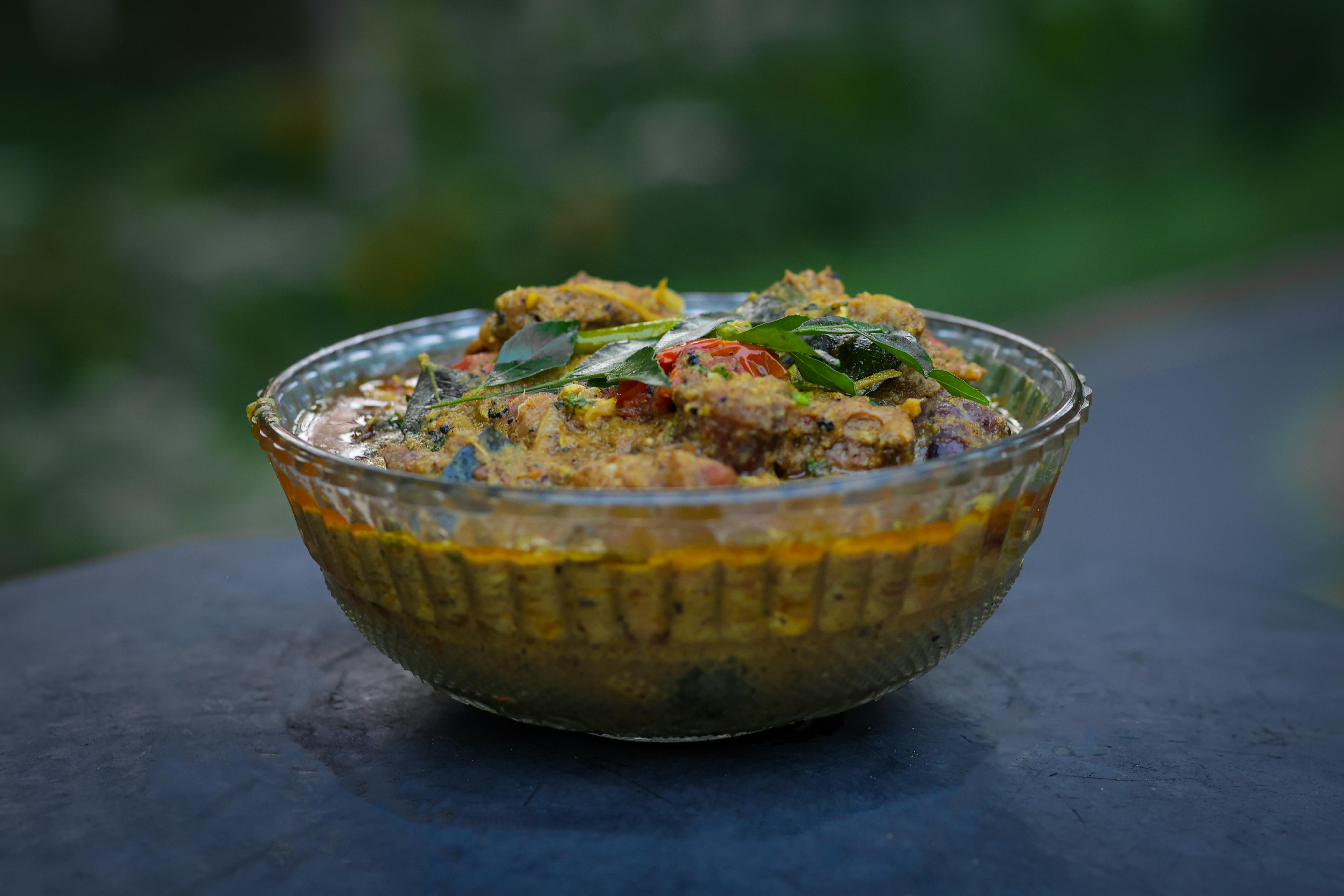
Photo: Sudhi Ashok kumar / Pexels
The diets react (see scores below)
Common Ingredients
- pumpkin
- red beans
- coconut
- cumin
- turmeric
- green chili
- curry leaves
- coconut oil
Specific recipes may vary.
Incompatible with 5 of 11 diets
Diet Ratings
Erissery is fundamentally incompatible with a ketogenic diet due to two high-carb primary ingredients: red beans and pumpkin. Red beans (kidney beans) are extremely high in net carbs — approximately 35-40g net carbs per 100g cooked — and a single serving could easily exceed an entire day's keto carb allowance. Pumpkin adds additional net carbs (~7-9g per 100g). Together, these two ingredients make ketosis maintenance virtually impossible even in small portions. While the dish does contain keto-friendly components — coconut, coconut oil, cumin, turmeric, green chili, and curry leaves are all acceptable — these cannot compensate for the carbohydrate load of the beans and pumpkin. The coconut and coconut oil provide healthy fats, but the macronutrient profile of this dish as a whole is dominated by carbohydrates from the legumes.
Erissery is a traditional Kerala dish made entirely from whole plant-based ingredients. Pumpkin and red beans provide the base with excellent nutritional value, while coconut, coconut oil, cumin, turmeric, green chili, and curry leaves are all fully plant-derived. There are no animal products or animal-derived ingredients in this dish. As a whole-food preparation featuring legumes, vegetables, and minimally processed coconut products, it scores highly even by whole-food plant-based standards.
Erissery contains red beans, which are legumes — a clear exclusion in all mainstream paleo frameworks due to their lectin and phytate content. Legumes are not gray-area foods; they are explicitly off-limits in virtually every major paleo authority's guidelines (Cordain, Sisson, Wolf). The remaining ingredients — pumpkin, coconut, cumin, turmeric, green chili, curry leaves, and coconut oil — are all paleo-approved, but the red beans are a non-negotiable disqualifier. This dish cannot be made paleo-compliant without fundamentally changing its identity by removing the primary protein source.
Erissery is a plant-forward Kerala dish built on pumpkin and red beans — both excellent Mediterranean diet foods — with wholesome spices like cumin and turmeric. The core concern is coconut and coconut oil, which are not part of the traditional Mediterranean dietary pattern. Coconut oil is high in saturated fat, which Mediterranean diet guidelines discourage in favor of extra virgin olive oil as the primary fat. However, the dish itself is otherwise well-aligned: legume-based, vegetable-rich, minimally processed, and free of added sugars or refined grains. The coconut content (both shredded and as oil) elevates saturated fat meaningfully, preventing a full approval, but the dish's plant-forward structure and nutritional density keep it from being avoided.
Some modern integrative Mediterranean diet practitioners argue that whole coconut (as opposed to refined coconut oil) contains fiber and micronutrients that partially offset saturated fat concerns, and that plant-derived saturated fats behave differently metabolically than animal-derived ones. Additionally, a minority of Mediterranean diet researchers adopt a broader 'plant-fat inclusive' framework that accommodates traditional non-Mediterranean plant oils used in their cultural context, which would push this dish closer to approval.
Erissery is a traditional Kerala dish made entirely from plant-based ingredients. Every single component — pumpkin, red beans, coconut, cumin, turmeric, green chili, curry leaves, and coconut oil — is plant-derived. There are no animal products whatsoever in this dish. Red beans are a legume, which is among the most excluded food categories on carnivore due to antinutrients (lectins, phytates). Pumpkin is a carbohydrate-rich plant food. Coconut and coconut oil are plant fats explicitly excluded in favor of animal fats. The spices and curry leaves are plant compounds carnivore seeks to eliminate. This dish is completely incompatible with the carnivore diet at every level — ingredient, macronutrient profile, and philosophy.
Erissery contains red beans (kidney beans), which are legumes and explicitly excluded from the Whole30 program. Unlike green beans, sugar snap peas, and snow peas — which are specifically excepted — red beans have no such exception and fall squarely within the excluded legume category. All other ingredients (pumpkin, coconut, cumin, turmeric, green chili, curry leaves, coconut oil) are fully compliant, but the red beans alone disqualify this dish.
Erissery is a traditional Kerala dish that combines pumpkin with red kidney beans (rajma) and a coconut-based tempering. The primary FODMAP concern is the red beans (kidney beans), which are high in GOS (galacto-oligosaccharides) — a key FODMAP that is problematic even at small servings. Red/kidney beans are consistently rated high-FODMAP by Monash University, and since they are a primary, structural ingredient in this dish (not a garnish), there is no realistic way to consume a standard serving of Erissery while staying within safe FODMAP limits. Pumpkin (butternut-type) can be moderate-FODMAP depending on serving size due to polyols. Coconut in small amounts is generally low-FODMAP, and spices like cumin, turmeric, green chili, curry leaves, and coconut oil are all low-FODMAP. However, the red beans alone make this dish unsuitable for the FODMAP elimination phase at any standard serving size.
Erissery has several DASH-friendly components — pumpkin is an excellent source of potassium, fiber, and micronutrients; red beans provide plant-based protein, fiber, and magnesium; and spices like turmeric and cumin add anti-inflammatory benefits with negligible sodium. However, two ingredients raise concerns under DASH guidelines: coconut and coconut oil. Both are high in saturated fat, which DASH explicitly limits, and tropical oils like coconut oil are specifically flagged by NIH/NHLBI guidelines. The amount of coconut and coconut oil used in a traditional Erissery serving can meaningfully contribute to saturated fat intake. The dish is otherwise low in sodium and free of added sugars or processed ingredients, keeping it from an 'avoid' rating. Portion control and reducing or substituting coconut oil with a vegetable oil (canola, olive) would bring this dish much closer to full DASH approval.
NIH DASH guidelines explicitly recommend limiting tropical oils including coconut oil due to saturated fat content. However, some updated clinical interpretations note that the medium-chain triglycerides (MCTs) in coconut may behave differently metabolically than long-chain saturated fats, and that the overall dietary pattern of a Kerala-style meal — rich in vegetables, legumes, and fiber — may mitigate cardiovascular risk despite coconut use. Some DASH-oriented dietitians allow moderate coconut in the context of an otherwise low-saturated-fat day.
Erissery is a traditional Kerala dish combining pumpkin, red beans, and coconut. From a Zone perspective, it has several positive attributes but also some challenges. Red beans provide a reasonable vegetarian protein source and are moderate-glycemic with good fiber content, making them 'favorable' Zone carbs. Pumpkin is a low-calorie vegetable but has a moderate glycemic index, classifying it as 'unfavorable' in Zone terminology — though its glycemic load is manageable in controlled portions. The primary fat concern is coconut and coconut oil: both are high in saturated fat, which early Zone Diet guidelines strictly limited. However, Sears' later anti-inflammatory writings (particularly 'The Zone Diet' updates) acknowledged that medium-chain triglycerides (MCTs) in coconut may have a different metabolic profile than long-chain saturated fats. The dish lacks a clear lean protein source — red beans provide protein but at a lower density than animal protein, requiring larger portions to hit Zone protein blocks, which simultaneously drives up carbohydrate intake. The anti-inflammatory spices (turmeric, cumin, curry leaves, green chili) align well with Sears' polyphenol emphasis. Overall, Erissery can be incorporated into a Zone meal but requires careful portioning: small serving sizes to manage carb load, pairing with additional lean protein (e.g., fish or chicken) to balance the block ratio, and accounting for the saturated fat from coconut oil rather than preferred monounsaturated sources.
Earlier Zone Diet publications (Enter the Zone, 1995) would rate coconut and coconut oil more harshly due to high saturated fat content, potentially pushing the score lower. Sears' more recent anti-inflammatory framework is more permissive of coconut's MCT fats. Additionally, some Zone practitioners note that pumpkin's net carb content is low enough per typical serving that it poses little glycemic threat, while others flag it as an 'unfavorable' carb to be used cautiously.
Erissery is a Kerala dish with a largely anti-inflammatory ingredient profile. Pumpkin is rich in beta-carotene and carotenoids, which are potent antioxidants and reduce inflammatory markers. Red beans (kidney beans) provide fiber, plant protein, and polyphenols that support gut health and reduce CRP. Turmeric contains curcumin, one of the most well-researched anti-inflammatory compounds. Green chili adds capsaicin, another anti-inflammatory agent. Curry leaves and cumin offer additional antioxidant and anti-inflammatory phytochemicals. Coconut itself contains medium-chain triglycerides (MCTs) and lauric acid; when used as grated/shredded coconut in moderate amounts, it contributes fiber and polyphenols. The primary concern is coconut oil, which is high in saturated fat (primarily lauric acid) — most anti-inflammatory frameworks including Dr. Weil's caution against regular use of tropical oils, while some functional medicine practitioners consider it neutral or beneficial. As a traditional dish where coconut oil is used in modest quantities for tempering, the overall inflammatory load remains moderate-to-favorable given the strength of the other anti-inflammatory ingredients.
Coconut oil is the main point of contention: mainstream anti-inflammatory nutrition (Dr. Weil, AHA-aligned protocols) advises limiting saturated fats including coconut oil, favoring extra virgin olive oil instead. However, a growing number of functional medicine and Ayurvedic-aligned practitioners consider virgin coconut oil to be neutral or anti-inflammatory due to its MCT content and lauric acid's antimicrobial properties, especially when used in traditional culinary quantities as in this dish.
Erissery is a traditional Kerala dish combining pumpkin and red beans in a coconut-based preparation. The red beans provide meaningful plant protein and excellent fiber, and pumpkin adds micronutrients, water content, and additional fiber — all positives for GLP-1 patients. However, the dish contains two significant fat sources: coconut (grated, often generous) and coconut oil used for tempering. Coconut is high in saturated fat, and coconut oil is among the most saturated of cooking oils. Combined, these raise the total fat per serving meaningfully, which can worsen GLP-1 side effects like nausea, bloating, and reflux — especially given slowed gastric emptying. Green chili is present but typically in modest amounts in this dish, posing low risk for most patients. Cumin, turmeric, and curry leaves are digestively benign or mildly beneficial. The dish is not protein-dense enough per serving to anchor a GLP-1 meal on its own (beans help but portion size as a side limits total protein contribution). As a small side alongside a lean protein main, it is acceptable. As a standalone protein source or primary dish, it falls short. Portion control is essential given the fat load from coconut.
Some GLP-1-focused dietitians are more permissive about coconut-based dishes because coconut contains medium-chain triglycerides (MCTs), which are metabolized differently than long-chain saturated fats and may be somewhat easier to digest — this creates genuine disagreement about how harshly to penalize coconut fat in GLP-1 dietary guidance. Others maintain that any high-saturated-fat preparation warrants caution given the consistent clinical pattern of GI side effects with fatty foods on these medications.
*See how scores were generated at our methodology page.
Nutritional profile
Six traits that cut across every diet.
Fiber & Plants
How much whole-plant food and fiber it delivers.
Healthy Fats
The quality of its fats (unsaturated, omega-3).
Whole / Unprocessed
How close it is to its natural, unprocessed form.
Gut Gentle
How easy it is on digestion (low FODMAP, few irritants).
Low Glycemic
How little it spikes your blood sugar.
Protein Density
How much protein it packs per calorie.
Controversy Index
Higher controversy = more disagreement between diets.
Diet-Specific Tips
 Vegan — 9/10
View tips
- All ingredients are 100% plant-derived
- Whole food preparation with no processed or refined ingredients
- Red beans and pumpkin provide fiber, protein, and complex carbohydrates
- Coconut and coconut oil are plant-based fat sources — coconut oil is minimally processed but still a whole-food-adjacent ingredient
- No animal-derived additives, thickeners, or flavor enhancers
- Traditional dish naturally aligned with vegan eating
 Mediterranean — 5/10
View tips
- Pumpkin and red beans are strongly Mediterranean-compatible plant foods
- Coconut oil contradicts the Mediterranean principle of olive oil as primary fat
- Shredded coconut adds additional saturated fat beyond what the diet encourages
- No red meat, processed ingredients, refined grains, or added sugars
- Spices (cumin, turmeric, curry leaves) are neutral to positive
- Overall dish is plant-based and legume-centered, a Mediterranean strength
- Coconut is non-traditional in Mediterranean cuisine and not endorsed by mainstream guidelines
 DASH — 5/10
View tips
- Pumpkin is rich in potassium, fiber, and beta-carotene — strongly DASH-approved
- Red beans provide plant-based protein, fiber, and magnesium — core DASH food
- Coconut oil is a tropical oil explicitly limited by NIH DASH guidelines due to high saturated fat
- Shredded coconut adds additional saturated fat load
- Dish is naturally very low in sodium — a significant DASH advantage
- No added sugars, processed ingredients, or red meat
- Substituting coconut oil with canola or olive oil would significantly improve DASH compatibility
 Zone — 5/10
View tips
- Red beans are a moderate Zone-friendly carb/protein source with good fiber reducing net carb load
- Pumpkin is classified as an 'unfavorable' carb in Zone due to moderate glycemic index
- Coconut and coconut oil contribute significant saturated fat, conflicting with Zone's monounsaturated fat preference
- No lean animal protein — bean-only protein requires larger portions, disrupting carb-protein block balance
- Anti-inflammatory spices (turmeric, cumin, curry leaves) align with Sears' polyphenol focus
- Dish is best used as a side with added lean protein to achieve Zone 40/30/30 ratio
- Coconut oil's MCT content may be more acceptable under Sears' later anti-inflammatory framework
 Anti-Inflammatory — 7/10
View tips
- Pumpkin is high in beta-carotene and antioxidant carotenoids with anti-inflammatory properties
- Red beans provide fiber, plant protein, and polyphenols that reduce CRP
- Turmeric (curcumin) is one of the most evidence-backed anti-inflammatory spices
- Green chili adds capsaicin, which inhibits NF-κB inflammatory pathways
- Cumin and curry leaves contribute additional antioxidant phytochemicals
- Coconut oil is high in saturated fat — a caution factor in most anti-inflammatory frameworks
- Coconut (flesh/grated) adds fiber and MCTs; moderate amounts are generally acceptable
- Dish is plant-based with legumes as primary protein, aligning with anti-inflammatory dietary emphasis
 GLP-1 Friendly — 5/10
View tips
- Red beans provide plant protein and high fiber — both GLP-1 priorities
- Pumpkin adds water content, micronutrients, and additional fiber
- Coconut (grated) is high in saturated fat — meaningful concern for GLP-1 GI side effects
- Coconut oil adds further saturated fat load
- Low protein density as a side dish — insufficient to meet per-meal protein targets alone
- Small portion as a side mitigates fat risk; larger servings increase GI side effect risk
- Green chili present but typically mild quantity; unlikely to cause reflux issues at normal serving
- Nutrient-dense ingredients overall, but fat profile limits the score