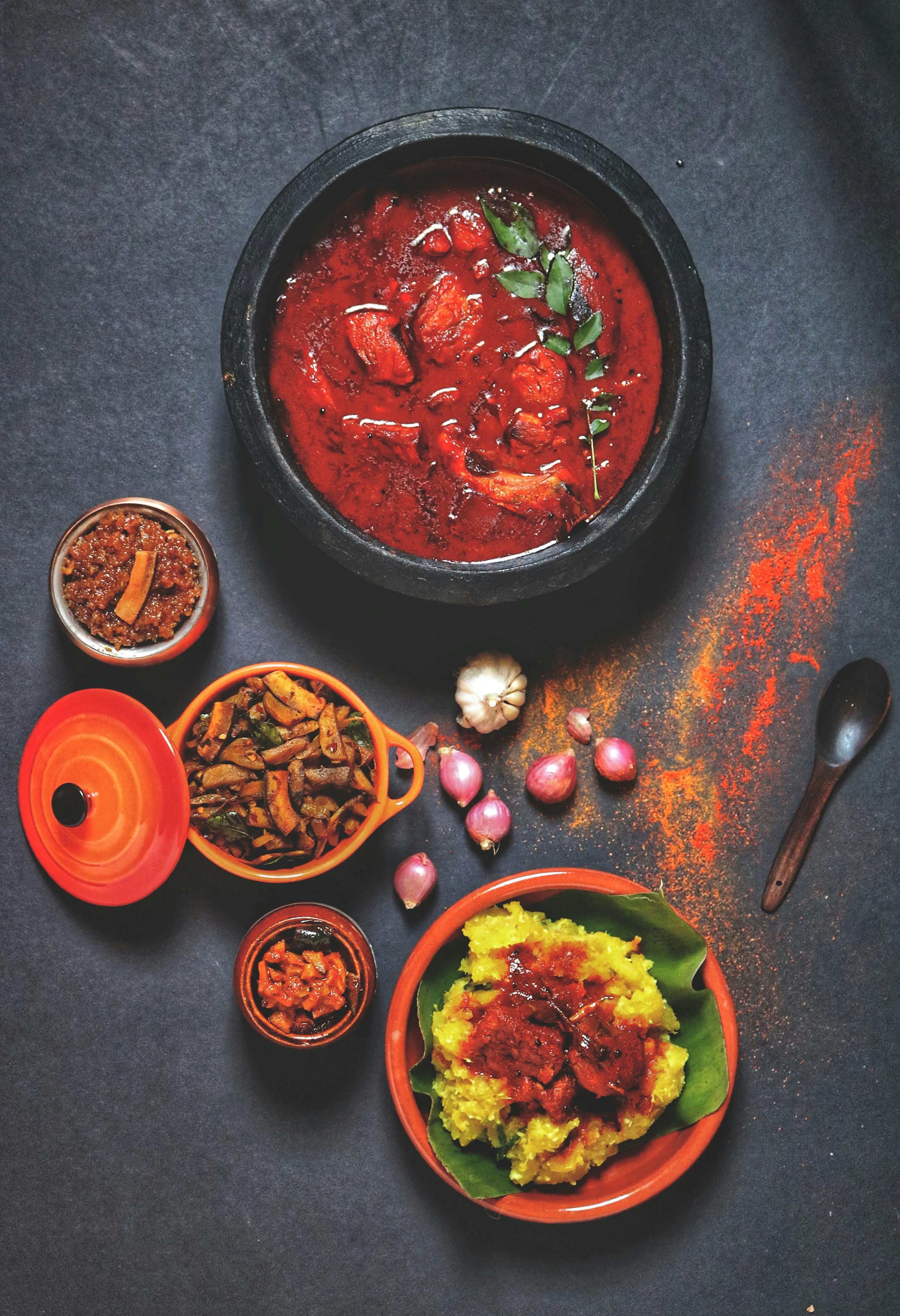
Photo: Saveurs Secretes / Pexels
Indian
Kappa and Meen
The diets react (see scores below)
Common Ingredients
- tapioca
- fish
- kokum
- chili powder
- shallots
- garlic
- curry leaves
- coconut oil
Specific recipes may vary.
Incompatible with 4 of 11 diets
Diet Ratings
Kappa and Meen is a traditional Kerala dish where tapioca (cassava/kappa) is the primary carbohydrate base. Tapioca is extremely high in net carbs — a typical serving (100g cooked) contains roughly 25-35g net carbs, and a main-course portion would easily contain 200-300g of tapioca, delivering 50-100g+ net carbs in a single dish, far exceeding the entire daily keto limit. While the fish, coconut oil, kokum, curry leaves, shallots, and garlic are keto-friendly or low-impact ingredients, they cannot offset the dominant carb load from tapioca. This dish is fundamentally structured around a starchy root vegetable and is incompatible with ketosis.
Kappa and Meen is a traditional Kerala dish combining tapioca (kappa) with fish (meen). Fish is an animal product and is categorically excluded from a vegan diet. While several other ingredients — tapioca, kokum, chili powder, shallots, garlic, curry leaves, and coconut oil — are entirely plant-based, the inclusion of fish as a primary protein makes this dish incompatible with veganism. There is no ambiguity here: fish is animal flesh.
Kappa and Meen is a Kerala classic pairing tapioca (cassava/kappa) with fish curry. Most ingredients are solidly paleo: fish is an approved protein, kokum is a natural fruit-based souring agent, chili powder and curry leaves are paleo-friendly spices, shallots and garlic are approved aromatics, and coconut oil is a preferred paleo fat. The dish's primary complexity lies with tapioca (cassava). Tapioca/cassava is a starchy tuber — and tubers are generally paleo-permitted — but cassava occupies a grayer zone than sweet potatoes due to its higher starch density and the fact that it must be processed (soaked, boiled) to remove naturally occurring cyanogenic compounds. Strict Cordain-school paleo is cautious about high-glycemic starchy tubers, while more moderate paleo frameworks accept cassava freely. There are no grains, legumes, dairy, seed oils, or refined sugars present, which is a strong positive. Overall the dish leans paleo-friendly but the tapioca prevents a full approval.
Strict Loren Cordain-aligned paleo practitioners would flag cassava/tapioca for its very high glycemic load and the processing required to neutralize its anti-nutrients, arguing it diverges meaningfully from ancestral starch sources. Conversely, Chris Kresser and the broader ancestral health community widely accept cassava as a legitimate 'safe starch,' especially in traditional preparations like this one.
Kappa and Meen (tapioca with fish) is a traditional Kerala dish with several Mediterranean-compatible elements: fish as the primary protein aligns well with Mediterranean principles of eating seafood 2-3 times weekly, and the aromatics (shallots, garlic, curry leaves), kokum, and chili powder are all whole, plant-based ingredients. However, two factors introduce friction with Mediterranean guidelines. First, tapioca (cassava) is a refined starchy carbohydrate with a high glycemic index and minimal fiber, analogous to white rice or white bread — not a whole grain. Second, coconut oil, while a plant-based fat, is high in saturated fat and is not traditional to the Mediterranean diet, where extra virgin olive oil is the canonical fat. The dish is not processed, contains no added sugars, and the fish component is strongly encouraged. On balance, it is acceptable in moderation but not a core Mediterranean staple due to the tapioca and coconut oil.
Some modern Mediterranean diet interpreters take a broader view of plant-based fats, accepting coconut oil as a minimally processed option from traditional cuisines. Additionally, traditional coastal Mediterranean communities did consume starchy root vegetables when grains were scarce, which could extend some acceptance to tapioca as a whole-food carbohydrate source.
Kappa and Meen is a traditional Kerala dish combining tapioca (cassava) with fish, but the dish is overwhelmingly plant-based in its ingredient list. Tapioca is a starchy root vegetable and the primary component of the dish, making it fundamentally incompatible with the carnivore diet. The remaining ingredients — kokum (a fruit), shallots, garlic, curry leaves, and coconut oil — are all plant-derived. Chili powder is a plant-based spice. The only carnivore-compatible ingredient is the fish itself. With 7 out of 8 ingredients being plant-derived, this dish cannot be considered carnivore-friendly in any tier of the diet.
Kappa and Meen (tapioca with fish) is a traditional Kerala dish whose ingredients are all Whole30-compliant. Tapioca (cassava root) is a starchy vegetable, not a grain, and is fully allowed. Fish is an approved protein. Kokum is a natural souring fruit used as a flavoring agent and is compliant. Chili powder, shallots, garlic, and curry leaves are all compliant spices, aromatics, and herbs. Coconut oil is an explicitly approved natural fat. There are no excluded ingredients in this dish as listed.
Kappa and Meen (tapioca with fish curry) contains two major high-FODMAP ingredients that make it unsuitable during the elimination phase. Garlic is one of the highest FODMAP foods tested by Monash University, containing significant fructans even in tiny amounts — there is no safe serving size of whole garlic. Shallots are similarly high in fructans and must be avoided entirely during elimination. These two allium ingredients are foundational to this dish's flavor profile and cannot simply be omitted without fundamentally altering the recipe. Tapioca (cassava) is low-FODMAP and fish is protein with no FODMAPs. Kokum (a souring agent common in Kerala cuisine) is not well-tested by Monash but is used in small quantities. Coconut oil is FODMAP-free. Curry leaves are low-FODMAP. Chili powder is low-FODMAP at typical culinary amounts. However, the combination of garlic and shallots as core aromatic ingredients renders this dish a clear avoid during elimination phase.
Kappa and Meen (tapioca with fish curry) has several DASH-positive elements — fish is a lean protein explicitly encouraged by DASH, tapioca provides carbohydrate energy, kokum and shallots add beneficial plant compounds, and garlic and curry leaves are nutritionally favorable. However, coconut oil is a tropical oil high in saturated fat that NIH/NHLBI DASH guidelines explicitly limit. The use of chili powder adds minimal sodium concern on its own, but traditional preparations of this Kerala dish often involve significant added salt for the fish curry component, which can push sodium levels into caution territory. The dish lacks the calcium-rich dairy and magnesium-rich whole grains that anchor a DASH meal. With portion control and reduced coconut oil (substituting a DASH-approved vegetable oil), this dish could be improved. As commonly prepared, it sits in the caution zone — beneficial protein and plant ingredients offset by the saturated fat from coconut oil and potentially high sodium in the curry base.
NIH DASH guidelines explicitly restrict tropical oils including coconut oil due to saturated fat content. However, some updated clinical interpretations note that traditional coconut oil use in South Asian cooking tends to be modest in quantity, and the overall dietary pattern — fish, vegetables, herbs, and plant-based acids like kokum — aligns well with DASH principles; these practitioners may rate this dish more favorably if coconut oil is used sparingly.
Kappa and Meen (tapioca with fish curry) is a traditional Kerala dish that presents a mixed Zone profile. The fish component is excellent — lean protein that fits Zone blocks perfectly, with anti-inflammatory omega-3s that align with Sears' later emphasis on eicosanoid balance. Kokum, shallots, garlic, and curry leaves are polyphenol-rich and Zone-friendly. However, tapioca (cassava) is the central problem: it is a very high-glycemic, starchy root vegetable with minimal fiber, making it one of the worst carbohydrate sources from a Zone perspective — similar to white rice or white potato in its glycemic impact. It offers little nutritional value beyond calories. Coconut oil contributes saturated fat, which was strictly limited in early Zone writings. The dish as traditionally prepared will be heavily carb-skewed with poor glycemic quality, making the 40/30/30 ratio very difficult to achieve without dramatically reducing tapioca portions. With careful portion control — using a small amount of tapioca, generous fish, and balancing with low-GI vegetables — it can be adapted, but as traditionally served it is a Zone challenge.
Some Zone practitioners following Sears' later anti-inflammatory framework (Toxic Fat, The Mediterranean Zone) may be slightly more permissive toward coconut oil, acknowledging that medium-chain triglycerides behave differently from long-chain saturated fats. Additionally, the fish, kokum, and polyphenol-rich aromatics are genuinely excellent Zone foods, and a practitioner might argue that a very small tapioca portion (1 carb block worth) paired with a large fish serving makes this dish workable in the Zone system rather than categorically unfavorable.
Kappa and Meen is a traditional Kerala dish pairing tapioca (cassava) with fish, typically a fatty or white fish like sardines or mackerel, cooked with kokum, chili powder, shallots, garlic, curry leaves, and coconut oil. The fish component is a strong anti-inflammatory positive — especially if oily fish like sardines or mackerel are used, which are rich in omega-3 fatty acids (EPA/DHA). Kokum (Garcinia indica) contains hydroxycitric acid and anthocyanins with emerging anti-inflammatory and antioxidant properties. Garlic, curry leaves, and chili powder (capsaicin) are all recognized anti-inflammatory spices. Shallots provide quercetin and other polyphenols. The concerns center on two ingredients: coconut oil and tapioca. Coconut oil is high in saturated fat (lauric acid), which most anti-inflammatory frameworks — including Dr. Weil's — recommend limiting, though it lacks trans fats and has some antimicrobial properties. Tapioca is a refined starch with a high glycemic index and minimal fiber, protein, or micronutrient density — it is essentially a starchy filler that contributes to glycemic load without anti-inflammatory benefit. The overall dish is not pro-inflammatory in the way processed foods are, but the high-GI tapioca base and coconut oil temper what would otherwise be a strong anti-inflammatory profile driven by the fish and spices.
Coconut oil is the key point of disagreement: Dr. Weil's anti-inflammatory pyramid recommends limiting saturated fats including coconut oil, and mainstream anti-inflammatory guidance generally flags it as a caution. However, some functional medicine practitioners (e.g., Dr. Mark Hyman) argue that coconut oil's medium-chain triglycerides (MCTs) behave differently metabolically than long-chain saturated fats and may not drive inflammation in the same way — meaning coconut-oil-based traditional dishes could score higher in some interpretations.
Kappa and Meen (tapioca with fish curry) is a traditional Kerala dish with a mixed nutritional profile for GLP-1 patients. The fish component is a strong positive — it provides lean protein and omega-3 fatty acids, both prioritized for GLP-1 patients. Kokum adds acidity and is easy to digest. Shallots, garlic, and curry leaves contribute micronutrients and are generally well-tolerated. However, tapioca (cassava) is a starchy, low-fiber, low-protein carbohydrate with high glycemic load and very low nutrient density per calorie — essentially an empty-calorie starch. This works against the core GLP-1 dietary priority of maximizing nutrient density in a reduced-appetite context. Coconut oil is a saturated fat that may worsen GI side effects at higher amounts. Chili powder at typical Kerala preparation levels may trigger or worsen reflux and nausea in GLP-1 patients, who already have slowed gastric emptying. The dish is not fried and the fish anchor makes it far better than many alternatives, but the tapioca base and spice level are meaningful concerns. A modified version with smaller tapioca portion and increased fish ratio would score higher.
Some GLP-1-focused dietitians may rate this more favorably given the fish protein and whole-food preparation — particularly for patients who tolerate spice well and keep coconut oil use minimal. Others would flag tapioca's high glycemic index and low fiber as particularly problematic for GLP-1 patients managing blood sugar alongside weight loss, and would recommend substituting a fiber-rich base such as cauliflower or legumes.
*See how scores were generated at our methodology page.
Nutritional profile
Six traits that cut across every diet.
Fiber & Plants
How much whole-plant food and fiber it delivers.
Healthy Fats
The quality of its fats (unsaturated, omega-3).
Whole / Unprocessed
How close it is to its natural, unprocessed form.
Gut Gentle
How easy it is on digestion (low FODMAP, few irritants).
Low Glycemic
How little it spikes your blood sugar.
Protein Density
How much protein it packs per calorie.
Controversy Index
Higher controversy = more disagreement between diets.
Diet-Specific Tips
 Paleo — 5/10
View tips
- Fish is a core paleo-approved protein
- Coconut oil is a preferred paleo fat
- Kokum, shallots, garlic, curry leaves, and chili powder are all paleo-compliant
- Tapioca (cassava) is a tuber — generally allowed in paleo but debated due to high glycemic index and required processing to remove cyanogenic compounds
- No grains, legumes, dairy, seed oils, or refined sugars present
- Traditional preparation (boiling) mitigates cassava's anti-nutrient concerns
 Mediterranean — 6/10
View tips
- Fish is a Mediterranean-approved primary protein (seafood 2-3x/week)
- Tapioca is a high-GI, low-fiber starch — not a whole grain
- Coconut oil is high in saturated fat, not the preferred Mediterranean fat (olive oil)
- All other ingredients (shallots, garlic, kokum, curry leaves, chili) are whole plant foods
- No processed ingredients, added sugars, or red meat
- Dish is minimally processed and traditional
 Whole30 — 8/10
View tips
- Tapioca (cassava) is a root vegetable, not a grain — fully Whole30 compliant
- Fish is an approved Whole30 protein
- Kokum is a natural fruit souring agent — compliant
- Coconut oil is an explicitly allowed natural fat
- Chili powder, shallots, garlic, and curry leaves are all compliant aromatics and spices
- No grains, legumes, dairy, added sugar, or other excluded ingredients present
 DASH — 5/10
View tips
- Fish is a DASH-approved lean protein source
- Coconut oil is a saturated-fat-rich tropical oil restricted by DASH guidelines
- Tapioca is a low-fiber refined starch, lacking the whole grain fiber DASH emphasizes
- Kokum, shallots, garlic, and curry leaves are DASH-compatible plant ingredients
- Sodium level depends heavily on preparation; traditional fish curry can be high in salt
- No dairy or whole grain components to support DASH calcium and fiber targets
- Substituting coconut oil with canola or olive oil would significantly improve DASH score
 Zone — 5/10
View tips
- Tapioca (cassava) is very high-glycemic with low fiber — an 'unfavorable' Zone carbohydrate similar to white potato or white rice
- Fish is an ideal Zone lean protein source with beneficial omega-3 fatty acids
- Coconut oil is high in saturated fat, limited in early Zone writings, though later Zone work is more nuanced
- Kokum, shallots, garlic, and curry leaves are polyphenol-rich and Zone-favorable
- As traditionally served, the dish is carbohydrate-heavy and glycemically poor, making 40/30/30 balance very difficult
- Portion reduction of tapioca and pairing with additional low-GI vegetables could bring the dish closer to Zone compliance
 Anti-Inflammatory — 6/10
View tips
- Fish (especially oily varieties like sardines/mackerel) provides anti-inflammatory omega-3 fatty acids (EPA/DHA)
- Kokum contains anthocyanins and hydroxycitric acid with antioxidant and anti-inflammatory properties
- Garlic, curry leaves, and chili powder (capsaicin) are established anti-inflammatory ingredients
- Shallots provide quercetin and polyphenols
- Tapioca is a high-glycemic refined starch with minimal fiber and nutrients — a neutral-to-negative factor
- Coconut oil is high in saturated fat, which most anti-inflammatory frameworks recommend limiting
- No processed ingredients, trans fats, or refined sugars — a meaningful positive
 GLP-1 Friendly — 5/10
View tips
- Fish provides lean protein and beneficial omega-3 fatty acids — strong positive
- Tapioca is a high-GI, low-fiber, low-protein starch with poor nutrient density per calorie — meaningful negative for GLP-1 patients
- Coconut oil is a saturated fat that may worsen nausea or bloating; amount used is critical
- Chili powder at Kerala-typical levels may aggravate reflux and nausea given slowed gastric emptying on GLP-1s
- Whole-food preparation with no frying is a positive for digestibility
- Kokum, shallots, garlic, and curry leaves are all GLP-1-compatible and contribute antioxidants
- Dish is portion-sensitive — a fish-heavy, tapioca-light serving improves the profile substantially