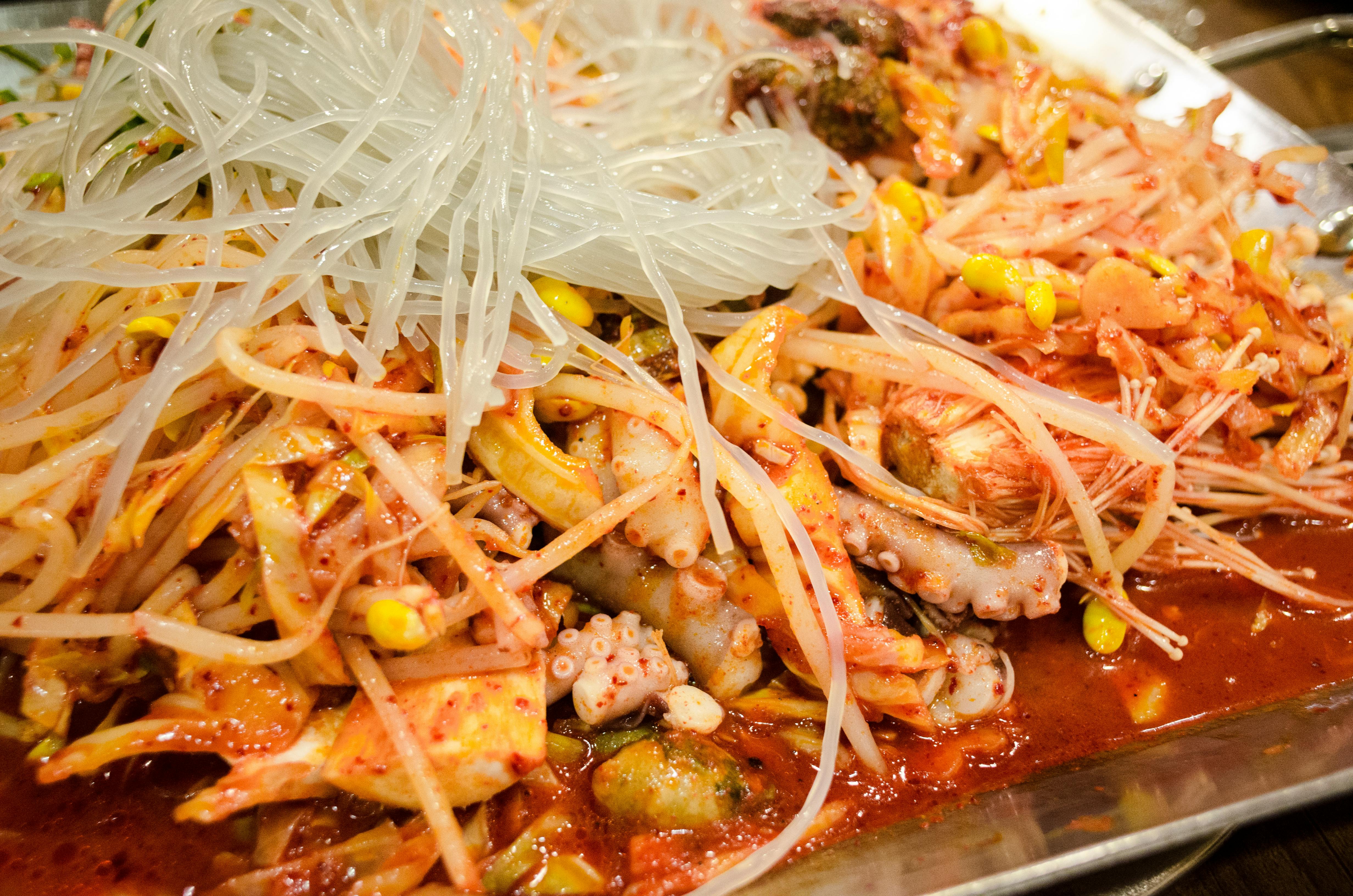
Korean
Chuncheon Dakgalbi
The diets react (see scores below)
Common Ingredients
- chicken
- gochujang
- cabbage
- sweet potato
- rice cakes
- onion
- perilla leaves
- garlic
Specific recipes may vary.
Incompatible with 6 of 11 diets
Diet Ratings
Chuncheon Dakgalbi is fundamentally incompatible with a ketogenic diet due to multiple high-carb ingredients. Rice cakes (tteok) are made from glutinous rice flour and are extremely high in net carbs, easily contributing 30-50g+ per serving on their own. Sweet potato adds another significant carb load (roughly 17-20g net carbs per 100g). Gochujang paste contains fermented sugar and rice, adding additional carbs. Combined, these three ingredients alone can push a single serving well beyond the entire daily keto carb limit of 20-50g. The chicken protein base and cabbage/perilla/garlic components are keto-friendly, but the core structural carbs of this dish are non-negotiable parts of its identity and cannot simply be omitted without fundamentally changing the dish.
Chuncheon Dakgalbi is a Korean spicy stir-fried chicken dish. Chicken is a direct animal product — poultry meat — which is categorically excluded from a vegan diet. There is no ambiguity here: no vegan organization or school of thought permits the consumption of slaughtered animal flesh. The remaining ingredients (gochujang, cabbage, sweet potato, rice cakes, onion, perilla leaves, garlic) are all plant-based, but the presence of chicken as the primary protein makes the dish entirely incompatible with veganism.
Chuncheon Dakgalbi contains two clear paleo-excluded ingredients that disqualify the dish outright. Rice cakes (tteok) are made from glutinous rice flour — a grain product that is categorically excluded from the paleo diet with unanimous consensus. Gochujang, the defining sauce of this dish, is a fermented Korean chili paste made with glutinous rice and soybean paste — combining two major paleo violations (grain + legume) in a single ingredient. The remaining ingredients — chicken, cabbage, sweet potato, onion, perilla leaves, and garlic — are all paleo-approved, and sweet potato is a particularly paleo-friendly tuber. However, the rice cakes and gochujang are not optional garnishes; they are structural and flavor-defining components of the dish. Without them, the dish ceases to be Dakgalbi. The dish as traditionally prepared cannot be considered paleo-compatible.
Chuncheon Dakgalbi features chicken as the primary protein, which is acceptable in the Mediterranean diet in moderate amounts (a few times per week). The dish includes several Mediterranean-friendly vegetables — cabbage, onion, garlic, and perilla leaves — and sweet potato, all of which are plant-based and nutrient-dense. However, the rice cakes (tteok) are made from refined white rice flour, qualifying as a refined grain that Mediterranean guidelines discourage. Gochujang, while a fermented paste with some nutritional merit, often contains added sugar and significant sodium, pushing toward the 'minimal processed/added sugar' boundary. The dish lacks olive oil as the cooking fat and is not part of any Mediterranean culinary tradition. Overall, the lean protein and vegetables are positives, but the refined rice cakes, sugary fermented paste, and non-Mediterranean cooking context temper the rating.
Some modern Mediterranean diet interpreters apply its principles flexibly to global cuisines, noting that chicken-forward dishes rich in vegetables and garlic align well with the diet's spirit; from this view, gochujang's fermented nature could be seen as analogous to other fermented condiments tolerated in the diet, and the dish could score higher if rice cakes are reduced or substituted with a whole-grain starch.
Chuncheon Dakgalbi is almost entirely incompatible with the carnivore diet. While chicken is the primary protein and is acceptable to most carnivore practitioners, the dish is dominated by plant-based ingredients and processed carbohydrates. Gochujang is a fermented chili paste made from red chili peppers, glutinous rice, and soybeans — all plant-derived. Cabbage, sweet potato, rice cakes (tteok), onion, and perilla leaves are all plant foods explicitly excluded from carnivore. Garlic is also a plant-derived additive. The only carnivore-compatible element is the chicken itself, which represents a small fraction of the dish's composition and identity. This dish cannot be adapted to carnivore without being completely reconstructed into something unrecognizable.
Chuncheon Dakgalbi contains two clearly excluded ingredients: rice cakes (tteok) are made from rice, a grain excluded on Whole30, and gochujang (Korean fermented chili paste) typically contains rice flour and often added sugar, both of which are excluded. While the remaining ingredients — chicken, cabbage, sweet potato, onion, perilla leaves, and garlic — are all Whole30-compliant on their own, the dish as traditionally prepared cannot be made compliant without fundamentally altering it. Rice cakes are a defining, structural component of the dish and cannot simply be swapped out.
Chuncheon Dakgalbi contains multiple high-FODMAP ingredients that make it unsuitable during the elimination phase. Garlic is one of the highest-FODMAP foods tested by Monash (high fructans even in tiny amounts). Onion is similarly very high in fructans and a major FODMAP trigger. Gochujang (Korean chili paste) typically contains garlic and onion powder as core ingredients, compounding the fructan load. Rice cakes (tteok) are made from glutinous rice flour and are generally low-FODMAP in small servings, but portions in a main dish tend to be substantial. Cabbage is low-FODMAP at standard servings (75g). Sweet potato is low-FODMAP at ½ cup but becomes high-FODMAP at larger servings due to mannitol. Chicken and perilla leaves are low-FODMAP. However, the combination of garlic, onion, and gochujang alone is sufficient to classify this dish as high-FODMAP — these are foundational to the recipe and cannot be reduced to safe levels without fundamentally altering the dish.
Chuncheon Dakgalbi features several DASH-friendly components — lean chicken (excellent DASH protein), cabbage, onion, perilla leaves, sweet potato (rich in potassium and fiber), and garlic all align well with DASH principles. However, gochujang (fermented chili paste) is the primary concern: it is typically high in sodium (roughly 400-700mg per tablespoon) and contains added sugar. Restaurant or home preparations commonly use 3-5 tablespoons of gochujang plus additional soy sauce or salt, potentially pushing a single serving well above DASH sodium thresholds. Rice cakes (tteok) are refined carbohydrates with minimal fiber, which DASH de-emphasizes relative to whole grains. The dish is not heavily saturated-fat-laden and lacks processed meats, which is favorable. Overall, the dish has a strong nutritional foundation but is undermined by high sodium from gochujang and the refined-carb load of rice cakes, warranting a caution rating. Home-prepared versions using reduced-sodium gochujang, limiting paste quantity, and substituting whole-grain options could bring this closer to DASH approval.
NIH DASH guidelines flag high-sodium condiments like gochujang as problematic for hypertension management. However, some DASH-oriented clinicians with expertise in Asian dietary patterns note that the vegetable density and lean protein quality of dakgalbi can fit within DASH if sodium-reduced gochujang is used and portion size is controlled, reflecting growing recognition that culturally adapted DASH interpretations may better support adherence.
Chuncheon Dakgalbi presents a mixed Zone profile. The dish has a solid lean protein foundation in chicken, which is a Zone-favorable protein source. The vegetables — cabbage, onion, perilla leaves, and garlic — are excellent low-glycemic Zone carbohydrates rich in polyphenols. However, the dish is significantly weighted toward high-glycemic carbohydrates via two problematic ingredients: rice cakes (tteok) and sweet potato. Rice cakes are among the highest glycemic foods available (GI ~80-90) and are essentially pure refined starch with minimal fiber — they carry nearly no net carb offset from fiber and will spike insulin sharply. Sweet potato is more defensible (moderate GI ~50-60, some fiber) but still an 'unfavorable' Zone carb that must be portioned carefully. Gochujang adds a small amount of sugar and fermented carbohydrates. The overall carbohydrate load from rice cakes and sweet potato together will almost certainly push the dish well past the 40% carb ceiling and create a carb-heavy, protein-light ratio. To bring this into Zone compliance, rice cakes should be dramatically reduced or eliminated, sweet potato portioned to a few bites, and the chicken-to-carb ratio substantially increased. As traditionally served, the dish skews too carb-heavy for Zone balance.
Chuncheon Dakgalbi is a Korean spicy stir-fried chicken dish with a mixed anti-inflammatory profile. On the positive side, chicken is a lean protein (moderate tier), garlic and gochujang (fermented chili paste) contribute anti-inflammatory compounds including allicin and capsaicin, cabbage provides glucosinolates and vitamin C with anti-inflammatory properties, perilla leaves are rich in rosmarinic acid and omega-3 ALA making them notably anti-inflammatory, onion supplies quercetin (a potent flavonoid), and sweet potato offers beta-carotene and fiber. However, several factors temper the rating: gochujang typically contains added sugar and sometimes high-fructose corn syrup or refined sweeteners, which pushes toward a pro-inflammatory signal; rice cakes (tteok) are made from refined white rice flour — a high-glycemic refined carbohydrate that can spike blood sugar and promote inflammatory markers. The dish also lacks meaningful omega-3 sources or olive oil. Overall, the dish has genuine anti-inflammatory ingredients but is held back by the refined carbohydrate load from rice cakes and the sugar content in the gochujang sauce.
Some anti-inflammatory practitioners would rate this more favorably, emphasizing the fermented nature of gochujang (which may support gut microbiome health), the potent antioxidant contributions of garlic, perilla, and cabbage, and the overall vegetable-forward profile of the dish. Others following stricter anti-inflammatory or low-glycemic protocols would rate it lower, pointing to the refined rice cake base and sweetened sauce as meaningful glycemic stressors that counteract the vegetable benefits.
Chuncheon Dakgalbi is a Korean stir-fried chicken dish with a solid protein foundation from chicken, but its GLP-1 compatibility is mixed. On the positive side, chicken is a lean, high-quality protein source, and cabbage, onion, perilla leaves, and garlic contribute fiber, micronutrients, and hydration. However, several ingredients raise caution flags for GLP-1 patients. Gochujang is a spicy, fermented chili paste — the spice level may worsen reflux, nausea, or GI discomfort, which are already common GLP-1 side effects. Rice cakes (tteok) are refined, low-fiber starchy carbohydrates that spike blood sugar quickly and offer minimal nutritional density per calorie — a poor fit when every bite needs to count. Sweet potato is a better carbohydrate choice with more fiber and micronutrients, but still adds significant starch volume to a dish that already contains rice cakes. The combined starch load (rice cakes + sweet potato) makes portion control critical and may cause discomfort given slowed gastric emptying. The dish is not fried and is relatively low in fat, which is a meaningful advantage. Overall, this dish can work for GLP-1 patients in a modified portion with reduced rice cakes and moderate gochujang, but the standard preparation has meaningful drawbacks.
Some GLP-1-focused dietitians would rate this more favorably, emphasizing that the chicken protein and vegetable content make it nutritionally denser than many alternatives, and that fermented gochujang in moderate amounts may be tolerated well by patients without significant reflux. Others would rate it more strictly, arguing that the refined starch from rice cakes and the spice burden make it a poor choice for patients in the early, higher-side-effect phase of GLP-1 therapy.
*See how scores were generated at our methodology page.
Nutritional profile
Six traits that cut across every diet.
Fiber & Plants
How much whole-plant food and fiber it delivers.
Healthy Fats
The quality of its fats (unsaturated, omega-3).
Whole / Unprocessed
How close it is to its natural, unprocessed form.
Gut Gentle
How easy it is on digestion (low FODMAP, few irritants).
Low Glycemic
How little it spikes your blood sugar.
Protein Density
How much protein it packs per calorie.
Controversy Index
Higher controversy = more disagreement between diets.
Diet-Specific Tips
 Mediterranean — 5/10
View tips
- Chicken is an acceptable moderate-frequency protein (poultry category)
- Cabbage, sweet potato, onion, and garlic are Mediterranean-friendly plant foods
- Rice cakes are a refined grain — not aligned with whole-grain emphasis
- Gochujang typically contains added sugar and high sodium — minimally processed food concern
- No olive oil; cooking fat is likely vegetable oil or sesame oil, neither canonical to Mediterranean diet
- Dish is not part of any Mediterranean culinary tradition
 DASH — 5/10
View tips
- Gochujang is high in sodium (400-700mg+ per tablespoon) and added sugar, a significant DASH concern
- Lean chicken is an ideal DASH protein source
- Cabbage, onion, sweet potato, perilla, and garlic are all DASH-positive vegetables rich in potassium, magnesium, and fiber
- Rice cakes are refined carbohydrates with low fiber, inconsistent with DASH whole-grain emphasis
- Total sodium per serving likely exceeds DASH targets depending on preparation
- No significant saturated fat or processed meat, which is favorable
- Low-sodium gochujang alternatives could substantially improve DASH compatibility
 Zone — 5/10
View tips
- Chicken is a lean, Zone-favorable protein source
- Rice cakes (tteok) are extremely high-glycemic with minimal fiber — poor Zone carbohydrate
- Sweet potato is an unfavorable Zone carb but tolerable in small portions
- Cabbage, perilla, onion, and garlic are excellent low-glycemic, polyphenol-rich Zone vegetables
- Gochujang contributes modest sugar and fermented carbs — minor concern
- Traditional serving ratios heavily favor carbs over protein, breaking Zone 40/30/30 balance
- Dish can be Zone-modified by reducing rice cakes and increasing chicken portion
 Anti-Inflammatory — 5/10
View tips
- Perilla leaves: rich in rosmarinic acid and omega-3 ALA — strong anti-inflammatory contributor
- Garlic: allicin and sulfur compounds with well-documented anti-inflammatory effects
- Gochujang: capsaicin is anti-inflammatory, but commercial versions contain added sugars/refined sweeteners
- Rice cakes (tteok): refined high-glycemic carbohydrate — pro-inflammatory concern
- Cabbage: glucosinolates and vitamin C support antioxidant defense
- Sweet potato: beta-carotene and fiber are anti-inflammatory, lower glycemic than white rice cakes
- Chicken: lean protein — neutral to mildly favorable in anti-inflammatory context
- Onion: quercetin content is a meaningful anti-inflammatory flavonoid
 GLP-1 Friendly — 5/10
View tips
- Chicken provides lean, high-quality protein — strong GLP-1 positive
- Gochujang (spicy chili paste) may worsen nausea, reflux, and GI discomfort on GLP-1s
- Rice cakes (tteok) are refined, low-fiber carbohydrates — poor nutrient density per calorie
- Sweet potato adds beneficial fiber and micronutrients but increases total starch load
- Combined rice cake + sweet potato starch may cause fullness and discomfort with slowed gastric emptying
- Cabbage, onion, perilla, and garlic contribute fiber and hydration-supportive water content
- Dish is not fried and is relatively low in fat — a meaningful advantage
- Portion control is critical; standard restaurant portions likely too large for GLP-1 patients
- Spice level is a significant individual tolerance variable among GLP-1 patients