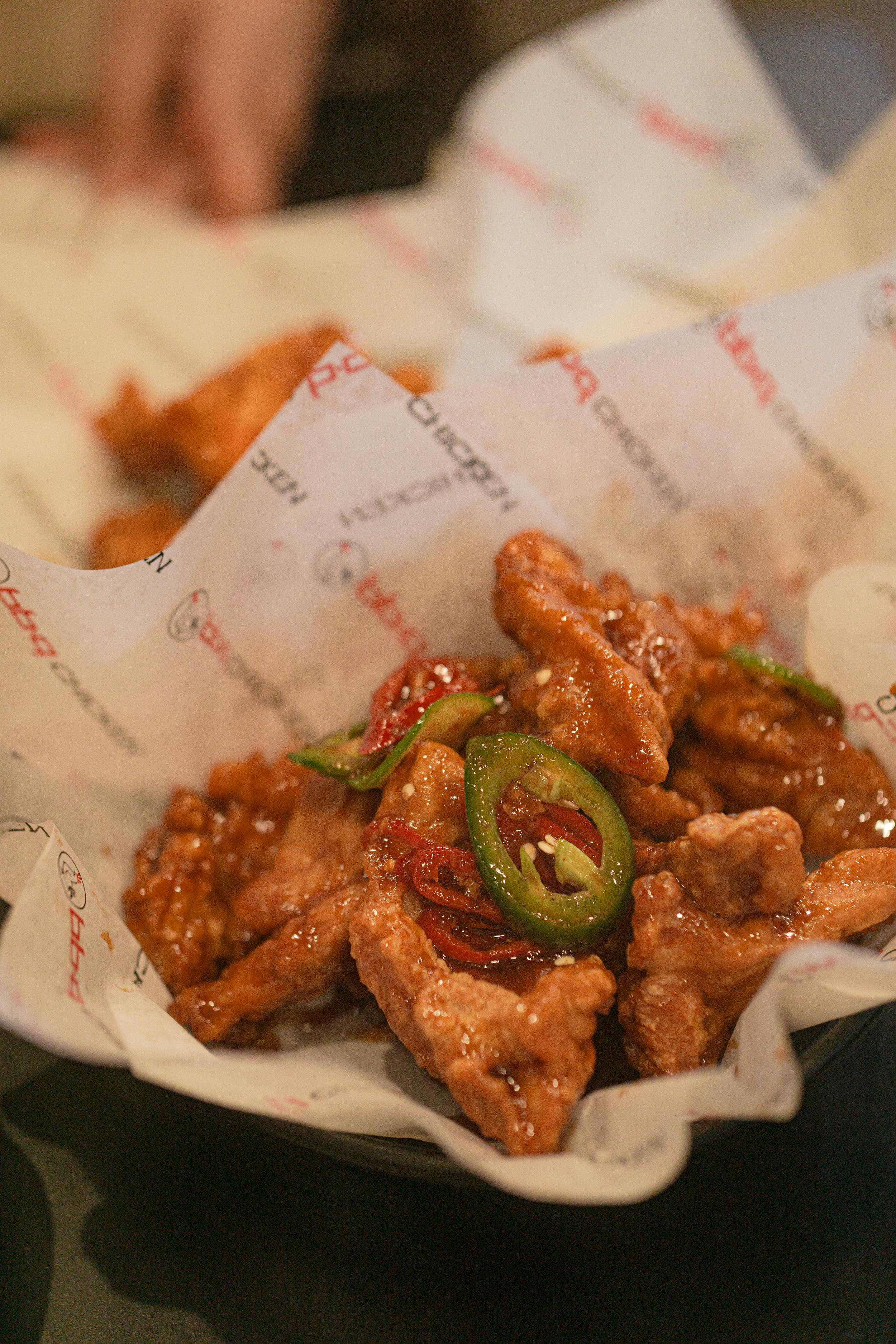
Photo: chickenbunny / Pexels
The diets react (see scores below)
Common Ingredients
- chicken feet
- gochugaru
- gochujang
- garlic
- ginger
- soy sauce
- sugar
- sesame seeds
Specific recipes may vary.
Incompatible with 9 of 11 diets
Diet Ratings
Dakbal is a heavily sauced Korean spicy chicken feet dish. While chicken feet themselves are high in collagen and protein with minimal carbs, the sauce is the problem: gochujang is a fermented chili paste with significant sugar and carbohydrate content (roughly 10-15g net carbs per 2 tbsp), and the recipe explicitly includes added sugar alongside soy sauce. Combined, the marinade/sauce renders a standard serving incompatible with ketogenic carb limits. The dish is built around a sweet-spicy glaze that cannot be considered keto-friendly in its traditional form.
Dakbal is a Korean dish made primarily from chicken feet, which are an animal product and therefore entirely incompatible with a vegan diet. There is no ambiguity here — chicken feet are poultry, a direct animal-derived ingredient that is categorically excluded under all definitions of veganism. The remaining ingredients (gochugaru, gochujang, garlic, ginger, soy sauce, sugar, sesame seeds) are plant-based, but the primary ingredient disqualifies the dish entirely.
Dakbal contains multiple non-paleo ingredients that disqualify it. Soy sauce is a fermented soy and wheat product — both legume and grain derivatives are strictly excluded from paleo. Refined sugar is explicitly off-limits. Gochujang is a fermented paste that contains rice flour and sugar, adding further grain and refined sugar content. While chicken feet, garlic, ginger, and gochugaru (pure chili flakes) are paleo-compatible, the combination of soy sauce, gochujang, and sugar creates a non-paleo marinade that cannot be easily separated from the dish as traditionally prepared.
Dakbal (Korean braised/spicy chicken feet) presents several conflicts with Mediterranean diet principles. While chicken is generally acceptable in moderation, chicken feet are high in collagen and saturated fat with minimal lean protein value compared to Mediterranean-preferred proteins like fish or legumes. More critically, the dish contains added sugar, soy sauce (high sodium, processed condiment), and gochujang (a fermented paste with significant added sugar and sodium) — none of which are Mediterranean staples. The overall flavor profile and ingredient base are entirely outside Mediterranean culinary tradition. The dish is also categorized as a snack, making it an occasional indulgence rather than a nutritious meal component. Sesame seeds and garlic/ginger are the only ingredients with some Mediterranean affinity.
Some modern Mediterranean diet interpreters note that garlic, ginger, and sesame seeds have recognized health benefits and that fermented foods like gochujang may support gut health similarly to Mediterranean fermented dairy; a flexible interpretation might treat this as an occasional cross-cultural indulgence rather than a strict violation.
Dakbal is a Korean spiced chicken feet dish that is fundamentally incompatible with the carnivore diet. While chicken feet themselves are an animal product (collagen-rich and acceptable on carnivore), the dish is defined by its heavy plant-based seasoning blend: gochugaru (red chili flakes), gochujang (fermented chili paste with rice and sugar), soy sauce (fermented soy — a legume), sugar, garlic, ginger, and sesame seeds. These ingredients are not incidental trace additives — they form the core flavor profile and sauce of the dish. Gochujang alone contains rice, fermented soybeans, and sugar. Soy sauce is a plant-derived fermented product. Sugar is excluded outright. This dish is essentially plant-seasoned chicken feet and cannot be adapted to carnivore without fundamentally changing what it is.
Dakbal contains two clearly excluded ingredients: soy sauce (which contains soy, a legume, and often wheat/gluten) and sugar (an added sugar). Both are explicitly prohibited on the Whole30 program. Gochujang, the Korean fermented chili paste, also typically contains sugar, rice, and soy — all of which are excluded. These are not edge-case ingredients; they are core to the dish as traditionally prepared. Even if coconut aminos were substituted for soy sauce, the sugar and gochujang would still need to be reformulated significantly, making this dish essentially non-compliant as described.
Dakbal (Korean braised/spicy chicken feet) contains multiple high-FODMAP ingredients that make it unsuitable during the elimination phase. Garlic is one of the highest-FODMAP foods tested by Monash University, containing significant fructans even in small amounts. Gochujang (Korean red pepper paste) typically contains wheat and/or garlic and onion as ingredients, adding further fructans. Soy sauce in larger amounts can contribute fructans (wheat-based soy sauce), though tamari in small amounts is generally low-FODMAP. Sugar in small amounts is acceptable, ginger and sesame seeds are low-FODMAP, and gochugaru (pure Korean red pepper flakes) is generally low-FODMAP. However, the combination of garlic and gochujang alone makes this dish a clear avoid — there is no realistic way to prepare traditional Dakbal without these high-FODMAP components, and the dish is defined by these ingredients. Chicken feet themselves are protein/collagen-based and FODMAP-free, but the marinade/sauce renders the dish incompatible with the elimination phase.
Dakbal (Korean spicy chicken feet) is problematic for the DASH diet on multiple fronts. Chicken feet are very high in collagen and skin, meaning significant saturated fat and cholesterol content — not the lean poultry DASH emphasizes. The sauce combines soy sauce (high sodium), gochujang (fermented chili paste, also high in sodium), and added sugar, making the overall sodium and sugar load substantial. A typical serving of dakbal can easily deliver 800–1,200mg of sodium from the soy sauce and gochujang alone, plus meaningful saturated fat from the skin-heavy chicken feet. While garlic, ginger, gochugaru, and sesame seeds offer some DASH-friendly micronutrients (potassium, magnesium), they do not offset the core concerns. This dish is heavily processed in its seasoning profile and does not align with DASH principles of lean protein, low sodium, and limited saturated fat.
NIH DASH guidelines flag both high sodium and saturated fat as primary concerns; however, some DASH-oriented clinicians note that chicken feet, if the skin is partially removed and low-sodium soy sauce and gochujang are substituted, could reduce sodium significantly — and the collagen content itself is not a direct cardiovascular risk factor. This substitution-based interpretation does not change the standard verdict for the dish as commonly prepared.
Dakbal (Korean spicy chicken feet) presents several Zone Diet challenges. Chicken feet are not a lean protein source — they consist almost entirely of skin, cartilage, and connective tissue with very high fat content (primarily saturated) and minimal actual protein compared to standard lean cuts. This makes hitting the 30% protein target difficult without overshooting fat. The gochujang sauce introduces added sugar, and the recipe explicitly includes sugar as an ingredient, raising the glycemic load of the dish. Gochugaru, garlic, and ginger are Zone-favorable polyphenol-rich ingredients, and the dish is not heavily starchy. However, the protein quality and fat profile are problematic — chicken feet are far from the lean skinless chicken breast that Zone endorses. The high collagen/gelatin content means the amino acid profile is incomplete as a primary protein block. Sesame seeds provide some monounsaturated fat but also add omega-6 load. As a snack, the sugar-laden gochujang glaze without accompanying balanced macronutrients makes Zone balancing very difficult in practice.
Some Zone-aligned practitioners note that Dr. Sears' later anti-inflammatory work (The Anti-Inflammation Zone) focuses heavily on polyphenols, and the chili-based ingredients (gochugaru, gochujang, garlic, ginger) are rich in polyphenols. A small portion of Dakbal could theoretically be incorporated into a broader Zone meal if lean protein is added elsewhere to balance the blocks. The collagen from chicken feet also has anti-inflammatory properties Sears has acknowledged in later writings, creating some ambiguity about categorical rejection.
Dakbal (Korean braised/stir-fried chicken feet) presents a mixed anti-inflammatory profile. On the positive side, the spice base is genuinely excellent: gochugaru and gochujang contribute capsaicin (shown to reduce inflammatory markers), garlic and ginger are well-established anti-inflammatory staples, and sesame seeds offer modest omega-3s and lignans. These spices align well with anti-inflammatory principles. However, chicken feet themselves are high in collagen and connective tissue — collagen is generally considered neutral to mildly beneficial (gut lining support is sometimes cited), but the fat profile of chicken feet skews toward saturated fat with limited omega-3 content. The sugar in the marinade adds refined sugar, a pro-inflammatory ingredient, though at typical recipe quantities it's modest. Soy sauce is high in sodium, which at excess levels can promote inflammatory pathways. Gochujang is a fermented food (a mild positive), but commercial versions often contain added sugars and preservatives. Overall, the dish is neither strongly pro-inflammatory nor strongly anti-inflammatory — the excellent spice profile partially offsets the less favorable protein source and added sugar/sodium.
Some anti-inflammatory practitioners would view the rich collagen content of chicken feet positively, citing research suggesting collagen peptides may support gut integrity and reduce joint inflammation — proponents like Dr. Josh Axe highlight collagen-rich foods as anti-inflammatory. Conversely, stricter anti-inflammatory frameworks would penalize the added sugar, high sodium, and saturated fat content more heavily, potentially pushing this toward 'avoid.'
Dakbal (Korean spicy chicken feet) is a poor fit for GLP-1 patients on multiple fronts. Chicken feet are composed almost entirely of skin, cartilage, and connective tissue — they deliver very little usable protein (roughly 5-8g per 100g serving) relative to their fat and calorie content, making them one of the lowest protein-density chicken preparations possible. The fat content is high due to the skin and gelatinous collagen matrix. The spice load from gochugaru and gochujang is significant and is likely to worsen GLP-1-associated nausea, reflux, and gastric discomfort, especially given the slowed gastric emptying these medications cause. Sugar is present in the marinade, adding empty calories. Sesame seeds contribute minimal fiber benefit at typical snack quantities. The dish is also typically eaten in large quantities to obtain meaningful nutrition, conflicting with the small-portion principle. As a snack category item, it fails to deliver the protein density or digestibility needed to justify its calorie and fat load on a GLP-1 regimen.
Some GLP-1-oriented dietitians note that collagen from chicken feet may offer minor joint and gut-lining benefits, and that small portions of culturally significant foods support long-term dietary adherence — a real clinical consideration. However, the spice intensity and poor protein-to-fat ratio make this a difficult food to defend even in moderation for most GLP-1 patients experiencing active GI side effects.
*See how scores were generated at our methodology page.
Nutritional profile
Six traits that cut across every diet.
Fiber & Plants
How much whole-plant food and fiber it delivers.
Healthy Fats
The quality of its fats (unsaturated, omega-3).
Whole / Unprocessed
How close it is to its natural, unprocessed form.
Gut Gentle
How easy it is on digestion (low FODMAP, few irritants).
Low Glycemic
How little it spikes your blood sugar.
Protein Density
How much protein it packs per calorie.
Controversy Index
Higher controversy = more disagreement between diets.
Diet-Specific Tips
 Zone — 4/10
View tips
- Chicken feet are high in saturated fat and skin — not a Zone-favorable lean protein source
- Added sugar in recipe and gochujang sauce raises glycemic load
- Difficult to achieve 40/30/30 macro balance with this protein source
- Gochugaru, garlic, and ginger are polyphenol-rich and Zone-favorable
- No significant starchy carbohydrates, which is a mild positive
- Sesame seeds add omega-6 fat load
- As a standalone snack, lacks Zone-balancing carb and protein structure
 Anti-Inflammatory — 4/10
View tips
- Pro-inflammatory: added sugar in marinade and gochujang, high sodium from soy sauce, saturated fat from chicken feet skin
- Anti-inflammatory: capsaicin in gochugaru/gochujang reduces CRP and inflammatory cytokines
- Anti-inflammatory: garlic and ginger are well-researched anti-inflammatory spices
- Anti-inflammatory: fermentation of gochujang may offer modest probiotic benefit
- Neutral/mixed: chicken feet collagen — debated between gut-supportive and not meaningfully anti-inflammatory
- Neutral: sesame seeds offer lignans and modest omega-3s but in small quantities