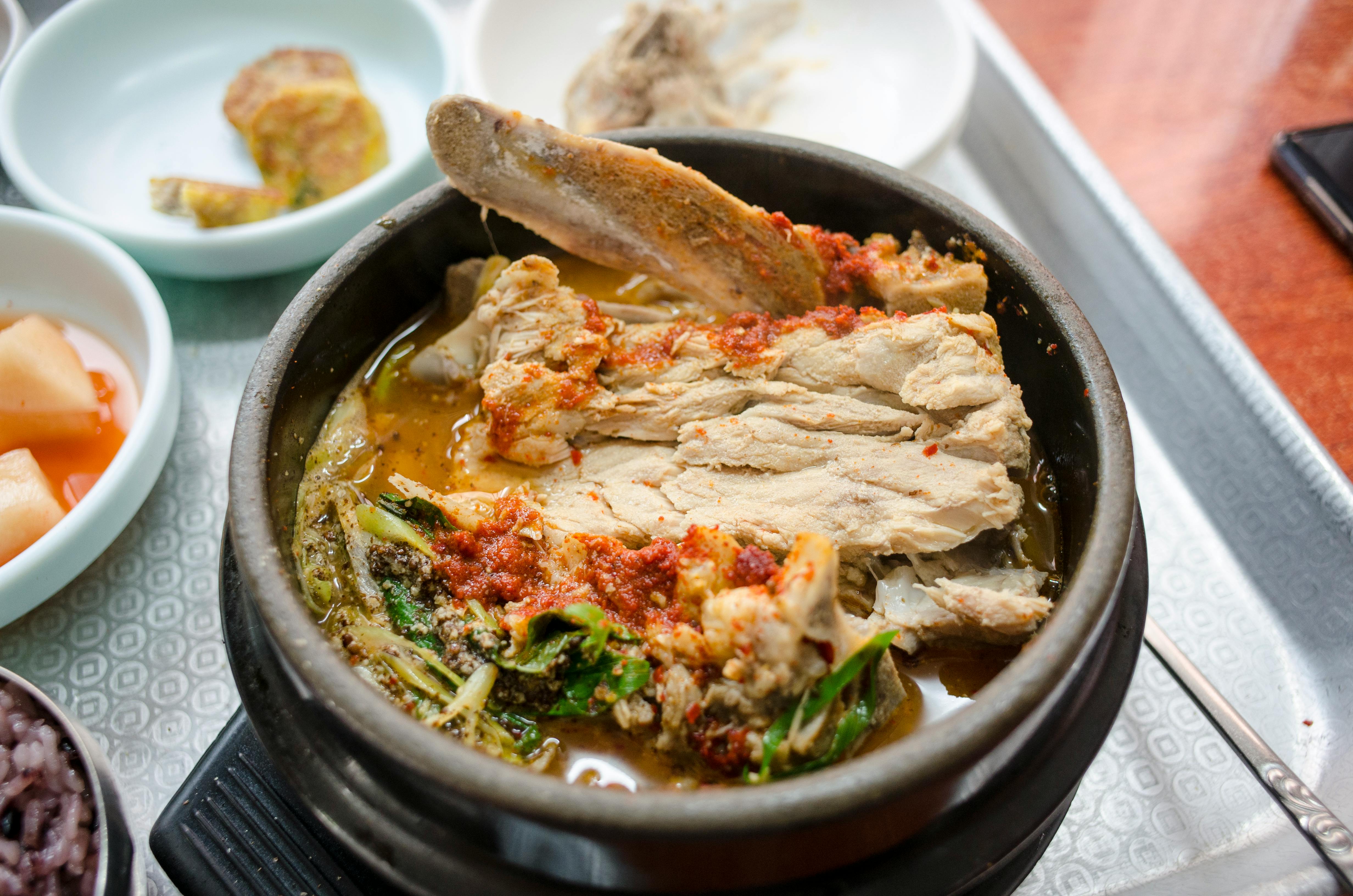
The diets react (see scores below)
Common Ingredients
- beef short ribs
- radish
- garlic
- green onion
- glass noodles
- egg
- soy sauce
- black pepper
Specific recipes may vary.
Incompatible with 7 of 11 diets
Diet Ratings
Galbitang is a beef short rib soup that is largely keto-friendly in its base form — fatty beef ribs, clear bone broth, radish, garlic, and green onion are all acceptable on keto. However, the inclusion of glass noodles (dangmyeon, made from sweet potato starch) is the primary problem. A standard serving of glass noodles contains approximately 20-30g of net carbs, which can single-handedly consume or exceed the daily keto carb limit. Without the noodles, this dish would easily be an 'approve.' Radish and green onion add minor carbs but are manageable in typical soup quantities. Soy sauce contributes negligible carbs. The dish can be made keto-compatible by simply omitting the glass noodles, making this a 'caution' with easy modification rather than a hard 'avoid.'
Some lazy keto or higher-carb-threshold practitioners (targeting 50g net carbs/day) may allow a small portion of glass noodles within their daily budget, particularly if it is the only carb source for the day. Strict keto purists, however, would classify any sweet potato starch noodle as off-limits regardless of portion size.
Galbitang is a traditional Korean beef short rib soup that contains multiple animal-derived ingredients, making it entirely incompatible with a vegan diet. The primary protein is beef short ribs (animal flesh), and the dish also includes egg, another animal product. The rich broth itself is derived from simmering beef bones and meat, which is inherently non-vegan. There is no ambiguity here — this dish is fundamentally built on animal products.
Galbitang contains three clear paleo violations: glass noodles (made from mung bean starch, a legume derivative), soy sauce (a fermented soy product — both a legume and a processed ingredient containing wheat), and added salt (soy sauce is primarily sodium). The base of the dish — beef short ribs slow-cooked with radish, garlic, and green onion — is entirely paleo-compliant, as is the egg. However, the glass noodles and soy sauce are non-negotiable exclusions under paleo rules. Black pepper is fine as a spice. The dish as traditionally prepared cannot be approved due to these foundational ingredient violations.
Galbitang is a Korean beef short rib soup that fundamentally conflicts with Mediterranean diet principles. Beef short ribs are a fatty red meat that Mediterranean guidelines restrict to only a few times per month. The dish contains no olive oil, no legumes, and minimal vegetables (radish, green onion, garlic provide some benefit but are not the focus). Glass noodles are a refined starch with low nutritional density. The overall dish is centered on red meat and lacks the plant-forward, olive oil-based foundation essential to the Mediterranean pattern.
Galbitang is a Korean beef short rib soup that, while centered on an excellent carnivore protein source (beef short ribs), contains multiple plant-derived and non-carnivore ingredients that disqualify it from the carnivore diet. Radish, garlic, and green onion are vegetables; glass noodles (dangmyeon) are made from sweet potato starch — a plant-based carbohydrate; soy sauce is a fermented soy and grain product containing plant compounds and additives. Black pepper is a plant-derived spice. While the beef short ribs and egg are carnivore-approved, the dish as prepared cannot be considered carnivore-compatible. A carnivore adaptation would retain only the beef ribs and egg, discarding all other components.
Galbitang contains two excluded ingredients: soy sauce (which contains soy, a legume, and often wheat, both excluded) and glass noodles (typically made from mung bean starch or sweet potato starch — mung beans are legumes, making most glass noodles non-compliant). Coconut aminos can substitute for soy sauce, but glass noodles have no compliant analog in this dish. The remaining ingredients — beef short ribs, radish, garlic, green onion, egg, and black pepper — are all Whole30 compliant.
Galbitang contains two high-FODMAP ingredients that make it unsuitable during the elimination phase. Garlic is one of the highest-fructan foods tested by Monash University and is a clear 'avoid' at any culinary quantity — even small amounts cooked into a broth contribute significant fructans to the liquid. Green onion (scallion) bulbs are also high in fructans, though the green tops alone are low-FODMAP; in traditional Galbitang, the whole scallion including the white bulb is typically used. These two ingredients alone disqualify the dish. The remaining ingredients are largely low-FODMAP: beef short ribs (protein, low-FODMAP), daikon radish (low-FODMAP at standard servings), glass noodles made from mung bean starch (low-FODMAP), egg (low-FODMAP), soy sauce in small amounts (low-FODMAP at ≤2 tablespoons), and black pepper (low-FODMAP). However, the garlic and green onion bulbs, particularly when simmered in broth, infuse the entire soup with water-soluble fructans, making the whole dish high-FODMAP. A low-FODMAP adaptation would require omitting garlic entirely, using only green scallion tops, and potentially using garlic-infused oil for flavoring instead.
Galbitang is a Korean beef short rib soup that presents multiple significant concerns for the DASH diet. Beef short ribs are a high-fat cut of red meat with substantial saturated fat content — both categories DASH explicitly limits. The soy sauce adds considerable sodium, and as a soup dish, galbitang is typically high in overall sodium from the long-simmered broth itself. Combined, a standard serving can easily exceed 1,000–1,500mg of sodium, a large fraction of even the standard DASH daily limit of 2,300mg. Red meat is discouraged on DASH (limited to ≤6 oz/day of lean cuts), and fatty cuts like short ribs fall well outside DASH recommendations. Some DASH-positive elements exist — radish, garlic, and green onion provide potassium and fiber — but these do not offset the dominant concerns of saturated fat from fatty beef and high sodium from soy sauce and broth.
Galbitang is a Korean short rib soup that presents a mixed Zone Diet profile. The primary protein — beef short ribs — is a fatty cut, which conflicts with Zone's preference for lean proteins (skinless chicken, fish, lean beef). Short ribs carry significant saturated fat, making it harder to hit the 30/30/40 ratio cleanly. However, the broth-based preparation does render out some fat, and the soup format means fat can be partially skimmed. The vegetables (radish, garlic, green onion) are favorable low-glycemic Zone carbs that count positively. The egg adds useful lean protein. The main carbohydrate concern is the glass noodles (dangmyeon), which are made from sweet potato starch — moderate to high glycemic index and a denser carb block with low nutritional density, classified as an 'unfavorable' carb in Zone terminology. However, glass noodles are typically used in modest amounts in Galbitang, limiting the glycemic impact. Soy sauce adds minimal sodium without significant macro disruption. With careful portioning — reducing or omitting glass noodles, skimming fat from the broth, and treating the short rib meat as the protein block while watching portion size — this dish can fit into Zone eating. It is not ideal due to the fatty protein source and unfavorable starch, but it is workable.
Some Zone practitioners following Sears' later anti-inflammatory writing (The Mediterranean Zone, Zone Perfect Meals in Minutes) would note that bone broth soups are positively regarded for their polyphenol and collagen content, and that the fat in short ribs, while saturated, is less concerning in a broader anti-inflammatory context. These practitioners might rate Galbitang more favorably (score 6-7) if glass noodles are minimized and the broth is defatted. Conversely, strict early-Zone adherents would flag short ribs as a clearly 'unfavorable' protein and penalize the glass noodles heavily, potentially scoring this a 4.
Galbitang is a traditional Korean beef short rib soup with a mixed anti-inflammatory profile. On the positive side, garlic is a well-established anti-inflammatory ingredient with allicin and organosulfur compounds that reduce inflammatory markers. Radish provides antioxidants, vitamin C, and anti-inflammatory glucosinolates. Green onion contributes quercetin and flavonoids. The long simmering process extracts collagen and gelatin from the bones, which some evidence suggests may support gut health and reduce systemic inflammation. The broth-based preparation also avoids frying in seed oils. However, beef short ribs are a fatty cut of red meat — high in saturated fat and arachidonic acid — which is a clear pro-inflammatory concern. Anti-inflammatory guidelines consistently recommend limiting red meat, particularly fatty cuts. Glass noodles (sweet potato starch) are relatively neutral — lower glycemic than wheat noodles — but add refined carbohydrate with minimal nutritional value. Eggs are a mixed factor (see confidence note). Soy sauce is a minor concern for sodium but not a meaningful inflammatory trigger in cooking amounts. Overall, this dish lands in 'caution' territory: a comforting soup with genuinely beneficial aromatics and broth-based cooking method, but anchored by a fatty red meat cut that anti-inflammatory frameworks recommend limiting rather than featuring regularly.
Dr. Weil's framework permits lean cuts of red meat occasionally, but short ribs are a high-saturated-fat cut that most anti-inflammatory authorities would flag; some functional medicine practitioners argue the bone broth collagen and mineral content partially offsets the inflammatory burden of fatty red meat, though this is not a mainstream consensus position.
Galbitang is a traditional Korean beef short rib soup that presents a mixed nutritional profile for GLP-1 patients. On the positive side, it is broth-based (easy to digest, high water content, excellent hydration support), contains meaningful protein from beef short ribs and egg, and includes fiber-supporting vegetables like radish and green onion. Garlic adds beneficial micronutrients with negligible caloric impact. However, beef short ribs are a fatty cut — one of the fattiest beef options — with significant saturated fat content that can worsen GLP-1 side effects like nausea, bloating, and reflux. The fat content is somewhat mitigated by the traditional preparation method: galbitang is typically simmered for hours and often served after the broth is skimmed or cooled so fat can be removed from the surface, which meaningfully reduces the fat load. Glass noodles (dangmyeon) are low in protein and fiber and contribute primarily refined starch calories, reducing the dish's overall nutrient density per calorie. The soy sauce adds sodium, which warrants attention for some patients. If fat is carefully skimmed from the broth and portion size is moderate, this dish becomes more acceptable — but the inherently fatty protein source and low-fiber, low-protein glass noodles prevent it from reaching approve territory without meaningful modification.
Some GLP-1-focused RDs consider well-skimmed bone broth-based soups with beef an acceptable protein vehicle, arguing that the collagen, electrolytes, and high water content of the broth outweigh concerns about saturated fat when fat is properly removed during preparation. Others maintain that fatty cuts like short ribs should be categorically avoided regardless of preparation method, given that residual fat content is difficult for patients to assess and the risk of GI side effects is meaningful.
*See how scores were generated at our methodology page.
Nutritional profile
Six traits that cut across every diet.
Fiber & Plants
How much whole-plant food and fiber it delivers.
Healthy Fats
The quality of its fats (unsaturated, omega-3).
Whole / Unprocessed
How close it is to its natural, unprocessed form.
Gut Gentle
How easy it is on digestion (low FODMAP, few irritants).
Low Glycemic
How little it spikes your blood sugar.
Protein Density
How much protein it packs per calorie.
Controversy Index
Higher controversy = more disagreement between diets.
Diet-Specific Tips
 Keto — 5/10
View tips
- Glass noodles (dangmyeon) are made from sweet potato starch — high net carbs, keto-incompatible
- Without noodles, the dish is largely keto-friendly: fatty beef ribs, bone broth base, low-carb vegetables
- Beef short ribs provide high fat and quality protein — ideal keto macros
- Radish and green onion contribute minor net carbs, acceptable in soup quantities
- Easy keto modification: omit glass noodles entirely
- Soy sauce adds negligible carbs at typical serving amounts
 Zone — 5/10
View tips
- Beef short ribs are a fatty, high-saturated-fat protein — unfavorable in Zone; lean beef or other cuts are preferred
- Glass noodles (sweet potato starch) are an unfavorable, moderate-to-high glycemic carb in Zone terminology
- Radish, garlic, and green onion are favorable low-glycemic Zone vegetables
- Broth-based preparation allows fat skimming, partially mitigating the saturated fat concern
- Egg contributes lean protein, improving the overall protein quality of the dish
- Portion control is critical: limiting glass noodles and controlling rib portion size can bring this into Zone balance
 Anti-Inflammatory — 5/10
View tips
- Beef short ribs are high in saturated fat and arachidonic acid — pro-inflammatory per anti-inflammatory guidelines
- Garlic is a potent anti-inflammatory with well-documented effects on CRP and IL-6
- Radish provides glucosinolates, vitamin C, and antioxidants
- Bone broth component may provide collagen and gut-supportive gelatin
- Glass noodles are relatively low-glycemic but nutritionally minimal
- Broth-based cooking avoids seed oil frying — neutral to beneficial preparation method
- Green onion contributes quercetin and polyphenols
 GLP-1 Friendly — 5/10
View tips
- Beef short ribs are a high-saturated-fat protein source — significant concern for GLP-1 GI side effects
- Broth-based format is ideal: high water content supports hydration, easy to digest, small portions feel satisfying
- Traditional fat-skimming preparation can substantially reduce fat load, but fat reduction is preparation-dependent and hard for patients to control
- Glass noodles are low in protein and fiber, contributing mostly empty starch calories that reduce nutrient density
- Egg adds additional protein and nutrient density
- Radish and green onion contribute modest fiber and micronutrients
- Soy sauce adds sodium — relevant for patients with hypertension or fluid retention
- Dish scores better if fat is skimmed thoroughly and glass noodle portion is minimized or omitted