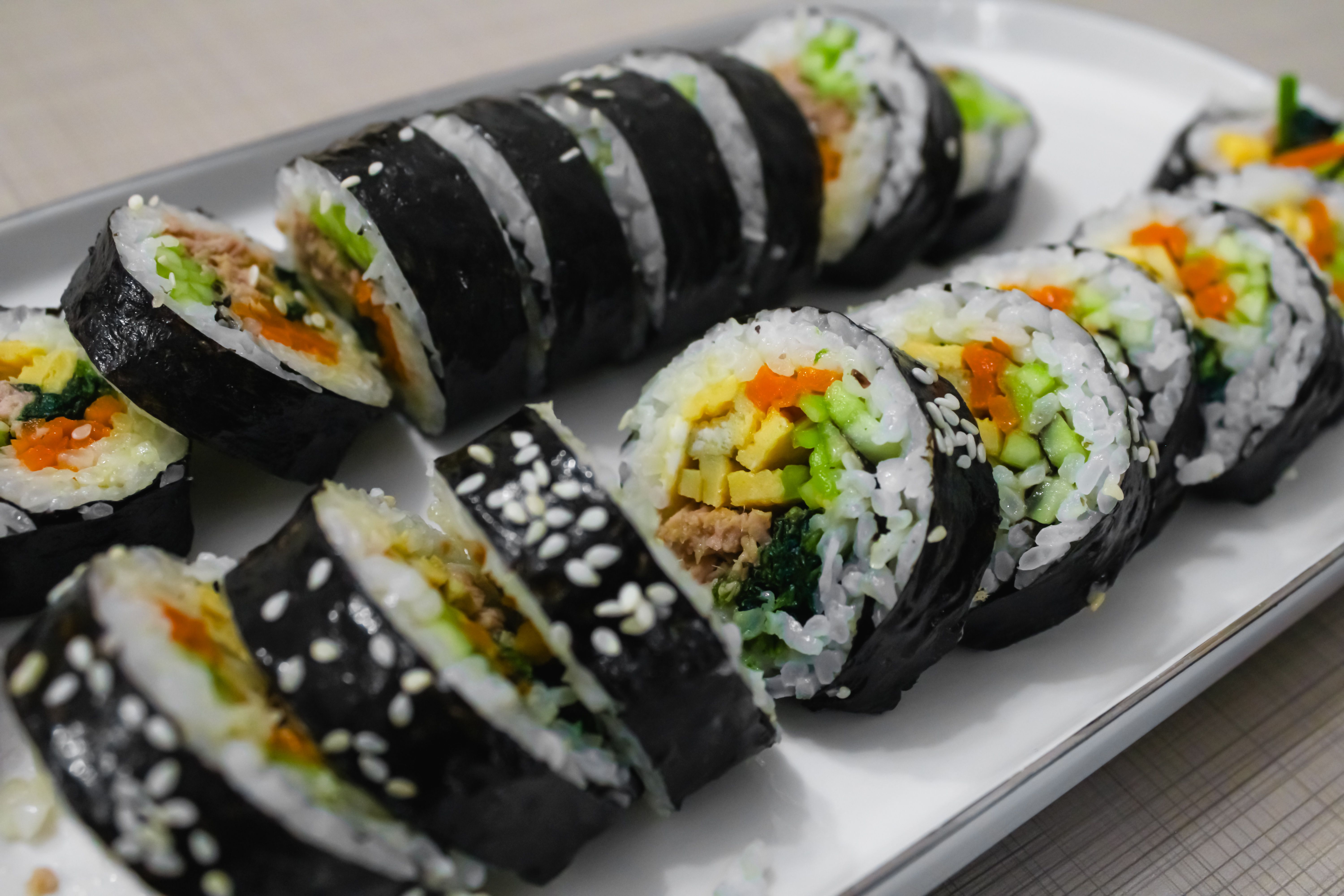
The diets react (see scores below)
Common Ingredients
- rice
- nori
- egg
- carrot
- spinach
- pickled radish
- burdock root
- sesame oil
Specific recipes may vary.
Incompatible with 5 of 11 diets
Diet Ratings
Gimbap is fundamentally incompatible with a ketogenic diet. The primary ingredient is white rice, which is a high-glycemic grain containing approximately 45g of net carbs per cup (a single gimbap roll typically uses 1-2 cups of cooked rice). This single ingredient alone exceeds the entire daily net carb allowance for ketosis. Additionally, pickled radish and burdock root often contain added sugar in their preparation, further compounding the carb load. While nori, egg, spinach, and sesame oil are keto-friendly, they are minor components that cannot offset the rice's carb content. No reasonable portion size of traditional gimbap is compatible with maintaining ketosis.
This gimbap contains egg as a primary protein ingredient, which is an animal product and therefore not compatible with a vegan diet. All other ingredients — rice, nori, carrot, spinach, pickled radish, burdock root, and sesame oil — are fully plant-based. However, the inclusion of egg disqualifies the dish entirely. A vegan version of gimbap is achievable by substituting egg with tofu, marinated tempeh, or additional vegetables.
Gimbap is fundamentally incompatible with the paleo diet. The primary ingredient is white rice, a grain that is excluded under strict paleo guidelines. Additionally, pickled radish typically contains added salt and often sugar or vinegar-based preservatives, and burdock root (gobo) while a root vegetable is often prepared with soy sauce or added salt. Sesame oil is a seed oil explicitly excluded from paleo. While nori (seaweed), egg, carrot, and spinach are individually paleo-approved, the foundational grain base and seed oil make this dish a clear avoid. The dish cannot be meaningfully adapted without losing its core identity.
Gimbap contains several Mediterranean-friendly ingredients — egg, carrot, spinach, and burdock root provide plant-based nutrition, and sesame oil (while not olive oil) is an unsaturated plant fat. Nori (seaweed) aligns well with the Mediterranean emphasis on seafood and sea vegetables. However, the base is white rice, a refined grain that Mediterranean guidelines generally discourage in favor of whole grains. Pickled radish may contain added sugar and sodium. The dish is minimally processed overall and protein comes from eggs, which are acceptable in moderation. The combination yields a reasonably balanced snack that is not harmful but doesn't fully align with Mediterranean staples.
Some Mediterranean diet interpreters, particularly those drawing on traditional Southern European and Middle Eastern coastal cuisines, accept white rice as part of culturally appropriate eating patterns — Spanish paella and Greek rice dishes demonstrate that white rice has a place in the broader Mediterranean culinary tradition, which would push this dish toward a slightly higher score.
Gimbap is almost entirely plant-based and is fundamentally incompatible with the carnivore diet. The dish is built around rice (grain), wrapped in nori (seaweed/plant), and filled predominantly with vegetables — carrot, spinach, pickled radish, and burdock root. It is seasoned with sesame oil, a plant-derived oil. The only animal-derived ingredient is egg, which is a minor component. With the vast majority of ingredients being plant foods, grains, and plant oils, this dish scores at the very bottom of carnivore compatibility. There is no meaningful way to adapt this dish within carnivore principles — it would require removing every ingredient except the egg.
Gimbap contains rice, which is an excluded grain on the Whole30 program. Additionally, pickled radish (danmuji) typically contains added sugar and may contain other excluded additives. Even if those secondary concerns were resolved, rice is a core, non-negotiable excluded ingredient, making this dish non-compliant. Furthermore, gimbap is a rice-wrapped roll analogous to a wrap or packaged snack format that would conflict with the program's spirit even if somehow made grain-free.
Gimbap contains several individually manageable ingredients, but two components raise concern for the elimination phase. Most ingredients are low-FODMAP: white rice is a safe staple, nori (dried seaweed) is low-FODMAP, egg is low-FODMAP, carrot is low-FODMAP in standard servings (up to 1 medium carrot), spinach is low-FODMAP at small servings (up to 75g), and sesame oil is low-FODMAP (fat-soluble, no FODMAPs). The two problematic ingredients are: (1) Pickled radish — daikon/radish itself is low-FODMAP, but commercial pickled radish (danmuji) typically contains high-fructose corn syrup or large amounts of sugar, and may include garlic or onion in the pickling brine, making commercial versions risky. (2) Burdock root (우엸) — this is a significant concern. Burdock root is high in inulin (fructans) and GOS, and Monash has not published clear low-FODMAP serving thresholds for it; clinical FODMAP dietitians generally advise avoidance during elimination. The cumulative FODMAP load across a typical 6-8 piece gimbap roll, especially with burdock root present, pushes this dish into caution territory for the elimination phase.
Monash University has not formally tested burdock root, but its high inulin content is well-documented in food science literature, leading most clinical FODMAP practitioners to recommend avoiding it entirely during elimination. Additionally, commercial pickled radish (danmuji) ingredients vary widely — homemade versions with just vinegar and sugar may be safer than store-bought varieties containing garlic, onion, or HFCS.
Gimbap contains several DASH-friendly ingredients — spinach, carrot, egg, nori, and burdock root are nutritious and aligned with DASH principles. However, the dish has meaningful sodium concerns: pickled radish (danmuji) is typically cured in salt and sugar, burdock root is often seasoned with soy sauce, and the rice is commonly seasoned with salt and sesame oil. Collectively, a single gimbap roll (roughly 6-8 pieces) can contain 600–1,000mg of sodium depending on preparation. The white rice, while not harmful, is a refined grain rather than the whole grain DASH emphasizes. Sesame oil is a vegetable oil and acceptable in moderation. The egg provides lean protein consistent with DASH. Overall, this is a moderately nutritious dish that falls into 'caution' territory due to sodium load from pickled and seasoned components, and the use of refined white rice rather than brown rice.
NIH DASH guidelines flag pickled/fermented foods as sodium-dense and advise limiting them; however, updated clinical interpretations note that gimbap's vegetable density, lean protein, and moderate portion size make it a reasonable choice within a DASH-compliant meal pattern if low-sodium pickling is used and portion size is controlled to 1 roll.
Gimbap presents a mixed Zone Diet picture. The vegetable ingredients — carrot, spinach, pickled radish, and burdock root — are favorable low-glycemic carbohydrate sources rich in polyphenols and fiber, aligning well with Zone principles. Egg provides a reasonably lean protein, though whole eggs include saturated fat compared to egg whites. Nori is essentially a free food in Zone terms. The main Zone challenge is white rice, which is a high-glycemic carbohydrate that Sears classifies as 'unfavorable' — it raises insulin quickly and dominates the carb block count in this dish. Sesame oil is a concern as it is high in omega-6 polyunsaturated fats, which Sears specifically discourages due to its pro-inflammatory arachidonic acid pathway effects, though the quantity used is typically small as a finishing flavor. The macro ratio of traditional gimbap skews heavily carbohydrate (rice is the largest component by volume) with modest protein from egg and minimal fat, making it difficult to hit the 40/30/30 Zone ratio without significant modification — such as reducing rice, adding more egg or lean protein, and substituting a monounsaturated fat. As a snack portion with small rice volume, it is more manageable than as a full meal portion.
Some Zone practitioners note that Sears' later writings (The OmegaRx Zone, The Anti-Inflammation Zone) place greater emphasis on overall dietary pattern and polyphenol intake over strict block ratios in any single food item. Gimbap's combination of nori, spinach, and colorful vegetables provides meaningful polyphenol and micronutrient value. In small snack-sized portions (2-3 pieces), the glycemic load of the rice is moderated and the dish could be considered a reasonable Zone-compatible snack if paired with additional lean protein to correct the protein deficit.
Gimbap is a moderately anti-inflammatory dish overall, with several genuinely beneficial components alongside a few neutral or mildly concerning ones. Nori (seaweed) is rich in minerals, iodine, and has some anti-inflammatory polyphenols. Spinach is an excellent anti-inflammatory vegetable, high in vitamin K, folate, and carotenoids. Carrots provide beta-carotene and antioxidants. Burdock root contains inulin (prebiotic fiber) and quercetin, offering meaningful anti-inflammatory support. Sesame oil, particularly if used in small amounts as a finishing oil, contains sesamol and sesamin with antioxidant properties, though it is relatively high in omega-6 (linoleic acid), placing it in the seed oil debate zone. Eggs are a mixed signal — protein and choline are beneficial, but arachidonic acid is flagged by some protocols. The most significant limiting factor is white rice, which is a refined carbohydrate with a high glycemic load and minimal fiber, representing a neutral-to-mildly-pro-inflammatory element. Pickled radish (danmuji) typically contains added sugar and food coloring (yellow dye), which introduces mild concern. The overall dish is far from harmful and contains genuinely beneficial ingredients, but the white rice base and processed pickled radish prevent a full approval. Using brown rice would substantially improve the profile.
Sesame oil is debated: most anti-inflammatory protocols flag high-omega-6 seed oils, but sesame oil's unique lignans (sesamol, sesamin) have demonstrated anti-inflammatory activity in research, and many anti-inflammatory practitioners consider small culinary amounts acceptable. Eggs are similarly contested — mainstream anti-inflammatory nutrition (including Dr. Weil's approach) permits moderate egg consumption for their nutrient density, while stricter protocols point to arachidonic acid as potentially pro-inflammatory.
Gimbap is a moderately GLP-1-friendly snack with meaningful upsides but notable limitations. On the positive side, it contains nori (fiber, micronutrients), egg (protein), spinach and carrot (fiber, vitamins), and burdock root (prebiotic fiber, gut health). Pickled radish adds probiotic benefit and digestive support. Sesame oil is an unsaturated fat used in small amounts, which is acceptable. However, the primary ingredient by volume is white rice — a refined grain with low fiber, high glycemic index, and minimal protein density. With egg as the only substantial protein source in a typical serving, a few rolls of gimbap will fall well short of the 15–30g protein per meal target. Portion size matters significantly here: a standard serving of 6–8 pieces provides roughly 6–10g protein and 1–2g fiber — adequate as a snack but inadequate as a meal without augmentation. The sesame oil, while unsaturated, adds fat calories in a food where caloric density per nutritional return is already modest. Gastric emptying is slowed on GLP-1s, and the rice-heavy composition may sit heavily for some patients. This is acceptable as a light snack or side dish, but should not be a primary meal without a significant protein addition (e.g., adding grilled chicken or tofu on the side).
Some GLP-1-focused RDs would rate gimbap more favorably as a portion-controlled, whole-food snack with vegetables and egg that avoids fried or high-fat ingredients — particularly compared to typical snack alternatives. Others caution that the refined rice base makes it a low-priority choice when caloric capacity is limited, preferring snacks with higher protein-to-calorie ratios.
*See how scores were generated at our methodology page.
Nutritional profile
Six traits that cut across every diet.
Fiber & Plants
How much whole-plant food and fiber it delivers.
Healthy Fats
The quality of its fats (unsaturated, omega-3).
Whole / Unprocessed
How close it is to its natural, unprocessed form.
Gut Gentle
How easy it is on digestion (low FODMAP, few irritants).
Low Glycemic
How little it spikes your blood sugar.
Protein Density
How much protein it packs per calorie.
Controversy Index
Higher controversy = more disagreement between diets.
Diet-Specific Tips
 Mediterranean — 5/10
View tips
- White rice is a refined grain, not preferred over whole grains in Mediterranean guidelines
- Eggs are acceptable in moderation (caution tier)
- Spinach, carrot, and burdock root are positive plant-based components
- Sesame oil is a healthy unsaturated fat but not extra virgin olive oil
- Nori/seaweed is a sea vegetable consistent with Mediterranean seafood emphasis
- Pickled radish may contain added sugar and high sodium
- Minimally processed overall — no red meat, no added sugars beyond pickling
 Low-FODMAP — 5/10
View tips
- White rice is low-FODMAP and safe as the main bulk ingredient
- Burdock root is high in inulin/fructans and generally avoided during FODMAP elimination
- Commercial pickled radish (danmuji) may contain high-HFCS, garlic, or onion in brine
- Nori, egg, carrot, and sesame oil are all low-FODMAP
- Spinach is low-FODMAP at small servings but can become moderate-FODMAP at larger amounts
- Cumulative FODMAP load across multiple gimbap rolls is a concern
- Homemade gimbap with verified low-FODMAP ingredients could be safer than restaurant versions
 DASH — 5/10
View tips
- Pickled radish (danmuji) is high in sodium — a significant DASH concern
- Seasoned burdock root and rice add additional sodium beyond the pickled components
- White rice is a refined grain; DASH recommends whole grains like brown rice
- Spinach, carrot, nori, and burdock root contribute potassium, magnesium, and fiber consistent with DASH
- Sesame oil is an acceptable vegetable fat in DASH in small amounts
- Egg provides lean protein aligned with DASH
- Total sodium per roll can approach or exceed 600–1,000mg depending on preparation
- Low-sodium preparation (reduced soy sauce, less-salted pickling) would significantly improve DASH compatibility
 Zone — 5/10
View tips
- White rice is a high-glycemic 'unfavorable' carbohydrate in Zone terminology, dominating the carb content
- Carbohydrate-to-protein ratio is skewed well above the Zone's 40/30/30 target in standard preparation
- Spinach, carrot, pickled radish, and burdock root are favorable low-glycemic Zone vegetables
- Sesame oil is omega-6 dominant, which Sears discourages in favor of monounsaturated fats like olive oil
- Egg provides moderate lean protein but whole eggs include some saturated fat
- Portion size is critical — small snack servings are more Zone-compatible than full meal portions
- Nori contributes negligible macronutrients but adds iodine and polyphenol value
 Anti-Inflammatory — 6/10
View tips
- White rice is a refined, high-glycemic carbohydrate — the main limiting factor
- Nori provides minerals, iodine, and anti-inflammatory polyphenols
- Spinach is rich in anti-inflammatory carotenoids and vitamin K
- Carrots contribute beta-carotene and antioxidants
- Burdock root offers prebiotic fiber and quercetin
- Sesame oil contains beneficial lignans but is moderately high in omega-6
- Pickled radish (danmuji) often contains added sugar and artificial yellow dye
- Eggs are nutritionally mixed — beneficial choline vs. arachidonic acid concerns
 GLP-1 Friendly — 5/10
View tips
- White rice is the dominant ingredient — refined grain, low fiber, low protein density
- Egg provides modest protein (~6g per egg), insufficient alone to meet GLP-1 meal protein targets
- Nori, spinach, carrot, and burdock root contribute beneficial fiber and micronutrients
- Sesame oil is unsaturated but adds fat calories with limited nutritional upside at scale
- Pickled radish may support gut motility — relevant given GLP-1 constipation risk
- Small, portion-controlled format is well-suited to reduced appetite on GLP-1s
- Works as a snack; needs significant protein augmentation to function as a meal