Photo: Markus Winkler / Pexels
Korean
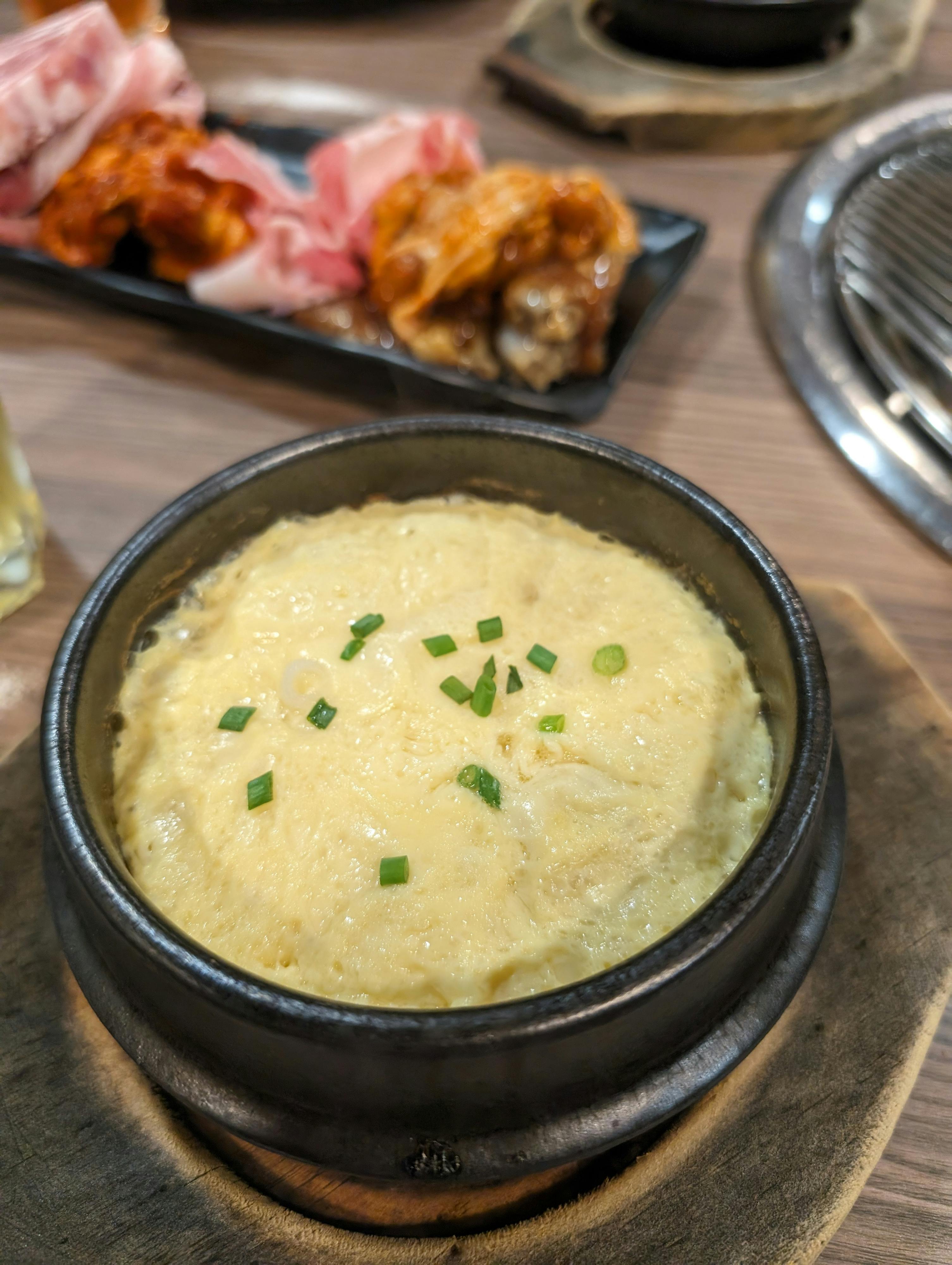
Gyeranjjim
The diets react (see scores below)
Common Ingredients
- eggs
- water
- green onion
- salted shrimp
- sesame oil
- salt
- carrot
Specific recipes may vary.
Incompatible with 3 of 11 diets
Diet Ratings
Gyeranjjim is a Korean steamed egg custard that is highly compatible with a ketogenic diet. The primary ingredient is eggs, which are a keto staple providing high-quality protein and fat. The supporting ingredients — water, green onion, salted shrimp, sesame oil, and salt — are all very low in carbohydrates. The only mild concern is carrot, which adds a small amount of net carbs, but in the quantities typically used as a garnish in gyeranjjim (a few small pieces), the contribution is negligible. Sesame oil adds healthy fat. The dish is whole and minimally processed. Net carbs per serving are estimated well under 5g, making this an easy fit within daily keto limits.
Gyeranjjim is a Korean steamed egg dish that is fundamentally incompatible with a vegan diet. The primary protein is eggs, an animal product excluded under all mainstream vegan standards. Additionally, salted shrimp (saeujeot) is a seafood ingredient, also an animal product. Both of these core ingredients are clearly animal-derived, making this dish doubly non-vegan with no ambiguity.
Gyeranjjim contains three significant paleo violations. Salt is explicitly excluded as an added ingredient in paleo guidelines. Salted shrimp (saeujeot) is a processed, heavily salted, fermented condiment — doubly problematic as both a processed food and a source of added salt. Sesame oil is a seed oil, which is excluded under paleo rules in favor of animal fats, olive oil, coconut oil, and similar alternatives. The base ingredients — eggs, water, green onion, and carrot — are paleo-approved, but the combination of salt, processed salted shrimp, and sesame oil makes this dish non-compliant in its traditional form.
Gyeranjjim is a steamed egg dish with mostly wholesome ingredients. Eggs are acceptable in the Mediterranean diet in moderate amounts (a few servings per week). The dish includes vegetables (green onion, carrot) and uses sesame oil rather than olive oil. The salted shrimp adds sodium and a small amount of seafood protein, which is generally positive. Overall, this is a nutrient-dense, minimally processed dish with moderate egg content and no red meat or refined grains, landing it solidly in the 'caution' (moderation) tier typical of egg-based dishes.
Some Mediterranean diet practitioners argue eggs can be eaten daily as part of a balanced diet, especially when paired with vegetables as here — in which case this dish could edge toward 'approve.' Conversely, the use of sesame oil instead of olive oil and the relatively high sodium from salted shrimp are departures from Mediterranean principles that reinforce the caution rating.
Gyeranjjim contains multiple plant-derived ingredients that disqualify it from the carnivore diet. Green onion, sesame oil, and carrot are all plant foods explicitly excluded on carnivore. Sesame oil is a plant-based oil, which is one of the clearest violations of carnivore principles. While eggs, water, salted shrimp, and salt are carnivore-compatible, the dish as prepared cannot be approved due to the plant ingredients. Removing the green onion, sesame oil, and carrot would make a simplified egg and shrimp version more acceptable, but the traditional dish as described is not carnivore-compliant.
Gyeranjjim (Korean steamed eggs) is largely Whole30-compliant at first glance: eggs, water, green onion, sesame oil, salt, and carrot are all approved ingredients. The key concern is 'salted shrimp' (saeujeot), a fermented Korean condiment. Saeujeot is typically just shrimp and salt, which are both Whole30-compliant ingredients, but commercially prepared versions can contain added sugars or other additives. The fermented nature is not itself an issue. Label-reading is essential if using a packaged product. If made with pure salted shrimp (no additives), the dish is fully compliant. The dish is a straightforward egg preparation — not a recreation of a baked good or junk food — so it passes the spirit test.
Official Whole30 guidelines don't specifically address saeujeot (Korean salted fermented shrimp); most practitioners would approve pure shrimp-and-salt versions, but some community members flag all fermented condiments for potential hidden additives and recommend verification of every ingredient label before use.
Gyeranjjim (Korean steamed eggs) is largely low-FODMAP, but contains two ingredients that require attention. Eggs, water, sesame oil, salt, and carrot are all low-FODMAP and safe during elimination. Green onion (scallion) is low-FODMAP at the green tops only — the white bulb portions contain fructans and must be avoided; many recipes and home cooks use the whole stalk. Salted shrimp (saeu-jeot) is a fermented condiment used in small amounts as seasoning; plain shrimp is low-FODMAP, and the quantity used in gyeranjjim is typically very small (a teaspoon or less), so it is unlikely to be problematic, but Monash has not specifically tested saeu-jeot as a fermented product, introducing minor uncertainty. If only the green tops of scallions are used and salted shrimp is used in minimal quantities, this dish is likely low-FODMAP. However, standard preparation often includes white scallion portions, making caution appropriate.
Monash University rates the green tops of scallions/green onions as low-FODMAP, but many clinical FODMAP practitioners advise patients to avoid green onions entirely during strict elimination due to the practical difficulty of separating green from white portions during cooking. The fermented salted shrimp (saeu-jeot) lacks specific Monash testing data, and some practitioners recommend avoiding fermented condiments of uncertain FODMAP status during elimination.
Gyeranjjim is a Korean steamed egg dish with generally DASH-friendly ingredients like eggs, vegetables (green onion, carrot), and water, but it contains two significant sodium contributors: salted shrimp (saeu-jeot) and added salt. Salted shrimp is a heavily brined fermented ingredient that can add several hundred milligrams of sodium per small serving, and combined with added salt, this dish can easily exceed 400-600mg sodium per serving — a meaningful portion of the DASH daily sodium budget. Eggs are moderately acceptable under current DASH-aligned interpretations, and the vegetables add potassium and fiber. Sesame oil is an unsaturated fat consistent with DASH principles. The dish is not categorically excluded, but the sodium load from salted shrimp is the primary concern for DASH adherents. A modified version using reduced or no salted shrimp and minimal added salt would score significantly higher (6-7).
NIH DASH guidelines do not specifically address salted shrimp, but categorically flag high-sodium fermented/preserved ingredients as problematic for sodium targets. Some DASH-oriented clinicians note that if gyeranjjim is prepared with a very small amount of salted shrimp and no additional salt, the overall sodium content can be moderated sufficiently for occasional inclusion — highlighting preparation method as the key variable rather than the dish itself.
Gyeranjjim (Korean steamed egg) is a gentle, protein-forward side dish that aligns well with Zone principles. Eggs provide a complete protein source, though whole eggs contain yolk fat (mostly unsaturated with some saturated). The dish is essentially a steamed egg custard with minimal carbohydrate additions — green onion and carrot contribute negligible net carbs and useful polyphenols. Salted shrimp (saeujeot) adds a small amount of additional protein and sodium. Sesame oil is a polyunsaturated/monounsaturated fat that Sears accepts, though it is omega-6-leaning, which is a minor anti-inflammatory concern in his later writings. The overall macronutrient profile is protein and fat dominant with very low carbohydrate, making it an excellent side dish to pair with low-glycemic vegetables and a lean protein main to build a balanced Zone meal. As a side dish, it needs to be paired carefully to hit the 40/30/30 ratio at the meal level, since it is carb-light and would require additional favorable carbohydrates elsewhere in the meal.
Whole eggs versus egg whites is a Zone nuance. Dr. Sears' earlier Zone books emphasized egg whites as the preferred protein block due to lower saturated fat, while later anti-inflammatory writings acknowledged whole eggs more favorably given their nutrient density and choline content. Sesame oil is accepted in Zone but is notably high in omega-6 fatty acids, which conflicts with Sears' anti-inflammatory framework in 'The OmegaRx Zone' — a stricter interpretation would flag this as a caution.
Gyeranjjim is a Korean steamed egg dish with a generally moderate anti-inflammatory profile. Eggs are the primary protein and provide choline, selenium, and some anti-inflammatory nutrients, but also contain arachidonic acid, which some sources flag as mildly pro-inflammatory. Green onion and carrot contribute antioxidants and carotenoids (beta-carotene from carrot is a plus). Sesame oil, used in small finishing amounts, contains sesamol and sesamin — compounds with documented antioxidant and mild anti-inflammatory activity — though it is moderately high in omega-6; the small quantity typical in gyeranjjim is unlikely to be problematic. Salted shrimp (saeujeot) adds sodium and fermented seafood notes; the fermentation process may contribute some beneficial compounds, but the high sodium content is a consideration for inflammation-sensitive individuals. Overall, this is a minimally processed, whole-food dish with no refined sugars, trans fats, or additives, and the vegetable and spice components add modest anti-inflammatory value. The main limiting factor is the egg debate and elevated sodium from salted shrimp.
Most anti-inflammatory frameworks (including Dr. Weil's pyramid) include eggs as an acceptable moderate food given their nutrient density, and the overall dish is whole-food and minimally processed. However, some anti-inflammatory practitioners and AIP-adjacent protocols flag egg arachidonic acid content and advise limiting eggs, particularly for those with autoimmune conditions — in that context this dish would rate lower.
Gyeranjjim is a Korean steamed egg custard — eggs beaten with water and steamed until soft and silky. It is an excellent GLP-1-friendly dish. Eggs are a high-quality, complete protein source (roughly 6g protein per egg) with moderate fat that is well-distributed and not concentrated as saturated fat. The steaming method means no added frying fat, and the high water content incorporated during cooking makes this one of the most easily digestible egg preparations available. The soft, custard-like texture is gentle on a slowed GI tract. Salted shrimp adds a small additional protein boost and umami depth with minimal fat. Sesame oil is used in very small amounts (a few drops for flavor), contributing unsaturated fat within acceptable limits. Green onion and carrot add minor fiber, micronutrients, and color. The dish is naturally low in refined carbohydrates and sugar. Salt content from the salted shrimp (jeot-gal) warrants attention — sodium can be high, which matters for patients with hypertension or those experiencing dehydration, a real concern on GLP-1s. Portion size is typically small as a banchan (side dish), which suits GLP-1 eating patterns well. Overall, this is a soft, protein-rich, easily digestible, nutrient-dense side dish that aligns well with GLP-1 dietary priorities.
Some GLP-1-focused dietitians flag whole eggs cautiously due to their fat content (roughly 5g fat per egg, with ~1.6g saturated), particularly for patients experiencing persistent nausea or reflux early in treatment — egg whites or a partial egg-white substitution are sometimes recommended in those cases. Sodium from salted shrimp may also be a consideration for clinicians working with patients managing blood pressure alongside GLP-1 therapy.
*See how scores were generated at our methodology page.
Nutritional profile
Six traits that cut across every diet.
Fiber & Plants
How much whole-plant food and fiber it delivers.
Healthy Fats
The quality of its fats (unsaturated, omega-3).
Whole / Unprocessed
How close it is to its natural, unprocessed form.
Gut Gentle
How easy it is on digestion (low FODMAP, few irritants).
Low Glycemic
How little it spikes your blood sugar.
Protein Density
How much protein it packs per calorie.
Controversy Index
Higher controversy = more disagreement between diets.
Diet-Specific Tips
 Keto — 8/10
View tips
- Eggs are a core keto-approved food — high protein, high fat, zero carbs
- Sesame oil adds healthy fat, supporting keto macros
- Carrot is present but only in trace garnish quantities, contributing minimal net carbs
- Salted shrimp adds flavor and protein with negligible carbs
- Green onion used in small amounts poses no meaningful carb concern
- No grains, added sugars, or starchy ingredients
- Whole, minimally processed dish
 Mediterranean — 5/10
View tips
- Eggs are the primary protein — acceptable in moderation per Mediterranean guidelines
- Contains beneficial vegetables (carrot, green onion)
- Salted shrimp adds seafood component but also significant sodium
- Sesame oil used instead of Mediterranean-canonical olive oil
- No red meat, processed foods, or refined grains — positives
- Minimally processed, whole-food preparation
 Whole30 — 6/10
View tips
- Eggs, vegetables, and sesame oil are fully Whole30-compliant
- Salted shrimp (saeujeot) is the critical ingredient — pure versions (shrimp + salt only) are compliant, but commercial products may contain added sugar or preservatives
- No grains, dairy, legumes, or other excluded categories present
- Not a recreation of a baked good or junk food — passes spirit-of-program test
- Label verification required for packaged salted shrimp
 Low-FODMAP — 5/10
View tips
- Eggs are fully low-FODMAP and safe in any reasonable quantity
- Green onion: green tops are low-FODMAP, but white bulb portions contain fructans — preparation method is critical
- Salted shrimp (saeu-jeot) used in small seasoning amounts; plain shrimp is low-FODMAP but fermented version lacks Monash testing
- Carrot, sesame oil, salt, and water are all low-FODMAP with no serving size concerns
- Overall dish safety depends heavily on whether only green scallion tops are used
 DASH — 4/10
View tips
- Salted shrimp (saeu-jeot) is a high-sodium fermented ingredient that significantly raises sodium content
- Added salt further compounds the sodium burden, potentially pushing a serving toward or over 500-700mg sodium
- Eggs are moderately DASH-compatible under current clinical interpretations but were historically limited due to cholesterol concerns
- Green onion and carrot provide DASH-positive nutrients: potassium, fiber, antioxidants
- Sesame oil is an unsaturated fat, consistent with DASH guidelines
- Dish can be made more DASH-friendly by omitting or drastically reducing salted shrimp and limiting added salt
- Portion size matters — served as a small Korean side dish (banchan), sodium impact may be partially mitigated
 Zone — 7/10
View tips
- Eggs are a recognized Zone protein source; whole eggs are acceptable though egg whites are more 'favorable' in strict Zone block counting
- Very low net carbohydrates — green onion and carrot are favorable, low-glycemic vegetables
- Sesame oil provides fat but is omega-6 dominant, mildly conflicting with Sears' anti-inflammatory fat hierarchy
- Salted shrimp adds protein and significant sodium; sodium is not a Zone concern per se but relevant for overall health
- As a side dish, it is carb-deficient for a standalone Zone meal and must be paired with additional favorable carbohydrates
- Cooking method (steaming) is ideal — no added processed oils or high-heat degradation
 Anti-Inflammatory — 5/10
View tips
- Eggs provide choline and selenium but contain arachidonic acid — mixed inflammatory profile
- Carrot contributes beta-carotene and antioxidant carotenoids
- Green onion adds quercetin and mild anti-inflammatory polyphenols
- Sesame oil in small amounts provides sesamol/sesamin with antioxidant properties but is moderately omega-6
- Salted shrimp adds high sodium, which may be a concern for inflammation-sensitive individuals
- No refined carbohydrates, trans fats, added sugar, or artificial additives — minimally processed whole-food dish
- Steaming as a cooking method preserves nutrients and avoids oxidized fats
 GLP-1 Friendly — 8/10
View tips
- High-quality complete protein from eggs — supports muscle preservation priority
- Steamed preparation — no added frying fat, easy to digest, gentle on slowed GI tract
- High water content integrated into dish — supports hydration indirectly
- Soft custard texture — well-tolerated when GI side effects are active
- Sesame oil used in small amounts — unsaturated fat, within acceptable range
- Salted shrimp adds protein and sodium — monitor sodium intake, especially with dehydration risk on GLP-1s
- Small banchan portion size — naturally suits reduced appetite and small-meal eating pattern
- Low refined carbohydrate and sugar content — nutrient-dense per calorie