Photo: Luis Becerra Fotógrafo / Pexels
Korean
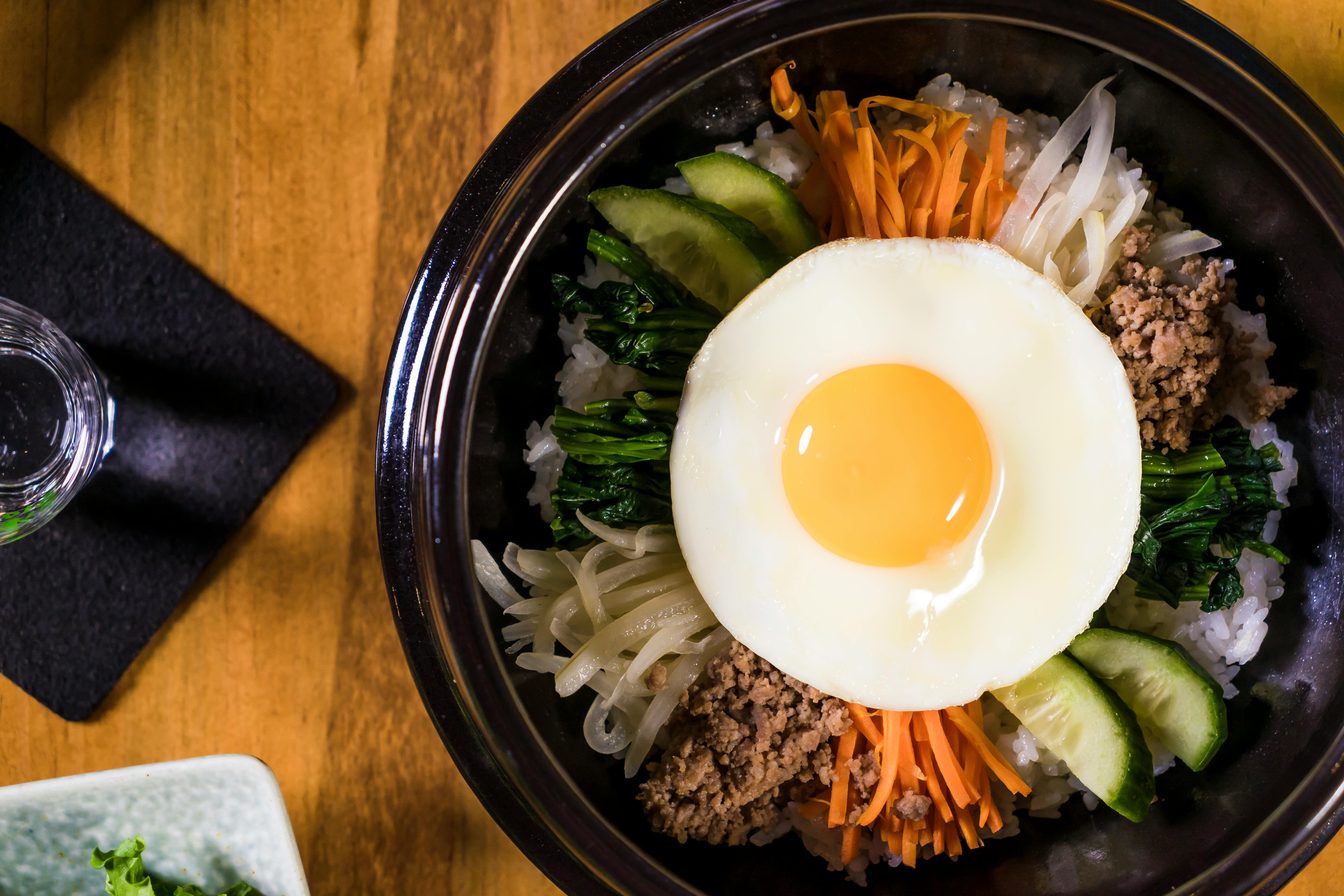
Jeonju Bibimbap
The diets react (see scores below)
Common Ingredients
- rice
- beef
- spinach
- bean sprouts
- carrot
- zucchini
- egg
- gochujang
Specific recipes may vary.
Incompatible with 6 of 11 diets
Diet Ratings
Jeonju Bibimbap is fundamentally incompatible with a ketogenic diet. The dish is built on a base of white rice, which alone contributes approximately 45-55g of net carbs per serving — already exceeding the entire daily keto limit before any other ingredients are counted. Gochujang (Korean fermented chili paste) adds additional sugars and carbs (typically 8-15g per tablespoon). Together, these two ingredients make ketosis virtually impossible even in small portions. While some ingredients like egg, beef, spinach, bean sprouts, and zucchini are keto-friendly, they cannot offset the massive carbohydrate load from the rice and gochujang. There is no realistic portion size of traditional Jeonju Bibimbap that would fit within a 20-50g daily net carb budget.
Jeonju Bibimbap contains two clear animal products: beef (meat) and egg. Both are unambiguously excluded under vegan dietary rules. The dish also typically includes gochujang, which in its traditional form is plant-based, but the presence of beef and egg alone is sufficient to make this dish incompatible with a vegan diet. While the vegetable components (spinach, bean sprouts, carrot, zucchini) and rice are fully plant-based, the dish as described cannot be considered vegan.
Jeonju Bibimbap is fundamentally incompatible with the paleo diet. The dish is built on a base of white rice, a grain that is categorically excluded from paleo. Additionally, bean sprouts are derived from mung beans, a legume, which are also excluded. Gochujang is a fermented Korean chili paste that typically contains rice flour and sometimes added sugar — both non-paleo ingredients. While several components are paleo-friendly (beef, spinach, carrot, zucchini, and egg), the foundational ingredients — rice, bean sprouts, and gochujang — make this dish a clear avoid. The dish cannot be considered paleo even in a lenient interpretation, as removing the offending ingredients would fundamentally alter it into something unrecognizable as Bibimbap.
Jeonju Bibimbap is a nutrient-dense dish with many Mediterranean-compatible elements: abundant vegetables (spinach, bean sprouts, carrot, zucchini), egg, and a vegetable-forward composition. However, several factors pull it away from Mediterranean ideals. The primary protein is beef, which should be limited to a few times per month on a Mediterranean diet. The rice base is white rice (refined grain), whereas whole grains are preferred. Gochujang, while a fermented condiment, often contains added sugar and processed ingredients. The dish lacks olive oil as a fat source, typically using sesame oil instead. Overall, the vegetable richness is commendable and aligns well with Mediterranean principles, but the beef and refined rice prevent a full approval.
Some Mediterranean diet practitioners, particularly those focused on dietary patterns rather than strict ingredient lists, might view this dish more favorably: the large proportion of vegetables and the modest amount of beef (used more as a garnish than a centerpiece) resembles the Mediterranean approach of using meat as a flavoring rather than a main feature. Additionally, white rice appears in traditional Mediterranean cuisines such as Greek and Turkish cooking, suggesting moderate inclusion is acceptable.
Jeonju Bibimbap is fundamentally incompatible with the carnivore diet. The dish is built on a rice base — a grain that is entirely excluded — and loaded with multiple plant foods: spinach, bean sprouts, carrot, and zucchini. Gochujang is a fermented chili paste made from red pepper, glutinous rice, and soybeans, all plant-derived and heavily processed. While the dish does contain egg and beef, these are minor components in a dish that is overwhelmingly plant-based and grain-centered. There is no version of this dish that could be adapted to carnivore without being an entirely different dish. The carnivore community has universal consensus on avoiding grains, vegetables, and plant-based condiments like gochujang.
Jeonju Bibimbap contains two explicitly excluded ingredients. First, rice is a grain and is prohibited on Whole30. Second, gochujang (Korean fermented chili paste) virtually always contains rice and/or sugar as core ingredients, making it doubly non-compliant. The remaining ingredients — beef, spinach, bean sprouts, carrot, zucchini, and egg — are all Whole30-compliant whole foods, but the foundational grain base (rice) and the sauce (gochujang) disqualify this dish as traditionally prepared. There is no practical compliant version of classic bibimbap, as rice is structural to the dish and gochujang is its defining sauce.
Jeonju Bibimbap is a mixed rice dish where most individual ingredients are low-FODMAP, but gochujang is the primary concern. Commercial gochujang typically contains garlic and onion powder (both high-fructan), and often wheat or barley as fermentation agents, making standard gochujang high-FODMAP. Monash has tested gochujang and rates it as high-FODMAP due to these additives. Rice is low-FODMAP. Beef (plain, no marinades with garlic/onion) is low-FODMAP. Spinach is low-FODMAP at standard serves. Bean sprouts are low-FODMAP (Monash approves up to 1 cup). Carrot is low-FODMAP at standard serves. Zucchini is low-FODMAP at up to 65g per serve. Egg is low-FODMAP. The dish is generally safe if gochujang is omitted or replaced with a certified low-FODMAP gochujang alternative, but as traditionally prepared with standard commercial gochujang, it poses a significant FODMAP risk. Additionally, traditional bibimbap sometimes includes marinated beef with garlic/soy sauce and namul vegetables that may be seasoned with garlic.
Monash University rates commercial gochujang as high-FODMAP due to garlic, onion, and sometimes wheat content, making the dish problematic during elimination. However, some clinical FODMAP practitioners note that the quantity of gochujang used per serving may be small enough (e.g., 1 teaspoon) that FODMAP load remains borderline, and low-FODMAP certified versions or homemade gochujang substitutes can make this dish compliant — but this requires significant recipe modification.
Jeonju Bibimbap is a mixed rice bowl loaded with DASH-friendly vegetables (spinach, bean sprouts, carrot, zucchini) that provide potassium, magnesium, and fiber — all nutrients emphasized in the DASH eating plan. The rice is a whole-grain-eligible carbohydrate base, and the egg and small portion of beef provide lean protein. However, gochujang (fermented chili paste) is the primary concern: a standard 1-tablespoon serving contains roughly 300–500mg of sodium, and restaurant-style bibimbap often uses 2–3 tablespoons plus additional seasoning on the vegetables, pushing total dish sodium toward 800–1,500mg or more. The beef, while a lean protein source, is a red meat that DASH recommends limiting. The egg introduces moderate cholesterol debate. On balance, the dish has an excellent vegetable-to-grain ratio and nutrient density, but sodium from gochujang and sodium used in vegetable blanching requires portion control and mindful preparation to fit standard DASH targets (<2,300mg/day) and makes it difficult to meet the low-sodium DASH threshold (<1,500mg/day) without significant modification.
NIH DASH guidelines do not specifically address gochujang or Korean fermented condiments, placing this assessment in a gray zone. Some DASH-oriented clinicians and dietitians highlight that the dish's exceptional vegetable density, potassium content, and fiber profile are strongly aligned with DASH principles, and argue that a home-prepared version with reduced gochujang (or low-sodium gochujang) and lean beef could reasonably earn an 'approve' rating — a view supported by the broader DASH framework that focuses on dietary patterns rather than individual ingredients.
Jeonju Bibimbap is a nutritionally rich Korean dish with a solid mix of lean protein (beef, egg), low-glycemic vegetables (spinach, bean sprouts, carrot, zucchini), and moderate fat. However, its Zone compatibility is undermined by two primary concerns: (1) white rice is the base carbohydrate, which is high-glycemic and classified as an 'unfavorable' carb in Zone terminology — it will spike insulin and make the 40/30/30 ratio harder to achieve, and (2) gochujang (fermented chili paste) typically contains added sugar and rice, adding additional high-glycemic carb load. The vegetable medley is genuinely excellent from a Zone perspective — spinach, bean sprouts, carrot, and zucchini are all favorable low-glycemic carbs rich in polyphenols. The beef (assuming lean cuts like bulgogi-style) and egg provide good protein blocks. The dish can be adapted for Zone by significantly reducing rice portion (1/3 cup cooked maximum), increasing vegetable volume, using a lean beef portion (~3 oz), and moderating gochujang. As traditionally served in Jeonju — where rice portions are generous — the carb load will be too high and heavily weighted toward unfavorable sources.
Some Zone practitioners and later Sears anti-inflammatory writings place greater emphasis on polyphenol-rich foods and fermented ingredients. Gochujang, being fermented, carries some probiotic and anti-inflammatory value that Sears' later work (The Zone Diet and Inflammation) might credit. Additionally, the overall dish density of colorful vegetables aligns well with Sears' emphasis on polyphenol intake. A practitioner following Sears' later evolution might score this higher (6-7) if rice is moderated, viewing the vegetable diversity and fermented paste as net positives.
Jeonju Bibimbap is a nutrient-dense dish with a mixed anti-inflammatory profile. On the positive side, it features an array of colorful vegetables (spinach, carrot, bean sprouts, zucchini) rich in antioxidants, carotenoids, and fiber. Gochujang contains capsaicin, which has documented anti-inflammatory properties, though commercial versions often include added sugars and sodium that partially offset this benefit. Eggs contribute choline and selenium with modest anti-inflammatory relevance. The base is white rice — a refined carbohydrate with a moderate glycemic load, which is neutral to mildly pro-inflammatory compared to whole grains. Beef is the main protein concern: it contains saturated fat and arachidonic acid, both of which are flagged under anti-inflammatory guidelines, though a traditional bibimbap portion uses relatively modest amounts of beef (typically ground or thinly sliced). Overall, the dish leans toward a balanced, vegetable-forward meal with some nutritional strengths, but the white rice base, beef, and processed gochujang (if store-bought) prevent a full approval. Substituting brown rice and minimizing the beef portion would significantly improve its anti-inflammatory profile.
Dr. Weil's anti-inflammatory framework emphasizes colorful vegetables and fermented or spiced foods, and would view bibimbap favorably given its vegetable density and gochujang spice base. However, stricter anti-inflammatory protocols (e.g., AIP or those targeting autoimmune conditions) would flag both the egg yolk's arachidonic acid and the chili pepper in gochujang as potential irritants for sensitive individuals, while also objecting to the refined white rice as a glycemic stressor.
Jeonju Bibimbap is a nutritionally diverse Korean rice bowl with meaningful upsides and notable caveats for GLP-1 patients. On the positive side, it delivers a broad array of vegetables (spinach, bean sprouts, carrot, zucchini) contributing fiber, micronutrients, and high water content — all well-aligned with GLP-1 priorities. The egg and beef provide protein, and the dish is low in added fat when prepared traditionally. However, the base is white rice, a refined carbohydrate with low fiber and moderate glycemic impact, which is suboptimal when caloric capacity is limited. Protein quantity is a concern: a standard serving may deliver only 15–20g of protein depending on beef quantity, which is acceptable but on the lower end. Gochujang is the primary flag — it is a fermented chili paste that adds moderate spice and a small amount of sugar; the spice level may worsen nausea or reflux in GLP-1 patients, particularly those in early weeks of treatment or dose escalation. The dish is also portion-sensitive: the rice-heavy base means a smaller serving meaningfully reduces both carbohydrate load and protein yield simultaneously. Overall, Jeonju Bibimbap is conditionally acceptable — best suited for GLP-1 patients who are past the acute side-effect phase, tolerate mild spice, reduce the rice portion, and ensure adequate beef or egg quantity to hit protein targets.
Some GLP-1-focused dietitians view bibimbap favorably as a whole-food, vegetable-forward meal that can be modified (brown rice substitution, increased egg or lean beef, minimal gochujang) to meet protein and fiber targets — they would score it higher as a customizable template rather than a fixed dish. Others flag gochujang more severely, noting that GLP-1 patients with active nausea or GERD should avoid all moderate-to-high spice foods regardless of overall meal quality, which would push the score lower.
*See how scores were generated at our methodology page.
Nutritional profile
Six traits that cut across every diet.
Fiber & Plants
How much whole-plant food and fiber it delivers.
Healthy Fats
The quality of its fats (unsaturated, omega-3).
Whole / Unprocessed
How close it is to its natural, unprocessed form.
Gut Gentle
How easy it is on digestion (low FODMAP, few irritants).
Low Glycemic
How little it spikes your blood sugar.
Protein Density
How much protein it packs per calorie.
Controversy Index
Higher controversy = more disagreement between diets.
Diet-Specific Tips
 Mediterranean — 5/10
View tips
- High vegetable variety aligns well with Mediterranean plant-forward emphasis
- Beef as primary protein conflicts with Mediterranean guideline of limiting red meat to a few times per month
- White rice is a refined grain; whole grains are preferred in Mediterranean guidelines
- Egg inclusion is compatible as moderate-frequency food
- Gochujang may contain added sugar and is a processed condiment
- Sesame oil rather than extra virgin olive oil used as primary fat
- No olive oil present, missing the cornerstone Mediterranean fat source
 DASH — 6/10
View tips
- High vegetable density (spinach, bean sprouts, carrot, zucchini) — strongly DASH-positive for potassium, magnesium, and fiber
- Gochujang is a significant sodium source (~300–500mg per tablespoon); restaurant portions can drive total dish sodium to 1,000–1,500mg+
- Beef is a red meat, which DASH recommends limiting; lean cuts in small portions are acceptable in moderation
- Egg provides quality protein but involves moderate cholesterol debate within updated DASH interpretations
- Rice base is acceptable but white rice (commonly used in Jeonju-style) is less preferred than brown rice under DASH whole-grain recommendations
- Vegetable blanching and seasoning with salt or soy sauce adds additional sodium beyond gochujang
- Home preparation with reduced-sodium gochujang, brown rice, and lean beef significantly improves DASH compatibility
 Zone — 5/10
View tips
- White rice is a high-glycemic 'unfavorable' carb that dominates the carbohydrate blocks and raises insulin response
- Gochujang adds sugar and additional high-glycemic carbs, compounding the unfavorable carb load
- Vegetable mix (spinach, bean sprouts, carrot, zucchini) is excellent — all favorable low-glycemic Zone carbs
- Beef and egg provide lean protein blocks consistent with Zone protein guidelines
- Dish is highly adaptable: reducing rice to ~1/3 cup and increasing vegetable ratio can bring it closer to Zone balance
- As traditionally served, carb ratio will be skewed heavily toward unfavorable high-glycemic sources
- No problematic fats — dish is relatively low in fat, which may require adding a monounsaturated fat source (e.g., sesame oil in moderation) to meet the 30% fat target
 Anti-Inflammatory — 6/10
View tips
- Multiple colorful vegetables (spinach, carrot, zucchini, bean sprouts) provide antioxidants and fiber — anti-inflammatory positives
- Gochujang contains anti-inflammatory capsaicin but commercial versions add sugar and sodium
- White rice is a refined carbohydrate with a moderate glycemic index — neutral to mildly pro-inflammatory
- Beef contributes saturated fat and arachidonic acid, both flagged under anti-inflammatory guidelines
- Egg is a mixed factor: provides choline and selenium but contains arachidonic acid — context-dependent
- Traditional portion sizes keep beef and egg quantities modest, limiting pro-inflammatory load
- Overall dish is vegetable-forward, which aligns with anti-inflammatory principles despite the refined grain base
 GLP-1 Friendly — 5/10
View tips
- White rice base is low-fiber and calorie-dense relative to nutritional value — reduces score for GLP-1 patients with limited caloric intake
- Gochujang adds moderate spice and small sugar load — may worsen nausea, reflux, or GI discomfort, especially in early treatment phases
- Good vegetable variety (spinach, bean sprouts, carrot, zucchini) contributes fiber and micronutrients
- Protein yield is moderate but portion-dependent — adequate only if beef and egg portions are not reduced when scaling down rice
- Low added fat when prepared traditionally — favorable for GLP-1 digestive tolerance
- High water content from vegetables supports hydration — a GLP-1 benefit
- Brown rice substitution would meaningfully improve fiber profile and glycemic response