The diets react (see scores below)
Common Ingredients
- wheat noodles
- soybeans
- cucumber
- sesame seeds
- salt
- ice
- tomato
Specific recipes may vary.
Incompatible with 5 of 11 diets
Diet Ratings
Kongguksu is fundamentally incompatible with a ketogenic diet. The primary component — wheat noodles — is a high-carb grain-based food that alone can contain 40-60g of net carbs per serving, immediately exceeding the daily keto limit. While soybeans do contain protein and fat, they also carry moderate carbs (~10g net carbs per 100g). Tomato and cucumber are relatively low-carb vegetables but are irrelevant given the noodle problem. There is no realistic portion size of this dish that keeps net carbs within keto limits without fundamentally altering the recipe (e.g., replacing wheat noodles with shirataki or zucchini noodles).
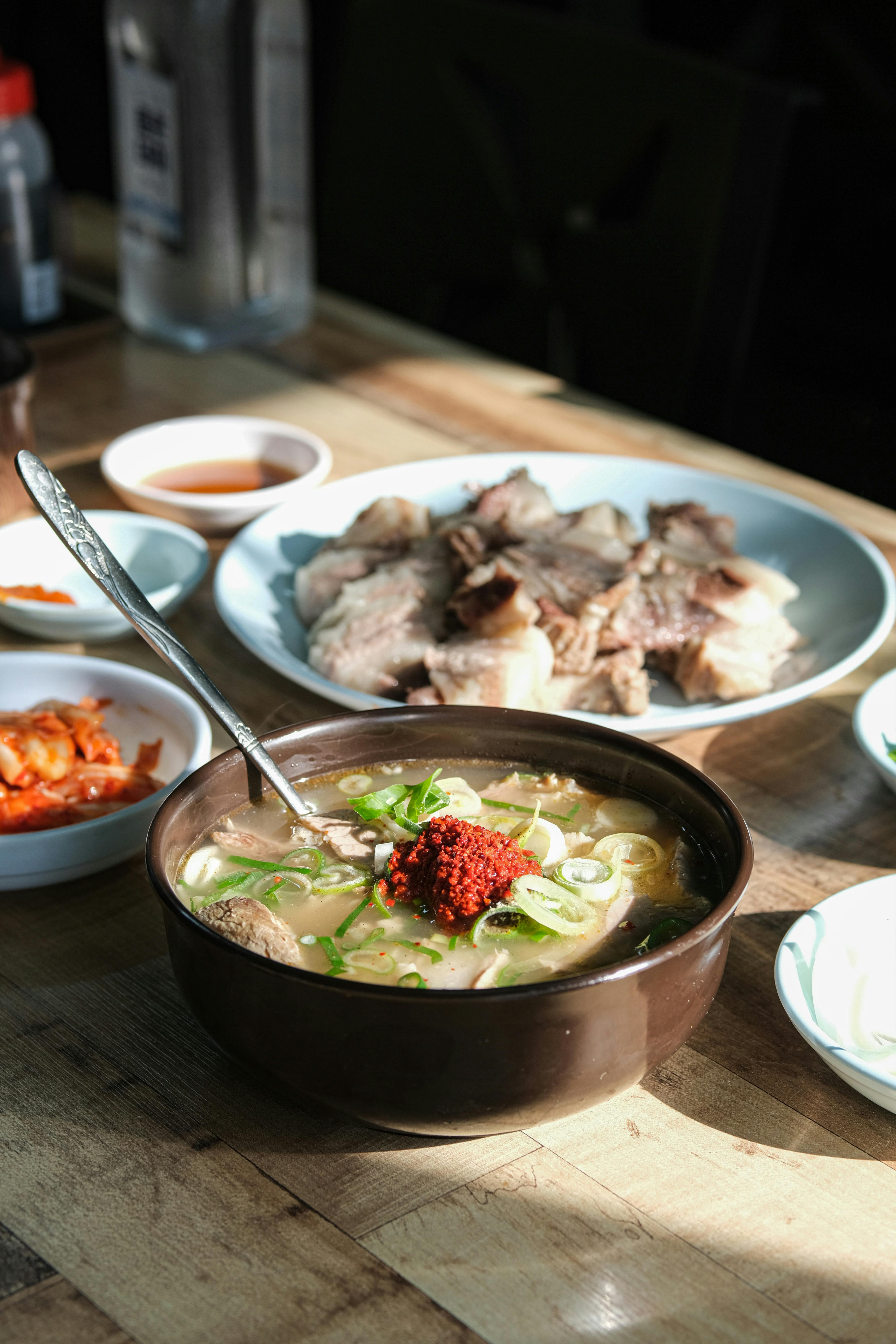
Kongguksu is a traditional Korean cold noodle soup made by blending soaked soybeans into a creamy, milk-like broth served over wheat noodles with simple garnishes. Every ingredient in this dish — wheat noodles, soybeans, cucumber, sesame seeds, salt, ice, and tomato — is entirely plant-based with no animal products or animal-derived ingredients present. The dish is nutritionally strong, featuring whole food sources of protein (soybeans), complex carbohydrates (wheat noodles), and micronutrients from the vegetable garnishes. The soy broth is a whole-food preparation, not a heavily processed substitute. This is a naturally vegan dish that requires no modification.
Kongguksu contains multiple paleo-prohibited ingredients that make it completely incompatible with the paleo diet. Wheat noodles are a grain product — one of the clearest exclusions in paleo. Soybeans are a legume, also strictly excluded. Salt is an added ingredient not permitted on strict paleo. These are not gray-area foods; they are foundational exclusions with unanimous consensus across all major paleo authorities. The only paleo-compatible ingredients in this dish are cucumber, sesame seeds, tomato, and ice — but the core structural components of the dish (noodles and soy broth) are entirely off-limits, making the dish as a whole an avoid.
Kongguksu is a Korean cold noodle soup with a soy milk broth made from blended soybeans, served with wheat noodles, cucumber, sesame seeds, and tomato. The dish has strong Mediterranean-compatible elements: soybeans are an excellent legume and plant protein source, cucumber and tomato are vegetables strongly encouraged in the Mediterranean diet, and sesame seeds are a healthy plant-based fat source. However, the wheat noodles are refined rather than whole grain, which is a moderate concern under Mediterranean principles. There is no olive oil and no traditional Mediterranean flavor profile, but the overall composition — plant-forward, legume-based broth, fresh vegetables — aligns reasonably well with the spirit of the diet. The absence of red meat, added sugars, or highly processed ingredients keeps this from being flagged as 'avoid.' The refined wheat noodles are the primary limiting factor.
Some Mediterranean diet practitioners would score this higher, arguing that the legume-rich soy broth and abundance of plant foods closely mirrors the Mediterranean emphasis on whole, minimally processed plant-based eating; traditional Mediterranean cuisines also include pasta made from refined wheat (e.g., Italian tradition), suggesting the noodles are not disqualifying.
Kongguksu is entirely plant-based and completely incompatible with the carnivore diet. Every single ingredient is excluded: wheat noodles are a grain product, soybeans are a legume (one of the most problematic foods in carnivore due to phytoestrogens and antinutrients), cucumber and tomato are vegetables/fruits, and sesame seeds are seeds with plant oils. There is no animal-derived ingredient in this dish whatsoever. This dish represents the antithesis of carnivore eating — it is a cold Korean noodle soup built entirely on plant foods.
Kongguksu contains two explicitly excluded ingredients: wheat noodles (a grain product) and soybeans (a legume). Both are categorically banned on the Whole30 program. Wheat noodles are a grain-based pasta, which is doubly excluded as both a grain and a noodle/pasta form. Soybeans are a legume and explicitly listed among excluded foods. The remaining ingredients — cucumber, sesame seeds, salt, ice, and tomato — are all compliant, but the two core components of this dish make it entirely incompatible with Whole30.
Kongguksu contains two major high-FODMAP ingredients that make it unsuitable during the elimination phase. First, wheat noodles are high in fructans and are a primary FODMAP trigger — there is no safe serving size for standard wheat noodles during elimination. Second, soybeans form the base broth of this dish and are high in GOS (galacto-oligosaccharides); a typical serving of soybeans used to make the creamy broth would far exceed any low-FODMAP threshold. The remaining ingredients — cucumber (low-FODMAP in standard serves), sesame seeds (low-FODMAP at ~1 tbsp), salt, ice, and tomato (low-FODMAP at standard serves) — are all acceptable, but the two core components of this dish are significant FODMAP sources. Substitutions (rice noodles for wheat noodles, and a modified non-soy broth) would be required to make this dish low-FODMAP compatible.
Kongguksu is a Korean cold noodle soup made with a creamy soybean broth, which brings several DASH-positive elements: soybeans are an excellent plant-based protein rich in potassium and magnesium, cucumber adds vegetables, and tomato contributes potassium and lycopene. However, the dish has meaningful DASH concerns. The wheat noodles are typically refined (not whole grain), reducing fiber value. Sesame seeds add healthy unsaturated fats but also modest calories. The primary concern is salt — kongguksu broth is traditionally salted to taste, and restaurant or home preparations can easily push sodium into a moderate-to-high range (500–900mg+ per serving). The soybean broth itself is relatively low in saturated fat, which is a positive. Overall, the dish is plant-forward and protein-rich but falls into 'caution' due to refined noodles and variable sodium from added salt. Using whole grain noodles and minimizing salt would meaningfully improve the DASH profile.
NIH DASH guidelines would flag refined wheat noodles and added salt as concerns requiring moderation. However, some updated DASH-aligned clinicians emphasize that kongguksu's whole-food soybean base, plant protein density, and absence of saturated fat or red meat make it substantially better than most noodle soups — particularly if salt is reduced and noodle portions are controlled, some would rate it closer to an approval.
Kongguksu is a Korean cold noodle soup made with a blended soybean broth, wheat noodles, and fresh vegetables. From a Zone perspective, this dish has both promising and problematic elements. The soybean broth is a notable strength — soybeans are a complete vegetarian protein source and provide monounsaturated and polyunsaturated fats, making them Zone-friendly. Cucumber and tomato are excellent low-glycemic vegetable carbs that Sears would approve of. Sesame seeds add small amounts of monounsaturated fat. However, the primary carbohydrate source — wheat noodles — is the main concern. Wheat noodles are a higher-glycemic, grain-based carbohydrate that Sears classifies as 'unfavorable,' and they tend to dominate the dish's carbohydrate load. Additionally, the dish lists 'none' as the primary protein, meaning the soybean broth provides moderate but not dominant protein. The fat block contribution from soybeans and sesame seeds is relatively small. To fit Zone ratios, portions of noodles would need to be significantly reduced (treated as 0-1 grain serving), the soybean broth would need to supply meaningful protein blocks, and additional lean protein might be needed to hit 30% protein. The dish is workable but requires deliberate portioning adjustments.
Some Zone practitioners, particularly those following Sears' later anti-inflammatory evolution, might view kongguksu more favorably because the soybean base provides polyphenols and plant-based protein simultaneously, and the overall dish is minimally processed and whole-food-based. The noodle portion could be kept small (half a cup cooked) to limit the glycemic load, making this closer to an acceptable Zone meal. Others would flag the noodle-heavy nature as a fundamental imbalance that is difficult to correct without altering the dish's character.
Kongguksu is a Korean cold noodle soup made with a blended soybean broth, which gives it a notably favorable anti-inflammatory base. Whole soybeans are explicitly emphasized in anti-inflammatory frameworks (Dr. Weil's pyramid includes whole soy foods like tofu, tempeh, and edamame) due to their isoflavones, fiber, and protein profile. Sesame seeds provide lignans and some omega-3 fatty acids (ALA), adding modest anti-inflammatory benefit. Cucumber and tomato contribute antioxidants — tomato notably provides lycopene, a carotenoid with anti-inflammatory properties. The main limiting factor is the wheat noodles: refined wheat noodles are a source of refined carbohydrates, which the anti-inflammatory framework recommends limiting. If made with whole wheat or other whole grain noodles, the dish would score higher. The overall dish is relatively clean — no processed ingredients, no added sugars, no seed oils, no trans fats — and the soybean broth base is genuinely beneficial. The sodium from salt is worth noting for inflammatory conditions, but is not a primary concern at moderate levels. On balance, this is a nutritionally solid dish held back mainly by refined noodles, landing it firmly in the 'caution/approve' border.
Nightshade considerations: tomato is included, and while mainstream anti-inflammatory nutrition (Dr. Weil) endorses tomatoes for their lycopene and antioxidant content, the Autoimmune Protocol (AIP) and practitioners like Dr. Tom O'Bryan exclude nightshades entirely due to potential solanine and lectin sensitivity in individuals with autoimmune conditions — relevant for that subpopulation. Additionally, some AIP-aligned frameworks also restrict soy due to lectin content, though this is a minority position within mainstream anti-inflammatory nutrition.
Kongguksu is a chilled Korean noodle dish in a cold soybean milk broth, topped with cucumber, sesame seeds, and optionally tomato. The soybean broth is a meaningful plant-based protein source — a full serving can deliver roughly 10–15g of protein from the soybeans — and soybeans provide fiber, unsaturated fats, and good micronutrient density. Cucumber adds hydration and lightness, and the cold, gentle preparation makes it easy to digest, which suits GLP-1 patients dealing with slowed gastric emptying. However, the primary listed protein is 'none,' and the dish is dominated by wheat noodles (refined carbohydrates, low fiber unless a whole-grain version is used), which limits protein density per calorie and contributes minimal fiber relative to volume. The sesame seeds add small amounts of healthy fat and calcium but also add calories in a dish that already skews carbohydrate-heavy. The dish does not meet the 15–30g protein per meal target on its own. Salt content warrants attention for patients managing blood pressure, which is common in the GLP-1 population. Overall, this is a nutrient-decent but protein-insufficient standalone meal that works better as a light side or supplemented with an additional protein source.
Some GLP-1-focused dietitians view soy-based dishes favorably as a complete plant protein and may rate kongguksu more positively when the soybean broth is thick and generous, arguing the plant protein plus fiber combination supports satiety adequately. Others flag refined wheat noodles and sodium content as drawbacks significant enough to recommend avoiding the dish or substituting shirataki or whole-grain noodles to improve the rating.
*See how scores were generated at our methodology page.
Nutritional profile
Six traits that cut across every diet.
Fiber & Plants
How much whole-plant food and fiber it delivers.
Healthy Fats
The quality of its fats (unsaturated, omega-3).
Whole / Unprocessed
How close it is to its natural, unprocessed form.
Gut Gentle
How easy it is on digestion (low FODMAP, few irritants).
Low Glycemic
How little it spikes your blood sugar.
Protein Density
How much protein it packs per calorie.
Controversy Index
Higher controversy = more disagreement between diets.
Diet-Specific Tips
 Vegan — 9/10
View tips
- Soybean broth is fully plant-based and provides complete protein
- Wheat noodles contain no eggs (unlike some Asian noodle varieties)
- All garnishes — cucumber, tomato, sesame seeds — are whole plant foods
- No dairy, eggs, or animal-derived additives present
- Naturally vegan dish requiring zero substitutions
- High nutritional value elevates score within the approve range
 Mediterranean — 6/10
View tips
- Soy milk broth is an excellent legume-based, plant-forward protein source
- Cucumber and tomato are strongly encouraged Mediterranean vegetables
- Sesame seeds provide healthy plant-based fats
- Refined wheat noodles are not whole grain, which is a moderate concern
- No olive oil, which is the canonical Mediterranean fat
- No red meat, processed ingredients, or added sugars
- Overall composition is plant-forward and minimally processed
 DASH — 6/10
View tips
- Soybeans provide high-quality plant protein, potassium, and magnesium — strongly aligned with DASH
- Refined wheat noodles rather than whole grain reduce fiber content and DASH alignment
- Added salt is the primary sodium risk; preparation-dependent but can be significant
- Cucumber and tomato contribute DASH-positive vegetables and potassium
- Sesame seeds add healthy unsaturated fats, acceptable in small amounts on DASH
- No saturated fat, red meat, or added sugar — favorable profile overall
- Sodium can be reduced substantially by minimizing salt, which would improve DASH score
 Zone — 5/10
View tips
- Wheat noodles are an 'unfavorable' high-glycemic carbohydrate in Zone terminology and dominate the carb load
- Soybean broth provides plant-based protein and favorable monounsaturated/polyunsaturated fats — a Zone positive
- Cucumber and tomato are ideal low-glycemic Zone carbohydrate sources
- Dish lacks a clearly dominant lean protein source, making 30% protein target harder to hit
- Sesame seeds contribute small amounts of healthy fat but insufficient to meet fat block needs
- Portion control of noodles is critical — a large noodle serving would spike the glycemic load significantly
- Overall macronutrient ratio skews carbohydrate-heavy, requiring deliberate modification to approach 40/30/30
 Anti-Inflammatory — 6/10
View tips
- Whole soybeans as the broth base — a strongly anti-inflammatory ingredient per Dr. Weil's pyramid (isoflavones, fiber, phytoestrogens)
- Sesame seeds contribute lignans and modest ALA omega-3s
- Tomato provides lycopene and antioxidants (with nightshade caveat for autoimmune individuals)
- Cucumber adds hydration and minor antioxidant value
- Wheat noodles are likely refined, contributing to glycemic load and partially offsetting anti-inflammatory benefits
- No seed oils, trans fats, added sugars, or processed additives — a clean ingredient list overall
- Sodium from salt is moderate; not a primary concern unless consumed in excess
 GLP-1 Friendly — 5/10
View tips
- Soybean broth provides meaningful but insufficient protein (~10–15g); does not meet 15–30g per meal target alone
- Wheat noodles are refined carbohydrates with low fiber unless whole-grain version is used
- Cold, lightly prepared dish is easy to digest — a genuine advantage for GLP-1 patients
- High water content from broth, cucumber, and ice supports hydration — a GLP-1 benefit
- Low fat profile from soy and sesame is appropriate; sesame seeds contribute small amounts of healthy unsaturated fat
- Sodium from salt warrants portion awareness, especially for patients with hypertension
- Nutrient density is moderate but not high; dish should be supplemented with additional protein source to meet daily targets