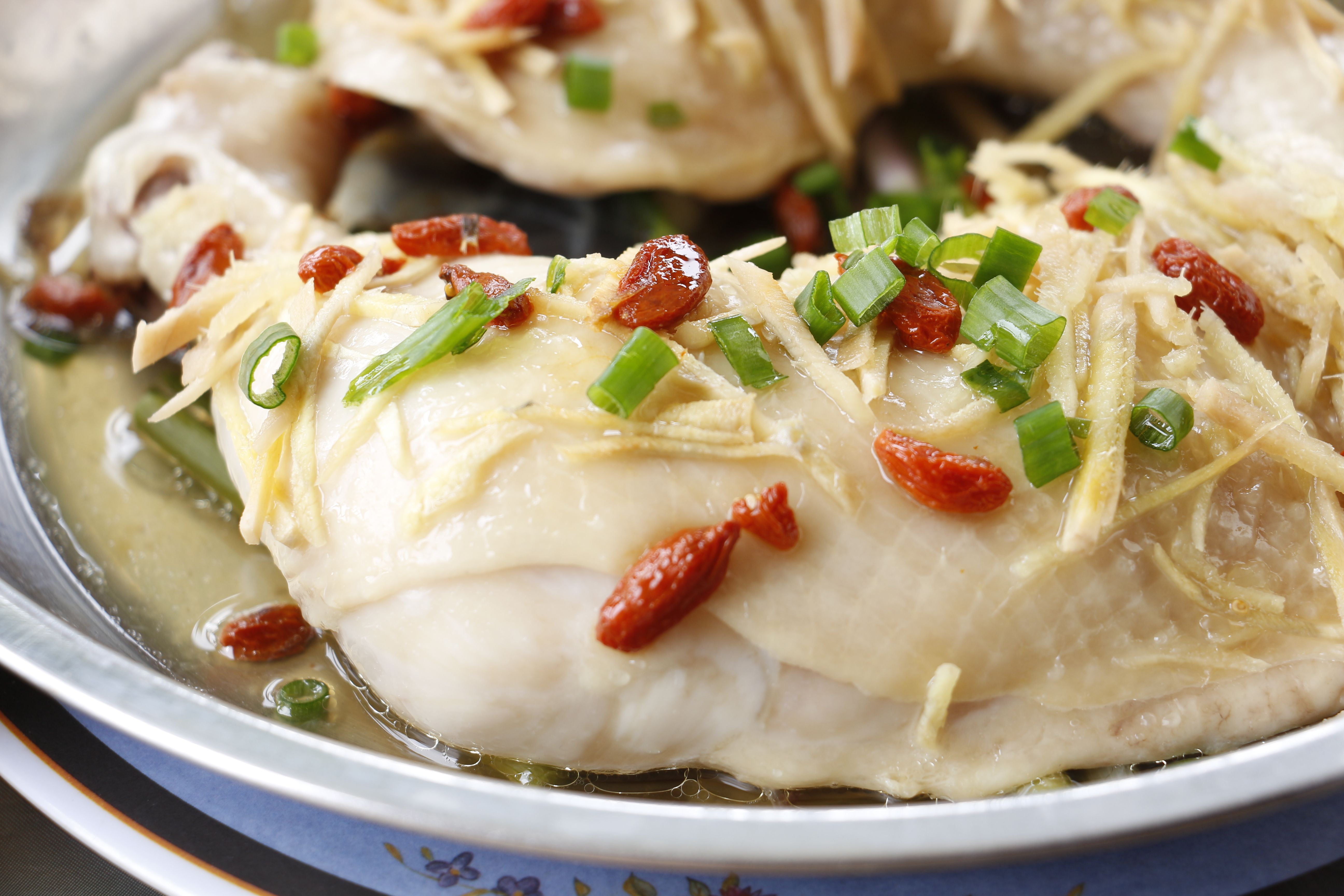
The diets react (see scores below)
Common Ingredients
- chicken
- glutinous rice
- ginseng
- garlic
- jujube
- green onion
- chestnut
- salt
Specific recipes may vary.
Incompatible with 6 of 11 diets
Diet Ratings
Samgyetang is fundamentally incompatible with ketogenic diet due to its core ingredient: glutinous rice stuffed inside the chicken cavity. Glutinous rice is one of the highest-glycemic starches available, with a standard serving contributing 30-50g of net carbs per portion on its own. Additionally, jujubes (Korean dates) are high-sugar dried fruits adding further carbohydrates, and chestnuts are among the most carb-dense nuts (~15g net carbs per small serving). The combination of glutinous rice, jujube, and chestnut in a single dish virtually guarantees exceeding the daily keto carb limit in one serving. While the chicken base and broth are keto-friendly, and garlic and ginseng are acceptable in small amounts, the overall dish is disqualifying due to its starchy, sugary components being integral to the recipe, not optional garnishes.
Samgyetang is a traditional Korean chicken soup where whole chicken is the primary and defining ingredient. Chicken is unambiguously an animal product and is excluded under all vegan dietary frameworks. There is no plant-based version of this dish that could be considered standard — the chicken is structural to the recipe, not incidental. The remaining ingredients (glutinous rice, ginseng, garlic, jujube, green onion, chestnut, salt) are all plant-based, but their presence does not mitigate the core animal product.
Samgyetang is disqualified primarily by glutinous rice, a grain that is strictly excluded under all mainstream paleo frameworks. Grains are a non-negotiable exclusion in the paleo diet due to their anti-nutrient content (lectins, phytates) and their association with the agricultural revolution. Salt is also a paleo exclusion as an added refined mineral. The remaining ingredients — chicken, ginseng, garlic, jujube (Chinese date), green onion, and chestnut — are all paleo-compatible whole foods. However, the presence of glutinous rice as a core structural ingredient (stuffed inside the chicken) means the dish cannot be adapted without fundamentally changing its identity. The verdict is 'avoid' with high confidence because grains are the clearest and most universal exclusion in paleo doctrine.
Samgyetang is a whole chicken soup with mostly wholesome ingredients — garlic, ginseng, jujube, chestnut, and green onion are all plant-based and align well with Mediterranean principles. Chicken is an acceptable moderate protein source. The main concern is glutinous rice, a refined/sticky starch that Mediterranean guidelines would prefer replaced with a whole grain. Overall it is a minimally processed, nutrient-dense dish, but the glutinous rice and non-traditional preparation keep it from a full approval.
Some Mediterranean diet interpreters might score this higher, noting that the soup is rich in whole, plant-forward aromatics and lean poultry with minimal added fat or processed ingredients — qualities that closely mirror Mediterranean cooking philosophy. The glutinous rice portion is relatively small, and certain traditional Mediterranean cuisines (e.g., Greek avgolemono) also feature white rice in chicken soups without disqualification.
Samgyetang is fundamentally incompatible with the carnivore diet. While it contains chicken as the primary protein, the dish is loaded with multiple plant-based ingredients that are entirely excluded from carnivore eating. Glutinous rice is a grain, ginseng is a plant root, garlic is a plant, jujubes are fruits, green onion is a plant, and chestnuts are nuts — every ingredient beyond the chicken and salt violates carnivore principles. The dish is essentially a heavily plant-augmented broth where the chicken is secondary to a complex array of excluded foods. This is not a borderline case requiring community debate; all of these plant ingredients are unambiguously off the carnivore diet.
Samgyetang contains glutinous rice, which is a grain and explicitly excluded on the Whole30 program. All grains — including rice in any form (white, brown, glutinous/sweet) — are eliminated for the full 30 days. The remaining ingredients (whole chicken, ginseng, garlic, jujube, green onion, chestnut, salt) are all Whole30-compliant, but the glutinous rice stuffed inside the chicken is a core, non-optional component of this dish as traditionally prepared. Without the rice, it would not be Samgyetang.
Samgyetang contains multiple high-FODMAP ingredients that make it unsuitable during the elimination phase. Garlic is one of the highest-FODMAP foods known, rich in fructans, and is used as a stuffing ingredient inside the chicken in this dish — even small amounts render it high-FODMAP. Green onion (scallion) bulbs are high in fructans, though the green tops are low-FODMAP. Jujube (Chinese dates) are high in polyols (sorbitol) at typical serving sizes. Ginseng root has limited Monash testing but is used in meaningful quantities and some sources flag it as potentially high-FODMAP. Chestnut is moderate in FODMAPs and borderline at typical serving sizes. Glutinous rice itself is low-FODMAP, and plain chicken is low-FODMAP, but the combination of garlic, jujube, and likely green onion bulbs makes this dish clearly unsuitable. The slow-cooking process also means FODMAP compounds from garlic leach into the broth (water-soluble fructans), making even the soup liquid problematic.
Samgyetang is a Korean ginseng chicken soup with a generally wholesome ingredient profile — whole chicken, glutinous rice, ginseng, garlic, jujube, chestnut, and green onion. Most ingredients align well with DASH principles: lean poultry (core DASH protein), garlic and green onion (vegetables), ginseng (herb), jujube and chestnut (fruits/whole foods rich in fiber and potassium). The glutinous rice is a refined grain rather than a whole grain, which is a mild negative. The primary DASH concern is sodium: the dish is typically salted during cooking and often served with additional salt at the table, which can push sodium levels into problematic territory. Additionally, whole chicken including skin contributes saturated fat. If prepared with skin removed and sodium kept minimal, it would score higher. As commonly consumed in restaurants, sodium content is likely moderate-to-high, warranting caution rather than approval.
NIH DASH guidelines emphasize low-fat poultry and sodium restriction, which would flag restaurant-prepared Samgyetang for its variable (often high) sodium and skin-on chicken. However, updated clinical interpretations note that the soup's base of whole-food ingredients — lean protein, herbs, minimal processed components — makes it one of the more DASH-compatible Korean dishes when home-prepared with reduced salt and skin-off chicken, potentially meriting an 'approve' rating in that context.
Samgyetang is a Korean whole chicken soup stuffed with glutinous rice, ginseng, garlic, jujube, and chestnuts. The protein source — whole chicken — is excellent for Zone, providing lean protein (though the skin adds some saturated fat). The broth itself is anti-inflammatory and polyphenol-rich thanks to ginseng and garlic, aligning well with Sears' later anti-inflammatory emphasis. The primary concern is the carbohydrate profile: glutinous (sticky) rice is a high-glycemic, unfavorable Zone carb, and jujubes and chestnuts add additional higher-glycemic carbohydrate load. Together, these starchy, high-GI carbs make it difficult to maintain the 40/30/30 ratio without careful portioning. A typical serving will be heavily carb-shifted toward unfavorable sources. That said, the dish is not a Zone disaster — the chicken protein is substantial, the broth adds no problematic macros, and the herbal ingredients (ginseng, garlic) are Zone-positive. With portion control — eating less of the rice stuffing, limiting jujube and chestnut intake, and pairing with additional low-GI vegetables — a Zone practitioner could adapt this dish. It is best classified as 'caution' rather than 'avoid' because the structural issue is the glycemic index of the carbs, not an absence of Zone-compatible components.
Some Zone practitioners in Sears' later anti-inflammatory framework would note that ginseng and garlic provide significant polyphenol benefits, and that the glutinous rice portion can be intentionally minimized when eating the dish — making it closer to a lean chicken broth soup with herbal additions, which scores quite well. In this interpretation, the dish earns more lenient treatment if the diner simply leaves most of the rice stuffing uneaten.
Samgyetang is a traditional Korean ginseng chicken soup with a notably strong anti-inflammatory ingredient profile. Chicken (lean poultry) is a 'moderate' protein in anti-inflammatory frameworks — acceptable and less pro-inflammatory than red meat. Ginseng is a well-documented adaptogen with anti-inflammatory properties, shown to reduce NF-κB signaling and pro-inflammatory cytokines in research. Garlic contains allicin and organosulfur compounds with strong anti-inflammatory and immune-modulating effects, broadly endorsed in anti-inflammatory diets. Jujubes (red dates) are rich in polyphenols, vitamin C, and antioxidants, with studies showing reductions in inflammatory markers. Chestnuts are low in fat, high in fiber, and contain anti-inflammatory flavonoids — among the healthiest nuts/seeds for this framework. Green onions provide quercetin and other flavonoids. The dish is cooked as a broth-based soup with minimal added fat, which is an ideal preparation method. The main caution is glutinous rice: a refined, high-glycemic starch with little fiber, which is mildly pro-inflammatory compared to whole grains. However, its proportion in the dish is relatively small (used as a stuffing), and the overall matrix of the meal is strongly anti-inflammatory. No seed oils, no processed additives, no added sugars, no trans fats. Salt is the only neutral/potentially negative element at high amounts. Overall, this is a wholesome, minimally processed dish that aligns well with anti-inflammatory principles.
Most anti-inflammatory authorities would approve this dish given its whole-food, herb-rich profile. A mild dissent comes from the glutinous rice component: strict anti-inflammatory protocols emphasizing low glycemic load (e.g., some functional medicine approaches) might flag this refined starch, preferring brown rice or omitting rice entirely. However, Dr. Weil's framework and mainstream anti-inflammatory nutrition consider moderate whole and minimally processed starches acceptable in context.
Samgyetang is a well-suited dish for GLP-1 patients overall. It is a broth-based soup built around a whole small chicken, which provides substantial lean protein — a whole bird yields roughly 30-50g of protein per serving depending on portion. The broth format supports hydration, which is especially valuable given that GLP-1 medications blunt thirst sensation. The soup is low in fat relative to its calorie content, easy to digest in liquid form, and warming rather than greasy or fried. Glutinous rice stuffed inside the chicken adds digestible carbohydrate and some fiber, though it is a refined starch and lower in fiber than whole grains — this is a mild drawback. Garlic, ginseng, jujube, and chestnut contribute micronutrients and antioxidants with minimal caloric cost. The dish is naturally low in added sugar, free of carbonation, not fried, and not heavily spiced, meaning it avoids most known GLP-1 side effect triggers. Sodium content from the broth deserves attention — traditional preparations can be moderately high in salt, which matters for fluid retention and blood pressure in patients who may already be managing metabolic conditions. Portion control is naturally supported by the soup format, as satiety arrives quickly. Overall this is a nutrient-dense, protein-forward, easy-to-digest meal that aligns well with GLP-1 dietary priorities.
The main clinical variation here centers on the glutinous rice: some GLP-1-focused dietitians flag refined sticky rice as a blood sugar concern, particularly for patients with type 2 diabetes or insulin resistance, given its high glycemic index — they would recommend reducing or substituting the rice portion. A secondary concern raised by some practitioners is that eating a whole small chicken in one sitting may be a larger portion than GLP-1 patients can comfortably tolerate given delayed gastric emptying, making shared or halved portions advisable.
*See how scores were generated at our methodology page.
Nutritional profile
Six traits that cut across every diet.
Fiber & Plants
How much whole-plant food and fiber it delivers.
Healthy Fats
The quality of its fats (unsaturated, omega-3).
Whole / Unprocessed
How close it is to its natural, unprocessed form.
Gut Gentle
How easy it is on digestion (low FODMAP, few irritants).
Low Glycemic
How little it spikes your blood sugar.
Protein Density
How much protein it packs per calorie.
Controversy Index
Higher controversy = more disagreement between diets.
Diet-Specific Tips
 Mediterranean — 5/10
View tips
- Chicken is an acceptable moderate protein (poultry category, a few servings/week)
- Glutinous rice is a refined starch — not aligned with whole-grain preference
- Garlic, ginseng, jujube, chestnut, and green onion are plant-forward and nutrient-dense
- Minimally processed preparation with no added sugars or unhealthy fats
- No olive oil as primary fat — cooked without the canonical Mediterranean fat source
- Low in saturated fat overall, aligning with Mediterranean heart-health goals
 DASH — 6/10
View tips
- Lean chicken protein aligns with DASH, but skin-on preparation adds saturated fat
- Glutinous (sticky) rice is a refined grain, not a whole grain — mild negative for DASH
- Garlic, green onion, jujube, and chestnut provide potassium, fiber, and beneficial nutrients
- Ginseng is a neutral herb with no DASH concerns
- Sodium is the primary concern — salt added during cooking and at the table can exceed DASH limits
- Low-sodium home preparation would significantly improve DASH compatibility
- No added sugars, tropical oils, or heavily processed ingredients
 Zone — 5/10
View tips
- Whole chicken provides excellent lean Zone protein, though skin adds some saturated fat
- Glutinous rice is a high-glycemic 'unfavorable' Zone carb that disrupts the 40/30/30 ratio
- Jujube and chestnut add additional higher-glycemic carbohydrate load
- Ginseng and garlic are polyphenol-rich and align with Sears' anti-inflammatory Zone principles
- Dish can be partially adapted by minimizing rice and chestnut/jujube consumption
- Broth base is Zone-neutral and beneficial
- No added oils or problematic fats present
 Anti-Inflammatory — 8/10
View tips
- Ginseng: potent anti-inflammatory adaptogen, reduces NF-κB and pro-inflammatory cytokines
- Garlic: allicin and organosulfur compounds with strong anti-inflammatory effects
- Jujube: rich in polyphenols and antioxidants, associated with reduced inflammatory markers
- Chestnuts: low-fat, high-fiber, flavonoid-rich
- Chicken: lean poultry, anti-inflammatory framework 'moderate' protein — preferable to red meat
- Glutinous rice: refined high-glycemic starch, low fiber — mild pro-inflammatory concern
- Broth-based preparation with no added oils, no processing, no additives — ideal cooking method
 GLP-1 Friendly — 8/10
View tips
- High lean protein from whole chicken — strong alignment with GLP-1 protein priority
- Broth base supports hydration, a critical GLP-1 need
- Low fat, not fried, not spicy — avoids major GLP-1 side effect triggers
- Easy to digest in soup form — well-suited for slowed gastric emptying
- Glutinous rice is a refined high-glycemic starch — lower fiber than ideal
- Moderate to high sodium from broth — worth monitoring in metabolic patients
- Natural portion control from soup format
- Garlic, ginseng, jujube, chestnut add micronutrient value at low caloric cost