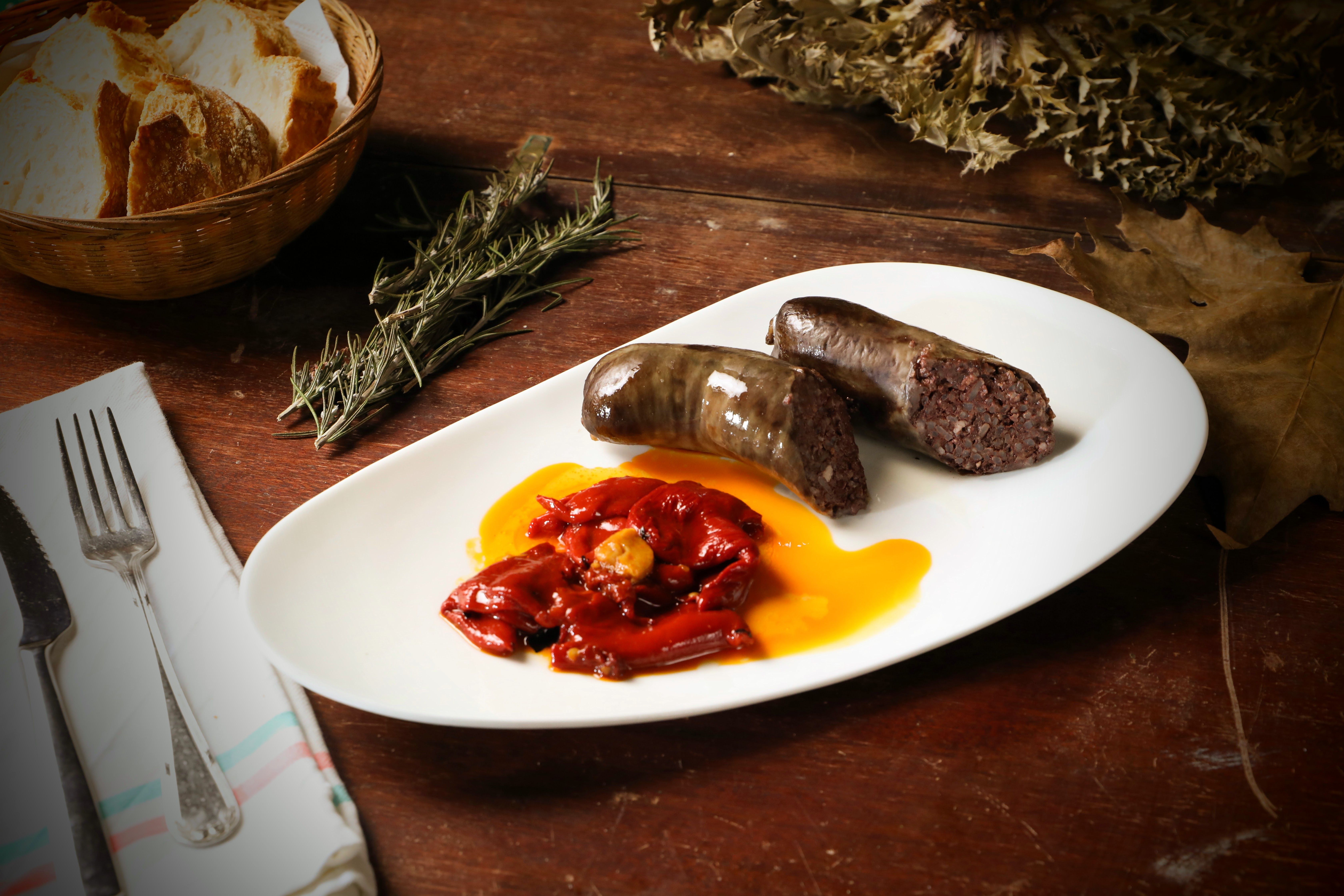
Photo: José Antonio Otegui Auzmendi / Pexels
The diets react (see scores below)
Common Ingredients
- pork intestine
- pig blood
- glass noodles
- glutinous rice
- garlic
- green onion
- perilla
- salt
Specific recipes may vary.
Incompatible with 9 of 11 diets
Diet Ratings
Korean Sundae (순대) is fundamentally incompatible with keto due to its primary fillers: glass noodles (dangmyeon) made from sweet potato starch and glutinous rice (chapssal). These two ingredients alone contribute substantial net carbs — glass noodles carry roughly 20-25g net carbs per 100g serving, and glutinous rice adds even more. A standard serving of Sundae easily delivers 30-50g+ of net carbs from these fillers alone, which can single-handedly exhaust or exceed an entire day's keto carb budget. The pork intestine casing and pig blood themselves are actually keto-friendly (low carb, high protein/fat), but the dish as traditionally prepared cannot be separated from its high-carb stuffing.
Korean Sundae (순대) is a traditional blood sausage made with pork intestine as the casing and pig blood as a primary filling ingredient. Both are unambiguously animal-derived products — organ meat and blood — making this dish entirely incompatible with a vegan diet. The remaining ingredients (glass noodles, glutinous rice, garlic, green onion, perilla, salt) are plant-based, but the foundational animal components cannot be substituted away without fundamentally changing the dish.
Korean Sundae (순대) contains multiple non-paleo ingredients that disqualify it. Glass noodles are made from starch (typically sweet potato or mung bean starch) and glutinous rice is a grain — both are excluded from the paleo diet. Added salt is also prohibited under strict paleo rules. While the pork intestine, pig blood, garlic, green onion, and perilla are paleo-compatible animal and plant ingredients, the grain (glutinous rice) and processed starch noodles are clear violations. The dish as a whole cannot be approved or even rated as caution due to these foundational non-paleo components.
Korean Sundae is a pork blood sausage made with pork intestine and pig blood as primary components, making it a red meat offal product. The Mediterranean diet strictly limits red meat to a few times per month and does not incorporate organ meats or blood products as part of its framework. While the dish contains some compatible ingredients (garlic, green onion, perilla, glass noodles), the dominant protein source — pork intestine and pig blood — firmly places this in the 'avoid' category. Glutinous rice is also a refined/sticky grain rather than a whole grain. The overall dish contradicts core Mediterranean principles.
Korean Sundae (soondae) contains significant plant-based ingredients that disqualify it from the carnivore diet. While the base of pork intestine and pig blood are excellent carnivore foods, the dish is substantially filled with glass noodles (made from sweet potato or mung bean starch) and glutinous rice — both plant-derived carbohydrates that are strictly excluded. Additional plant ingredients include garlic, green onion, and perilla (a herb), all of which violate carnivore rules. The animal-derived components alone — intestine and blood — would score highly, but the dish as prepared cannot be considered carnivore-compatible due to the starchy fillers comprising a large portion of the recipe.
Korean Sundae contains two excluded ingredients: glass noodles (made from starch, typically sweet potato or mung bean starch — while sweet potato starch itself may be borderline, glass noodles are a grain/starch-based noodle product that falls under the 'no pasta or noodles' rule in Whole30's SWYPO/junk food recreation ban) and glutinous rice (a grain, explicitly excluded under Whole30 rules). Grains are categorically excluded for the full 30 days, and glutinous rice is a clear grain. Additionally, glass noodles represent a noodle product which is explicitly called out as non-compliant under the 'no recreating baked goods/junk food' rule (noodles are listed). The remaining ingredients — pork intestine, pig blood, garlic, green onion, perilla, and salt — are all individually Whole30-compatible, but the presence of glutinous rice and glass noodles makes this dish non-compliant.
Korean Sundae contains several high-FODMAP ingredients that make it unsuitable during the elimination phase. Garlic is a major fructan source and is unambiguously high-FODMAP at any culinary quantity. Green onion (scallion) greens are low-FODMAP but the white bulb portions are high in fructans and are commonly used in cooking this dish. Glutinous rice (sticky rice) is generally considered low-FODMAP in moderate servings, and glass noodles (mung bean starch noodles) are also low-FODMAP. Pig blood is essentially protein and fat with negligible FODMAPs. Pork intestine casing itself is low-FODMAP. Perilla (kkaennip) is an herb used in small quantities and is low-FODMAP. However, garlic alone is sufficient to classify this dish as high-FODMAP — it is a core flavoring ingredient in Sundae and cannot be practically avoided or separated from the finished dish. The combination of garlic and potentially the white parts of green onions makes this dish a clear 'avoid' during elimination phase.
Monash University has not specifically tested Korean Sundae as a dish, so the rating is inferred from individual ingredients. Some FODMAP practitioners might note that if a version were prepared with garlic-infused oil and only scallion greens, the dish could theoretically be modified to be lower-FODMAP, but as traditionally prepared and served, it is high-FODMAP.
Korean Sundae (순대) is a blood sausage made with pork intestine casing stuffed with pig blood, glass noodles, and glutinous rice. From a DASH perspective, this dish is problematic on multiple fronts. Pork intestine is an organ meat high in saturated fat and cholesterol. Pig blood, while rich in iron, contributes significant cholesterol. The dish is typically high in sodium from added salt and the inherent sodium in organ meats. Organ meats and processed sausage-style preparations are explicitly in the 'limit' or 'avoid' category under DASH guidelines due to saturated fat and cholesterol content. The glutinous rice adds refined carbohydrates with minimal fiber. While garlic, green onion, and perilla are DASH-friendly ingredients, they are minor components that do not offset the core concerns. The overall preparation resembles a processed/cured meat product, which DASH explicitly limits.
Korean Sundae (순대) is a sausage-like dish made by stuffing pork intestine with pig blood, glass noodles, glutinous rice, and aromatics. From a Zone perspective, it presents a mixed macro profile. The protein sources (pork intestine, pig blood) are relatively lean by weight but include organ meats with moderate saturated fat — not ideal but not categorically forbidden. The bigger Zone challenge is the carbohydrate component: glutinous rice and glass noodles (made from starch) are both high-glycemic, unfavorable Zone carbohydrates that spike insulin. Glutinous rice is particularly problematic — sticky/waxy rice has a very high glycemic index. Glass noodles (dangmyeon, made from sweet potato starch) also have a high glycemic load in typical portions. The garlic, green onion, and perilla are Zone-favorable polyphenol-rich additions. The dish can technically be portioned into a Zone meal — eating a small amount alongside a large serving of low-glycemic vegetables and a controlled fat source — but the carb quality is unfavorable and the fat profile includes saturated fats from intestine. It is not a Zone-friendly building block on its own but is not as categorically problematic as pure sugar or white bread, given it also delivers protein.
Some Zone practitioners may rate this lower (avoid territory, score 2-3) given that glutinous rice is one of the highest-glycemic foods available and glass noodles add further starchy carb load — both are clearly 'unfavorable' carbs in Sears' framework. The saturated fat from pork intestine also conflicts with Zone's preference for monounsaturated fats. On the other hand, the portion size of Sundae as a snack can be small, and the blood/intestine protein content does provide meaningful protein blocks, which is why a 'caution' rather than 'avoid' rating is defensible if portions are tightly controlled.
Korean Sundae (soondae) is a traditional blood sausage dish with a mixed inflammatory profile. On the pro-inflammatory side: pork intestine is high in saturated fat and arachidonic acid (an omega-6 fatty acid linked to inflammatory cascades), and pig blood, while rich in iron and protein, contributes to a high heme iron load which in excess is associated with oxidative stress. Glutinous rice is a high-glycemic refined starch offering little fiber, which does not support anti-inflammatory goals. On the anti-inflammatory side: garlic is a well-established anti-inflammatory ingredient with allicin and organosulfur compounds that reduce CRP; green onion provides quercetin and flavonoids; perilla (kkaennip) is notably rich in rosmarinic acid and omega-3 alpha-linolenic acid, making it one of the more potent anti-inflammatory herbs in Korean cuisine; glass noodles (dangmyeon, made from sweet potato starch) are relatively low-glycemic compared to wheat noodles. The dish is not processed in the industrial sense — it is a whole-food traditional preparation — which is a positive factor. However, the combination of organ meat, saturated fat, and refined starch with minimal vegetables tips the overall profile toward 'caution' rather than 'avoid.' It is not a dish to build an anti-inflammatory diet around, but the aromatic herbs partially offset the pro-inflammatory components.
Some nose-to-tail and ancestral diet advocates (e.g., Weston A. Price Foundation) argue that organ meats like intestine and blood are nutrient-dense superfoods rich in bioavailable iron, B12, zinc, and CoQ10, and that the saturated fat concern is overstated. Mainstream anti-inflammatory nutrition (Dr. Weil's framework) does not categorically condemn organ meats but limits red and processed meat generally, placing this dish firmly in moderation territory rather than outright avoidance.
Korean Sundae (soondae) is a blood sausage made primarily from pork intestine stuffed with pig blood, glass noodles, and glutinous rice. While it contains some protein from pork and blood, the overall nutritional profile is poorly suited for GLP-1 patients. The pork intestine casing is high in saturated fat and cholesterol. Glass noodles and glutinous rice are refined, low-fiber carbohydrates with minimal protein density and poor nutrient density per calorie — essentially empty fillers. The cooking process (steaming or boiling in intestine casing) retains significant fat from the organ meat. Gastric emptying is already slowed by GLP-1 medications, and heavy organ meats with fatty casings are known to worsen nausea, bloating, and upper GI discomfort. The dish is also low in fiber despite its volume. The aromatics (garlic, green onion, perilla) are fine and mildly beneficial, but they do not meaningfully offset the core issues. This dish does not meet the protein density, low-fat, or fiber priorities critical for GLP-1 patients.
Some GLP-1-aware dietitians may note that pig blood is a meaningful source of heme iron and protein, and that steamed (non-fried) preparation is less problematic than fried organ meats — so individual tolerability may vary. However, the combination of high saturated fat from intestine, low fiber, and refined carbohydrate fillers makes consensus toward avoidance fairly consistent in GLP-1 nutrition practice.
*See how scores were generated at our methodology page.
Nutritional profile
Six traits that cut across every diet.
Fiber & Plants
How much whole-plant food and fiber it delivers.
Healthy Fats
The quality of its fats (unsaturated, omega-3).
Whole / Unprocessed
How close it is to its natural, unprocessed form.
Gut Gentle
How easy it is on digestion (low FODMAP, few irritants).
Low Glycemic
How little it spikes your blood sugar.
Protein Density
How much protein it packs per calorie.
Controversy Index
Higher controversy = more disagreement between diets.
Diet-Specific Tips
 Zone — 4/10
View tips
- Glutinous rice is a very high-glycemic 'unfavorable' Zone carbohydrate — one of the most problematic carb sources
- Glass noodles (sweet potato starch) add significant high-glycemic starchy carb load
- Pork intestine and pig blood provide protein but with moderate saturated fat — not lean protein per Zone ideals
- Garlic, green onion, and perilla are Zone-favorable polyphenol-rich ingredients
- Dish macro ratio is likely carb-heavy with poor carb quality — insulin-spiking profile
- Could theoretically be portioned in small amounts alongside low-GI vegetables, but requires very careful management
- No monounsaturated fat source present — Zone fat quality is also suboptimal
 Anti-Inflammatory — 4/10
View tips
- Pork intestine: high in saturated fat and arachidonic acid (pro-inflammatory omega-6)
- Pig blood: high heme iron — beneficial for anemia but associated with oxidative stress in excess
- Perilla (kkaennip): rich in rosmarinic acid and ALA omega-3s — notable anti-inflammatory herb
- Garlic: allicin and organosulfur compounds reduce CRP and NF-κB signaling
- Glutinous rice: high glycemic index, low fiber — does not support anti-inflammatory goals
- Glass noodles (sweet potato starch): lower glycemic than wheat noodles, a relative positive
- Green onion: provides quercetin and flavonoids
- Traditional whole-food preparation — no industrial processing, additives, or trans fats