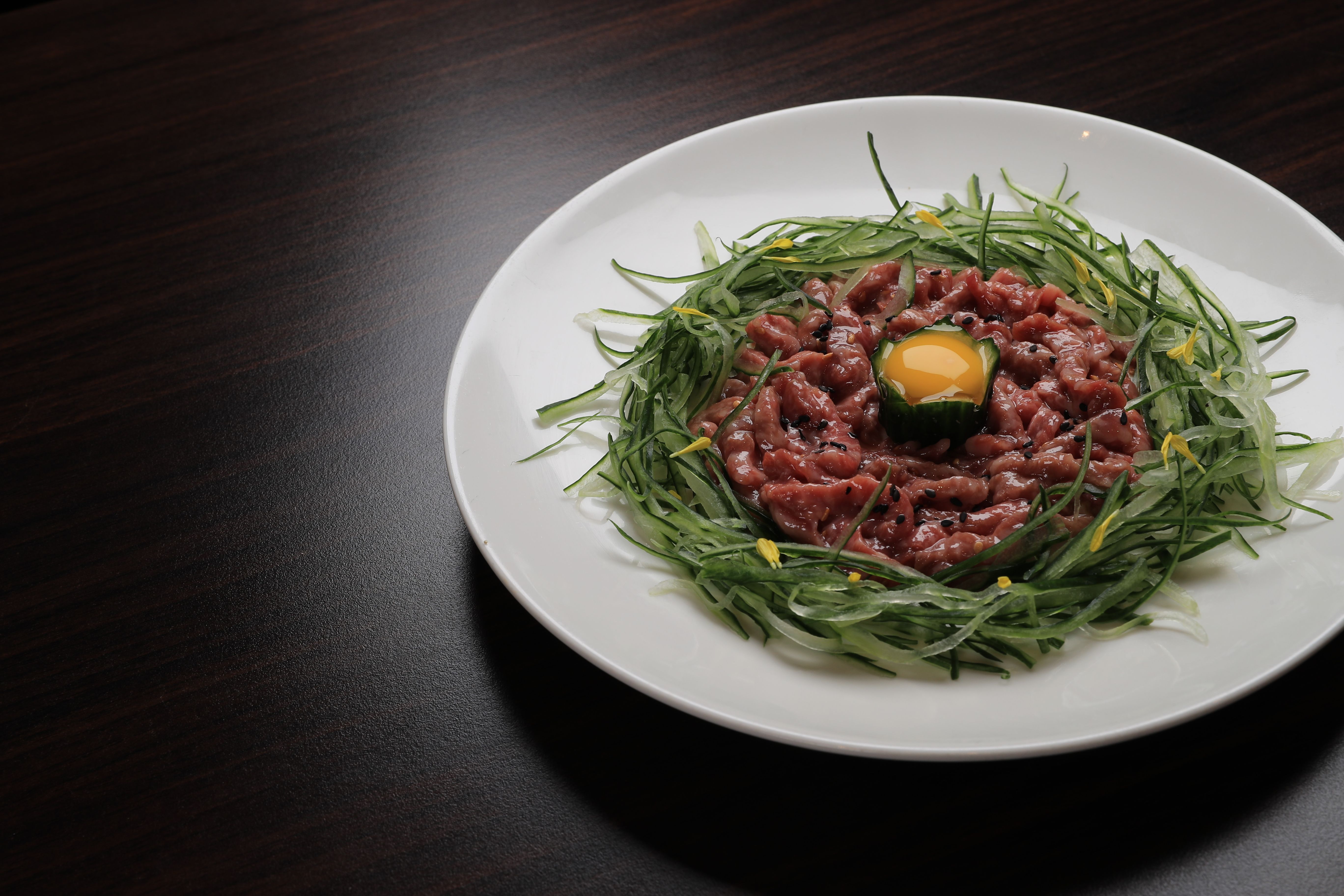
Photo: Miel Protacio / Pexels
The diets react (see scores below)
Common Ingredients
- raw beef
- egg yolk
- asian pear
- sesame oil
- soy sauce
- garlic
- sugar
- pine nuts
Specific recipes may vary.
Incompatible with 6 of 11 diets
Diet Ratings
Yukhoe (Korean beef tartare) has a solid keto foundation — raw beef is high-quality protein, egg yolk adds healthy fat, and sesame oil is keto-friendly. However, the dish contains three significant carb contributors: Asian pear (a high-sugar fruit, roughly 10-15g net carbs per serving), added sugar in the marinade, and soy sauce (small but present carbs). Together these can push net carbs into a range that is borderline for keto, especially if pear is used generously. Pine nuts and garlic are acceptable in small quantities. The dish can be made keto-compatible with modifications (omit pear and sugar, reduce soy sauce), but as traditionally prepared it warrants caution rather than approval.
Some strict keto practitioners would rate this as 'avoid' due to the zero-tolerance stance on added sugar and high-sugar fruits like Asian pear, arguing that even a small amount of sugar disrupts ketosis and that fruit has no place in a true ketogenic protocol regardless of portion size.
Yukhoe is a Korean raw beef dish containing two clear animal products: raw beef (meat) and egg yolk. Both are strictly excluded under all vegan definitions. The remaining ingredients — asian pear, sesame oil, soy sauce, garlic, sugar, and pine nuts — are plant-based, but the presence of beef and egg yolk makes this dish entirely incompatible with a vegan diet. There is no meaningful debate within the vegan community on this verdict.
Yukhoe contains several clear paleo violations that make it incompatible with the diet. Soy sauce is a fermented soy and wheat product — a double violation involving both a legume and a grain. Sesame oil is a seed oil, explicitly excluded under paleo guidelines. Refined sugar is a direct paleo exclusion. These three ingredients alone disqualify the dish. While raw beef, egg yolk, asian pear, garlic, and pine nuts are all paleo-approved, and pine nuts add healthy fats, the non-negotiable violations from soy sauce, sesame oil, and sugar cannot be overlooked. The dish could theoretically be adapted (coconut aminos for soy sauce, avocado oil or walnut oil for sesame oil, omitting sugar), but in its traditional form it is not paleo-compatible.
Yukhoe is a Korean raw beef dish that fundamentally conflicts with Mediterranean diet principles. Red meat is to be consumed only a few times per month at most, and this dish centers entirely on beef as its primary protein. The addition of sugar adds unnecessary refined sweetener, and sesame oil, while a healthy fat, is not the preferred olive oil of the Mediterranean tradition. The egg yolk and pine nuts are positive elements, and Asian pear provides fruit-based nutrition, but these minor positives cannot offset the core problem: a red meat-centered dish with added sugar eaten as a main course directly contradicts the dietary pattern's hierarchy where plant foods, fish, and poultry dominate and red meat is a rare indulgence.
Yukhoe contains raw beef and egg yolk, which are carnivore-approved ingredients, but the dish is heavily laden with non-carnivore ingredients that disqualify it entirely. Asian pear is a fruit (plant-derived), sesame oil is a plant-based oil, soy sauce is a legume-derived condiment containing wheat, sugar is excluded from carnivore, garlic is a plant, and pine nuts are seeds. The majority of the dish's flavor profile and several of its structural ingredients are plant-based or processed plant derivatives. Only the raw beef and egg yolk pass carnivore criteria. This is fundamentally a Korean mixed dish designed around plant-based marinades and garnishes, making it incompatible with carnivore principles.
Yukhoe contains two excluded ingredients: soy sauce (which contains soy and often wheat, both excluded) and sugar (an added sugar, which is excluded on Whole30). While the base of raw beef, egg yolk, asian pear, sesame oil, garlic, and pine nuts are all compliant, the soy sauce and sugar make this dish non-compliant as traditionally prepared. Soy sauce could theoretically be substituted with coconut aminos, and sugar omitted or replaced with compliant fruit juice, but as the dish is standardly made it must be avoided.
Yukhoe contains garlic as a direct ingredient, which is one of the highest-FODMAP foods due to its very high fructan content. Even small amounts of garlic (e.g., half a clove) exceed safe FODMAP thresholds during the elimination phase. Asian pear is also high-FODMAP due to excess fructose and polyols (sorbitol), and is typically used in meaningful quantities in this dish as both a flavoring and garnish. These two ingredients alone make this dish a clear avoid during FODMAP elimination. The remaining ingredients — raw beef, egg yolk, sesame oil, soy sauce (in small amounts), sugar, and pine nuts (in small servings) — are generally low-FODMAP, but the presence of garlic and asian pear as core, non-optional components of the traditional recipe cannot be overlooked.
Yukhoe (Korean beef tartare) presents a mixed DASH diet profile. The dish contains raw lean beef, which is a moderate-to-red meat source — DASH limits red meat consumption significantly. Asian pear is a DASH-friendly fruit, and pine nuts (a nut) are acceptable in moderation. However, soy sauce contributes meaningful sodium (one tablespoon contains ~900mg), which is a significant concern for DASH's 1,500–2,300mg/day target. Sesame oil is an unsaturated vegetable oil, generally acceptable in DASH. Added sugar is a minor concern. The egg yolk raises historical DASH cholesterol concerns, though current guidelines have relaxed on dietary cholesterol. The combination of soy sauce sodium, red meat, and added sugar pulls this dish toward 'caution' territory. Portion size matters — a small serving could fit into a DASH plan occasionally, but the soy sauce sodium and red meat categorization make it non-ideal as a regular choice.
NIH DASH guidelines explicitly limit red meat and high-sodium condiments like soy sauce, making this dish problematic. However, updated clinical interpretations note that lean beef in small portions and low-sodium soy sauce substitutions could make Yukhoe more compatible with DASH principles, and some DASH practitioners focus on overall dietary patterns rather than excluding individual red meat servings entirely.
Yukhoe (Korean beef tartare) has several Zone-friendly elements but requires careful portioning and has some unfavorable components. The raw lean beef provides excellent Zone protein — lean cuts used in yukhoe (typically eye of round or sirloin) align well with the ~25g protein per meal target. Asian pear is a moderate-glycemic fruit that Zone treats as a usable but 'unfavorable' carb due to higher sugar content, and the added sugar in the marinade is a straightforward Zone negative. Sesame oil contributes fat but is higher in omega-6 polyunsaturated fat compared to preferred monounsaturated sources like olive oil or avocado oil, which conflicts with Sears' anti-inflammatory emphasis. Pine nuts add fat and are a reasonable monounsaturated source. The egg yolk adds saturated fat and additional protein. Soy sauce is minimal impact. The dish is carb-light overall (pear + sugar), meaning it would need Zone-friendly low-GI vegetables added as sides to hit the 40% carb target. The omega-6 load from sesame oil and the added sugar are the primary concerns, but neither is disqualifying at typical serving sizes. With portion control and vegetable-heavy sides, this dish can fit into a Zone meal.
Some Zone practitioners following Sears' later anti-inflammatory writing (Toxic Fat, The Mediterranean Zone) would rate this more harshly due to sesame oil's omega-6 content actively promoting arachidonic acid pathways. Others would note that the lean beef and minimal carbs make this a solid protein-fat block core, requiring only carb additions to balance — making it more Zone-friendly than average restaurant dishes.
Yukhoe (Korean beef tartare) presents a genuinely mixed anti-inflammatory profile. On the positive side: garlic provides allicin with documented anti-inflammatory effects; sesame oil contains sesamol and sesaminol (antioxidant lignans) and is considered better than many seed oils in the anti-inflammatory context; asian pear contributes fiber, polyphenols, and antioxidants; pine nuts offer monounsaturated fats and some omega-3 ALA; egg yolk provides choline and selenium. The raw preparation preserves heat-sensitive nutrients. On the negative side: beef is a red meat, placing it in the 'limit' category due to arachidonic acid, saturated fat, and heme iron, which can promote inflammatory pathways; added sugar is a minor concern; and soy sauce (refined, high-sodium) is a processed ingredient. The dish is not a processed food per se — it is a traditional whole-food preparation — which somewhat mitigates concerns. The small portion size typical of this dish (served as a smaller course) and the use of lean beef cuts (usually sirloin or tenderloin with fat trimmed) reduce the saturated fat burden. Overall, the beneficial spices and anti-inflammatory accompaniments partially offset the red meat concern, landing this in cautious-neutral territory.
Most anti-inflammatory frameworks (including Dr. Weil's pyramid) place red meat in the 'limit' category rather than outright 'avoid,' and a lean, minimally processed beef tartare with anti-inflammatory aromatics could be considered acceptable occasionally. However, stricter anti-inflammatory practitioners and autoimmune protocol (AIP) adherents would flag the arachidonic acid content of beef and the egg yolk as potentially pro-inflammatory, particularly for individuals with elevated baseline inflammation.
Yukhoe is a Korean raw beef tartare dish with some genuine nutritional strengths but several meaningful concerns for GLP-1 patients. On the positive side, lean raw beef provides a solid protein source (roughly 20-25g per standard serving), and the dish is served in small portions by nature, which suits the small-meal pattern recommended for GLP-1 users. The egg yolk adds additional protein and micronutrients. However, the dish raises several flags: sesame oil contributes saturated and unsaturated fat that can worsen nausea and GI discomfort, sugar is added (empty calories, blood sugar spike), and pine nuts add additional fat load. The Asian pear adds a small amount of fiber and water content, which is a modest positive. The most significant concern beyond nutrition is food safety — raw beef carries meaningful risk of bacterial contamination (E. coli, Salmonella). GLP-1 medications slow gastric emptying, which may prolong exposure of the GI tract to any pathogens and could amplify the severity of foodborne illness. This is a clinically relevant risk that pushes the rating toward caution even if the macronutrient profile were otherwise acceptable. The added sugar, sesame oil fat content, and food safety concern collectively prevent an approve rating.
Some GLP-1-focused dietitians may rate this more favorably as an occasional high-protein small-plate option, noting that sesame oil is used in small quantities and the fat content is moderate rather than high. However, the food safety concern around raw meat and slowed gastric emptying is a point of genuine clinical caution that most obesity medicine practitioners would flag, particularly for patients who are immunocompromised or early in their medication titration when GI side effects are most pronounced.
*See how scores were generated at our methodology page.
Nutritional profile
Six traits that cut across every diet.
Fiber & Plants
How much whole-plant food and fiber it delivers.
Healthy Fats
The quality of its fats (unsaturated, omega-3).
Whole / Unprocessed
How close it is to its natural, unprocessed form.
Gut Gentle
How easy it is on digestion (low FODMAP, few irritants).
Low Glycemic
How little it spikes your blood sugar.
Protein Density
How much protein it packs per calorie.
Controversy Index
Higher controversy = more disagreement between diets.
Diet-Specific Tips
 Keto — 4/10
View tips
- Asian pear is a high-sugar fruit adding 10-15g net carbs per serving
- Added sugar in the marinade violates strict keto zero-sugar rules
- Raw beef and egg yolk are excellent keto-friendly protein and fat sources
- Sesame oil and pine nuts are keto-compatible fats
- Soy sauce contributes minor carbs but is generally acceptable in small amounts
- Dish can be modified for keto by omitting pear and sugar
 DASH — 4/10
View tips
- Soy sauce is high in sodium — a major DASH concern; low-sodium soy sauce would reduce but not eliminate this issue
- Raw beef is a red meat, which DASH recommends limiting to 6oz or less per day, preferably lean cuts
- Asian pear is a DASH-friendly ingredient providing fiber, potassium, and natural sweetness
- Sesame oil is an unsaturated fat, acceptable in DASH in small amounts
- Pine nuts are DASH-approved nuts; contribute healthy fats and magnesium
- Egg yolk raises mild cholesterol concerns under conservative DASH/cardiology interpretations
- Added sugar is a minor negative per DASH guidelines
- Portion control is critical — a small serving is more compatible than a large one
 Zone — 6/10
View tips
- Lean raw beef is an excellent Zone protein source, easily portioned to one block (~30g raw beef per block)
- Asian pear classified as 'unfavorable' carb in Zone due to higher natural sugar content
- Added sugar in marinade is a direct Zone negative, though small quantities are manageable
- Sesame oil is omega-6-dominant, conflicting with Zone's anti-inflammatory fat preference
- Pine nuts provide monounsaturated fat, partially offsetting the sesame oil concern
- Dish is carb-deficient on its own — requires vegetable sides to achieve 40/30/30 balance
- Egg yolk adds saturated fat and shifts fat block composition toward less favorable profile
 Anti-Inflammatory — 5/10
View tips
- Red meat (beef) is in the 'limit' category due to saturated fat and arachidonic acid
- Garlic is a well-established anti-inflammatory ingredient
- Sesame oil contains anti-inflammatory lignans (sesamol, sesaminol)
- Asian pear adds polyphenols and fiber
- Pine nuts provide monounsaturated fats and trace omega-3s
- Added sugar is a mild negative
- Egg yolk has mixed anti-inflammatory evidence
- Lean, unprocessed cut of beef with fat trimmed reduces saturated fat impact
- Traditional whole-food preparation preserves nutrients
 GLP-1 Friendly — 4/10
View tips
- Raw beef poses elevated foodborne illness risk, compounded by GLP-1-slowed gastric emptying
- Moderate protein content (~20-25g per serving) supports GLP-1 protein priority
- Added sugar contributes empty calories with minimal nutritional return
- Sesame oil and pine nuts increase fat load, potentially worsening nausea or reflux
- Small portion size is naturally compatible with GLP-1 eating patterns
- Asian pear provides modest fiber and hydration support
- Egg yolk adds micronutrients but also fat; minimal protein contribution
- No fiber-rich staple components — dish is low in dietary fiber overall