Malaysian
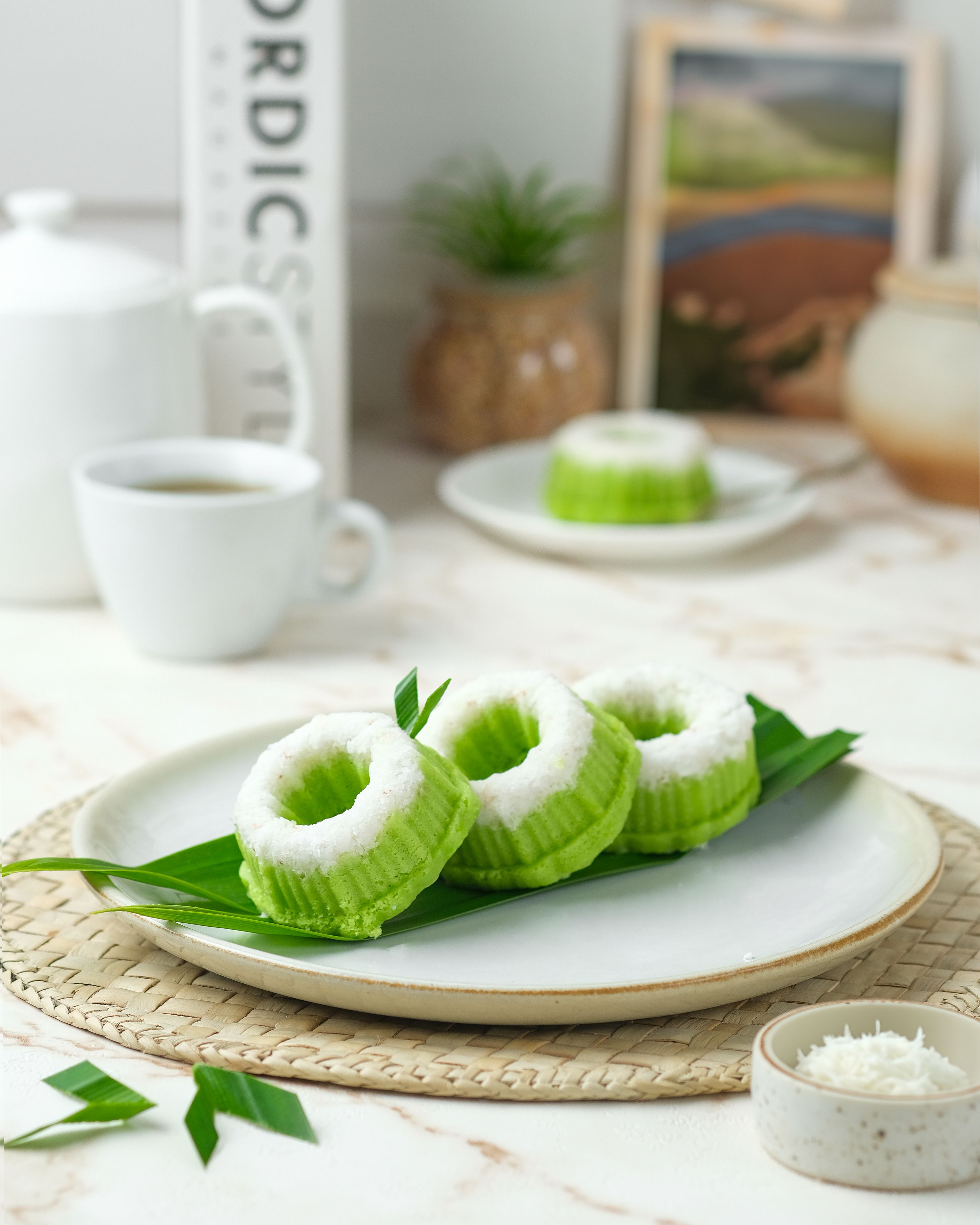
Kuih Talam
The diets react (see scores below)
Common Ingredients
- coconut milk
- pandan leaves
- tapioca flour
- rice flour
- sugar
- salt
- water
Specific recipes may vary.
Incompatible with 9 of 11 diets
Diet Ratings
Kuih Talam is a traditional Malaysian steamed layered cake that is fundamentally incompatible with ketogenic eating. It contains multiple high-carbohydrate ingredients: tapioca flour and rice flour are both dense starch sources with virtually no fiber, and sugar is added directly. A single serving would easily contain 30-50g of net carbs from the flours alone, plus additional carbs from sugar, blowing the entire daily keto carb budget. While coconut milk is keto-friendly, it cannot offset the overwhelming carbohydrate load from the other ingredients. There is no meaningful portion size that would make this dish keto-compatible.
Kuih Talam is a traditional Malaysian steamed layered cake made entirely from plant-based ingredients. Coconut milk serves as the fat and liquid base (fully plant-derived), pandan leaves provide natural color and flavor, and tapioca flour, rice flour, sugar, salt, and water complete the recipe. There are no animal products, dairy, eggs, or animal-derived additives present. All ingredients are whole or minimally processed plant foods, placing this dish near the top of the vegan approval scale.
Kuih Talam contains multiple non-paleo ingredients that make it clearly incompatible with the paleo diet. Rice flour is a grain-based product, explicitly excluded from paleo. Tapioca flour, while derived from cassava (a tuber), is a heavily processed starch with almost no nutritional value and is a gray area at best, but combined with the other violations it doesn't matter. Refined sugar is explicitly forbidden. Added salt is excluded. The only paleo-friendly components are coconut milk and pandan leaves. With at least three clear paleo violations (rice flour, refined sugar, added salt), this dish is firmly in the avoid category.
Kuih Talam is a traditional Malaysian steamed layered cake that conflicts with Mediterranean diet principles on multiple fronts. It is made primarily from refined flours (tapioca flour and rice flour), significant added sugar, and coconut milk as the primary fat source. Tapioca and rice flour are refined, low-fiber carbohydrates with minimal nutritional value. Added sugar is explicitly discouraged in Mediterranean dietary guidelines. Coconut milk is high in saturated fat and is entirely non-traditional in Mediterranean cuisine, where extra virgin olive oil is the canonical fat. While the dish is plant-based in origin, it lacks the whole grains, fiber, healthy fats, and micronutrient density that characterize Mediterranean-approved foods. It functions essentially as a sugary, refined-grain dessert snack.
Kuih Talam is entirely plant-based and contains no animal products whatsoever. Every single ingredient — coconut milk, pandan leaves, tapioca flour, rice flour, sugar, salt, and water — is either plant-derived or non-animal. Coconut milk is a plant fat from coconuts, tapioca and rice flours are carbohydrate-heavy grains/starches, pandan is a plant leaf, and sugar is a refined plant carbohydrate. This dessert is the antithesis of carnivore eating: it is high-carb, plant-derived, processed with plant starches, and sweetened with sugar. There is no salvageable component from a carnivore perspective.
Kuih Talam contains multiple excluded ingredients. Sugar (added sugar) is explicitly prohibited on Whole30. Rice flour is a grain-based flour and grains are excluded. Tapioca flour, while grain-free, is used here alongside other excluded ingredients. Even if tapioca flour alone were debatable, the presence of added sugar and rice flour makes this dish clearly non-compliant. Additionally, as a sweet steamed snack cake, it falls squarely into the 'no recreating baked goods/junk food' category — it is essentially a dessert/confection made to satisfy sweet cravings, which violates the spirit of the program regardless of any ingredient substitutions.
Kuih Talam is a traditional Malaysian steamed layered cake made from rice flour, tapioca flour, pandan, coconut milk, sugar, salt, and water. Individually, most ingredients are low-FODMAP: rice flour and tapioca flour are both gluten-free and low-FODMAP, pandan leaves are not known to contain significant FODMAPs, salt and water are FODMAP-free, and sugar (sucrose) is low-FODMAP. The main concern is coconut milk, which is low-FODMAP at small servings (up to 1/2 cup or 125ml per Monash) but becomes moderate-to-high in polyols (sorbitol) at larger amounts. A standard serving of kuih talam is typically one to two pieces, and coconut milk is a primary ingredient used in generous quantities in the recipe. Depending on the piece size and coconut milk concentration per serving, this dish could tip into a moderate-FODMAP range. The overall dish is likely safe at a single small piece but requires portion caution.
Monash University rates coconut milk as low-FODMAP at 1/2 cup (125ml), but clinical FODMAP practitioners often advise caution with coconut-milk-rich Asian sweets because the cumulative coconut milk per serving can be difficult to estimate and may exceed the safe threshold. During strict elimination, some practitioners recommend avoiding rich coconut milk-based desserts altogether.
Kuih Talam is a Malaysian steamed layered cake whose primary fat source is coconut milk, a tropical oil product high in saturated fat — a category explicitly limited by NIH/NHLBI DASH guidelines. The dish is also high in refined carbohydrates (tapioca flour, rice flour) with significant added sugar and offers virtually no fiber, potassium, calcium, or magnesium. These characteristics directly conflict with DASH's core emphases: limiting saturated fat and tropical oils, minimizing added sugar and refined grains, and prioritizing nutrient-dense whole foods. While sodium content is moderate, the combination of saturated fat from coconut milk and added sugar makes this a poor fit for the DASH eating pattern.
Kuih Talam is a traditional Malaysian steamed layered cake made almost entirely of high-glycemic carbohydrates (rice flour, tapioca flour, sugar) and saturated fat (coconut milk), with virtually no protein and no favorable fat profile. The macro composition is roughly 70-80% carbohydrate calories (predominantly high-glycemic, refined), 15-20% fat (almost entirely saturated from coconut milk), and essentially 0% protein. This is the antithesis of the Zone 40/30/30 ratio. Sugar is a direct spike to blood glucose and insulin, which Zone explicitly targets to avoid. Tapioca flour and rice flour are high-glycemic refined starches with minimal fiber, offering negligible net carb benefit. Coconut milk, while providing some medium-chain triglycerides, is dominantly saturated fat with no monounsaturated advantage. There is no lean protein component whatsoever. Achieving even a remotely Zone-compatible ratio would require eating a tiny, unsatisfying portion alongside very large amounts of lean protein and monounsaturated fat in the same meal — at which point the kuih contributes nothing useful. This is a rare case where the food genuinely scores in the 'avoid' range, as its core function is sugar-and-starch delivery with no Zone-favorable attributes.
Kuih Talam is a traditional Malaysian two-layered steamed cake made primarily from coconut milk, pandan leaves, tapioca flour, rice flour, sugar, and salt. From an anti-inflammatory perspective, this dish has a mixed profile. On the positive side, pandan leaves contain chlorophyll and some antioxidant compounds, and coconut milk provides medium-chain triglycerides (MCTs), particularly lauric acid, which has been studied for potential antimicrobial and modest anti-inflammatory effects. However, the overall profile is concerning: coconut milk is high in saturated fat, which anti-inflammatory guidelines generally recommend limiting; the dish is built on refined starches (tapioca flour and rice flour) with minimal fiber or micronutrient density; and the addition of sugar adds to the glycemic load, potentially promoting inflammatory signaling (elevated blood glucose → increased IL-6, CRP). Tapioca and rice flour are both high-glycemic refined carbohydrates with no meaningful fiber. There is no omega-3, antioxidant-rich vegetable, legume, or whole grain component to offset these concerns. As an occasional treat in a broader anti-inflammatory diet, Kuih Talam is acceptable, but it offers no meaningful anti-inflammatory benefit and several mild pro-inflammatory features.
Some functional nutrition perspectives point to coconut milk's lauric acid as potentially modulating inflammatory pathways and supporting gut health, and pandan is increasingly recognized in Southeast Asian ethnobotany for its antioxidant capacity. However, mainstream anti-inflammatory frameworks (Dr. Weil, IF Rating system) consistently flag high saturated fat from coconut and refined sugars as pro-inflammatory drivers, making a positive rating difficult to justify for the general population.
Kuih Talam is a traditional Malaysian steamed layered cake made primarily from coconut milk, rice flour, tapioca flour, and sugar. It is nutritionally misaligned with GLP-1 dietary priorities across nearly every dimension. It provides virtually no protein, no meaningful fiber, and derives most of its calories from refined starches and sugar with additional saturated fat from coconut milk. The high sugar content risks blood sugar spikes, which is particularly counterproductive given that many GLP-1 patients have metabolic dysfunction or type 2 diabetes as a comorbidity. The saturated fat from coconut milk, while not fried, adds to the fat load without providing useful micronutrients or macronutrients to justify inclusion. Tapioca and rice flours are both low-fiber, high-glycemic refined carbohydrates that offer empty calories. The only mild positive is that it is steamed and therefore not fried, and the portion size is traditionally small — but this does not meaningfully redeem its nutritional profile for GLP-1 patients.
*See how scores were generated at our methodology page.
Nutritional profile
Six traits that cut across every diet.
Fiber & Plants
How much whole-plant food and fiber it delivers.
Healthy Fats
The quality of its fats (unsaturated, omega-3).
Whole / Unprocessed
How close it is to its natural, unprocessed form.
Gut Gentle
How easy it is on digestion (low FODMAP, few irritants).
Low Glycemic
How little it spikes your blood sugar.
Protein Density
How much protein it packs per calorie.
Controversy Index
Higher controversy = more disagreement between diets.
Diet-Specific Tips
 Vegan — 9/10
View tips
- Coconut milk is fully plant-based and a common vegan substitute for dairy
- Pandan leaves are a natural plant flavoring with no animal-derived components
- Tapioca flour and rice flour are both plant-derived starches
- No eggs, dairy, gelatin, or other animal products used
- Sugar in Malaysian culinary tradition is typically cane sugar; bone-char processing is theoretically possible but not a standard concern for home or traditional preparations
- All ingredients are minimally processed whole plant foods
 Anti-Inflammatory — 4/10
View tips
- Coconut milk is high in saturated fat — limited in anti-inflammatory guidelines
- Tapioca flour and rice flour are refined, high-glycemic starches with no fiber
- Added sugar contributes to glycemic load and potential inflammatory signaling
- Pandan leaves provide modest antioxidant and chlorophyll content — a minor positive
- Coconut milk's lauric acid (MCT) has debated but limited anti-inflammatory properties
- No omega-3 fatty acids, polyphenol-rich vegetables, legumes, or whole grains present
- Acceptable as an occasional indulgence but not a beneficial anti-inflammatory food