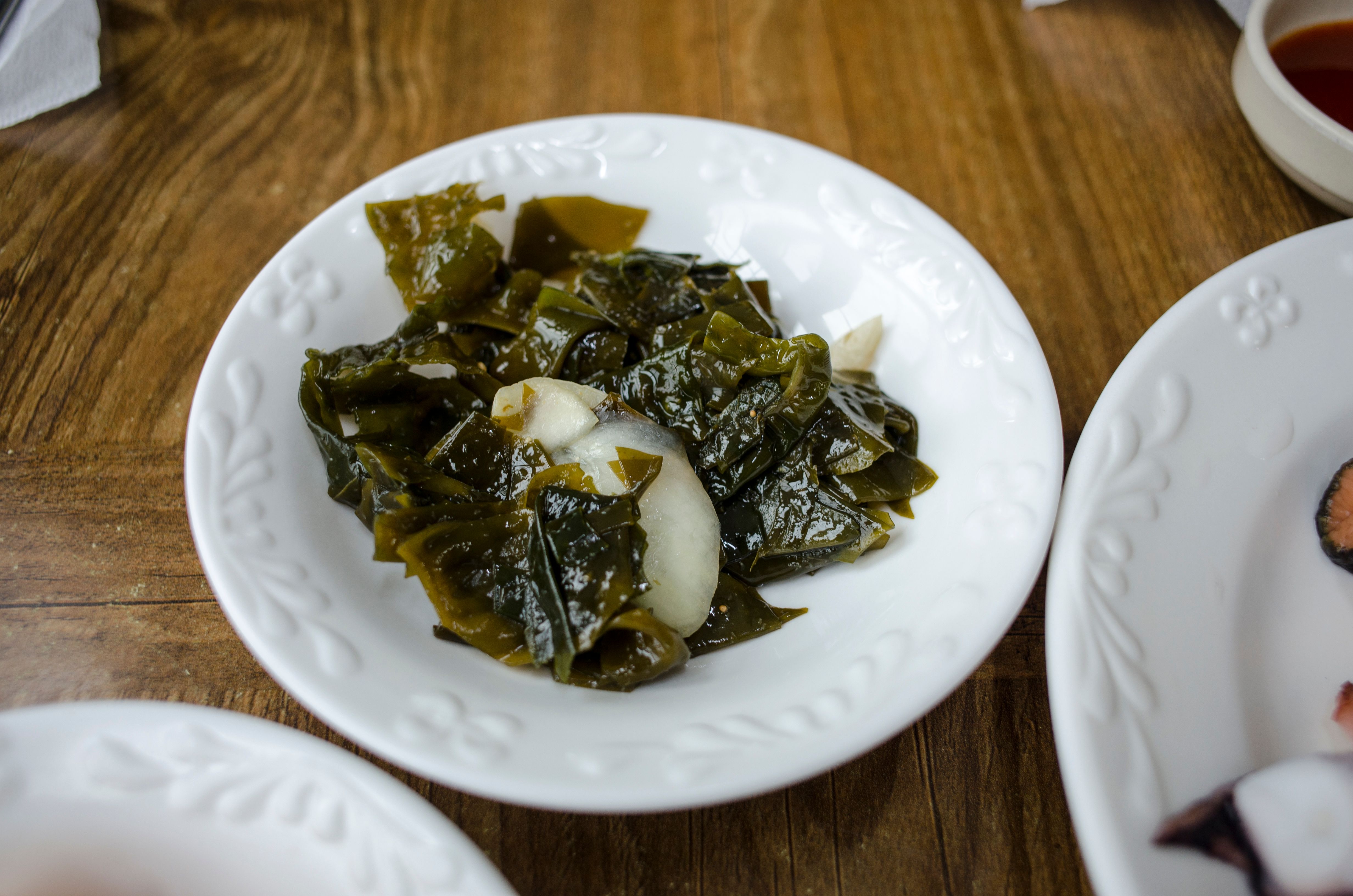
The diets react (see scores below)
Common Ingredients
- river weed
- sesame seeds
- garlic
- tomato
- galangal
- salt
- oil
Specific recipes may vary.
Incompatible with 3 of 11 diets
Diet Ratings
Khai Paen is a traditional Lao dried river weed (freshwater algae) snack seasoned with sesame seeds, garlic, tomato, galangal, salt, and oil. River weed (Cladophora) is extremely low in net carbs and high in minerals. Sesame seeds contribute healthy fats and minimal net carbs. The oil adds beneficial fat content. The small amounts of garlic, tomato, and galangal contribute negligible net carbs per serving. Overall, this snack is naturally low-carb, whole-food based, and fits well within keto macros. A standard serving would contribute very few net carbs, likely under 3-5g, while providing healthy fats from sesame and oil.
Some strict keto practitioners may flag tomato and galangal as borderline ingredients due to their carbohydrate content and glycemic potential, and would prefer to verify the exact serving size and preparation method. Additionally, those following carnivore-adjacent keto protocols may avoid plant-based snacks like river weed altogether.
Khai Paen is a traditional Lao snack made from river weed (freshwater algae harvested from the Mekong River) that is dried and seasoned with sesame seeds, garlic, tomato, galangal, salt, and oil. Every ingredient is entirely plant-based. River weed is an algae/plant organism, not an animal product. The dish is minimally processed — essentially dried and seasoned whole-food ingredients — which earns it a high score within the approve range. There are no animal products, animal-derived ingredients, or ethically contested components present.
Khai Paen is a traditional Lao snack made from dried river weed (freshwater algae), which is itself a borderline-acceptable ingredient, but two critical non-paleo elements disqualify this dish. First, 'salt' (added/refined salt) is explicitly excluded under paleo rules as an additive. Second, 'oil' is listed without specification — in the context of this Lao street food, it almost certainly refers to a seed oil (commonly vegetable or sesame oil used for frying), both of which are prohibited seed oils. Sesame oil in particular is a seed oil and is on the avoid list. The dish is also typically deep-fried, which compounds the processed-food concern. The remaining ingredients — river weed (algae/aquatic plant), sesame seeds (as whole seeds, paleo-approved), garlic, tomato, and galangal — are otherwise paleo-compatible. However, the confirmed presence of added salt and the near-certain use of prohibited seed oil for frying make this dish an avoid.
Khai Paen is a Lao dried river weed snack that aligns well with Mediterranean diet principles. The primary ingredients — river weed (a nutrient-dense aquatic plant/algae), sesame seeds, garlic, tomato, and galangal — are all whole, plant-based foods. Sesame seeds provide healthy fats and minerals analogous to other nuts and seeds celebrated in the Mediterranean diet. Garlic and tomato are Mediterranean staples. The oil used for frying is a consideration, but if a neutral or olive-compatible oil is used, it remains acceptable. The dish has no refined grains, added sugars, red meat, or highly processed ingredients. It functions as a whole-food, plant-forward snack with no primary protein, making it an excellent fit for the plant-emphasis pillar of the Mediterranean diet.
Some Mediterranean diet purists may flag the deep-frying preparation method, as river weed sheets are typically fried in oil, which can increase caloric density and oxidize less stable oils. Traditional Mediterranean snacking favors minimally processed preparations; a baked or air-dried version would score higher under stricter clinical interpretations.
Khai Paen is a traditional Lao snack made entirely from plant-based ingredients. River weed (a freshwater algae/plant) is the primary ingredient, accompanied by sesame seeds, garlic, tomato, galangal, and plant-based oil. There are zero animal-derived ingredients in this dish. Every single component is explicitly excluded from the carnivore diet: river weed is a plant/algae, sesame seeds are seeds, garlic and tomato are vegetables/fruits, galangal is a root spice, and the oil is plant-derived. This dish is completely incompatible with carnivore principles at every level.
Khai Paen is a traditional Lao snack made from dried river weed (a freshwater algae/aquatic plant) pressed into sheets with sesame seeds, garlic, tomato, galangal, salt, and oil. All listed ingredients are individually Whole30-compliant — river weed is a whole, unprocessed plant food, sesame seeds and oil are natural fats, and the aromatics are all allowed. However, this dish raises a 'spirit of the program' concern: Khai Paen is essentially a crispy, chip-like snack food. Rule 4 explicitly prohibits chips and crackers even when made from compliant ingredients, as recreating snack foods contradicts Whole30's goal of resetting your relationship with food. The texture and function of Khai Paen — dried, crispy sheets eaten as a snack — closely mirrors the excluded chip/cracker category. That said, river weed sheets are a culturally traditional whole food, not a modern recreation of a junk food, which slightly differentiates it from, say, homemade sweet potato chips.
Official Whole30 guidelines prohibit chips and crackers even from compliant ingredients to discourage snacking on crunchy, processed-texture foods. However, some community members and practitioners argue that Khai Paen, as a minimally processed traditional whole food (not a manufactured snack product), is more analogous to eating dried seaweed or nori sheets — both of which are generally accepted on Whole30 — and should therefore be approved rather than flagged.
Khai Paen is a traditional Lao snack made from dried river weed (freshwater algae) sheets, typically seasoned with sesame seeds, garlic, tomato, galangal, salt, and oil. The critical FODMAP offender here is garlic, which is high in fructans and is a major trigger even in small amounts during the elimination phase. While garlic-infused oil would be low-FODMAP, the recipe lists garlic as a direct ingredient, meaning fructans are present in the final product. Tomato is low-FODMAP at a standard serving (up to 65g per Monash), sesame seeds are low-FODMAP in small quantities (1 tbsp), galangal has limited Monash data but is used in very small amounts as a spice, and river weed (freshwater algae) itself lacks Monash testing data. The presence of whole garlic as a seasoning ingredient makes this dish high-FODMAP and unsuitable during the elimination phase.
If the garlic were used only to infuse the oil and then removed before preparation (a common modification), the dish could potentially be low-FODMAP, as FODMAPs are water-soluble and do not transfer into fat. However, traditional Khai Paen preparations incorporate garlic directly into the seasoning paste or topping, making this substitution unlikely without specific recipe modification. River weed also lacks Monash University testing, adding further uncertainty for FODMAP practitioners.
Khai Paen is a traditional Lao snack made from dried river weed (freshwater algae) sheets, which is genuinely nutrient-dense — rich in minerals, omega-3s, and fiber, aligning well with DASH principles. Sesame seeds provide magnesium and healthy fats. Garlic, tomato, and galangal are all DASH-friendly aromatics. However, two factors introduce caution: (1) Salt is a listed ingredient, and the sodium content in traditionally prepared Khai Paen can be significant and variable — this is the primary concern under DASH guidelines. (2) The dish is typically fried or oil-crisped, adding caloric fat, though the oils used (likely vegetable) are not inherently disqualifying under DASH. The base ingredients are excellent, but sodium from salt and the frying method mean this is best consumed in moderation. If prepared with minimal salt and baked or lightly oiled rather than deep-fried, this could easily score in the approve range.
NIH DASH guidelines flag added salt and fried preparations as concerns, pointing toward caution. However, updated clinical interpretations note that river algae/weed is exceptionally rich in potassium, magnesium, calcium, and omega-3 fatty acids — nutrients DASH explicitly prioritizes — and some DASH-oriented dietitians may consider a small portion of lightly salted Khai Paen an acceptable nutrient-dense snack, particularly for non-hypertensive individuals on the standard 2,300mg sodium limit.
Khai Paen is a traditional Lao snack made from dried river weed (freshwater algae) sheets, typically seasoned with sesame seeds, garlic, tomato, galangal, salt, and oil, then sun-dried or fried. From a Zone perspective, this is an interesting food: river weed is extremely low in calories and carbohydrates while being rich in minerals and polyphenols, making it an excellent Zone-friendly base. Sesame seeds contribute both fat and modest protein, though sesame oil/seeds are higher in omega-6 fatty acids which Sears would caution against. The garlic, tomato, and galangal are favorable low-glycemic Zone carb contributors with anti-inflammatory polyphenol benefits. The primary concern is the frying oil — if fried in omega-6-heavy seed oils (common in Lao street preparation), this conflicts with Zone's anti-inflammatory emphasis. If prepared with olive oil or minimal oil, the dish is quite Zone-compatible. The lack of any lean protein source means this cannot stand alone as a Zone snack block; it would need to be paired with a protein source to achieve the 40/30/30 ratio. As-is, it skews heavily toward carb/fat with negligible protein, making portioning and pairing critical. It scores in the caution range — favorable ingredients overall, but incomplete macro balance and potential omega-6 concerns from oil and sesame.
Some Zone practitioners may rate this higher because river weed is rich in EPA omega-3 fatty acids (freshwater algae can contain meaningful omega-3s), which aligns perfectly with Sears' later emphasis on omega-3s and polyphenols in 'The OmegaRx Zone' and 'The Zone Diet.' If the omega-3 content is significant, the anti-inflammatory profile could offset the sesame omega-6 concerns, pushing this closer to an 'approve' verdict for use as a Zone snack accompaniment.
Khai Paen is a traditional Lao snack made from dried river weed (freshwater algae harvested from the Mekong), sesame seeds, garlic, tomato, galangal, and salt, typically dried and lightly fried or toasted in oil. The ingredient profile is remarkably anti-inflammatory overall. River weed (Cladophora or similar freshwater algae) is rich in omega-3 fatty acids, chlorophyll, carotenoids, and minerals — an exceptional anti-inflammatory base. Sesame seeds contribute lignans (sesamin, sesamolin), vitamin E, and modest anti-inflammatory polyunsaturated fats. Garlic provides allicin and organosulfur compounds with well-documented anti-inflammatory and immunomodulatory effects. Tomato adds lycopene and vitamin C. Galangal, a rhizome related to ginger and turmeric, contains galangin and other flavonoids with meaningful anti-inflammatory activity studied in vitro and in animal models. Salt is nutritionally neutral in moderate amounts. The primary concern is the oil: if the dish is prepared with a seed oil high in omega-6 (e.g., soybean or sunflower oil, common in Laos), that introduces a pro-inflammatory element, which prevents a top-tier score. If sesame oil or a more favorable oil is used, the profile improves. Overall, this is a nutrient-dense, predominantly plant-based snack with multiple anti-inflammatory compounds and no refined sugars or processed additives.
The unspecified 'oil' is the key variable: mainstream anti-inflammatory frameworks (Dr. Weil, IF Rating system) caution against regular use of omega-6-heavy refined seed oils like soybean or sunflower oil, which are commonly used in Southeast Asian cooking. If such oils are used for frying, anti-inflammatory practitioners following stricter omega-6 control protocols would downgrade this dish. However, if consumed occasionally and prepared with a less inflammatory oil, most authorities would still consider it a net anti-inflammatory food given the strength of the other ingredients.
Khai Paen is a traditional Lao snack made from dried river weed (freshwater algae) sheets, typically seasoned with garlic, tomato, galangal, and sesame seeds, then fried or toasted in oil. It has genuine nutritional strengths: river weed is rich in micronutrients (iron, iodine, B vitamins), fiber, and plant-based protein relative to its volume, and sesame seeds contribute healthy unsaturated fats and minerals. However, the preparation typically involves frying in oil, which raises the fat content per serving and can worsen GLP-1 side effects like nausea, bloating, and reflux. The snack provides essentially no meaningful protein by GLP-1 standards (no primary protein source listed), making it nutritionally incomplete as a standalone item. Portion sizes are small, which is a positive. If toasted/baked rather than deep-fried, the fat concern is reduced significantly. The garlic and galangal are generally well-tolerated in small amounts. As an occasional small snack paired with a protein source, it is acceptable, but the typical fried preparation and lack of protein limit its score.
This dish is not well-studied in GLP-1 nutrition literature, so guidance is extrapolated from general principles. Some nutrition practitioners may rate it more favorably if prepared baked/toasted due to its micronutrient density and fiber from river algae; others would rate it lower specifically because the fried preparation common in traditional recipes conflicts with GLP-1 fat tolerance guidelines.
*See how scores were generated at our methodology page.
Nutritional profile
Six traits that cut across every diet.
Fiber & Plants
How much whole-plant food and fiber it delivers.
Healthy Fats
The quality of its fats (unsaturated, omega-3).
Whole / Unprocessed
How close it is to its natural, unprocessed form.
Gut Gentle
How easy it is on digestion (low FODMAP, few irritants).
Low Glycemic
How little it spikes your blood sugar.
Protein Density
How much protein it packs per calorie.
Controversy Index
Higher controversy = more disagreement between diets.
Diet-Specific Tips
 Keto — 8/10
View tips
- River weed (freshwater algae) is extremely low in net carbs and keto-compatible
- Sesame seeds provide healthy fats with minimal net carbs
- Oil adds fat content aligned with keto macros
- Tomato and galangal contribute minor carbs but are negligible at typical serving amounts
- No grains, added sugars, or starchy ingredients present
- Whole, unprocessed ingredients align with clean keto principles
 Vegan — 9/10
View tips
- River weed (khai) is a freshwater algae/plant — fully plant-based
- All seasoning ingredients (sesame seeds, garlic, tomato, galangal, salt, oil) are plant-derived
- No animal products or animal-derived additives
- Whole-food, minimally processed preparation earns a high score
- Traditional dish naturally vegan by composition
 Mediterranean — 8/10
View tips
- River weed is a whole, nutrient-dense plant food rich in minerals and omega-3s
- Sesame seeds are a Mediterranean-compatible healthy fat and micronutrient source
- Garlic and tomato are core Mediterranean diet ingredients
- No red meat, processed foods, refined grains, or added sugars
- Frying method may reduce healthfulness depending on oil type and temperature
- Non-traditional cuisine but ingredients align with Mediterranean principles
 Whole30 — 6/10
View tips
- All individual ingredients (river weed, sesame seeds, garlic, tomato, galangal, salt, oil) are Whole30-compliant
- Khai Paen's crispy, chip-like form raises concerns under Rule 4 prohibiting chips and crackers
- River weed is a traditional whole food, not a modern junk food recreation
- Comparable to dried nori/seaweed sheets, which are generally accepted on Whole30
- Categorized as a 'snack,' which Whole30 discourages in general
- No excluded ingredients such as grains, legumes, dairy, or added sugar present
 DASH — 5/10
View tips
- River weed is mineral-rich (potassium, magnesium, calcium) and fiber-rich — strongly DASH-aligned
- Sesame seeds provide magnesium and healthy unsaturated fats
- Added salt raises sodium concerns central to DASH guidelines
- Oil-frying method adds fat; vegetable oil is acceptable under DASH but portion control matters
- Garlic, tomato, and galangal are all low-sodium, DASH-friendly ingredients
- Sodium level is highly preparation-dependent — low-salt versions would score higher (7-8)
- No saturated fat, red meat, added sugar, or full-fat dairy — positives for DASH
 Zone — 6/10
View tips
- River weed is very low glycemic and rich in minerals and potentially omega-3 fatty acids — highly favorable Zone ingredient
- Sesame seeds are higher in omega-6 fatty acids, which conflicts with Zone's anti-inflammatory principles
- No protein source present — cannot achieve 40/30/30 ratio as a standalone snack without pairing with lean protein
- Garlic, tomato, and galangal are all favorable low-glycemic Zone carb sources with anti-inflammatory polyphenols
- Frying oil type is critical — omega-6 seed oils (common) are unfavorable; olive oil would be preferred
- Works best as a component or accompaniment rather than a standalone Zone snack
 Anti-Inflammatory — 8/10
View tips
- River weed (freshwater algae): rich in omega-3s, carotenoids, and chlorophyll — strongly anti-inflammatory
- Sesame seeds: lignans and vitamin E with anti-inflammatory properties
- Garlic: allicin and organosulfur compounds reduce inflammatory markers
- Galangal: flavonoids (galangin) with documented anti-inflammatory activity
- Tomato: lycopene and vitamin C, antioxidant support
- Oil type unspecified: potential omega-6 concern if refined seed oil is used
- No refined sugars, no processed additives, no trans fats
- Whole-food, plant-based snack with high nutrient density
 GLP-1 Friendly — 5/10
View tips
- No meaningful protein content — fails the #1 GLP-1 dietary priority
- Typically fried in oil — elevated fat per serving may worsen nausea and bloating
- River weed provides fiber, micronutrients (iron, iodine), and is nutrient-dense per calorie
- Sesame seeds contribute healthy unsaturated fats in small amounts
- Small portion size is GLP-1 friendly
- Garlic and galangal generally well-tolerated at snack-level quantities
- Score improves meaningfully if baked or toasted rather than deep-fried
- Best consumed as an accompaniment to a protein-rich meal, not as a standalone snack