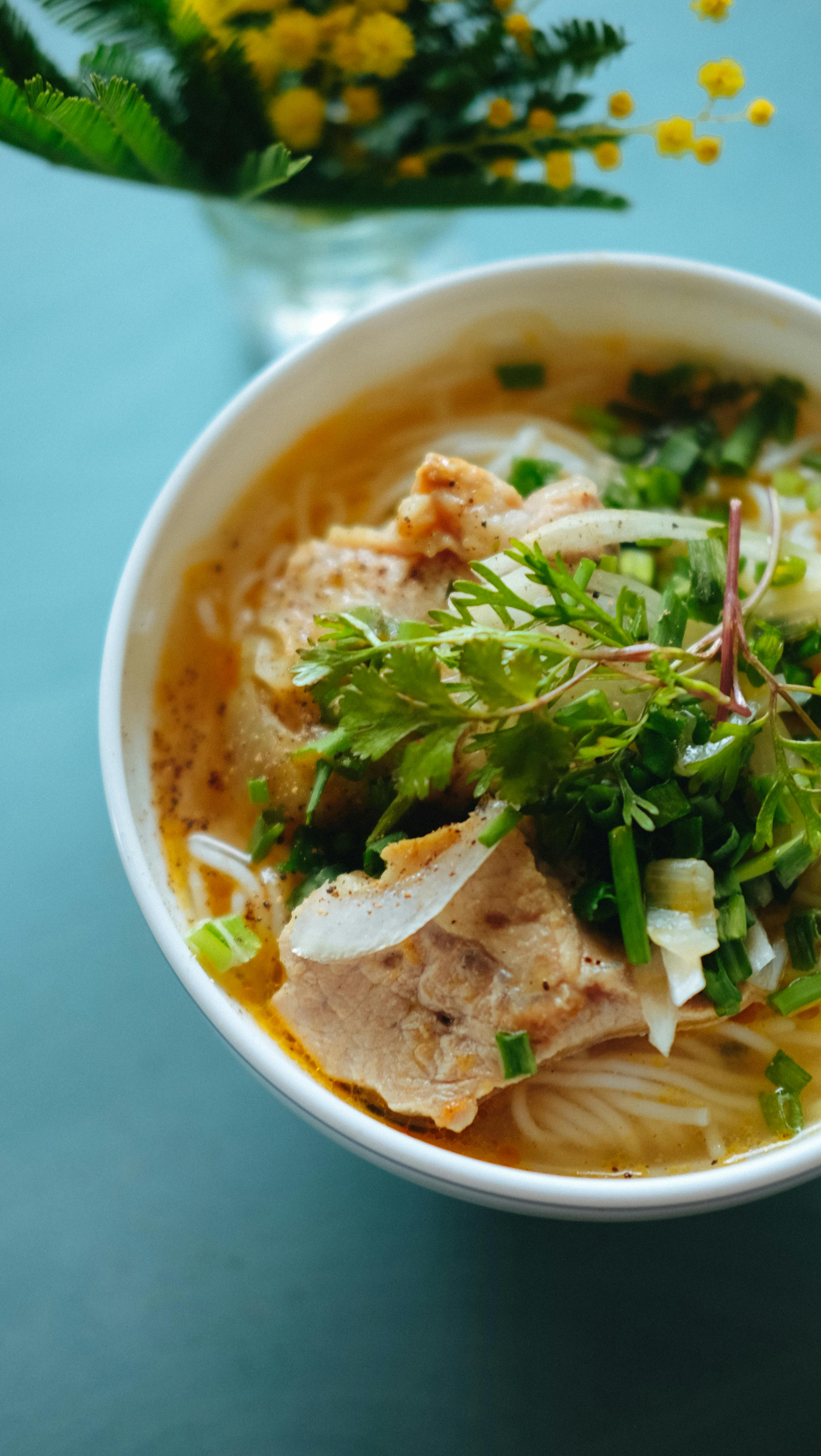
Photo: Phuong NGUYEN Nguyen / Pexels
The diets react (see scores below)
Common Ingredients
- rice noodles
- tapioca starch
- chicken
- garlic
- shallots
- ginger
- scallions
- cilantro
- fried garlic
- fish sauce
Specific recipes may vary.
Incompatible with 6 of 11 diets
Diet Ratings
Khao Piak Sen is fundamentally built around rice noodles and tapioca starch, both of which are extremely high in net carbs. Rice noodles alone in a standard serving (100-150g cooked) can contribute 25-35g of net carbs, and tapioca starch — used to give the noodles their characteristic chewy, thick texture — adds additional rapidly digestible carbohydrates with virtually no fiber to offset them. Together, these two ingredients almost certainly push a single serving well beyond the 20-50g daily net carb limit for ketosis. While the remaining ingredients (chicken, garlic, shallots, ginger, scallions, cilantro, fish sauce) are largely keto-compatible in typical amounts, they cannot redeem the dish. There is no meaningful way to portion-control this dish without fundamentally changing what it is — the noodles are the dish.
Khao Piak Sen contains multiple animal-derived ingredients that disqualify it from a vegan diet. Chicken is a direct animal product (poultry), and fish sauce is derived from fermented fish — both are unambiguously non-vegan. There is no meaningful debate within the vegan community about either of these ingredients. The dish cannot be considered vegan in its traditional form, though a vegan adaptation could substitute mushroom or vegetable broth for chicken, omit the chicken, and replace fish sauce with soy sauce or a vegan fish sauce alternative.
Khao Piak Sen is built on rice noodles, which are a grain-based ingredient — strictly excluded from the paleo diet. Tapioca starch (derived from cassava root) occupies a gray area but is commonly used as a thickener alongside the noodles, and fish sauce often contains added salt and sometimes sugar or preservatives. The remaining ingredients — chicken, garlic, shallots, ginger, scallions, cilantro, and fried garlic — are all paleo-compliant. However, the foundational base of the dish (rice noodles) is a clear grain exclusion, making the dish as a whole non-paleo. The dish cannot be meaningfully separated from its defining noodle component.
Khao Piak Sen is a wholesome, minimally processed soup with lean chicken, aromatic vegetables (garlic, shallots, ginger, scallions, cilantro), and fish sauce — ingredients that align reasonably well with Mediterranean principles. Chicken as the primary protein fits as a moderate-consumption food. However, the noodles are made from refined rice flour and tapioca starch rather than whole grains, which conflicts with the Mediterranean emphasis on whole grains. Fish sauce is a fermented condiment that adds sodium but is not inherently problematic in small amounts. The fried garlic adds a small amount of oil, though likely not olive oil. The dish is free of red meat, added sugars, and heavily processed ingredients, making it acceptable but not a Mediterranean staple.
Some Mediterranean diet interpreters would view this dish more favorably, noting that traditional Mediterranean soups often feature similar broth-based preparations with lean poultry, aromatics, and legumes — and that the absence of red meat, saturated fat, and processed ingredients makes this a broadly health-compatible meal even if the grain base is not ideal. Others would note that white rice noodles are similar to white rice, which appears in traditional Mediterranean regions like parts of Greece and the Middle East and is accepted in moderation.
Khao Piak Sen is fundamentally incompatible with the carnivore diet. The dish is built on a base of rice noodles and tapioca starch — both plant-derived carbohydrates that are explicitly excluded from any tier of the carnivore diet. Beyond the noodles, virtually every other ingredient except the chicken and fish sauce is plant-based: garlic, shallots, ginger, scallions, cilantro, and fried garlic are all plant foods. Fish sauce, while animal-derived, is a minor component and cannot salvage this dish. The only carnivore-compatible element is the chicken itself. This dish is essentially a plant-carbohydrate-forward soup that happens to contain chicken, making it a clear avoid with high confidence.
Khao Piak Sen contains rice noodles, which are made from rice — a grain explicitly excluded on the Whole30. Tapioca starch is also a concern as a processed starch used to recreate noodle-like pasta, which falls under the 'no recreating baked goods/junk food' rule that specifically lists pasta and noodles as excluded even when made with compliant ingredients. The remaining ingredients (chicken, garlic, shallots, ginger, scallions, cilantro, fried garlic, fish sauce) are all Whole30-compatible, but the foundational noodle component makes this dish non-compliant.
Khao Piak Sen contains multiple high-FODMAP ingredients that make it unsuitable during the elimination phase. Garlic and shallots are among the highest-FODMAP foods tested by Monash University, both being dense sources of fructans. Fried garlic (crispy garlic chips used as a topping) is a concentrated source of fructans and is explicitly high-FODMAP. Scallions/green onions are low-FODMAP only in their green tops — the white bulb portions are high-FODMAP in fructans, and traditional preparation often uses both parts. The base ingredients — rice noodles, tapioca starch, chicken, ginger (at moderate amounts), and fish sauce — are all low-FODMAP and fine for elimination. However, the combination of whole garlic, shallots, and fried garlic topping creates an unavoidably high-FODMAP dish. Even if the broth were strained (removing garlic/shallot solids), the water-soluble fructans would have leached into the broth during cooking, making the broth itself high-FODMAP. There is no realistic preparation of this dish as traditionally made that would render it safe for the elimination phase.
Khao Piak Sen is a Lao rice noodle soup that contains several DASH-friendly elements: lean chicken protein, aromatic vegetables (garlic, shallots, ginger, scallions, cilantro), and a broth base. However, fish sauce is a significant source of sodium — a single tablespoon contains approximately 1,000–1,400mg of sodium, and typical preparations may use 2–4 tablespoons for a pot of soup, potentially pushing a single serving well above DASH sodium targets. Rice noodles (refined starch) and tapioca starch offer minimal fiber compared to whole grains emphasized in DASH. Fried garlic adds a small amount of oil but is not a major concern in typical quantities. The dish is not inherently unhealthy, but sodium control through fish sauce reduction or substitution is essential for DASH compliance. A home-prepared, low-sodium version with reduced fish sauce could score significantly higher (7–8).
NIH DASH guidelines focus on total sodium intake patterns rather than individual ingredients; some DASH-oriented dietitians argue that if fish sauce is used sparingly as a seasoning and total daily sodium remains within the 1,500–2,300mg range, dishes like this can fit within DASH. Updated interpretations also recognize that the lean chicken, aromatics, and broth base provide meaningful potassium and anti-inflammatory compounds that support DASH goals.
Khao Piak Sen is a Lao rice noodle soup with a chewy, thick noodle made from rice flour and tapioca starch — two high-glycemic carbohydrate sources that Zone methodology classifies as 'unfavorable.' The noodle base is the primary Zone concern: rice noodles and tapioca starch together create a high-glycemic, low-fiber carbohydrate load that spikes blood sugar and disrupts the eicosanoid balance Sears targets. The protein component (chicken) is lean and Zone-favorable, and the aromatics (garlic, shallots, ginger, scallions, cilantro) contribute polyphenols and minimal carb impact. Fish sauce adds sodium but negligible macronutrient disruption. The fat content in a traditional preparation is low, which actually creates a Zone imbalance from another direction — insufficient monounsaturated fat to complete a proper 40/30/30 block. A Zone practitioner could technically portion this dish carefully (small noodle serving, generous chicken, added avocado or olive oil drizzle), but the dish as traditionally served is noodle-dominant and would require significant modification to hit Zone ratios. It sits firmly in the 'unfavorable carb' category but is not categorically forbidden.
Khao Piak Sen is a Lao rice noodle soup with a generally clean, wholesome ingredient profile. The anti-inflammatory positives are meaningful: garlic, shallots, ginger, and scallions are all well-supported anti-inflammatory aromatics with polyphenols and bioactive compounds (allicin, gingerols). Cilantro adds antioxidant value. Chicken is a lean protein, acceptable in the anti-inflammatory framework. Fish sauce, while high in sodium, is a fermented condiment used in small amounts and not flagrantly pro-inflammatory. The concerns center on the carbohydrate base: fresh rice noodles made with tapioca starch have a high glycemic index and are low in fiber and micronutrients. Tapioca starch in particular is nearly pure refined starch with no significant nutritional contribution. High-glycemic refined starches can promote post-meal glucose spikes, which are associated with increased inflammatory markers. Fried garlic, while garlic itself is anti-inflammatory, introduces an oil-frying step — depending on the oil used (often neutral seed oils), this could add an omega-6 load, though the quantity is small as a garnish. Overall, this is a moderately acceptable dish: the aromatic base is excellent, the protein is lean, but the refined starch foundation tempers the anti-inflammatory score. Prepared with a high-quality broth and eaten in moderate portions, it lands in the caution/acceptable range.
Some anti-inflammatory practitioners (e.g., those following Dr. Weil's broader pyramid) would view this as a generally healthy traditional dish and might rate it more favorably, noting that white rice and rice noodles are less inflammatory than wheat-based refined carbs and are staples in some of the world's healthiest populations. Others following stricter glycemic-focused anti-inflammatory protocols (e.g., Barry Sears' Zone Diet or functional medicine frameworks) would flag the high-GI tapioca-rice noodle base more severely and might push this toward a lower score.
Khao Piak Sen is a Lao rice noodle soup made with chicken broth, fresh rice noodles (made with rice flour and tapioca starch), and chicken. The broth-based format is a strong positive — easy to digest, hydrating, gentle on a slowed GI tract, and well-tolerated by most GLP-1 patients. Chicken provides lean protein, and aromatic ingredients (ginger, garlic, shallots) are GLP-1-friendly and may even help with nausea. However, the dish is primarily a carbohydrate vehicle: rice noodles and tapioca starch are refined carbs with minimal fiber and low protein density per calorie. Protein content depends heavily on how much chicken is included — a restaurant serving may skew noodle-heavy with modest chicken. Fried garlic is a minor concern (small amount of added fat, may cause mild GI irritation in sensitive patients). Fish sauce adds sodium but is used in small quantities and not a meaningful concern. Overall this is a comforting, easily digestible soup that works well for GLP-1 patients experiencing nausea or GI sensitivity, but it requires deliberate portioning to prioritize chicken over noodles and does not meet protein targets on its own.
Some GLP-1-focused RDs would rate this more favorably on injection days or high-nausea days specifically because its soft texture, broth base, and ginger content make it one of the most tolerable food formats for acute GI side effects. Others caution that the refined noodle base offers minimal fiber and protein density, making it a poor everyday choice when nutritional efficiency is the priority.
*See how scores were generated at our methodology page.
Nutritional profile
Six traits that cut across every diet.
Fiber & Plants
How much whole-plant food and fiber it delivers.
Healthy Fats
The quality of its fats (unsaturated, omega-3).
Whole / Unprocessed
How close it is to its natural, unprocessed form.
Gut Gentle
How easy it is on digestion (low FODMAP, few irritants).
Low Glycemic
How little it spikes your blood sugar.
Protein Density
How much protein it packs per calorie.
Controversy Index
Higher controversy = more disagreement between diets.
Diet-Specific Tips
 Mediterranean — 5/10
View tips
- Lean chicken protein — acceptable in moderate Mediterranean consumption
- Rice noodles and tapioca starch are refined grains, not whole grains — a negative factor
- Abundant aromatic vegetables (garlic, shallots, ginger, scallions, cilantro) — a positive factor
- No red meat, added sugars, or heavily processed ingredients
- Fish sauce is fermented and used in small amounts — not harmful
- No olive oil present — typical Mediterranean fat source is absent
- Broth-based preparation is low in saturated fat — a positive factor
 DASH — 5/10
View tips
- Fish sauce is high in sodium (~1,000–1,400mg per tablespoon), posing the primary DASH concern
- Lean chicken protein is DASH-approved
- Garlic, shallots, ginger, scallions, and cilantro are DASH-positive aromatics and vegetables
- Rice noodles and tapioca starch are refined carbohydrates with low fiber — not whole grains
- Fried garlic adds modest oil but is not a major saturated fat source
- Home preparation allows sodium reduction via less fish sauce or low-sodium substitutes
- No red meat, no added sugars, no tropical oils — structurally aligned with DASH principles if sodium is managed
 Zone — 4/10
View tips
- Rice noodles and tapioca starch are high-glycemic, low-fiber 'unfavorable' carbohydrates in Zone terminology
- Chicken is lean and Zone-approved protein — a positive anchor for the dish
- Aromatic ingredients (garlic, ginger, shallots, cilantro) provide polyphenols with minimal glycemic impact
- Traditional preparation is very noodle-heavy, making 40/30/30 ratio difficult to achieve without modification
- Fat content is low — a Zone meal would need added monounsaturated fat (e.g., olive oil, avocado) to balance
- Can be adapted for Zone by reducing noodle portion significantly and increasing chicken and vegetable volume
 Anti-Inflammatory — 6/10
View tips
- Anti-inflammatory aromatics: garlic, ginger, shallots, scallions, cilantro provide meaningful polyphenol and bioactive content
- Lean chicken protein: acceptable within anti-inflammatory guidelines
- Rice noodles + tapioca starch: high-glycemic, low-fiber refined starch base is the primary concern
- Tapioca starch adds no nutritional value and increases glycemic load
- Fish sauce: fermented, used in small amounts — not a significant inflammatory concern
- Fried garlic garnish: minor omega-6 concern depending on frying oil used
- No red meat, trans fats, added sugars, or heavily processed ingredients
- Traditional broth-based preparation is generally supportive of anti-inflammatory eating
 GLP-1 Friendly — 6/10
View tips
- Broth-based format supports hydration and easy digestibility — strong GLP-1 positive
- Chicken provides lean protein but quantity is serving-dependent; dish is carbohydrate-dominant
- Rice noodles and tapioca starch are refined carbs with negligible fiber — low nutrient density per calorie
- No significant fat concerns; fried garlic is a minor addition
- Ginger and aromatics may help mitigate nausea — beneficial for GLP-1 side effect management
- Does not meet protein targets without intentional chicken-loading; should be supplemented
- Well-suited for high-nausea or post-injection days; less ideal as a daily staple