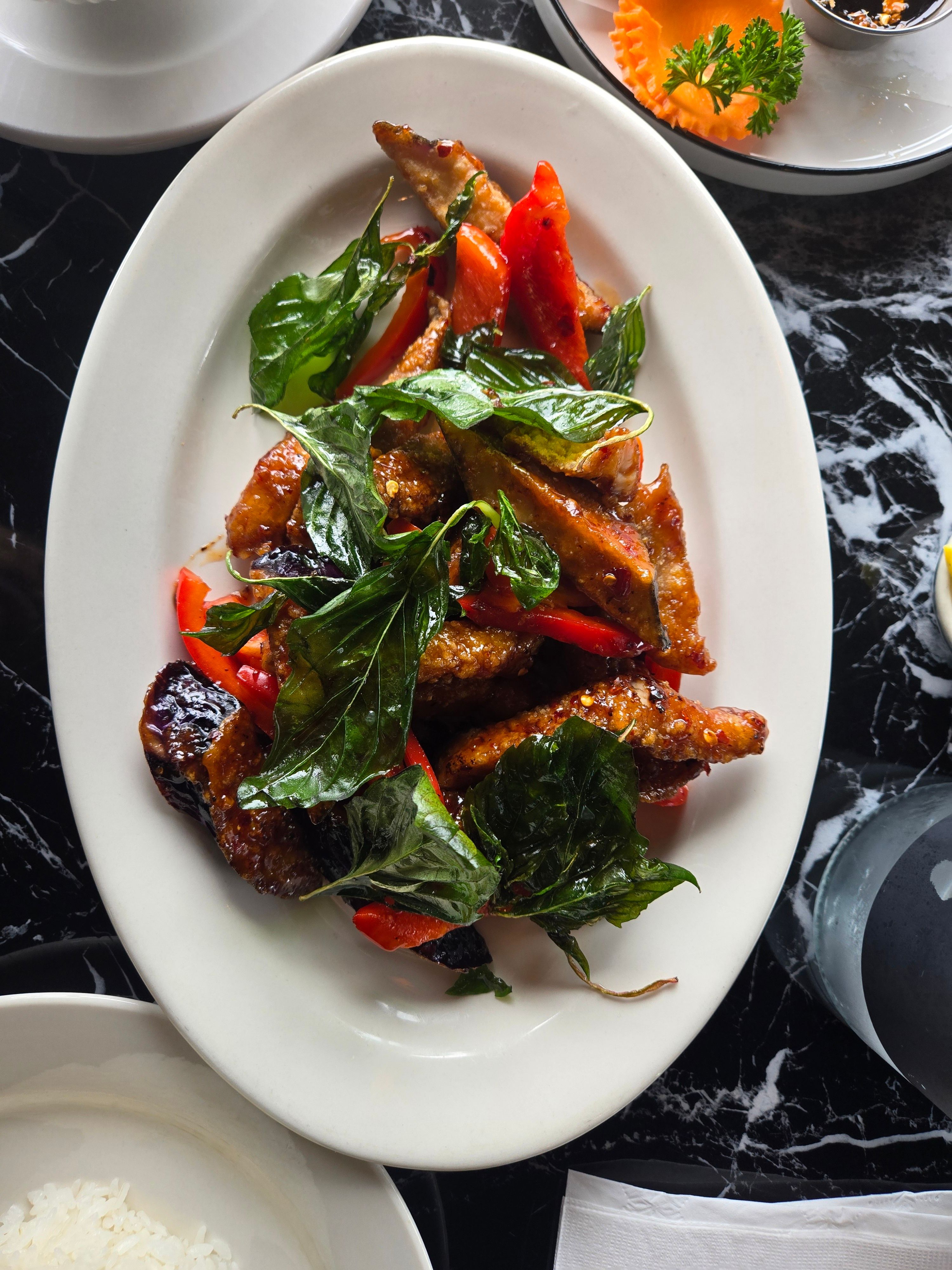
Photo: Kevin Early / Pexels
The diets react (see scores below)
Common Ingredients
- chicken
- lemongrass
- garlic
- cilantro root
- fish sauce
- white pepper
- palm sugar
- oyster sauce
- soy sauce
- padaek
Specific recipes may vary.
Incompatible with 5 of 11 diets
Diet Ratings
Ping Gai is a Lao grilled chicken dish that is fundamentally protein and fat-friendly, but the marinade contains notable keto concerns. Palm sugar is a real sugar that raises net carbs meaningfully, oyster sauce contains added sugar and starch, and soy sauce adds minimal carbs. Padaek (fermented fish paste) is generally low-carb. The combined marinade sugars across a standard serving are moderate — likely 5-10g net carbs per serving depending on marinade quantity absorbed — which keeps it in caution territory rather than outright avoid. The base protein (chicken) is keto-appropriate, and aromatics like lemongrass, garlic, and cilantro root contribute minimal net carbs in marinade quantities. With modifications (eliminating palm sugar, substituting coconut aminos for soy sauce, and omitting or minimizing oyster sauce), this dish could be approved. As served traditionally, portion control is required.
Strict keto practitioners would argue the palm sugar and oyster sauce alone disqualify this dish, as any added sugar violates zero-tolerance sugar rules regardless of the small absorbed quantity. They would rate this avoid until the recipe is explicitly modified.
Ping Gai is a Lao grilled chicken dish with multiple animal-derived ingredients. The primary protein is chicken (animal flesh), fish sauce is derived from fermented fish, oyster sauce is derived from oysters, and padaek is a traditional Lao fermented fish paste. This dish contains at least four distinct animal-product ingredients, making it entirely incompatible with a vegan diet.
Ping Gai (Lao grilled chicken) contains several ingredients that are clearly non-paleo. Fish sauce often contains added salt and sometimes sugar, making it a processed condiment. Oyster sauce is a processed condiment containing refined sugar, added salt, and thickeners. Soy sauce is soy-derived (a legume) and heavily processed. Padaek (Lao fermented fish paste) is a heavily fermented, salted, processed condiment that falls outside paleo guidelines. Palm sugar is a refined/processed sugar that falls in the caution-to-avoid range. While the base ingredients — chicken, lemongrass, garlic, cilantro root, and white pepper — are paleo-friendly, the combination of multiple non-paleo condiments (soy sauce, oyster sauce, padaek, fish sauce with additives) firmly places this dish in the avoid category as traditionally prepared.
Ping Gai is a Lao grilled chicken dish, and grilled poultry itself fits within Mediterranean diet principles as a moderate, acceptable protein. The aromatic herbs (lemongrass, garlic, cilantro root) are very much in the spirit of Mediterranean herb-forward cooking. However, several ingredients raise concerns: fish sauce, oyster sauce, soy sauce, and padaek (fermented fish paste) are all high-sodium, processed condiments not part of Mediterranean tradition. Palm sugar adds refined/processed sugar. These condiments push the dish away from whole-food principles. That said, the core protein (chicken) and herb profile keep this from being a full 'avoid.' As a snack or occasional dish, it is acceptable in moderation, but the condiment profile means it cannot be fully approved.
Some Mediterranean diet practitioners focus primarily on the macronutrient and food-group profile, noting that lean grilled chicken with aromatics is functionally equivalent to Mediterranean grilled poultry dishes. From this perspective, the condiments are used in small quantities as flavor agents, comparable to how anchovies or capers add salt and umami in Mediterranean cooking.
Ping Gai is a Lao grilled chicken dish that is heavily marinated with numerous plant-based ingredients and condiments. While chicken itself is an animal product accepted by most carnivore practitioners, this dish contains lemongrass, garlic, cilantro root, white pepper, and palm sugar — all plant-derived and excluded on carnivore. Additionally, oyster sauce and soy sauce typically contain sugar, starches, and plant-based additives, and soy sauce is legume-derived. Padaek (Lao fermented fish paste) is animal-derived but the overall dish is disqualified by the extensive plant-based marinade components. The palm sugar alone (a sweetener) and soy sauce (legume product) make this clearly incompatible with carnivore principles.
Ping Gai contains multiple Whole30-excluded ingredients. Palm sugar is an added sugar, which is explicitly prohibited. Soy sauce contains soy (a legume) and typically wheat (a grain), both excluded. Oyster sauce typically contains added sugar and sometimes cornstarch. Padaek (Lao fermented fish paste) often contains additives and is a heavily fermented product that may contain non-compliant ingredients. These are not minor or label-reading issues — palm sugar and soy sauce alone are clear disqualifiers with no compliant substitutions in the traditional recipe.
Ping Gai (Lao grilled chicken) contains two clearly high-FODMAP ingredients: garlic and lemongrass used as a marinade. Garlic is one of the highest-fructan foods and is high-FODMAP even in very small amounts. Lemongrass has not been fully tested by Monash but is used in meaningful quantities in marinades and is generally flagged as moderate-to-high FODMAP. Cilantro root is similarly under-tested but used in concentrated paste form. Padaek (fermented fish paste/sauce) is a traditional Lao ingredient with uncertain FODMAP status — the fermentation process and added ingredients (often garlic, shallots) make it risky during elimination. Oyster sauce frequently contains wheat or high-fructose additives and is high-FODMAP unless a specific certified low-FODMAP version is used. Soy sauce in small amounts may be tolerated, but combined with oyster sauce adds to FODMAP load. Fish sauce in small quantities is generally low-FODMAP. Palm sugar in small amounts is likely low-FODMAP. The chicken itself is of course low-FODMAP. The marinade as a whole — particularly garlic, lemongrass in quantity, and padaek — makes this dish unsafe during the elimination phase without significant modification.
Monash University has not specifically tested padaek or cilantro root, and lemongrass data is limited; some clinical FODMAP practitioners allow small amounts of lemongrass (the inner stalk only) during elimination. However, garlic is definitively high-FODMAP and its presence in any non-infused-oil form is a clear disqualifier for strict elimination phase compliance, regardless of other ingredient uncertainties.
Ping Gai is a Lao grilled chicken dish with a marinade built on several high-sodium condiments: fish sauce, oyster sauce, soy sauce, and padaek (fermented fish paste). While the base protein — chicken — is a DASH-approved lean meat, and the aromatics (lemongrass, garlic, cilantro root) are beneficial, the cumulative sodium load from this marinade combination is a significant concern. Fish sauce alone can contribute 1,000–1,400mg sodium per tablespoon; padaek is similarly sodium-dense. Palm sugar adds modest amounts of added sugar, a DASH-limited ingredient. The dish is grilled rather than fried, which is favorable, and the herbs and spices are DASH-friendly. However, the multi-source sodium burden makes this a 'caution' food unless the marinade is significantly reduced in quantity or reformulated with low-sodium alternatives. Portion size and marinade absorption also matter — as a snack portion the sodium may be more manageable than a full entrée serving.
NIH DASH guidelines focus on total daily sodium patterns rather than prohibiting individual high-sodium dishes outright; some DASH-oriented clinicians argue that if Ping Gai is consumed as a small snack portion alongside an otherwise low-sodium day, the overall dietary pattern can remain within DASH targets. However, in practice the combined sodium from fish sauce, oyster sauce, soy sauce, and padaek makes per-serving sodium control difficult without recipe modification.
Ping Gai (Lao grilled chicken) is a Zone-friendly dish at its core. The primary protein is chicken, which is a lean protein staple in the Zone Diet, fitting cleanly into protein blocks at approximately 7g per block. The aromatics — lemongrass, garlic, and cilantro root — are low-glycemic and add negligible carbohydrate load, functioning as favorable Zone carb contributors. The main concern is the marinade: palm sugar and oyster sauce introduce moderate glycemic carbohydrates and some sugar, and padaek (fermented fish paste) and fish sauce add sodium but negligible macronutrient disruption. As a snack-sized portion, the sugar from palm sugar and oyster sauce is small enough that it does not materially unbalance the Zone ratios, though it should be noted. The dish is naturally low in fat, which means it may need a monounsaturated fat addition (e.g., a small serving of avocado or a drizzle of olive oil) to complete the 30% fat target of a Zone snack. Soy sauce is acceptable in Zone in small quantities. Overall, this is a favorable Zone snack: lean protein, aromatic low-GI vegetables, minimal added sugar in context.
Some Zone practitioners may flag palm sugar and oyster sauce as 'unfavorable' carbohydrate sources due to their higher glycemic index and added sugar content, and might recommend substituting with a sugar-free alternative or reducing quantity. Dr. Sears' later anti-inflammatory writings would also flag soy sauce and padaek as high-sodium fermented foods that could contribute to inflammation if consumed frequently, slightly tempering the approval.
Ping Gai is a Lao-style grilled chicken dish with a genuinely mixed anti-inflammatory profile. On the positive side, the marinade features several potent anti-inflammatory aromatics: lemongrass contains citral and limonene with documented anti-inflammatory activity; garlic provides allicin and organosulfur compounds that reduce inflammatory markers; cilantro root offers antioxidant flavonoids; and white pepper contains piperine, which has been shown to modulate NF-κB pathways. The lean chicken protein itself is a 'moderate' food in anti-inflammatory frameworks — acceptable and far preferable to red meat. Against this, the dish contains several concerns: palm sugar is a refined/added sugar, and while it has a lower glycemic index than white sugar, it still contributes to glycemic load; oyster sauce and soy sauce add significant sodium and typically contain additives; fish sauce is high in sodium but used in small quantities; and padaek (fermented fish paste) is sodium-dense, though it does provide fermented food benefits (probiotics) that can support gut health and reduce systemic inflammation. The overall picture is a lean grilled protein enhanced by genuinely anti-inflammatory herbs, but offset by multiple high-sodium condiments and an added sugar — a profile that lands solidly in 'caution' territory. Grilling method is generally preferable to frying. The dish is unlikely to be pro-inflammatory at typical serving sizes, but the condiment load and added sugar prevent an 'approve' rating.
Some anti-inflammatory practitioners (particularly those following AIP or gut-health-focused protocols) would flag fermented fish products like padaek and high-sodium sauces as potential gut irritants that could indirectly promote inflammation in sensitive individuals. Conversely, fermentation advocates (including researchers aligned with the Human Food Project) would argue that padaek's probiotic content is a meaningful anti-inflammatory asset that mainstream frameworks undervalue.
Ping Gai is a Lao grilled herb-marinated chicken dish. The base protein — chicken — is lean and GLP-1 friendly, delivering high protein per calorie with relatively low fat, especially if using breast or thigh without skin. The marinade is built primarily from aromatics (lemongrass, garlic, cilantro root) that are digestively beneficial and anti-inflammatory, with negligible caloric impact. The cooking method — grilling — avoids added fat and supports easy digestibility compared to fried preparations. The main concerns are the sodium-heavy condiment stack (fish sauce, oyster sauce, soy sauce, padaek) and the palm sugar. Padaek (fermented fish paste) is pungent and high in sodium and may cause GI discomfort in sodium-sensitive or GI-reactive GLP-1 patients. Palm sugar adds modest sugar to the marinade but in typical quantities used for marinating it is unlikely to push the dish into problematic glycemic territory. White pepper is generally mild enough not to trigger reflux. Overall this is a nutrient-dense, high-protein, low-fat dish that fits GLP-1 dietary priorities well as a snack-sized portion, with the sodium load and fermented ingredients being the primary caution flags.
Some GLP-1-focused dietitians would flag the cumulative sodium from fish sauce, oyster sauce, soy sauce, and padaek as a meaningful concern — not because sodium directly worsens GLP-1 side effects, but because high sodium intake can mask dehydration in patients already experiencing reduced thirst sensation. Others note that fermented condiments like padaek occasionally trigger nausea or bloating in patients with already-slowed gastric emptying, making individual GI tolerance a key variable here.
*See how scores were generated at our methodology page.
Nutritional profile
Six traits that cut across every diet.
Fiber & Plants
How much whole-plant food and fiber it delivers.
Healthy Fats
The quality of its fats (unsaturated, omega-3).
Whole / Unprocessed
How close it is to its natural, unprocessed form.
Gut Gentle
How easy it is on digestion (low FODMAP, few irritants).
Low Glycemic
How little it spikes your blood sugar.
Protein Density
How much protein it packs per calorie.
Controversy Index
Higher controversy = more disagreement between diets.
Diet-Specific Tips
 Keto — 5/10
View tips
- Palm sugar is a real sugar and primary keto concern in marinade
- Oyster sauce contains added sugar and starch
- Chicken base protein is fully keto-compatible
- Fermented fish sauce and padaek are low-carb
- Lemongrass and garlic in marinade quantities are negligible net carbs
- Net carb load is moderate and portion-dependent
- Traditional preparation not keto-optimized without modification
 Mediterranean — 5/10
View tips
- Chicken is an accepted moderate protein in the Mediterranean diet (poultry category)
- Grilling is a healthy, oil-light preparation method consistent with Mediterranean cooking
- Lemongrass, garlic, and cilantro root are whole-food aromatics aligned with Mediterranean herb use
- Fish sauce, oyster sauce, soy sauce, and padaek are high-sodium processed condiments not traditional to Mediterranean cuisine
- Palm sugar introduces added sugars, which are discouraged
- No olive oil as primary fat; the dish relies on non-Mediterranean flavor bases
- Overall dish is not Mediterranean in tradition but is moderately compatible in food-group terms
 DASH — 4/10
View tips
- High sodium from fish sauce (~1,000–1,400mg/tbsp)
- Additional sodium from oyster sauce, soy sauce, and padaek (fermented fish paste)
- Lean protein base (chicken) is DASH-approved
- Grilling method is favorable — no added fats from frying
- Aromatic herbs (lemongrass, garlic, cilantro root) are DASH-friendly
- Palm sugar contributes added sugar, a DASH-limited ingredient
- Snack-sized portion reduces absolute sodium load but does not eliminate concern
- Low-sodium soy sauce or reduced condiment quantities could improve DASH compatibility
 Zone — 7/10
View tips
- Chicken is a lean, Zone-ideal protein source fitting cleanly into protein blocks
- Lemongrass, garlic, and cilantro root are low-glycemic aromatics with negligible carb impact
- Palm sugar and oyster sauce introduce small amounts of higher-glycemic carbohydrates and added sugar
- Padaek and fish sauce add sodium but minimal macronutrient impact
- Dish is naturally low in fat — a monounsaturated fat addition is recommended to meet Zone 30% fat target
- As a snack portion, the sugar load from the marinade is manageable within Zone block limits
- Soy sauce is acceptable in small Zone-compliant quantities
 Anti-Inflammatory — 6/10
View tips
- Lean chicken protein — acceptable in anti-inflammatory frameworks
- Lemongrass: citral and limonene with anti-inflammatory properties
- Garlic: allicin and organosulfur compounds reduce inflammatory markers
- White pepper: piperine modulates NF-κB inflammatory pathways
- Palm sugar: added sugar, contributes to glycemic load (negative)
- Oyster sauce and soy sauce: high sodium, potential additives (mild negative)
- Padaek (fermented fish paste): high sodium but potential probiotic benefit (mixed)
- Grilling preparation avoids added inflammatory fats
- No omega-3 sources, no significant antioxidant-dense vegetables or whole grains in dish
 GLP-1 Friendly — 7/10
View tips
- High-quality lean protein from grilled chicken — strong GLP-1 alignment
- Grilling method avoids added fat and supports digestibility
- Aromatic marinade ingredients (lemongrass, garlic, cilantro root) are low-calorie and gut-friendly
- High combined sodium load from fish sauce, oyster sauce, soy sauce, and padaek — concern for dehydration risk
- Padaek (fermented fish paste) may cause nausea or bloating in GLP-1 patients with GI sensitivity
- Palm sugar adds modest sugar but marinade quantities are unlikely to be glycemically significant
- No fiber contribution — should be paired with vegetables or whole grains to meet fiber targets
- Portion-friendly as a snack — small serving delivers solid protein without volume burden