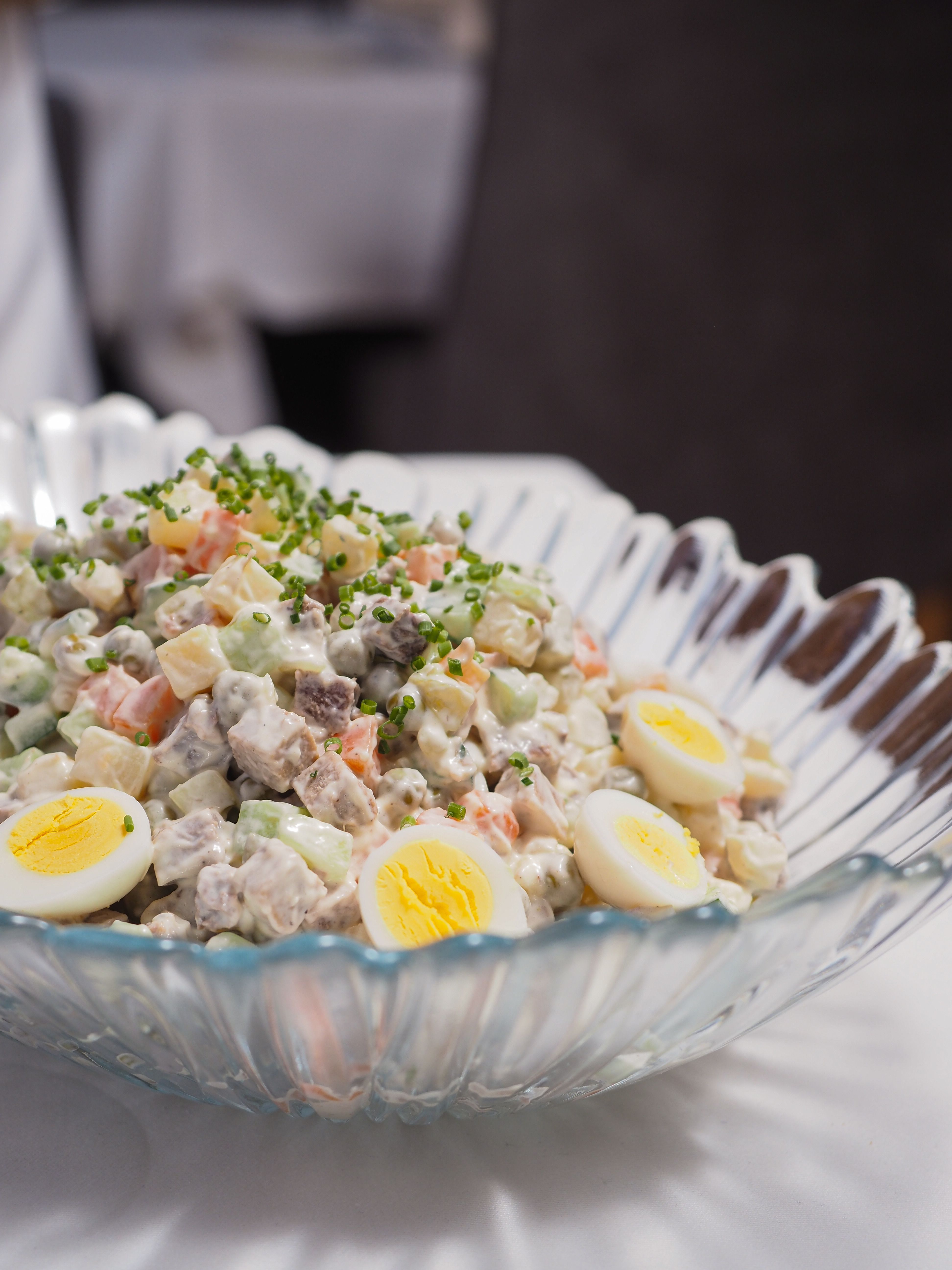
The diets react (see scores below)
Common Ingredients
- potatoes
- peas
- pickles
- carrots
- eggs
- onion
- mayonnaise
- mustard
Specific recipes may vary.
Incompatible with 6 of 11 diets
Diet Ratings
Rasols is a traditional Latvian potato salad that is fundamentally incompatible with ketogenic eating. Potatoes are a high-starch vegetable with roughly 15-17g net carbs per 100g, and they form the bulk of this dish. Peas and carrots add additional starch and sugar, compounding the carb load significantly. A single serving of Rasols could easily contain 30-50g of net carbs, which alone meets or exceeds the entire daily keto carb limit. While eggs and mayonnaise are keto-friendly, and pickles/mustard are negligible in carbs, they cannot offset the dominant starchy ingredients. This dish cannot be consumed in any meaningful portion without breaking ketosis.
Rasols contains two clear animal-derived ingredients: eggs and mayonnaise (which is traditionally made with eggs). Both are animal products excluded under all definitions of veganism. The remaining ingredients — potatoes, peas, pickles, carrots, onion, and mustard — are fully plant-based, but the presence of eggs and egg-based mayonnaise makes this dish incompatible with a vegan diet. A vegan version could be made by substituting eggs with tofu or chickpeas and using plant-based mayonnaise (e.g., aquafaba-based), but the traditional dish as described is not vegan.
Rasols contains multiple non-paleo ingredients that disqualify it clearly. Peas are legumes and are excluded from paleo. Potatoes are debated but even setting that aside, mayonnaise (commercial) typically contains seed oils such as soybean or canola oil, and pickles often contain added salt, sugar, and vinegar with additives. Mustard in commercial form may contain additives or non-paleo ingredients. The combination of legumes (peas) and processed condiments (commercial mayonnaise) makes this dish firmly non-paleo. Eggs and carrots and onion are paleo-approved, but they cannot redeem a dish built around peas and seed-oil-based mayonnaise.
Rasols is a Latvian potato salad that contains several elements misaligned with Mediterranean diet principles. The dominant issue is mayonnaise as the primary dressing — a highly processed, refined-oil condiment that replaces the canonical extra virgin olive oil. Potatoes, peas, carrots, onion, and mustard are acceptable or even positive ingredients, and eggs fall within the moderate/caution zone. However, pickles may contain high sodium, and the overall dish is defined by its heavy mayonnaise base, which is not a Mediterranean fat source. There are no whole grains, legumes as a primary component, or olive oil present. The dish is not inherently unhealthy in a general sense, but it structurally contradicts Mediterranean dietary patterns due to the processed fat source.
Some Mediterranean diet interpreters might score this slightly higher, noting that the vegetable and egg components are wholesome and that a home-made mayonnaise using olive oil could bring it closer to Mediterranean principles — a substitution practiced in some modern Mediterranean-inspired cooking.
Rasols is a traditional Latvian potato salad that is fundamentally incompatible with the carnivore diet. The dish is predominantly plant-based: potatoes, peas, carrots, pickles, onion, and mustard are all plant-derived foods explicitly excluded from carnivore eating. While eggs are present and would be approved on carnivore, they are a minor component in a dish otherwise built entirely around vegetables and starch. Mayonnaise may contain plant oils (typically soybean or canola oil), further disqualifying it. There are no meaningful animal-derived components that could redeem this dish from a carnivore perspective.
Rasols is a traditional Latvian potato-egg salad. Most individual ingredients are Whole30-compliant (potatoes, carrots, eggs, onion, peas, mustard). However, two ingredients require careful scrutiny: (1) Mayonnaise — commercial mayo almost universally contains soybean or canola oil and sometimes sugar or other additives; a compliant homemade or Whole30-approved mayo (e.g., made with avocado oil, eggs, compliant vinegar, mustard) must be used. (2) Pickles — many commercial pickles contain added sugar or other non-compliant additives; label-reading is essential to find a sugar-free, compliant version. Peas in this context are likely garden peas (not sugar snap or snow peas), which are legumes and technically excluded from Whole30. This is a significant concern that pushes the dish toward caution or avoid depending on pea quantity. With compliant mayo and pickles and peas omitted (or substituted), the dish could be compliant, but as commonly prepared it likely contains at least one excluded ingredient.
Official Whole30 guidelines exclude garden/green peas as legumes, which is a clear disqualifier as commonly made. However, some community members argue that the pea quantity in Rasols is small enough to be incidental, and Melissa Urban's program does make exceptions for green beans and snap peas — though garden peas do not share that exception. The mayo issue is also debated: some practitioners accept store-bought 'compliant-labeled' mayo while others insist on homemade only.
Rasols contains two high-FODMAP ingredients that make it unsuitable during the elimination phase: onion and peas. Onion is one of the highest-fructan foods tested by Monash University and is high-FODMAP at any reasonable serving size — it is a primary trigger food on the low-FODMAP diet. Canned or cooked peas are high in GOS and become high-FODMAP at servings above 1/4 cup (approximately 40g), and in a mixed salad like this, the portion of peas is typically larger. The remaining ingredients are generally low-FODMAP: potatoes are low-FODMAP at a standard serving (~2/3 cup), carrots are low-FODMAP, pickles (cucumber-based) are low-FODMAP in small amounts, eggs are low-FODMAP, plain mayonnaise is generally low-FODMAP (check for HFCS or garlic additives), and mustard is low-FODMAP in typical serving sizes. However, the combination of onion (unavoidable high-FODMAP trigger) and peas (GOS) makes this dish a clear 'avoid' during elimination without significant recipe modification.
Rasols is a Latvian potato salad containing a mix of DASH-friendly and problematic ingredients. On the positive side, potatoes, peas, carrots, onion, and eggs provide potassium, fiber, magnesium, and protein — all aligned with DASH priorities. However, the dish has two significant DASH concerns: (1) Pickles are high in sodium (a single dill pickle can contain 700-1,500mg sodium), which directly conflicts with DASH's sodium limits of 1,500-2,300mg/day. (2) Traditional mayonnaise is high in total fat and saturated fat, which DASH discourages. Mustard adds additional sodium. As commonly prepared, this salad's sodium load from pickles alone could approach or exceed a full day's DASH sodium budget. The dish is acceptable only in small portions and with significant modifications — reduced or low-sodium pickles and light/reduced-fat mayonnaise would substantially improve its DASH compatibility.
NIH DASH guidelines flag high-sodium condiments and pickled foods as problematic. However, updated clinical interpretations note that if low-sodium pickles and light mayonnaise (or Greek yogurt substitution) are used, the overall nutritional profile — with vegetables, legumes, and eggs providing potassium, fiber, and protein — could be acceptable in moderate portions within a broader DASH eating pattern.
Rasols is a traditional Latvian potato salad that presents multiple Zone Diet challenges. The dominant ingredient — potatoes — is explicitly listed as a high-glycemic, unfavorable carbohydrate in Dr. Sears' Zone framework, similar to corn and raisins. Potatoes spike insulin rapidly and are among the carbohydrates Sears most consistently discourages. Mayonnaise, typically made from omega-6-heavy seed oils (soybean or canola), conflicts with the Zone's anti-inflammatory fat guidance favoring monounsaturated sources. The dish also lacks meaningful lean protein — eggs provide some, but as a salad ingredient in small amounts alongside no primary protein source, the 30% protein target is almost certainly missed. On the positive side, peas, carrots, pickles, and onion are relatively favorable Zone carbohydrates, and mustard is essentially neutral. However, the macro profile of this dish as traditionally prepared skews heavily toward high-GI carbohydrates and inflammatory fats, with insufficient protein to create a Zone-balanced meal. It would require radical reformulation — replacing potatoes with cauliflower, swapping mayo for avocado-based dressing, and adding substantial lean protein — to approach Zone compliance. As served, it scores at the low end of caution, bordering on avoid.
Rasols is a traditional Latvian potato salad with a mixed inflammatory profile. On the positive side, it contains several anti-inflammatory contributors: peas provide fiber and plant protein; carrots are rich in beta-carotene and antioxidants; onion contains quercetin, a notable anti-inflammatory flavonoid; mustard adds a modest anti-inflammatory boost from isothiocyanates; and pickles (fermented) may offer some probiotic benefit if naturally fermented. Eggs are a moderate-confidence neutral-to-beneficial ingredient depending on context. However, the dish is anchored by two problematic elements: potatoes are a high-glycemic starchy base that in large quantities can promote blood sugar spikes and modest inflammatory signaling, and conventional mayonnaise — the dominant dressing — is typically made with refined seed oils (soybean or canola) high in omega-6 fatty acids, which anti-inflammatory frameworks largely advise against using regularly. The overall dish is calorie-dense and fat-heavy relative to its antioxidant content. It is not a dish with strong pro-inflammatory ingredients like trans fats, red meat, or refined sugar, but the mayo-heavy, starch-forward structure places it squarely in 'caution' territory. Substituting an olive oil or avocado oil-based mayo would meaningfully improve the profile.
Mainstream nutrition science (AHA, USDA guidelines) views canola and soybean-based mayonnaise as acceptable unsaturated fat sources and would not flag this dish as problematic — potatoes also provide potassium and vitamin C. However, most anti-inflammatory protocols (Dr. Weil's pyramid, Wahls Protocol) emphasize minimizing refined seed oils and high-glycemic starches, which are central to Rasols as traditionally prepared.
Rasols is a traditional Latvian potato salad bound with mayonnaise. The ingredient profile presents a mixed picture for GLP-1 patients. On the positive side, eggs contribute some protein, peas and carrots add modest fiber and micronutrients, and pickles provide flavor with minimal calories. However, the dominant base is starchy potatoes with mayonnaise as the binder — a combination that is calorie-dense, high in fat (primarily from mayo), and low in protein per serving. The dish does not list a primary protein source, and eggs alone are unlikely to provide the 15–30g protein per meal target. Mayonnaise is high in fat and can worsen GLP-1-related nausea, bloating, and reflux, especially given that gastric emptying is already slowed. Refined starchy vegetables like potatoes rank lower in nutrient density per calorie compared to non-starchy alternatives. The dish is not fried or high in sugar, and it is soft and easy to digest, which are modest positives. Overall, a small portion as a side dish alongside a high-protein main could be tolerated, but Rasols is not a GLP-1-friendly centerpiece meal as traditionally prepared.
Some GLP-1-focused dietitians may be more permissive with this dish in small portions, noting that eggs provide complete protein, peas add fiber, and the soft texture suits patients with GI sensitivity — particularly on higher-dose injection days when tolerance for solid food is reduced. Others would flag the mayo content more strongly, as individual tolerance to high-fat condiments varies considerably among GLP-1 patients and can be a significant nausea trigger.
*See how scores were generated at our methodology page.
Nutritional profile
Six traits that cut across every diet.
Fiber & Plants
How much whole-plant food and fiber it delivers.
Healthy Fats
The quality of its fats (unsaturated, omega-3).
Whole / Unprocessed
How close it is to its natural, unprocessed form.
Gut Gentle
How easy it is on digestion (low FODMAP, few irritants).
Low Glycemic
How little it spikes your blood sugar.
Protein Density
How much protein it packs per calorie.
Controversy Index
Higher controversy = more disagreement between diets.
Diet-Specific Tips
 Whole30 — 5/10
View tips
- Garden peas are legumes and excluded from Whole30 (unlike green beans or snap peas which are explicitly excepted)
- Commercial mayonnaise typically contains soybean oil and/or sugar — a Whole30-compliant version must be used
- Pickles must be label-checked for added sugar or non-compliant ingredients
- Mustard is generally compliant but should be verified as sugar-free
- Potatoes, carrots, eggs, and onion are all Whole30-approved ingredients
- Dish is compliant only with ingredient substitutions and careful sourcing
 DASH — 4/10
View tips
- Pickles are a major sodium concern — standard dill pickles can contribute 700-1,500mg sodium per serving
- Traditional mayonnaise is high in total fat and saturated fat, conflicting with DASH fat guidelines
- Mustard adds additional sodium
- Potatoes, peas, carrots, and onion are DASH-positive vegetables providing potassium, fiber, and magnesium
- Eggs are acceptable in DASH in moderation
- Low-sodium pickle substitution and light/reduced-fat mayo would significantly improve DASH compatibility
- Portion control is essential given cumulative sodium from multiple high-sodium ingredients
 Zone — 5/10
View tips
- Potatoes are explicitly flagged as unfavorable/high-glycemic in Zone methodology — a primary ingredient here
- Mayonnaise typically contains omega-6-heavy seed oils, conflicting with Zone anti-inflammatory fat principles
- No primary protein source listed; eggs in small salad quantities are insufficient to meet 30% protein target
- Peas, carrots, pickles, and onion are favorable Zone carbohydrates that partially redeem the dish
- Overall macro ratio heavily skewed toward carbohydrates with inflammatory fat profile — difficult to balance within Zone blocks
- Would require significant ingredient substitution (cauliflower for potatoes, avocado mayo, added lean protein) to become Zone-compatible
 Anti-Inflammatory — 4/10
View tips
- Mayonnaise made with refined seed oils (omega-6 heavy) is a significant anti-inflammatory concern
- Potatoes are a high-glycemic starch base — large portions can elevate blood sugar and mildly promote inflammation
- Carrots and peas provide fiber, beta-carotene, and plant-based antioxidants
- Onion contributes quercetin, a well-studied anti-inflammatory flavonoid
- Pickles may offer probiotic benefit if naturally lacto-fermented
- Eggs are a moderate/neutral ingredient under anti-inflammatory guidelines
- Mustard adds minor anti-inflammatory isothiocyanates
- No strongly pro-inflammatory ingredients (trans fats, refined sugar, processed meat) present
- Overall dish is calorie-dense with limited omega-3 content
 GLP-1 Friendly — 4/10
View tips
- High mayonnaise content increases fat per serving and may worsen nausea and reflux
- Potato base is starchy and calorie-dense with low protein density per calorie
- No dedicated primary protein source — eggs provide incomplete protein coverage for a meal
- Peas and carrots contribute modest fiber and micronutrients
- Soft texture is easy to digest, which is a mild positive for GLP-1 patients
- Portion-sensitive: very small amounts as a side dish are more tolerable than a full serving
- Not fried or high in sugar, which limits downside compared to worse alternatives