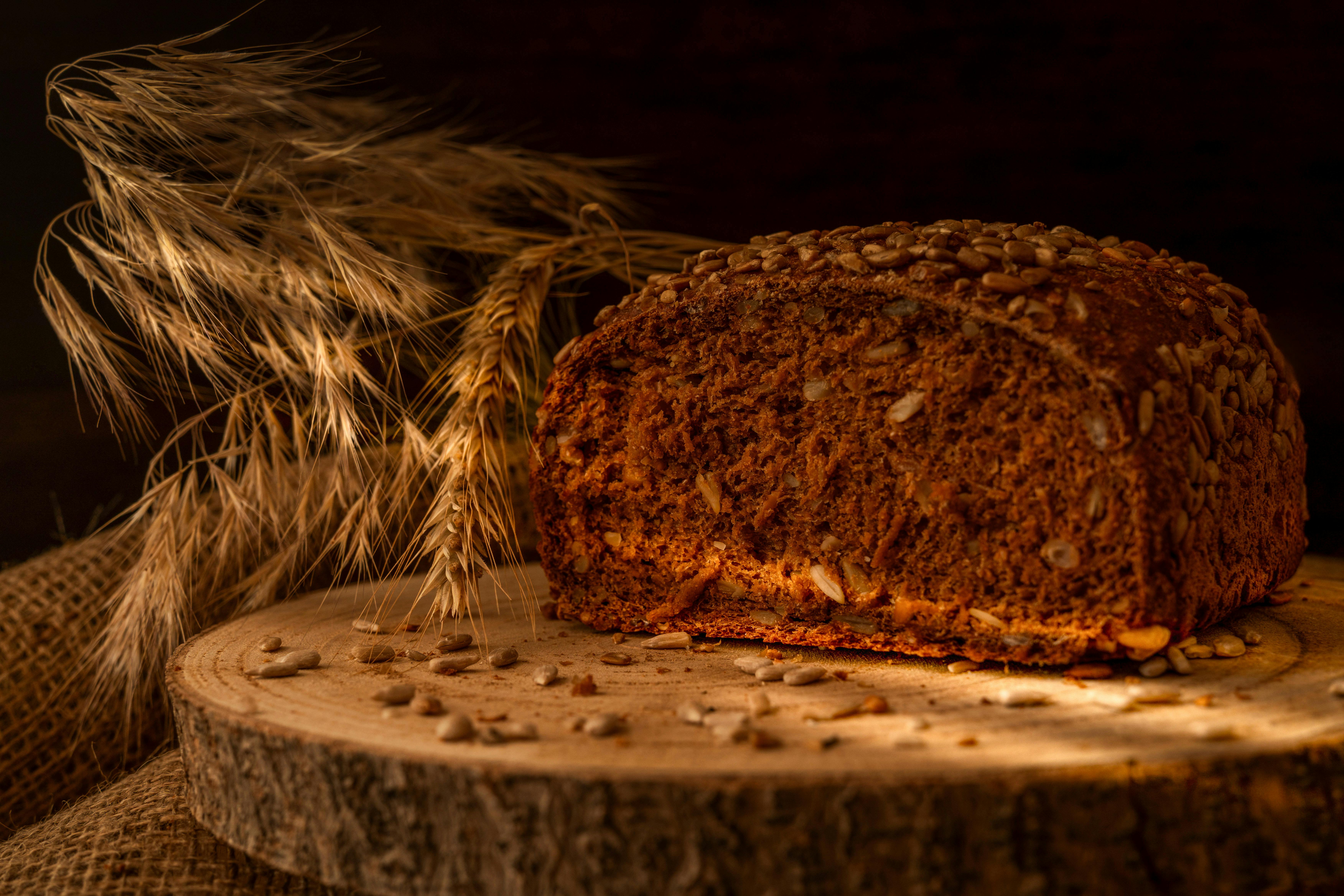
Photo: Gundula Vogel / Pexels
Latvian
Rupjmaize
The diets react (see scores below)
Common Ingredients
- rye flour
- sourdough starter
- malt
- caraway seeds
- water
- salt
- molasses
Specific recipes may vary.
Incompatible with 5 of 11 diets
Diet Ratings
Rupjmaize is a traditional Latvian dark rye sourdough bread made almost entirely from high-carbohydrate ingredients. Rye flour is a grain with very high net carbs (roughly 60-70g net carbs per 100g), and molasses adds significant sugar on top of that. A single slice would likely contain 15-25g of net carbs, making even small portions capable of breaking ketosis. Malt further adds fermentable sugars. Despite the sourdough fermentation process slightly reducing glycemic impact, it does not meaningfully lower net carb content enough to make this food compatible with a ketogenic diet. This is a grain-based bread — categorically excluded from keto.
Rupjmaize is traditional Latvian dark rye bread made entirely from plant-based ingredients. Rye flour, sourdough starter (a fermented mixture of flour and water), malt (typically from barley or rye), caraway seeds, water, salt, and molasses are all fully plant-derived. There are no animal products or animal-derived ingredients present. The sourdough fermentation process uses wild yeast and bacteria, not animal products. This is a whole-food, minimally processed bread with a strong nutritional profile — rye flour is high in fiber and micronutrients. Molasses is a plant-derived byproduct of sugar cane or sugar beet processing. All ingredients are unambiguously vegan, making this an excellent choice for a plant-based diet.
Rupjmaize is a traditional Latvian dark rye bread. Its primary ingredient is rye flour, which is a grain and categorically excluded from the paleo diet. The sourdough starter is grain-based (rye), malt is a grain derivative, and salt is excluded under paleo rules. Molasses is a refined sugar byproduct also excluded. Caraway seeds and water are the only paleo-compatible ingredients. This dish is fundamentally a grain-based bread — one of the most clearly non-paleo food categories — with multiple additional non-paleo ingredients.
Rupjmaize is a traditional Latvian dark sourdough rye bread made from whole rye flour, sourdough starter, malt, caraway seeds, water, salt, and a small amount of molasses. Whole rye flour is a nutrient-dense whole grain with high fiber content, fully aligned with Mediterranean diet principles that emphasize whole grains. The sourdough fermentation process improves digestibility and nutrient bioavailability. Caraway seeds add beneficial phytonutrients. Molasses is present in small amounts as a flavoring agent and contributes trace minerals, not in quantities that would constitute a significant added sugar concern. The bread contains no refined grains, unhealthy fats, or highly processed ingredients. While rye bread is not a traditional Mediterranean staple (Mediterranean cuisines typically feature wheat-based breads), the whole-grain, minimally processed nature of this bread is consistent with Mediterranean diet principles, and whole grain rye is broadly endorsed by Mediterranean diet researchers as a compatible whole grain option.
Some strict Mediterranean diet frameworks emphasize traditional regional foods — primarily whole wheat, barley, or other grains native to the Mediterranean basin — and may view rye bread as outside the canonical food pattern. However, most modern clinical interpretations (including those based on the PREDIMED study framework) endorse any minimally processed whole grain bread as compatible, making Rupjmaize a well-aligned choice.
Rupjmaize is a traditional Latvian dark rye bread made entirely from plant-derived ingredients. Every single component — rye flour, sourdough starter, malt, caraway seeds, molasses — is plant-based and explicitly excluded from the carnivore diet. Rye flour is a grain, one of the most prominently excluded food categories. Molasses is a sugar byproduct of plant origin. Caraway seeds are plant seeds. Malt is derived from grain. There is no animal product anywhere in this dish. This is among the clearest possible 'avoid' verdicts on the carnivore diet.
Rupjmaize is a traditional Latvian dark rye bread. It contains rye flour, which is a grain explicitly excluded on the Whole30 program. Additionally, molasses is a form of added sugar, which is also excluded. Even if both of these ingredients were somehow overlooked, the dish itself is bread — which falls squarely into the 'no recreating baked goods' rule (Rule 4), regardless of whether the ingredients could be made compliant. All three strikes make this a clear avoid with high confidence.
Rupjmaize is a traditional Latvian dark rye bread made predominantly from rye flour, which is high in fructans — a key FODMAP. Unlike wheat sourdough (where long fermentation can significantly reduce fructan content), rye sourdough fermentation does not reliably reduce fructans to low-FODMAP levels, and rye bread remains high-FODMAP per Monash University guidance. The sourdough process may reduce some fructans, but rye contains substantially more fructans than wheat, and Monash has not rated traditional dense rye bread (like pumpernickel or rupjmaize) as low-FODMAP at standard serving sizes. Malt (barley-based) adds additional fructans and GOS. Molasses in small amounts may be tolerable, but adds to the FODMAP load. Caraway seeds are low-FODMAP at typical culinary doses. Salt and water are FODMAP-free. The combination of rye flour and malt makes this bread high-FODMAP at any standard serving (a typical slice of 30-50g). During the elimination phase, this should be avoided.
Some clinical FODMAP practitioners acknowledge that the dense sourdough fermentation process in traditional rye breads like rupjmaize may reduce fructan content more than standard rye bread, and Monash University has noted that some sourdough spelt breads become low-FODMAP through fermentation — however, rye has a higher baseline fructan load than spelt, and no specific Monash testing data exists for rupjmaize, so elimination-phase caution strongly favors avoidance.
Rupjmaize is a traditional Latvian dark rye sourdough bread made primarily from whole rye flour, which is an excellent source of fiber, magnesium, and B vitamins — all aligned with DASH principles. Whole grains are explicitly encouraged in DASH. However, bread in general presents a sodium concern: a typical slice of rye bread contains 150-200mg sodium, and traditional rupjmaize can range from moderate to relatively high sodium depending on preparation. The molasses contributes small amounts of potassium and iron and adds minimal sugar per serving. Malt and caraway seeds are nutritionally neutral in context. The sourdough fermentation process may slightly lower glycemic index and improve mineral bioavailability. DASH does include whole grain breads, but recommends portion control (about 7-8 servings of grains/day total, with most being whole grains). The bread earns credit for its whole grain rye base and fiber content, but the sodium content and the fact that it is a processed/baked product (not a raw whole grain) warrants a 'caution' rather than full approval. It is notably better than white bread or high-sodium sandwich breads.
NIH DASH guidelines categorize whole grain bread as an approved staple food group, which would support a higher 'approve' rating for rupjmaize given its 100% rye whole grain base. However, updated clinical interpretation notes that bread sodium content is a leading contributor to dietary sodium in practice, and some DASH clinicians advise limiting even whole grain breads or choosing specifically labeled low-sodium versions, keeping this in the 'caution' tier pending sodium content confirmation.
Rupjmaize (Latvian dark rye bread) is a dense, whole-grain sourdough bread made primarily from rye flour with sourdough fermentation, malt, molasses, caraway seeds, and salt. In Zone Diet terms, it functions as a carbohydrate block source. Its key advantages over typical bread are: (1) rye flour has a lower glycemic index than wheat flour, especially in whole/dark form; (2) sourdough fermentation further reduces glycemic response by partially breaking down starches and lowering the bread's effective GI; (3) it is very dense and fiber-rich, meaning net carbs per slice are more moderate than they appear. However, it is still a grain-based carbohydrate, which Dr. Sears classifies as an 'unfavorable' carb — usable in Zone meals but not preferred over vegetables and most fruits. Molasses adds some sugar load but is present in small quantities. As a side dish with no protein or fat, it would need to be carefully portioned (roughly 1/2 to 1 thin slice per Zone block) and paired with lean protein and monounsaturated fat to form a balanced Zone meal. It is far from an ideal Zone carb source, but its whole-grain, high-fiber, sourdough-fermented profile makes it one of the more Zone-compatible bread options available.
Some Zone practitioners and later Sears anti-inflammatory writings would note that the polyphenols in dark rye and the fermentation process (which produces short-chain fatty acids beneficial for gut health and reducing systemic inflammation) make rupjmaize a relatively favorable grain choice compared to white bread or even standard whole wheat. A strict early-Zone reading would still classify any bread as 'unfavorable' and limit it sharply, while a more modern Zone/anti-inflammatory perspective might be more permissive with this specific bread given its fermented, whole-grain character.
Rupjmaize is a traditional Latvian dark sourdough rye bread with a strong anti-inflammatory profile overall. Whole rye flour is rich in dietary fiber (particularly arabinoxylan), lignans, and polyphenols that have been associated with reduced inflammatory markers including CRP in epidemiological research. The sourdough fermentation process is a significant positive factor: it improves mineral bioavailability, lowers the glycemic index compared to conventional bread, and produces short-chain fatty acids and beneficial organic acids that support gut health and may reduce systemic inflammation. Caraway seeds contribute anti-inflammatory flavonoids and antispasmodic compounds. Malt adds B vitamins and antioxidants. Molasses, used in small quantities for flavor, provides trace minerals (iron, magnesium, potassium) and some antioxidants, though it is a source of added sugar — at the amounts typical in this bread, the impact is minor. Salt is neutral at normal dietary levels. The absence of refined flour, seed oils, artificial additives, or trans fats is a clear positive. The primary reservation is that bread — even whole grain sourdough rye — is still a processed carbohydrate product, and some anti-inflammatory practitioners apply caution to all grains, particularly for individuals with gluten sensitivity or autoimmune conditions (rye contains gluten). For the general population, dense whole-grain rye sourdough bread is broadly supported by anti-inflammatory nutrition research.
Dr. Weil's Anti-Inflammatory Food Pyramid includes whole and cracked grains (including rye) as a recommended daily foundation, and research consistently links high rye intake with lower inflammatory markers. However, AIP (Autoimmune Protocol) and some functional medicine practitioners (e.g., Dr. Tom O'Bryan) exclude all gluten-containing grains due to their potential to trigger intestinal permeability and low-grade inflammation, particularly in individuals with autoimmune or gluten-related conditions — making this bread a poor choice for that population subset.
Rupjmaize is a traditional Latvian dense sourdough rye bread made from whole rye flour, malt, caraway seeds, molasses, and a sourdough starter. Per standard serving (~40-50g slice), it delivers meaningful fiber (approximately 3-4g) from whole rye, a modest amount of protein (2-3g), low fat, and beneficial micronutrients including B vitamins, iron, and magnesium. The sourdough fermentation process partially breaks down phytic acid and may improve digestibility compared to non-fermented rye breads, which is a meaningful advantage for GLP-1 patients dealing with slowed gastric emptying. Caraway seeds may also support digestion and reduce bloating. However, rupjmaize is a carbohydrate-dominant food with no meaningful protein contribution per serving, which conflicts with the protein-first priority for GLP-1 patients. The molasses adds a small amount of sugar and contributes to its characteristic dense, slightly sweet flavor. The bread is quite dense and filling in small portions, which suits small-serving requirements. It scores well on fiber, low fat, and nutrient density but falls short on protein and contributes primarily carbohydrate calories. Best used as a small accompaniment to a high-protein main rather than as a standalone food. Portion sensitivity is high — one slice is appropriate; multiple slices crowd out protein-rich foods.
Some GLP-1-focused dietitians view whole-grain fermented rye breads favorably due to their lower glycemic index compared to refined grains and their gut microbiome benefits from fermentation, recommending them as a preferred carbohydrate source in small portions. Others are more cautious, noting that any bread — even whole grain — displaces protein-dense foods in an already calorie-restricted eating pattern, and that GLP-1 patients with significant GI sensitivity may find dense rye difficult to tolerate on slower gastric emptying days.
*See how scores were generated at our methodology page.
Nutritional profile
Six traits that cut across every diet.
Fiber & Plants
How much whole-plant food and fiber it delivers.
Healthy Fats
The quality of its fats (unsaturated, omega-3).
Whole / Unprocessed
How close it is to its natural, unprocessed form.
Gut Gentle
How easy it is on digestion (low FODMAP, few irritants).
Low Glycemic
How little it spikes your blood sugar.
Protein Density
How much protein it packs per calorie.
Controversy Index
Higher controversy = more disagreement between diets.
Diet-Specific Tips
 Vegan — 9/10
View tips
- Rye flour is 100% plant-based
- Sourdough starter is fermented flour and water — no animal involvement
- Malt (barley/rye) is plant-derived
- Molasses is a plant-derived sugar byproduct
- Caraway seeds are whole plant seeds
- No dairy, eggs, or animal-derived additives present
- Whole-food, minimally processed bread — scores highly among whole-food plant-based advocates
 Mediterranean — 8/10
View tips
- Whole rye flour provides high fiber and complex carbohydrates consistent with whole grain emphasis
- Sourdough fermentation improves digestibility and glycemic response
- No refined grains, unhealthy fats, or significant processed ingredients
- Molasses used in small quantity as flavoring — minimal added sugar impact
- Caraway seeds contribute beneficial phytonutrients
- Rye is not a traditional Mediterranean grain, but whole grain rye is broadly accepted in modern Mediterranean diet interpretations
 DASH — 6/10
View tips
- Whole rye flour provides substantial dietary fiber, magnesium, and B vitamins — core DASH nutrients
- Sodium content is the primary concern; traditional rupjmaize can contain 150-250mg sodium per slice
- Molasses adds trace potassium and iron with minimal added sugar impact per typical serving
- Sourdough fermentation may improve mineral bioavailability and lower glycemic response
- DASH explicitly encourages whole grains; 100% rye qualifies as a whole grain
- No saturated fat, no cholesterol, no tropical oils — favorable lipid profile
- Caraway seeds and malt are nutritionally neutral at quantities used in bread
- Portion control matters: multiple thick slices could push sodium intake significantly
 Zone — 5/10
View tips
- Dense whole-grain rye flour has a meaningfully lower glycemic index than refined wheat flour
- Sourdough fermentation further reduces glycemic response — one of the most Zone-friendly preparations for grain-based bread
- High fiber content reduces net carbs per serving, improving Zone block calculation
- Molasses adds a small sugar contribution but is a minor ingredient
- Still classified as an 'unfavorable' grain carb in Zone terminology — vegetables are strongly preferred
- No protein or fat present — must be carefully paired to achieve 40/30/30 balance
- Caraway seeds contribute negligible macros but add anti-inflammatory phytonutrients consistent with Zone principles
 Anti-Inflammatory — 7/10
View tips
- Whole rye flour is high in fiber, lignans, and polyphenols with demonstrated anti-inflammatory effects
- Sourdough fermentation lowers glycemic index and improves gut health via short-chain fatty acids
- Caraway seeds contribute anti-inflammatory flavonoids
- Molasses adds trace minerals and antioxidants but also small amounts of added sugar
- No refined flour, seed oils, trans fats, or artificial additives
- Contains gluten — caution warranted for autoimmune or gluten-sensitive individuals
- Dense, minimally processed traditional bread format is preferable to refined grain alternatives
 GLP-1 Friendly — 5/10
View tips
- Good fiber content for a bread (~3-4g per slice) supports GLP-1 priority #2
- No meaningful protein per serving — does not support protein-first priority
- Sourdough fermentation improves digestibility, relevant for slowed gastric emptying
- Low fat profile aligns well with GLP-1 dietary guidelines
- Molasses adds modest sugar but also contributes iron and trace minerals
- Caraway seeds may reduce bloating and support digestion
- Very dense texture — portion sensitive, one small slice recommended
- Whole rye offers lower glycemic response than refined grain breads
- Best paired with high-protein foods (e.g., cottage cheese, smoked fish) to compensate for low protein contribution