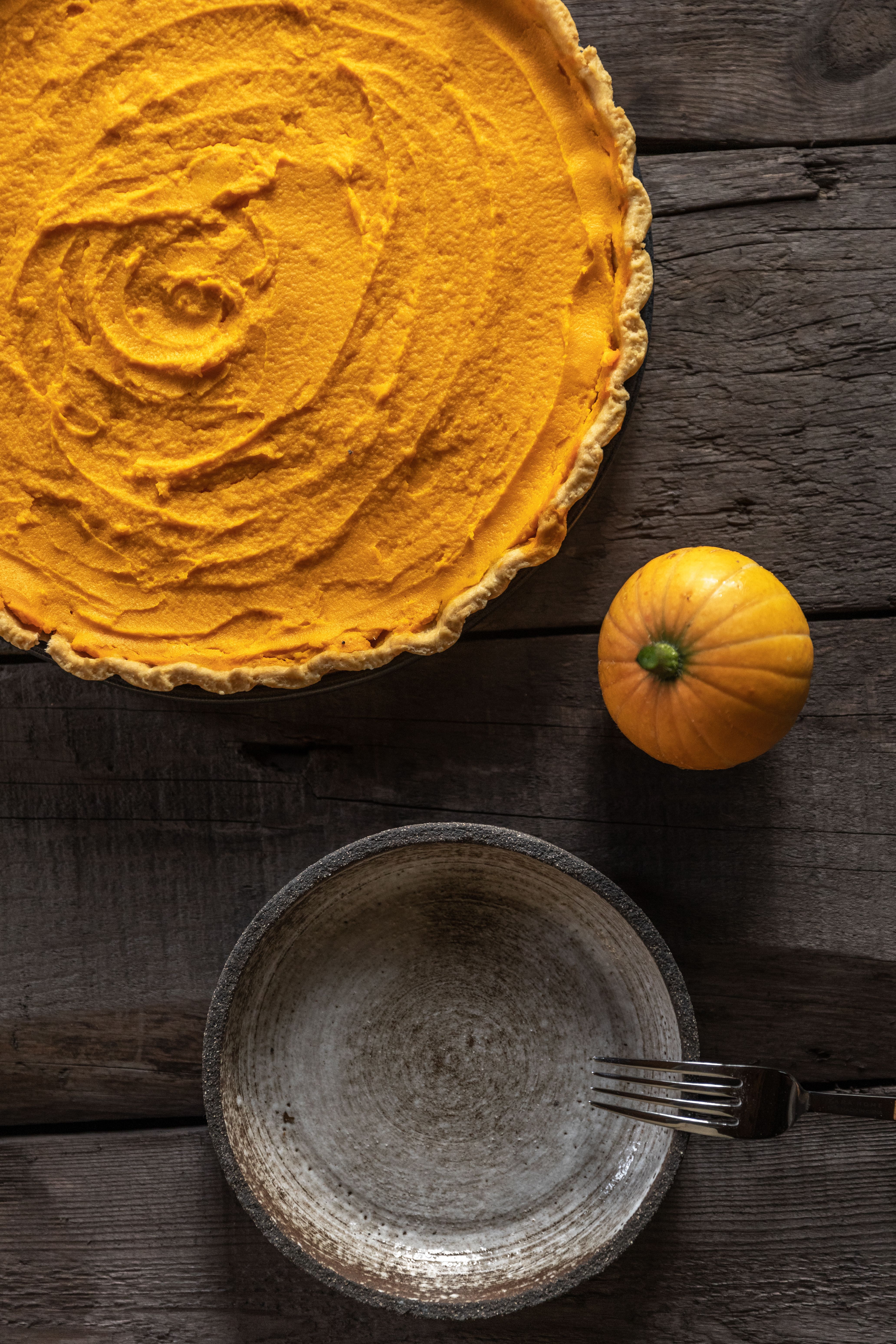
Photo: KATRIN BOLOVTSOVA / Pexels
Latvian
Sklandrausis
The diets react (see scores below)
Common Ingredients
- rye flour
- carrots
- potatoes
- cream
- eggs
- sugar
- cinnamon
- caraway seeds
Specific recipes may vary.
Incompatible with 7 of 11 diets
Diet Ratings
Sklandrausis is a traditional Latvian pastry that is fundamentally incompatible with a ketogenic diet. It contains multiple high-carbohydrate ingredients that together create an overwhelming carb load. The rye flour crust alone delivers significant net carbs per serving. The filling combines carrots and potatoes — both starchy/sugary vegetables that spike blood sugar — along with added sugar. This dish is essentially a carbohydrate trifecta: grain-based crust, starchy root vegetable filling, and added sugar, making it one of the most keto-incompatible foods imaginable. A single serving would likely exceed the entire daily net carb allowance for ketosis.
Sklandrausis is a traditional Latvian pastry made with a rye flour crust filled with mashed carrots and potatoes. While the base vegetables and rye flour are fully plant-based, this dish contains two clear animal-derived ingredients: cream (dairy) and eggs. Both are unambiguously excluded under vegan dietary rules. The dish cannot be considered vegan in its traditional form, though it could theoretically be adapted using plant-based cream and an egg substitute.
Sklandrausis is a traditional Latvian pastry that is fundamentally incompatible with the paleo diet. The dish is built on a rye flour crust, which is a grain and a clear paleo violation. The filling contains cream, which is a dairy product excluded from paleo. Sugar is a refined sweetener also prohibited. While carrots, potatoes, eggs, cinnamon, and caraway seeds are individually paleo-friendly or debated (potatoes), the foundational ingredients — rye flour, cream, and sugar — are all hard 'avoid' items with high paleo consensus. No substitutions could make this dish paleo without fundamentally changing its character.
Sklandrausis is a traditional Latvian rye pastry filled with carrot and potato, spiced with caraway and cinnamon. Several elements align reasonably well with Mediterranean principles: rye flour provides whole grain fiber, carrots and potatoes are vegetables, and caraway/cinnamon are healthy spices. However, the dish uses cream and eggs (moderate dairy/egg content acceptable in limited amounts), and contains added sugar, which is discouraged. The rye crust, while not a Mediterranean staple grain, is a whole grain and nutritionally acceptable. The absence of red meat, processed ingredients, or heavy saturated fats keeps it from being flagged as 'avoid', but the cream and sugar content prevent a full 'approve'. Overall, this is a moderately acceptable occasional snack within a Mediterranean-inspired framework.
Some Mediterranean diet practitioners applying strict modern clinical guidelines would rate this lower due to the added sugar and cream, which contribute refined carbohydrates and saturated fat. Conversely, those emphasizing whole-food, plant-forward eating might note the vegetable-rich filling and whole grain rye crust favorably, arguing the sugar and cream are minor in typical portion sizes.
Sklandrausis is a traditional Latvian pastry that is almost entirely plant-based and therefore fundamentally incompatible with the carnivore diet. The dish consists of a rye flour crust filled with mashed carrots and potatoes, sweetened with sugar, and spiced with cinnamon and caraway seeds. The only animal-derived ingredients are cream and eggs, which appear in minor supporting roles within an overwhelmingly plant-based dish. Rye flour (a grain), carrots and potatoes (vegetables/root vegetables), sugar, cinnamon, and caraway seeds are all strictly excluded on the carnivore diet. This dish has no primary protein source and derives its bulk and character entirely from forbidden plant foods. Even the most lenient carnivore practitioners would have no grounds to include this dish.
Sklandrausis is a traditional Latvian pastry/tart with multiple excluded ingredients. Rye flour is a grain and is explicitly excluded on Whole30. Sugar is an added sweetener, also excluded. Cream is a dairy product, also excluded. Additionally, this dish is a baked good (a pie/tart), which falls directly under the 'no recreating baked goods' rule even if compliant ingredients could somehow be substituted. Three separate hard exclusions make this clearly non-compliant.
Sklandrausis is a traditional Latvian pastry made with a rye flour crust filled with a carrot and potato mixture. The primary FODMAP concern is the rye flour crust, which is high in fructans — a key FODMAP — making the dish problematic during the elimination phase. Rye is among the most fructan-dense grains and is consistently rated high-FODMAP by Monash University. The filling ingredients (carrots, potatoes, eggs, cream, sugar, cinnamon, caraway seeds) are individually low-FODMAP or low-FODMAP at standard servings: carrots and potatoes are safe, eggs are safe, lactose in cream is low at small amounts, sugar (sucrose) is fine, and spices like cinnamon and caraway seeds are used in small quantities. However, the rye crust is structural and non-optional — it cannot be portion-reduced without fundamentally changing the dish. A standard serving of sklandrausis would deliver a meaningful dose of fructans from the rye base, making the overall dish high-FODMAP. Cream contributes some lactose, which at larger portions could add to the FODMAP load, though this is secondary to the rye issue.
Some FODMAP practitioners note that traditional rye flatbreads with long fermentation may have reduced fructan levels, similar to sourdough, but sklandrausis uses standard rye flour without prolonged fermentation, so this exception likely does not apply. Monash University has not specifically tested sklandrausis, so the rating is inferred from its component ingredients rather than direct analysis.
Sklandrausis is a traditional Latvian open-faced rye pastry filled with carrot and potato mixture. Several ingredients align well with DASH principles: rye flour provides whole grain fiber, carrots and potatoes contribute potassium and magnesium, and the spices (caraway seeds, cinnamon) are DASH-friendly. However, the inclusion of cream introduces saturated fat, which DASH limits, and sugar adds empty calories. The overall sodium content appears moderate depending on preparation. The dish is not heavily processed and contains no high-sodium additives, red meat, or tropical oils. As a snack with portion control, it sits in the 'caution' zone — the wholesome base ingredients are commendable, but the cream and added sugar prevent a full approval. If cream were substituted with low-fat dairy (e.g., low-fat sour cream or yogurt), this dish would score considerably higher.
NIH DASH guidelines specify low-fat or fat-free dairy and discourage saturated fat sources like heavy cream. However, updated clinical interpretations and recent meta-analyses (e.g., de Souza et al., 2015) suggest full-fat dairy may not adversely affect cardiovascular outcomes, and some DASH-oriented clinicians may permit moderate cream use when overall saturated fat intake remains controlled — particularly in a dish where cream is a minor component of a largely vegetable-and-whole-grain preparation.
Sklandrausis is a traditional Latvian sweet pastry/tart made from a rye flour crust filled with mashed potatoes and carrots sweetened with sugar and cream. From a Zone Diet perspective, this dish is highly problematic. The macronutrient profile is dominated almost entirely by carbohydrates and fat, with virtually no protein — the category itself lists 'none' as the primary protein source. The carbohydrates come primarily from high-glycemic sources: potatoes (explicitly listed by Dr. Sears as an unfavorable, high-glycemic carb to avoid), refined rye flour (moderate-high glycemic when used as a pastry base), and added sugar (pure high-glycemic carb). Cream contributes saturated fat rather than the preferred monounsaturated fat. Eggs provide a small amount of protein and some favorable fat, but their quantity in this recipe is insufficient to balance the macro ratios. There is essentially no lean protein component, making it nearly impossible to construct a Zone-balanced block structure around this dish as a snack. The 40/30/30 ratio cannot be approached without dramatically restructuring the dish. The combination of high-glycemic carbs, added sugar, saturated fat, and absence of lean protein places this firmly in the 'avoid' category.
Sklandrausis is a traditional Latvian open-faced rye pastry filled with mashed carrots and potatoes, sweetened with sugar and spiced with cinnamon and caraway seeds. The dish presents a genuinely mixed anti-inflammatory profile. On the positive side, rye flour is a whole grain with significant fiber content, beta-glucans, and a lower glycemic impact than refined wheat — all of which support an anti-inflammatory profile. Carrots are rich in beta-carotene and antioxidant carotenoids. Cinnamon is a well-recognized anti-inflammatory spice, and caraway seeds offer modest anti-inflammatory phytochemicals. Eggs provide choline and selenium. However, the dish also contains cream (full-fat dairy, a source of saturated fat flagged for moderation-to-limitation) and added sugar, both of which are pro-inflammatory in meaningful quantities. The sugar content is particularly relevant given it's a sweet pastry filling. The overall dish lands in cautious territory: the whole-grain rye base, colorful vegetables, and spices are genuine positives, but the cream and added sugar prevent a full approval. Portion size matters considerably — eaten as an occasional small snack rather than a daily staple, this dish fits within a broadly anti-inflammatory dietary pattern.
Some anti-inflammatory practitioners, particularly those following stricter protocols like AIP or low-glycemic anti-inflammatory diets, would rate this more negatively due to the combination of added sugar and full-fat cream, arguing these outweigh the whole-grain and vegetable benefits. Conversely, Dr. Weil's broader anti-inflammatory framework, which permits whole grains and allows moderate dairy, would view the rye-vegetable-spice combination more favorably and might consider this an acceptable occasional food.
Sklandrausis is a traditional Latvian open-faced rye pastry filled with a sweetened carrot-potato mixture enriched with cream and eggs. It has a few redeeming qualities for GLP-1 patients — rye flour provides meaningful fiber and is more nutrient-dense than refined white flour, and carrots and potatoes contribute micronutrients and some additional fiber. The eggs and cream contribute small amounts of protein, but this dish is listed with no primary protein source and the overall protein content per serving is low, likely under 5g. The cream adds saturated fat, and added sugar makes this a semi-sweet pastry snack. As a snack, it delivers modest calories but those calories skew toward carbohydrates and fat rather than protein — exactly the nutrient profile GLP-1 patients need to minimize in limited-appetite eating windows. The rye crust and caraway seeds support digestibility somewhat (caraway is traditionally used to ease bloating), which is a minor positive. However, the sugar content, cream-based fat load, and near-absence of protein make this a poor use of limited caloric real estate on a GLP-1 regimen. Acceptable as an occasional small portion alongside a high-protein main, but not a snack that stands well on its own.
Some GLP-1-focused dietitians may view traditional whole-grain pastries like this more favorably than ultra-processed snack foods, noting that rye flour's lower glycemic index and fiber content make it meaningfully better than refined-flour equivalents; however, the cream and sugar content remain concerns that most clinicians would flag regardless of the grain quality.
*See how scores were generated at our methodology page.
Nutritional profile
Six traits that cut across every diet.
Fiber & Plants
How much whole-plant food and fiber it delivers.
Healthy Fats
The quality of its fats (unsaturated, omega-3).
Whole / Unprocessed
How close it is to its natural, unprocessed form.
Gut Gentle
How easy it is on digestion (low FODMAP, few irritants).
Low Glycemic
How little it spikes your blood sugar.
Protein Density
How much protein it packs per calorie.
Controversy Index
Higher controversy = more disagreement between diets.
Diet-Specific Tips
 Mediterranean — 5/10
View tips
- Rye flour provides whole grain fiber, broadly consistent with Mediterranean whole grain emphasis
- Carrot and potato filling contributes vegetable content
- Cream adds saturated fat, a concern in strict Mediterranean interpretation
- Added sugar contradicts Mediterranean principle of minimal added sugars
- No red meat or highly processed ingredients
- Caraway and cinnamon are healthy spices with no dietary concerns
- Not a traditional Mediterranean food, so assessment requires interpretive latitude
 DASH — 5/10
View tips
- Rye flour provides whole grain fiber, aligning with DASH whole grain emphasis
- Carrots and potatoes contribute potassium, magnesium, and fiber — core DASH nutrients
- Cream is a source of saturated fat, which DASH limits
- Added sugar is present, which DASH discourages
- No high-sodium ingredients, processed additives, red meat, or tropical oils
- Spices (caraway, cinnamon) are DASH-compatible and add flavor without sodium
- Portion control is key — as a small snack this is more acceptable than as a large serving
- Substituting cream with low-fat dairy would significantly improve DASH compatibility
 Anti-Inflammatory — 5/10
View tips
- Rye flour is a whole grain with fiber and lower glycemic impact — anti-inflammatory positive
- Carrots provide beta-carotene and antioxidant carotenoids
- Cinnamon is a well-supported anti-inflammatory spice
- Caraway seeds offer modest phytochemical benefits
- Cream (full-fat dairy) contributes saturated fat — flagged for limitation in anti-inflammatory diets
- Added sugar is pro-inflammatory and should be limited
- No omega-3 sources, lean protein, or high-polyphenol ingredients present
- Overall profile is mixed: beneficial base ingredients offset by pro-inflammatory cream and sugar
 GLP-1 Friendly — 4/10
View tips
- Very low protein — fails the primary GLP-1 priority for snacks
- Rye flour provides fiber and has a lower glycemic index than refined grains
- Cream adds saturated fat, which can worsen nausea and reflux on GLP-1s
- Added sugar is a negative — low-nutrient calories in a reduced-appetite context
- Carrot and potato filling adds micronutrients and modest fiber
- Caraway seeds may mildly support digestion and reduce bloating
- Small traditional portion size is a minor positive for GLP-1 portion tolerance
- Should not be eaten as a standalone snack — needs pairing with a protein source