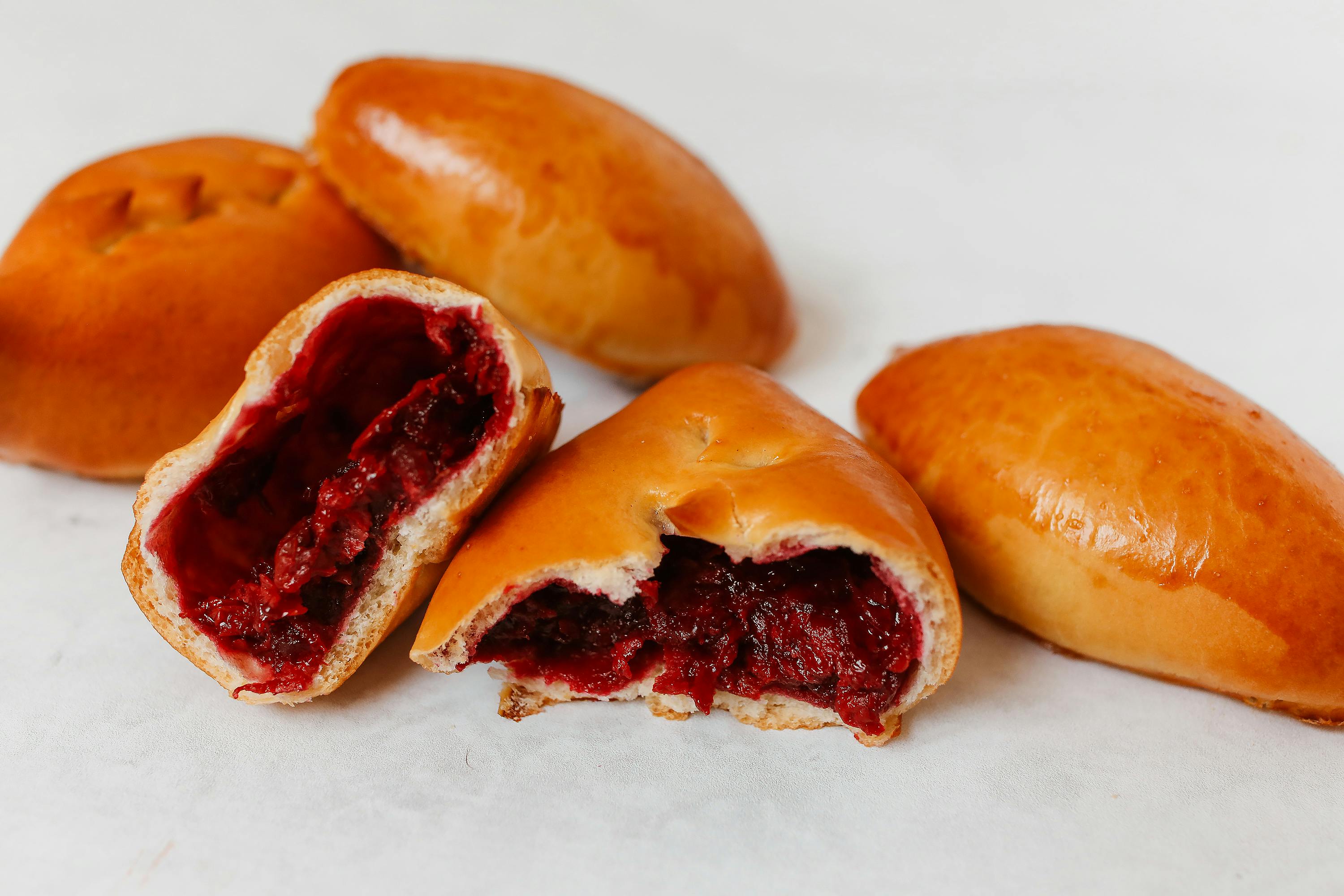
Photo: Polina Tankilevitch / Pexels
Latvian
Speka Piradzini
The diets react (see scores below)
Common Ingredients
- flour
- yeast
- bacon
- onion
- eggs
- butter
- milk
- salt
Specific recipes may vary.
Incompatible with 11 of 11 diets
Diet Ratings
Speka Piradzini are traditional Latvian bacon-filled pastries made with a yeast-leavened wheat flour dough. The primary structure of this dish is built on wheat flour and yeast, both of which are strictly incompatible with a ketogenic diet. A single piradzini pastry contains significant net carbs from the dough alone, and eating even a small portion (2-3 pieces) would likely exceed a full day's keto carb allowance. While the bacon filling is keto-friendly, the flour-based shell is the dominant component and cannot be substituted or avoided. There is no realistic portion size that makes this dish compatible with ketosis.
Speka Piradzini (Latvian bacon buns) contain multiple animal-derived ingredients that are strictly excluded from a vegan diet. Bacon is pork — a direct animal product. Eggs, butter, and milk are all animal-derived dairy or egg products. This dish is fundamentally incompatible with veganism in its traditional form, with no ambiguity whatsoever.
Speka Piradzini are traditional Latvian bacon-filled pastries — essentially small leavened bread rolls stuffed with bacon and onion. The dish is fundamentally incompatible with the paleo diet due to multiple core violations. Flour (wheat) is a grain and one of the most clearly excluded foods in all paleo frameworks. Yeast-leavened dough is a processed grain product. Milk and butter are dairy, excluded under paleo rules. Salt is an added ingredient also discouraged. Bacon, while pork-derived, is a processed meat with additives and salt. The only paleo-compliant ingredients in this dish are onion and eggs. With the primary structure of the dish being a wheat-flour pastry, this is an unambiguous avoid — the dish cannot be meaningfully adapted without ceasing to be Speka Piradzini.
Speka Piradzini are traditional Latvian bacon-filled pastries that conflict with Mediterranean diet principles on multiple fronts. The primary protein is bacon (processed pork), which is both red/processed meat and high in saturated fat and sodium — a category to be severely limited. The dough is made from refined white flour, a refined grain discouraged in favor of whole grains. Butter replaces olive oil as the fat source, adding saturated fat. Milk and eggs are present but are the least problematic ingredients. There is virtually no plant-forward content — the only vegetable is onion in a minor role. This dish combines processed meat, refined grains, and saturated animal fats, making it fundamentally incompatible with Mediterranean diet principles.
Speka Piradzini are Latvian bacon-filled pastries that are fundamentally incompatible with the carnivore diet. While the filling contains acceptable carnivore ingredients (bacon, onion is borderline, eggs, butter), the dish is primarily defined by its flour and yeast-based pastry dough. Flour is a grain — one of the most explicitly excluded food categories on the carnivore diet. Yeast and onion are also plant-derived. Milk adds a dairy component. The dish is essentially a baked good with a small amount of animal-derived filling; the dominant macrostructure is plant-based carbohydrate. No adaptation short of completely removing the pastry shell would make this carnivore-compatible, at which point the dish no longer exists as Speka Piradzini.
Speka Piradzini (Latvian bacon buns) are fundamentally incompatible with Whole30 on multiple levels. The dish contains flour (a grain, explicitly excluded), yeast (used to leaven grain-based bread, also excluded as part of baked goods), butter (dairy, excluded — only ghee/clarified butter is allowed), and milk (dairy, explicitly excluded). Even setting aside the excluded individual ingredients, this dish is a classic filled pastry/bun, which falls squarely into the 'no recreating baked goods' rule — Whole30 explicitly prohibits bread, buns, and similar baked goods even when made with compliant ingredients. There is no compliant version of this dish possible within Whole30 constraints.
Speka Piradzini (Latvian bacon buns) are fundamentally incompatible with the low-FODMAP elimination diet due to multiple high-FODMAP ingredients. The wheat flour dough is the primary offender — wheat is high in fructans, a key FODMAP that must be avoided during elimination. Onion is one of the highest-FODMAP foods on the Monash list, extremely rich in fructans, and is a core ingredient in the bacon filling. Milk used in the dough contributes lactose. These are not marginal cases — flour (wheat), onion, and milk are among the most clearly high-FODMAP ingredients in the Monash database. Even if small quantities were used, the combination of three significant FODMAP sources makes any standard serving of these buns problematic for someone in the elimination phase.
Speka Piradzini are traditional Latvian bacon-filled pastries that conflict with multiple core DASH diet principles simultaneously. The primary filling is bacon, which is explicitly identified in DASH guidelines as a high-sodium, high-saturated-fat food to avoid. The pastry dough is made with refined white flour (not whole grain), butter (saturated fat), whole milk, and added salt, compounding the sodium and saturated fat load. A single serving of these pastries can easily contain 400-600mg of sodium and significant saturated fat from the bacon and butter combination, with multiple pieces constituting a typical snack portion. The dish provides no meaningful potassium, magnesium, or fiber — the key DASH-beneficial nutrients — and lacks vegetables or other DASH-friendly components. Virtually every ingredient either directly conflicts with DASH guidelines (bacon, butter) or represents a missed opportunity to include DASH-positive foods (refined flour instead of whole grain).
Speka Piradzini are traditional Latvian bacon-filled pastries made primarily from white flour dough (yeast-leavened) with a bacon and onion filling. From a Zone Diet perspective, this dish is highly problematic on multiple fronts. The primary component — white flour yeast dough — is a high-glycemic carbohydrate that Sears explicitly classifies as 'unfavorable,' producing rapid insulin spikes that push the body out of the Zone. The macronutrient ratio is severely imbalanced: the dish is carbohydrate and fat dominant, with the protein (bacon) being fatty and processed rather than lean. Bacon itself is high in saturated fat and sodium, not the lean protein Sears recommends. Butter adds additional saturated fat, and there is no meaningful low-glycemic vegetable component. The overall macro profile — high-GI carbs + saturated fat + insufficient lean protein — is essentially the opposite of the 40/30/30 Zone template. While small portions could theoretically be worked around, the dish's fundamental construction as a dough-wrapped fatty meat pastry makes it nearly impossible to incorporate into a Zone-balanced meal without completely deconstructing it.
Speka Piradzini are traditional Latvian bacon-filled pastries made from an enriched yeast dough. From an anti-inflammatory perspective, this dish is problematic on multiple fronts. The filling centers on bacon, a processed red meat high in saturated fat, sodium, and nitrates/nitrites — all associated with increased inflammatory markers (CRP, IL-6). The dough is made from refined white flour, a refined carbohydrate that can spike blood glucose and promote inflammatory signaling. Butter adds saturated fat, and whole milk contributes additional saturated fat. The dish contains virtually no anti-inflammatory components: no omega-3s, no colorful vegetables, no polyphenols or antioxidants, no herbs or spices with anti-inflammatory properties. Onion is the only marginally beneficial ingredient (quercetin content), but in amounts typical to a filling it provides negligible anti-inflammatory effect. This is essentially a refined-carb pastry filled with processed meat and saturated fat — a combination that anti-inflammatory diet frameworks broadly characterize as pro-inflammatory.
Speka Piradzini are traditional Latvian bacon-filled pastries made from an enriched yeast dough (flour, butter, milk, eggs) with a filling of fatty bacon and onion. This dish is problematic on nearly every GLP-1 dietary criterion. The primary protein source is bacon — a high-saturated-fat, processed meat that is explicitly on the avoid list. The dough base is refined flour enriched with butter and milk, providing dense calories with minimal fiber or protein per serving. Fat content per pastry is high, coming from both the bacon filling and the enriched dough, which directly worsens GLP-1 side effects including nausea, bloating, and reflux due to slowed gastric emptying. Protein density is low relative to calorie load — the bacon provides some protein but it is far outweighed by the refined carbohydrate and fat content. Fiber is essentially zero. These are not portion-friendly in a meaningful sense — a single pastry is calorically dense with poor nutritional return. The combination of high fat, refined carbs, processed meat, and low fiber makes this a poor choice for GLP-1 patients.
*See how scores were generated at our methodology page.
Nutritional profile
Six traits that cut across every diet.
Fiber & Plants
How much whole-plant food and fiber it delivers.
Healthy Fats
The quality of its fats (unsaturated, omega-3).
Whole / Unprocessed
How close it is to its natural, unprocessed form.
Gut Gentle
How easy it is on digestion (low FODMAP, few irritants).
Low Glycemic
How little it spikes your blood sugar.
Protein Density
How much protein it packs per calorie.
Controversy Index
Higher controversy = more disagreement between diets.