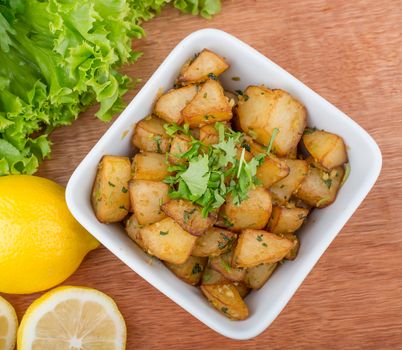
Photo: Shameel mukkath / Pexels
Levantine
Batata Harra
The diets react (see scores below)
Common Ingredients
- potatoes
- garlic
- cilantro
- red chili
- olive oil
- lemon
- salt
- coriander
Specific recipes may vary.
Incompatible with 3 of 11 diets
Diet Ratings
Batata Harra is built around potatoes, which are a starchy vegetable with approximately 15-17g of net carbs per 100g. A standard serving of this dish would easily deliver 30-50g or more of net carbs, far exceeding the keto daily limit in a single side dish. While the other ingredients — olive oil, garlic, cilantro, chili, lemon, and spices — are keto-friendly, they cannot offset the carbohydrate load of the potato base. This dish is fundamentally incompatible with ketosis.
Batata Harra is a classic Levantine spiced potato dish made entirely from whole plant foods. Every ingredient — potatoes, garlic, cilantro, red chili, olive oil, lemon juice, salt, and coriander — is fully plant-derived with no animal products or animal-derived ingredients involved. The dish is minimally processed, dominated by whole vegetables and aromatics, and cooked in olive oil, making it an excellent fit for both vegan and whole-food plant-based diets. The only minor consideration is olive oil, which is a refined fat and lowers the score slightly from a whole-food plant-based purist perspective, but it is unambiguously vegan.
Batata Harra is built around white potatoes, which sit in a debated gray zone within the paleo community. Most other ingredients are straightforwardly paleo-compliant: olive oil is a preferred fat, garlic, cilantro, red chili, lemon juice, and coriander are all whole herbs/spices, and these present no issues. However, two ingredients push the dish toward caution. First, white potatoes: originally excluded by Loren Cordain due to glycemic load and glycoalkaloid content, though many modern paleo practitioners and protocols (Whole30, Mark Sisson) now accept them. Second, salt: paleo guidelines generally discourage added salt as it was not a staple of Paleolithic diets. Because the dish's entire substance is built on a debated ingredient (white potatoes) and includes added salt, a 'caution' verdict with a mid-range score is appropriate rather than outright avoidance.
Strict Cordain-school paleo excludes white potatoes entirely due to their high glycemic index and saponin/glycoalkaloid content, which would push this dish to 'avoid.' Conversely, Mark Sisson (The Primal Blueprint) and the Whole30 protocol both permit white potatoes, which would support a more lenient view closer to 'approve' if salt is omitted or minimized.
Batata Harra is a whole-food, plant-based dish featuring potatoes cooked in extra virgin olive oil with garlic, fresh herbs, lemon, and spices — all core Mediterranean ingredients. The dish is minimally processed, free of added sugars, refined grains, or animal products, and relies on olive oil as its primary fat source. Potatoes are a starchy vegetable that fit within the Mediterranean dietary pattern, though they are less emphasized than legumes or non-starchy vegetables. The generous use of olive oil, fresh herbs, lemon, and garlic makes this a strongly Mediterranean-aligned preparation.
Some modern Mediterranean diet guidelines (e.g., Harvard's Healthy Eating Plate interpretation) deprioritize potatoes compared to other vegetables due to their high glycemic index and starchy nature, suggesting that legume- or non-starchy vegetable-based sides would be more optimal. Traditional Mediterranean patterns, however, do include potatoes regularly in plant-forward preparations like this one.
Batata Harra is entirely plant-based with zero animal-derived ingredients. Potatoes are a starchy carbohydrate-rich tuber, garlic, cilantro, red chili, and coriander are plant foods, olive oil is a plant-derived oil, and lemon is a fruit. Every single ingredient in this dish is excluded on the carnivore diet. There is no animal protein, no animal fat, and no animal-derived component whatsoever. This dish is incompatible with carnivore eating at every level, including the most lenient interpretations.
Batata Harra is a Levantine spiced potato dish made entirely from whole, unprocessed, Whole30-compliant ingredients. Potatoes are an allowed vegetable, garlic, cilantro, red chili, coriander, and salt are all compliant herbs and spices, olive oil is a compliant natural fat, and lemon juice is a compliant acidic seasoning. There are no excluded ingredients present — no grains, legumes, dairy, added sugar, alcohol, or other banned substances. This is a straightforward whole-food side dish that aligns well with Whole30 principles.
Batata Harra contains whole garlic cloves as a core ingredient, which is a high-FODMAP food (high in fructans) at any standard serving size. Garlic is one of the highest-FODMAP foods tested by Monash University and is a primary trigger for IBS symptoms. There is no way to make this dish low-FODMAP without substituting garlic cloves with garlic-infused oil, as the recipe fundamentally relies on garlic as a key flavoring agent. The remaining ingredients — potatoes (low-FODMAP up to 1 medium potato), olive oil, lemon juice, fresh red chili, cilantro, salt, and coriander spice — are all low-FODMAP at standard servings. However, the garlic alone disqualifies this dish for the elimination phase.
Batata Harra is a spiced potato dish made primarily with whole-food, DASH-compatible ingredients: potatoes (a good source of potassium), garlic, lemon, cilantro, coriander, chili, and olive oil (a heart-healthy unsaturated fat). These align well with DASH principles. However, the dish lands in 'caution' for two reasons: (1) Potatoes, while nutrient-dense, are a starchy vegetable and count toward grain/starch servings rather than the non-starchy vegetable servings DASH emphasizes — portion control matters. (2) The amount of olive oil used in traditional preparation can be generous, adding significant calories from fat, though the fat type is DASH-friendly. (3) Salt is listed as an ingredient and sodium content depends heavily on preparation — home-prepared versions can stay within DASH sodium limits, but restaurant versions may use considerably more salt. The dish has no saturated fat, no processed ingredients, no added sugar, and no red meat, making it broadly compatible with DASH when portion-controlled and prepared with restrained salt.
NIH DASH guidelines classify potatoes as a starchy vegetable and do not specifically restrict olive oil, suggesting this dish could be viewed more favorably as a whole-food, plant-based side. Some DASH-oriented clinicians would approve it outright for home-prepared versions with sodium kept low, noting the potassium content of potatoes actively supports blood pressure goals.
Batata Harra is built around potatoes, which Dr. Sears explicitly classifies as an 'unfavorable' high-glycemic carbohydrate in Zone methodology — placing them alongside white bread and corn as carbs to avoid or strictly minimize. Potatoes have a high glycemic index and load, causing rapid insulin spikes that work against the Zone's core goal of hormonal balance. The olive oil is a Zone-positive monounsaturated fat, and garlic, lemon, cilantro, and chili are all favorable polyphenol-rich additions. However, the carbohydrate base (potato) is fundamentally problematic. The dish also lacks any protein component, making it incomplete as a Zone-balanced side — it would need to be paired carefully with a lean protein. It is not a categorically 'avoid' food because it can technically be consumed in a very small, controlled portion alongside lean protein and additional low-GI vegetables, but the high-glycemic potato base makes this impractical as a regular Zone component. A Zone-friendly adaptation would substitute cauliflower or another low-GI vegetable for the potato.
Batata Harra is a vibrant Levantine spiced potato dish with a notably favorable anti-inflammatory ingredient profile overall. Extra virgin olive oil is a cornerstone anti-inflammatory fat, rich in oleocanthal and oleic acid. Garlic provides allicin and organosulfur compounds with well-documented anti-inflammatory effects. Red chili contributes capsaicin, a potent anti-inflammatory and antioxidant compound. Coriander (the spice) and cilantro (the herb) both offer polyphenols and antioxidants. Lemon juice adds vitamin C and flavonoids. The primary concern is potatoes, which are nightshade vegetables — mainstream anti-inflammatory nutrition (including Dr. Weil's framework) considers them acceptable and even beneficial due to antioxidants like chlorogenic acid and potassium, but they are excluded from Autoimmune Protocol (AIP) diets due to solanine and lectin content. Potatoes are also a high-glycemic food, which can be mildly pro-inflammatory in large quantities or for insulin-resistant individuals. However, when prepared with EVOO and these anti-inflammatory spices, the overall dish profile leans clearly positive for a generally healthy person. No processed ingredients, no trans fats, no added sugar, no seed oils.
Potatoes are nightshades, and AIP/autoimmune protocol advocates (Dr. Tom O'Bryan, Sarah Ballantyne) argue that solanine alkaloids and lectins in nightshades promote gut permeability and inflammation in sensitive individuals — leading these frameworks to exclude them entirely. Additionally, potatoes carry a high glycemic index, and some anti-inflammatory practitioners caution that glycemic spikes drive inflammatory markers like IL-6 and CRP, particularly in metabolically compromised individuals. By contrast, Dr. Weil's pyramid and mainstream anti-inflammatory research do not flag nightshades for the general population, and the antioxidant and spice composition here meaningfully offsets glycemic concerns.
Batata Harra is a spiced, olive-oil-dressed potato dish with no meaningful protein content. Potatoes are a starchy carbohydrate with moderate fiber (roughly 2-3g per medium potato), decent micronutrients (potassium, vitamin C), and reasonable digestibility when roasted or sautéed rather than fried. The olive oil is a positive — unsaturated fat in moderate amounts is acceptable — but the total fat content per serving depends heavily on preparation generosity. The red chili is the main GLP-1 concern: spicy ingredients can worsen nausea, reflux, and GI discomfort, which are already common side effects of GLP-1 medications. Garlic, lemon, and cilantro are benign or mildly beneficial. The dish scores poorly on protein density (near zero) and is portion-sensitive — potatoes are calorie-dense relative to their protein and fiber contribution, making them a lower-priority food when appetite and caloric capacity are significantly reduced. It is not a food to avoid categorically, but it occupies space better used by protein- and fiber-dense foods. If consumed, it should be a small side portion paired with a high-protein main, and chili quantity should be minimized.
Some GLP-1-focused dietitians accept potatoes as a whole-food carbohydrate source with useful potassium and fiber, especially for patients experiencing fatigue or electrolyte imbalance — a meaningful concern on reduced-calorie intake. However, the spice level and low protein density make this dish less universally suitable, and clinicians vary on how aggressively they restrict starchy carbohydrates depending on whether the patient has comorbid insulin resistance or type 2 diabetes.
*See how scores were generated at our methodology page.
Nutritional profile
Six traits that cut across every diet.
Fiber & Plants
How much whole-plant food and fiber it delivers.
Healthy Fats
The quality of its fats (unsaturated, omega-3).
Whole / Unprocessed
How close it is to its natural, unprocessed form.
Gut Gentle
How easy it is on digestion (low FODMAP, few irritants).
Low Glycemic
How little it spikes your blood sugar.
Protein Density
How much protein it packs per calorie.
Controversy Index
Higher controversy = more disagreement between diets.
Diet-Specific Tips
 Vegan — 9/10
View tips
- All ingredients are 100% plant-derived
- Dominated by whole foods: potatoes, garlic, fresh herbs, chili, lemon
- No animal products, dairy, eggs, or animal-derived additives
- Olive oil is the only processed ingredient, slightly reducing whole-food status
- No cross-contamination or hidden animal-derived ingredient concerns in this recipe
 Paleo — 4/10
View tips
- White potatoes are debated in paleo — excluded by Cordain, accepted by Sisson and Whole30
- Added salt is generally discouraged in strict paleo frameworks
- Olive oil is an approved paleo fat
- Garlic, red chili, cilantro, coriander, and lemon are all whole, paleo-compliant ingredients
- No grains, legumes, dairy, seed oils, or processed ingredients present
- Dish is otherwise minimally processed and close to whole-food principles
 Mediterranean — 8/10
View tips
- Extra virgin olive oil as primary fat — core Mediterranean principle
- All-plant ingredient list with no processed or animal ingredients
- Whole potatoes are acceptable in traditional Mediterranean cuisine
- Garlic, lemon, and fresh herbs are hallmark Mediterranean flavors
- No added sugars, refined grains, or unhealthy fats
- Potatoes are higher glycemic than other Mediterranean staple vegetables
 Whole30 — 9/10
View tips
- Potatoes are explicitly allowed on Whole30
- Olive oil is a compliant natural fat
- All spices (coriander, red chili, garlic) are fully compliant
- Lemon juice is a compliant acidic flavoring
- Cilantro and salt are both compliant
- No excluded ingredients present
- Whole, minimally processed preparation method consistent with Whole30 spirit
 DASH — 6/10
View tips
- Potatoes are potassium-rich but starchy — count toward starch servings, not non-starchy vegetable quota
- Olive oil is a DASH-approved unsaturated fat, but quantity used in traditional preparation can be high
- Sodium is preparation-dependent — home cooking with minimal salt is DASH-compatible; restaurant versions may be high-sodium
- No saturated fat, no processed ingredients, no added sugar — whole-food profile is strong
- Garlic, lemon, and spices are DASH-positive flavor enhancers that reduce reliance on salt
- Portion control recommended given caloric density from oil and starch
 Zone — 4/10
View tips
- Potatoes are explicitly listed as an 'unfavorable' high-glycemic carbohydrate in Dr. Sears' Zone books — to be avoided like white rice and bread
- Olive oil is a Zone-ideal monounsaturated fat source
- No protein component — dish is macronutrient-incomplete for Zone purposes
- Garlic, chili, lemon, and cilantro are polyphenol-rich, anti-inflammatory additions consistent with Zone principles
- High glycemic load makes insulin management difficult even with small portions
- Could technically fit in a very small portion as part of a balanced meal, but impractical
 Anti-Inflammatory — 7/10
View tips
- Extra virgin olive oil — rich in oleocanthal and monounsaturated fats, strongly anti-inflammatory
- Garlic — allicin and organosulfur compounds reduce CRP and NF-κB signaling
- Red chili — capsaicin is a well-researched anti-inflammatory and antioxidant compound
- Coriander seed and cilantro — polyphenols and antioxidants with mild anti-inflammatory properties
- Lemon juice — vitamin C and flavonoids support antioxidant defense
- Potatoes (nightshade) — contested: beneficial antioxidants per mainstream guidance, but solanine/lectin concerns under AIP protocols
- High glycemic index of potatoes — may mildly elevate inflammatory markers in large portions or insulin-resistant individuals
- No processed ingredients, refined sugars, trans fats, or pro-inflammatory seed oils
 GLP-1 Friendly — 4/10
View tips
- No protein content — fails the #1 GLP-1 dietary priority
- Red chili may worsen nausea, reflux, or GI discomfort common on GLP-1 medications
- Olive oil is an acceptable fat source but adds calories with no protein offset
- Potatoes provide moderate fiber and micronutrients but are calorie-dense relative to nutritional return
- Preparation method matters — sautéed or roasted is preferable to deep-fried versions
- Best consumed as a small side portion paired with a high-protein main dish
- Portion-sensitive: easy to overeat relative to GLP-1 reduced caloric budget