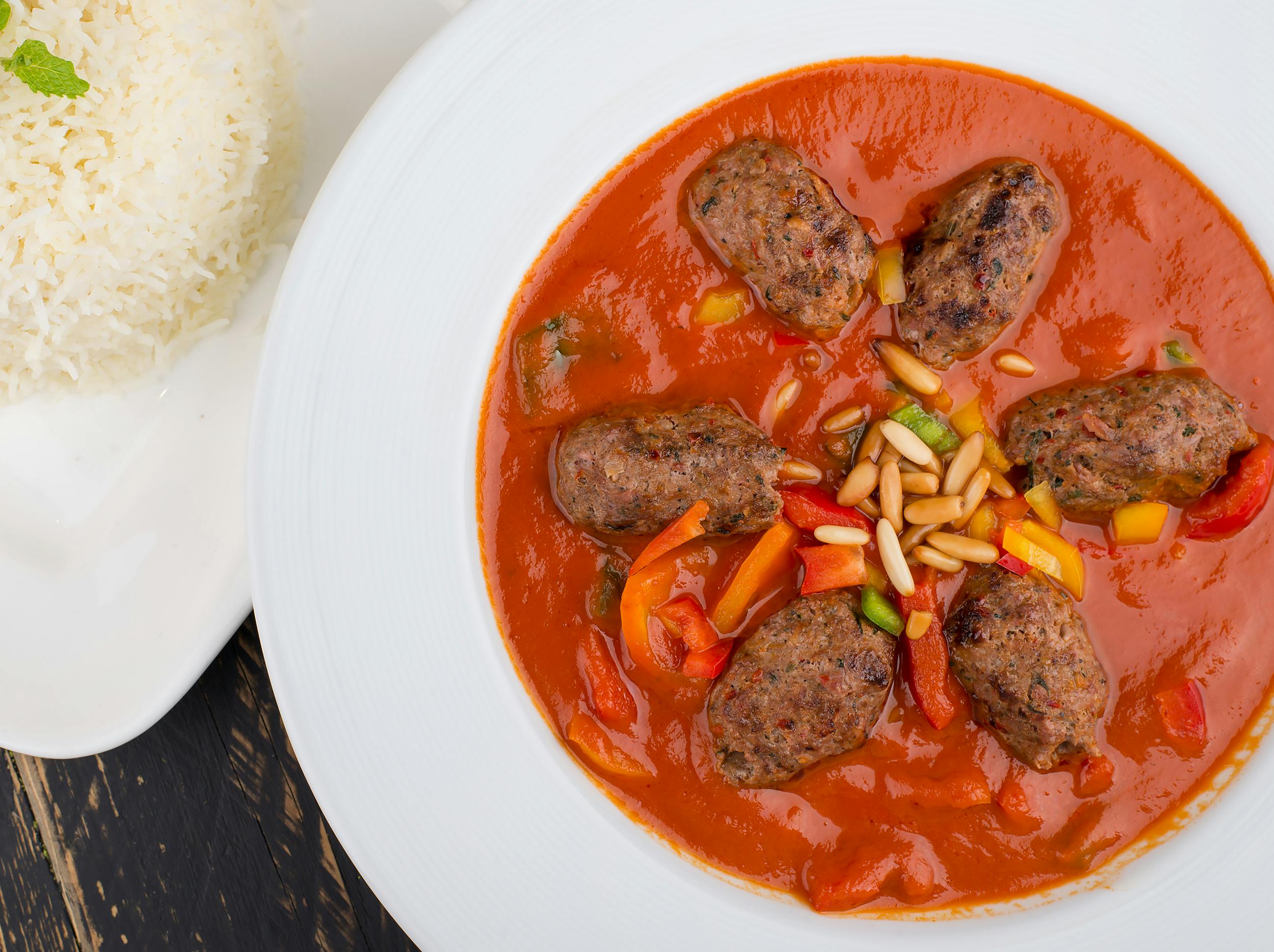
Photo: Shameel mukkath / Pexels
The diets react (see scores below)
Common Ingredients
- lamb
- onion
- parsley
- allspice
- cinnamon
- black pepper
- salt
Specific recipes may vary.
Incompatible with 4 of 11 diets
Diet Ratings
Kafta is an excellent keto dish. Ground lamb is rich in fat and protein with zero carbs. Onion and parsley contribute minimal net carbs in the small quantities used as seasonings/mix-ins. The spices (allspice, cinnamon, black pepper, salt) add negligible carbohydrates. A typical serving of kafta skewers or patties will contain well under 5g net carbs while delivering high fat and quality protein, fitting perfectly within ketogenic macros.
Kafta is a Levantine ground meat dish with lamb as its primary and defining ingredient. Lamb is an animal product (red meat), which is categorically excluded from a vegan diet. There is no ambiguity here — all remaining ingredients (onion, parsley, allspice, cinnamon, black pepper, salt) are plant-based, but the dish cannot be considered vegan in any form due to the lamb. A plant-based version could theoretically be made using lentils, mushrooms, or a meat substitute, but that would be a different dish entirely.
Kafta is largely paleo-friendly: ground lamb is an excellent unprocessed protein, onion and parsley are whole vegetables/herbs, and allspice, cinnamon, and black pepper are natural spices fully approved under paleo guidelines. The single disqualifying ingredient is salt (added/refined), which is explicitly excluded under strict paleo rules. Salt is the deciding factor that drops this from a full approval. Without salt, this dish would score a 9. Most practical paleo practitioners and ancestral health advocates tolerate small amounts of natural salt (sea salt, pink Himalayan), but strict Cordain-school paleo excludes added salt entirely, as Paleolithic humans did not have access to refined sodium chloride in meaningful quantities.
Many mainstream paleo practitioners and coaches (including Mark Sisson and Robb Wolf) permit moderate use of natural salts like sea salt or Himalayan pink salt, arguing the trace mineral content and ancestral availability of salt licks makes it acceptable. Under this interpretation, kafta would receive a full approval with a score of 9.
Kafta is a traditional Levantine dish made primarily from ground lamb, which classifies it as red meat. The Mediterranean diet restricts red meat to a few times per month, making lamb-based dishes like kafta an occasional indulgence rather than a regular meal. The accompanying ingredients — onion, parsley, and aromatic spices — are all Mediterranean-friendly, and the dish is minimally processed with no added sugars or refined grains. However, the dominant protein source (lamb) is high in saturated fat and falls in the 'avoid' category for frequent consumption. The score of 3 reflects that while the preparation is clean and traditional, the core ingredient conflicts with Mediterranean dietary principles when consumed regularly.
Some Mediterranean diet scholars, particularly those studying traditional Levantine and Eastern Mediterranean foodways, argue that small portions of lean ground lamb consumed occasionally are culturally embedded in the diet and acceptable within a broader plant-forward dietary pattern. The PREDIMED-style approach may permit such dishes monthly, especially when served alongside vegetables, legumes, or whole grains.
Kafta is built on a lamb base, which is an excellent carnivore protein, but the dish contains multiple plant-derived ingredients that disqualify it from the carnivore diet. Onion and parsley are vegetables, and allspice, cinnamon, and black pepper are plant-based spices — all of which are excluded under carnivore rules. The majority of the non-salt ingredients are plant-derived, making this dish incompatible in its traditional form. The lamb itself would score a 9-10, but the surrounding plant ingredients bring the overall dish to an avoid rating.
Kafta as described contains only whole, unprocessed ingredients: ground lamb (meat), onion and parsley (vegetables/herbs), allspice, cinnamon, and black pepper (spices), and salt — all explicitly permitted on the Whole30 program. There are no excluded ingredients whatsoever. This is a straightforward, whole-food dish that aligns perfectly with Whole30's core philosophy of eating unprocessed meat with vegetables, herbs, and spices.
Kafta contains onion as a primary ingredient, which is one of the highest-FODMAP foods tested by Monash University due to its high fructan content. Onion is high-FODMAP at any meaningful serving size and cannot be reduced to a safe threshold when incorporated into a mixed dish like kafta, where it is typically blended throughout the meat mixture. Lamb itself is low-FODMAP (plain protein), and the spices — allspice, cinnamon, black pepper, and salt — are all low-FODMAP at culinary quantities. Parsley is also low-FODMAP. However, onion is the disqualifying ingredient: it is a fructan-rich food that Monash rates as high-FODMAP even in small amounts (e.g., 1/2 cup chopped onion is definitively high-FODMAP, and even smaller amounts used in cooking carry meaningful fructan load). Since onion is structurally integrated into kafta rather than used as a garnish or topping that could be removed, the dish as traditionally prepared is not suitable for the elimination phase of a low-FODMAP diet.
Kafta is a spiced ground lamb dish that sits uneasily within DASH guidelines. Lamb is classified as red meat, which DASH explicitly limits due to its saturated fat content — ground lamb in particular tends to be higher in fat than lean poultry or fish. The addition of salt as a listed ingredient introduces sodium concern, though the amount varies by recipe. On the positive side, the dish contains beneficial aromatics (onion, parsley) and anti-inflammatory spices (allspice, cinnamon, black pepper) with no added sugars or processed ingredients, and it provides a meaningful protein source. DASH does not ban red meat outright but recommends limiting it, making occasional moderate portions of kafta acceptable rather than a staple. The saturated fat load from lamb is the primary disqualifier from a higher score.
NIH DASH guidelines categorize red meat as a food to limit due to saturated fat and recommend lean poultry and fish as preferred proteins. However, some updated clinical interpretations note that unprocessed lean red meat in controlled portions (e.g., extra-lean ground lamb, trimmed of visible fat) may be compatible with a heart-healthy diet, especially compared to processed meats — making kafta in moderate portions a more acceptable choice than a strict reading of DASH would suggest.
Kafta is a ground lamb dish seasoned with onion, parsley, and warm spices. Its primary Zone challenge is the protein source: ground lamb is not a lean protein by Zone standards. Lamb typically carries significant saturated fat content (depending on cut and grind, ground lamb can be 15-20% fat by weight), which pushes the fat ratio toward saturated rather than the preferred monounsaturated fats. However, the Zone Diet is ratio-based, not exclusion-based, and lamb can fit into Zone blocks if portioned carefully — roughly 1 oz of ground lamb per protein block to hit the ~7g protein target while accounting for the accompanying fat load. The spices (allspice, cinnamon, black pepper) are anti-inflammatory polyphenol sources, which aligns well with Sears' later anti-inflammatory emphasis. Onion and parsley are favorable low-glycemic carb contributors. The core issue is that kafta alone provides protein + fat blocks but no carbohydrate blocks, so it must be paired with favorable low-GI carbs (e.g., a large vegetable salad, grilled peppers, zucchini) to complete a Zone meal. Within a well-constructed Zone plate, kafta can serve as the protein-fat anchor, but the saturated fat content of lamb warrants the 'caution' rating rather than an outright approval.
Dr. Sears' earlier Zone books (Enter the Zone, 1995) placed a stronger emphasis on limiting saturated fat and categorized fatty red meats as unfavorable proteins. However, in his later work (The OmegaRx Zone, The Anti-Inflammation Zone), Sears softened his stance somewhat, acknowledging that not all saturated fat is equally harmful and that the overall inflammatory balance of a meal matters more than isolating one macronutrient. Some Zone practitioners therefore treat lean-ish lamb preparations as acceptable Zone proteins, especially when the meal is balanced with abundant low-GI vegetables and omega-3-rich additions.
Kafta is a spiced ground lamb dish with a mixed anti-inflammatory profile. On the positive side, the spice blend — allspice, cinnamon, and black pepper — carries meaningful anti-inflammatory polyphenols. Parsley is a notable source of flavonoids (apigenin, luteolin) and vitamin C. Onion provides quercetin, a well-researched anti-inflammatory compound. These ingredients collectively support an anti-inflammatory signal. However, lamb is a red meat, which anti-inflammatory dietary frameworks generally place in the 'limit' category due to its saturated fat content and the arachidonic acid pathway. Ground lamb, depending on cut and fat content, can be relatively high in saturated fat. The preparation method also matters — grilling is neutral to positive, but charring can generate pro-inflammatory advanced glycation end-products (AGEs) and heterocyclic amines. Within a predominantly plant-rich, anti-inflammatory eating pattern, kafta eaten occasionally is acceptable, but it should not be a dietary staple. The dish's redeeming qualities — beneficial spices, no processed additives, no refined carbohydrates, clean whole-food ingredient list — keep it out of the 'avoid' category.
Some anti-inflammatory practitioners, including those aligned with Mediterranean diet research (which the Levantine diet closely resembles), would rate lamb more permissively, noting that grass-fed lamb has a better omega-6 to omega-3 ratio than grain-fed beef and that moderate red meat consumption within an otherwise plant-forward diet does not consistently raise inflammatory markers in clinical studies. Conversely, stricter anti-inflammatory and autoimmune protocol frameworks (AIP, Dr. Wahls Protocol) would rate this more harshly, flagging lamb's arachidonic acid content and saturated fat as meaningful drivers of inflammatory load.
Kafta is a ground lamb dish seasoned with onion, parsley, and warm spices. Ground lamb is a meaningful protein source — a standard 150g serving delivers roughly 25–30g of protein — which satisfies the GLP-1 priority of 15–30g per meal. However, ground lamb is significantly higher in saturated fat than preferred GLP-1 proteins (typically 20–25g total fat per 150g serving, with 8–12g saturated), which can worsen nausea, bloating, and reflux by slowing gastric emptying further on top of the medication's own effect. The dish contains no meaningful fiber (parsley and onion contribute negligible amounts), so it should be paired with a high-fiber side such as tabbouleh, lentils, or roasted vegetables to meet daily targets. The spice profile — allspice, cinnamon, black pepper — is mild and unlikely to trigger GI distress for most patients. The dish is minimally processed and free of refined carbohydrates, fried components, or added sugars, which are positives. Portion size is the key lever here: a small serving (100–120g) can fit into a GLP-1 meal plan; a full traditional portion compounds the saturated fat load. Kafta is not an ideal GLP-1 protein source but is meaningfully better than fried or processed alternatives.
Some GLP-1-focused dietitians accept lamb occasionally on the grounds that its protein density and whole-food profile outweigh the fat concern, particularly when portion-controlled and grilled rather than pan-fried. Others caution against all fatty red meats categorically due to the additive effect of saturated fat on delayed gastric emptying in GLP-1 patients, recommending substitution with lean ground turkey or chicken kafta instead.
*See how scores were generated at our methodology page.
Nutritional profile
Six traits that cut across every diet.
Fiber & Plants
How much whole-plant food and fiber it delivers.
Healthy Fats
The quality of its fats (unsaturated, omega-3).
Whole / Unprocessed
How close it is to its natural, unprocessed form.
Gut Gentle
How easy it is on digestion (low FODMAP, few irritants).
Low Glycemic
How little it spikes your blood sugar.
Protein Density
How much protein it packs per calorie.
Controversy Index
Higher controversy = more disagreement between diets.
Diet-Specific Tips
 Keto — 9/10
View tips
- Ground lamb is a high-fat, zero-carb protein source ideal for keto
- Onion used in small quantities as flavoring contributes minimal net carbs
- Parsley is a leafy green with negligible carb impact at culinary quantities
- Spices used are trace amounts with near-zero net carb contribution
- No grains, breading, or added sugars in the traditional recipe
- Whole, minimally processed ingredients align with keto food quality standards
 Paleo — 6/10
View tips
- Ground lamb is a high-quality, unprocessed paleo protein
- Onion and parsley are whole, paleo-approved vegetables/herbs
- Allspice, cinnamon, and black pepper are natural spices — fully paleo
- Salt is explicitly excluded under strict paleo rules as an added/refined ingredient
- No grains, legumes, dairy, or seed oils present
- Dish is otherwise minimally processed and ancestrally aligned
 Whole30 — 10/10
View tips
- Lamb is a fully compliant Whole30 protein
- Onion and parsley are compliant vegetables/herbs
- Allspice, cinnamon, and black pepper are compliant spices
- Salt is explicitly allowed, including iodized varieties
- No added sugars, grains, legumes, dairy, or other excluded ingredients
- Simple, whole-food preparation with no processed components
 DASH — 4/10
View tips
- Lamb is a red meat — explicitly limited on DASH due to saturated fat
- Ground lamb typically has higher fat content than lean poultry or fish
- Salt is a listed ingredient, adding to sodium load (amount is recipe-dependent)
- No processed ingredients, added sugars, or tropical oils
- Parsley and onion contribute micronutrients including potassium and vitamin C
- Spices (allspice, cinnamon, black pepper) are DASH-neutral and anti-inflammatory
- Occasional moderate portions are more acceptable than regular consumption
- Choosing leaner lamb or substituting with ground turkey would improve DASH compatibility
 Zone — 5/10
View tips
- Ground lamb is a higher-saturated-fat protein, not ideal by Zone lean-protein standards
- Lamb can still be portioned into Zone protein blocks (~1 oz per block) with careful measurement
- Onion and parsley contribute favorable low-glycemic carb content
- Warm spices (allspice, cinnamon) provide anti-inflammatory polyphenols aligned with Sears' later work
- Kafta is protein+fat only — must be paired with low-GI vegetables to complete Zone macro ratio
- No high-glycemic ingredients present; the concern is fat quality, not carbohydrate load
- Sears' later anti-inflammatory writings are somewhat more permissive toward saturated fat in context
 Anti-Inflammatory — 5/10
View tips
- Lamb is a red meat — categorized as 'limit' in anti-inflammatory frameworks due to saturated fat and arachidonic acid content
- Cinnamon and allspice contain polyphenols with documented anti-inflammatory activity
- Parsley is rich in anti-inflammatory flavonoids (apigenin, luteolin) and vitamin C
- Onion provides quercetin, a well-studied anti-inflammatory flavonoid
- No processed ingredients, refined carbohydrates, seed oils, or added sugars — clean whole-food profile
- Cooking method (grilling/charring) can generate AGEs and heterocyclic amines, adding pro-inflammatory risk
- Grass-fed lamb has a more favorable omega-3 profile than grain-fed beef, a partial mitigating factor
 GLP-1 Friendly — 5/10
View tips
- High saturated fat content in ground lamb may worsen GLP-1 GI side effects
- Solid protein yield (~25–30g per 150g serving) meets per-meal protein target
- No meaningful fiber — requires high-fiber accompaniments to meet daily targets
- Mild spice profile unlikely to cause reflux or nausea
- Minimally processed, no refined carbs or added sugars
- Portion-sensitive: small serving is acceptable, full traditional portion is problematic
- Grilled preparation preferred; pan-fried or charred versions add fat or digestive irritants