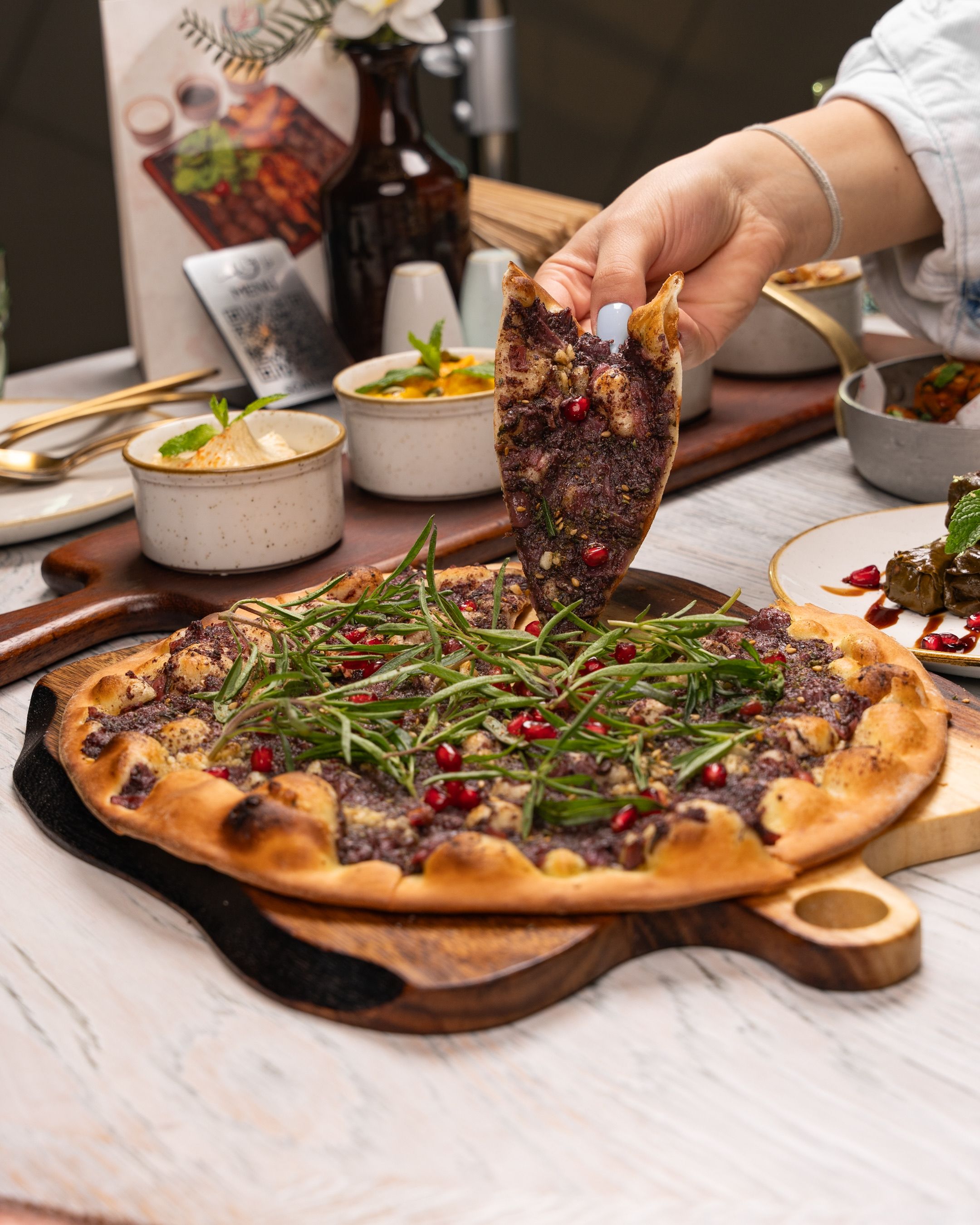
Photo: Ali Dashti / Pexels
The diets react (see scores below)
Common Ingredients
- chicken
- taboon bread
- sumac
- onion
- olive oil
- pine nuts
- allspice
- cardamom
Specific recipes may vary.
Incompatible with 6 of 11 diets
Diet Ratings
Musakhan is built around taboon bread, a thick flatbread that serves as the base of the dish. This bread is a high-carb grain product that alone disqualifies the dish from keto compatibility. A single serving of musakhan can easily contain 40-60g of net carbs from the bread alone, far exceeding the daily keto limit. While the remaining ingredients — chicken, sumac, olive oil, onion, pine nuts, allspice, and cardamom — are largely keto-friendly or low-carb in typical quantities, the bread is structural to the dish and cannot simply be omitted without fundamentally changing the meal. Onions in large amounts also add moderate carbs. The dish as traditionally prepared is incompatible with ketosis.
Musakhan is a traditional Levantine dish centered on roasted or braised chicken as its primary protein, making it fundamentally incompatible with a vegan diet. Chicken is an animal product explicitly excluded under all vegan frameworks. While several of the accompanying ingredients — sumac, onion, olive oil, pine nuts, allspice, cardamom, and taboon bread — are plant-based, the dish cannot be considered vegan in its standard form. A plant-based version substituting the chicken with, for example, roasted cauliflower or chickpeas could replicate the flavor profile, but that would be a different dish entirely.
Musakhan is built around taboon bread, a wheat-based flatbread that is central to the dish — not a minor garnish. Grains are explicitly excluded from the paleo diet with clear consensus across all major paleo authorities. The remaining ingredients (chicken, sumac, onion, olive oil, pine nuts, allspice, cardamom) are all paleo-compliant, but the dish cannot be meaningfully separated from its bread base. As traditionally prepared and served, Musakhan is not paleo-compatible.
Musakhan is a traditional Levantine dish built around several Mediterranean-friendly components: generous olive oil, onions, sumac (a polyphenol-rich spice), and pine nuts — all staples of the Mediterranean diet. Chicken as the primary protein is acceptable in moderation (poultry falls under the 'a few times per week' category). The main concern is the taboon bread, which is a refined flatbread similar to pita, representing a refined grain rather than a whole grain. The dish is otherwise quite wholesome — it is not processed, uses no added sugars, and olive oil is central to the preparation. Overall it is a nutritious, traditional dish that fits the Mediterranean pattern with the caveat of the refined bread base.
Some Mediterranean diet authorities, particularly those referencing traditional Levantine and Eastern Mediterranean culinary practices, would view taboon bread as an acceptable whole-food staple with a lower glycemic impact than modern refined bread, and would rate this dish more favorably. The abundant olive oil and anti-inflammatory spices (sumac, allspice) could push this toward an 'approve' rating in those interpretations.
Musakhan is a traditional Levantine dish that is fundamentally incompatible with the carnivore diet. While it does contain chicken as the primary protein, the dish is built around taboon bread (a grain-based flatbread), sumac (a plant-based spice), onions (a vegetable), olive oil (a plant-derived oil), pine nuts (seeds/nuts), allspice, and cardamom (plant-based spices). The majority of ingredients are explicitly excluded from the carnivore diet. Taboon bread alone is a disqualifying grain product, and the combination of plant oils, vegetables, nuts, and spices makes this dish entirely incompatible. Only the chicken itself would be carnivore-approved — the rest of the dish must be avoided entirely.
Musakhan is a traditional Levantine dish where chicken is served on top of taboon bread — a flatbread that is central and integral to the dish, not a side element. Taboon bread is a wheat-based flatbread, and all grains (including wheat) are excluded on Whole30. The bread is not incidental; it is a defining structural component of the dish, used to soak up the sumac-spiced onion and olive oil mixture. All other ingredients — chicken, sumac, onion, olive oil, pine nuts, allspice, and cardamom — are fully Whole30-compliant, but the taboon bread alone disqualifies the dish as traditionally prepared. There is no compliant workaround that preserves the nature of Musakhan, as removing the bread fundamentally changes the dish into something else entirely (e.g., a sumac chicken bowl).
Musakhan contains two major high-FODMAP ingredients that make it unsuitable during the elimination phase. First, taboon bread is a traditional wheat-based flatbread, and wheat contains significant fructans — a key FODMAP to eliminate. Second, onion is one of the highest-FODMAP foods tested by Monash University, rich in fructans, and is a defining, structurally central ingredient in Musakhan (typically used in large quantities cooked down in olive oil). These two ingredients alone render this dish a clear 'avoid.' Sumac is generally considered low-FODMAP. Olive oil is low-FODMAP. Pine nuts are low-FODMAP at a standard serving (~1 tablespoon). Allspice and cardamom are used in small spice quantities and are low-FODMAP. Chicken is low-FODMAP. However, the combination of wheat-based bread and a large quantity of onion — both high-fructan foods — makes this dish incompatible with the elimination phase of the low-FODMAP diet regardless of portion size.
Musakhan contains several DASH-friendly components: chicken (lean protein), onions and sumac (vegetables/spices rich in antioxidants), olive oil (heart-healthy unsaturated fat emphasized in DASH), and pine nuts (healthy fats and minerals). However, two factors push it into 'caution' territory. First, the amount of olive oil used in traditional Musakhan is substantial — onions are typically slow-cooked in generous quantities of olive oil — which, while heart-healthy in type, adds significant caloric density and total fat beyond DASH portion guidance. Second, taboon bread is a white/refined flatbread, not a whole grain, which conflicts with DASH's emphasis on whole grains. The dish has no inherently high-sodium or high-saturated-fat ingredients, which is a genuine strength, and the spice profile (sumac, allspice, cardamom) adds flavor without sodium. With portion control, use of whole-grain flatbread substitutes, and moderated oil, this dish can align more closely with DASH principles.
Some DASH-oriented dietitians following updated Mediterranean-DASH hybrid approaches (MIND diet, etc.) would view Musakhan more favorably, noting that olive oil is explicitly heart-protective and its quantity in context of an otherwise low-sodium, vegetable-rich dish may be acceptable. Stricter NIH DASH guidelines, however, emphasize total fat limitation and whole grains, making the traditional preparation a moderate rather than core DASH meal.
Musakhan is a traditional Levantine dish built around chicken (excellent Zone protein), olive oil (ideal monounsaturated fat), and sumac-caramelized onions (low-glycemic, polyphenol-rich), all of which align well with Zone principles. However, the dish is anchored to taboon bread — a flatbread similar to pita — which is a refined, higher-glycemic carbohydrate classified as 'unfavorable' in Zone terminology. In traditional preparation, the bread is heavily soaked in olive oil and used as the primary base, meaning the carbohydrate load from bread dominates rather than low-glycemic vegetables. The overall macro ratio skews too carbohydrate-heavy and the fat content from oil-saturated bread is high. With careful modification — reducing bread to a minimal portion (1 small piece as a single carb block), ensuring the chicken portion is adequate (~3 oz), using measured olive oil, and adding a side salad of Zone-favorable vegetables — Musakhan can be adapted. Pine nuts add some additional fat blocks that need to be counted. As traditionally served, the dish is difficult to portion into clean Zone blocks without significant modification, placing it firmly in caution territory.
Some Zone practitioners may rate this more favorably, noting that chicken and olive oil are ideal Zone foods and that onions and sumac are anti-inflammatory, polyphenol-rich ingredients Dr. Sears specifically champions. If the taboon bread is treated as a controlled carb block (similar to how Sears allows limited whole grain servings), and the dish is not consumed in the oversized traditional portions, it can be argued this approaches a reasonable Zone meal with moderate portioning. The anti-inflammatory spice profile (sumac, allspice, cardamom) and quality of fats also support a more favorable reading in the context of Sears' later anti-inflammatory Zone writings.
Musakhan is a traditional Palestinian dish with several genuinely anti-inflammatory components alongside some that temper enthusiasm. On the positive side: extra virgin olive oil is a cornerstone of anti-inflammatory eating, providing oleocanthal and monounsaturated fats; sumac is rich in polyphenols, anthocyanins, and tannins with documented antioxidant and anti-inflammatory properties; onions supply quercetin and other flavonoids; pine nuts offer vitamin E and some healthy fats; allspice and cardamom are aromatic spices with antioxidant profiles. Chicken (presumably roasted or braised) is a lean protein that falls squarely in the 'moderate' category of anti-inflammatory frameworks. The significant limiting factor is taboon bread — a flatbread made from refined white flour, which is a refined carbohydrate with a higher glycemic index that can modestly promote inflammatory signaling. If made with whole wheat taboon, the profile improves considerably. The dish is also typically quite generous with olive oil, which is a net positive. Overall, Musakhan is a Mediterranean-style dish with a favorable overall profile undermined primarily by the refined bread base, landing it in 'caution' territory — highly acceptable for occasional consumption and meaningfully better than most Western mains, but not quite an 'approve' due to the refined carbohydrate component.
Some anti-inflammatory practitioners, particularly those following stricter protocols like the Autoimmune Protocol (AIP), would push this lower due to the refined wheat bread (gluten and refined carbs) and potentially flag nightshade-adjacent spice blends. Conversely, Mediterranean diet researchers (including those at Harvard T.H. Chan School of Public Health) might rate this more favorably, noting that the olive oil, sumac, and aromatic spices in a traditional preparation provide a strong polyphenol profile that likely offsets the modest glycemic impact of the bread, particularly in a mixed meal context.
Musakhan is a Levantine dish built around roasted or braised chicken — a high-quality lean protein — layered over taboon bread and topped with sumac-spiced caramelized onions, olive oil, and pine nuts. The chicken component is excellent for GLP-1 patients: high protein, easy to digest, and nutrient-dense. Sumac, allspice, and cardamom are mild spices unlikely to worsen reflux or nausea. However, the dish has two meaningful drawbacks. First, olive oil is used generously — traditional Musakhan is notably oil-rich, with onions slow-cooked in substantial amounts of olive oil and additional oil soaked into the bread. While olive oil provides beneficial unsaturated fats, the high total fat per serving can worsen GLP-1-related nausea, bloating, and delayed gastric emptying. Pine nuts add further fat load. Second, taboon bread is a refined flatbread with low fiber and minimal protein contribution, representing lower nutrient density per calorie. Together, the fat content and refined bread base push this into caution territory. A modified version — using less olive oil, requesting extra chicken, eating a smaller bread portion, and treating this as a small meal — can make it workable. Rated as a standard restaurant or home serving.
Some GLP-1-focused dietitians would rate this more favorably, noting that the olive oil fat is predominantly monounsaturated and the chicken provides a strong protein anchor — arguing that fat source quality matters more than fat quantity for GLP-1 tolerability. Others are stricter, flagging that any high-fat meal significantly worsens nausea and slows gastric emptying beyond what GLP-1 already induces, regardless of fat quality, and would recommend this only in heavily modified portions.
*See how scores were generated at our methodology page.
Nutritional profile
Six traits that cut across every diet.
Fiber & Plants
How much whole-plant food and fiber it delivers.
Healthy Fats
The quality of its fats (unsaturated, omega-3).
Whole / Unprocessed
How close it is to its natural, unprocessed form.
Gut Gentle
How easy it is on digestion (low FODMAP, few irritants).
Low Glycemic
How little it spikes your blood sugar.
Protein Density
How much protein it packs per calorie.
Controversy Index
Higher controversy = more disagreement between diets.
Diet-Specific Tips
 Mediterranean — 6/10
View tips
- Chicken is an acceptable moderate-consumption protein (poultry tier)
- Olive oil is central and abundant — strongly aligned with Mediterranean principles
- Sumac and pine nuts are polyphenol-rich, diet-approved ingredients
- Taboon bread is a refined grain, reducing the score from the 'approve' range
- No processed ingredients, added sugars, or red meat
- Traditional Levantine dish with close cultural ties to Mediterranean dietary patterns
 DASH — 5/10
View tips
- Chicken is a DASH-approved lean protein source
- Olive oil is heart-healthy but used in large quantities in traditional preparation, exceeding DASH fat portion guidance
- Taboon bread is a refined grain, not a whole grain — conflicts with DASH whole grain emphasis
- Onions and sumac contribute antioxidants, potassium, and flavor without added sodium
- Pine nuts provide magnesium and healthy unsaturated fats, consistent with DASH nut servings
- No high-sodium ingredients, processed additives, or saturated fats — a notable DASH strength
- Spice-forward flavor profile reduces need for added salt, aligning well with DASH sodium goals
- Portion control is key — large servings of bread and oil-soaked onions can undermine DASH compliance
 Zone — 5/10
View tips
- Chicken is a lean, ideal Zone protein source
- Olive oil is the gold-standard Zone monounsaturated fat
- Taboon bread is a refined, higher-glycemic 'unfavorable' carbohydrate in Zone classification
- Traditional preparation uses bread as the dominant component, skewing carb ratio too high
- Caramelized onions are low-glycemic and polyphenol-rich — Zone favorable
- Sumac is a high-polyphenol spice aligned with Sears' anti-inflammatory focus
- Pine nuts add additional fat blocks that must be accounted for
- Dish can be adapted for Zone compliance by minimizing bread and controlling oil quantity
 Anti-Inflammatory — 6/10
View tips
- Extra virgin olive oil: strongly anti-inflammatory (oleocanthal, monounsaturated fats)
- Sumac: high in polyphenols, anthocyanins, and gallic acid — anti-inflammatory
- Onions: quercetin and flavonoids support anti-inflammatory response
- Chicken: lean protein, 'moderate' category in anti-inflammatory frameworks
- Pine nuts: vitamin E, healthy fats — mildly anti-inflammatory
- Allspice and cardamom: antioxidant spice compounds
- Taboon bread (refined wheat): refined carbohydrate, higher glycemic index — pro-inflammatory concern
- Whole wheat taboon would significantly improve the anti-inflammatory profile
 GLP-1 Friendly — 5/10
View tips
- Strong lean protein source from chicken — supports GLP-1 muscle-preservation priority
- Traditional preparation is high in olive oil — elevated total fat per serving likely to worsen nausea and bloating
- Taboon bread is a refined grain with low fiber and low protein density — reduces overall nutrient quality per calorie
- Pine nuts add additional fat load — small portion sensitivity required
- Sumac and mild spices are well-tolerated — no reflux or GI concern
- No added sugar, no fried components, no carbonation — avoids major GLP-1 red flags
- Portion control critical — smaller serving with emphasis on chicken over bread improves rating significantly