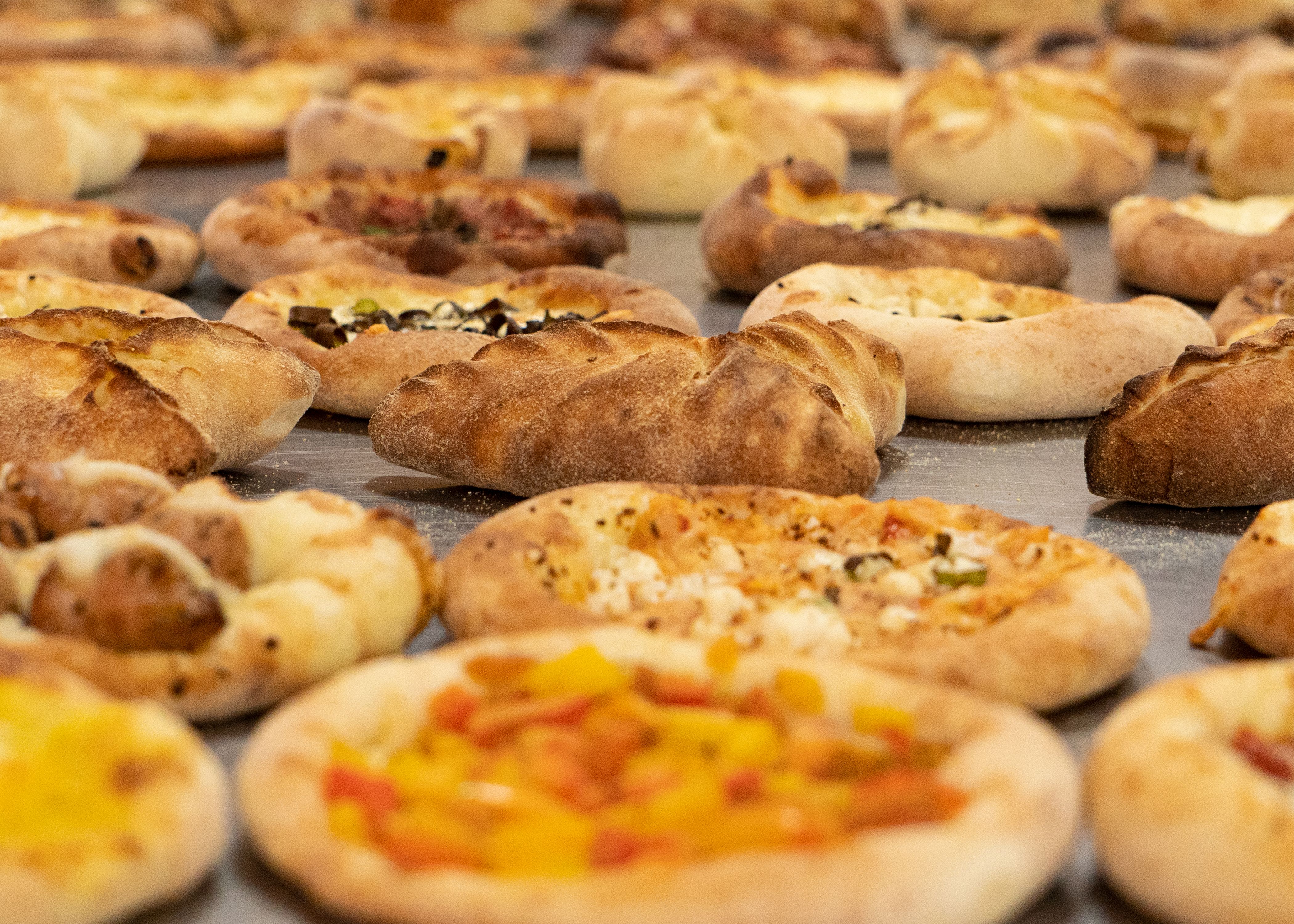
Photo: Mario Schafer / Pexels
The diets react (see scores below)
Common Ingredients
- flour
- lamb
- onion
- tomato
- pine nuts
- pomegranate molasses
- allspice
- yogurt
Specific recipes may vary.
Incompatible with 7 of 11 diets
Diet Ratings
Sfiha is a Levantine open-faced meat pie built on a wheat flour dough base, which immediately disqualifies it from a ketogenic diet. Flour is a high-carb grain product — a single sfiha provides roughly 20-30g of net carbs from the dough alone, which can exhaust or exceed the entire daily keto carb budget. Compounding this, pomegranate molasses is a concentrated source of sugar (high glycemic), pushing the carb count even higher. While the lamb filling with onion, tomato, pine nuts, and spices would otherwise be keto-friendly, the flour crust and pomegranate molasses make this dish fundamentally incompatible with ketosis in its traditional form.
Sfiha contains multiple animal-derived ingredients that are strictly excluded from a vegan diet. Lamb is a direct animal flesh product, and yogurt is a dairy derivative made from animal milk. Both are unambiguous disqualifiers under vegan dietary rules. The remaining ingredients — flour, onion, tomato, pine nuts, pomegranate molasses, and allspice — are all plant-based, but the presence of lamb and yogurt makes this dish entirely incompatible with veganism.
Sfiha is a Levantine meat pie built on a wheat flour dough base, which immediately disqualifies it under strict paleo rules — grains are a core exclusion. Beyond the dough, yogurt (dairy) is another non-paleo ingredient. The remaining components — lamb, onion, tomato, pine nuts, pomegranate molasses, and allspice — are largely paleo-compatible, with pomegranate molasses sitting in a caution zone due to its concentrated sugar content. However, the two foundational non-paleo ingredients (wheat flour and dairy) make this dish clearly incompatible with a paleo diet. No meaningful modification short of a full reconstruction (e.g., replacing the dough with a cassava or almond flour base and omitting yogurt) would render it paleo-compliant.
Sfiha is a Levantine open-faced meat pie built on a refined white flour dough base, filled primarily with lamb — a red meat that Mediterranean diet guidelines restrict to a few times per month. The combination of refined flour (a processed grain) and red meat as the central components places this dish in tension with core Mediterranean principles. While the topping includes genuinely Mediterranean-friendly ingredients (tomato, onion, pine nuts, pomegranate molasses, yogurt), these are secondary to the problematic base and protein. The dish is not inherently egregious — lamb is used in small amounts relative to the dough, and the accompaniments are wholesome — but as a snack food centered on refined carbs and red meat, it contradicts the diet's emphasis on whole grains, plant-forward eating, and minimal red meat consumption.
Some Mediterranean diet scholars note that Levantine culinary traditions are themselves part of the Mediterranean basin, and small portions of spiced lamb with abundant vegetables and yogurt reflect authentic regional eating patterns. Traditional sfiha portions are modest, and pomegranate molasses, pine nuts, and tomatoes provide genuine nutritional value; eaten occasionally and in small quantities, this dish could be viewed as culturally compatible rather than a dietary violation.
Sfiha is a Levantine meat pie that is fundamentally incompatible with the carnivore diet. While it contains lamb as its primary protein, the dish is built around a flour-based dough (a grain product), and includes multiple plant-based ingredients: onion, tomato, pine nuts, pomegranate molasses, allspice, and yogurt. The flour dough alone disqualifies it entirely — grains are among the most strictly excluded foods on carnivore. Pomegranate molasses is a concentrated plant sugar, pine nuts are seeds, tomatoes and onions are vegetables, and allspice is a plant spice. Even stripping out the lamb and yogurt, the remaining ingredients form a comprehensive list of carnivore exclusions. This is essentially a plant-heavy baked good with a small amount of meat filling.
Sfiha (Lebanese meat pies) contains multiple Whole30-excluded ingredients. Flour (a grain) is the primary structural component of the dough/crust, making this a baked good built on an excluded ingredient. Additionally, yogurt (dairy) is explicitly excluded on Whole30. Even if those two ingredients were removed, sfiha is fundamentally a meat pie — a baked good that falls squarely under the Whole30 rule against recreating bread, wraps, and similar grain-based formats. The remaining ingredients (lamb, onion, tomato, pine nuts, allspice) are compliant, and pomegranate molasses would need label scrutiny for added sugar, but the disqualifying factors of flour and yogurt make this dish clearly non-compliant.
Sfiha contains multiple high-FODMAP ingredients that make it unsuitable during the elimination phase. Wheat flour is high in fructans at any standard serving size for a bread/dough product. Onion is one of the highest-FODMAP foods known, rich in fructans even in small quantities. Yogurt contains lactose and is high-FODMAP at typical serving portions used in a topping or dough component. Pomegranate molasses is concentrated and likely to contribute excess fructose. Pine nuts become high-FODMAP at portions above about 1 tablespoon (14g). Tomato is generally low-FODMAP at small serves but the combination of all other high-FODMAP ingredients is the overriding concern. Lamb and allspice are low-FODMAP. There is no realistic modification of this traditional recipe that would render it low-FODMAP without fundamentally changing the dish — the wheat dough base and onion filling are core components.
Sfiha is a Levantine meat pie with a mixed DASH profile. On the positive side, it contains several DASH-friendly ingredients: tomato and onion (vegetables), pomegranate molasses (antioxidants, potassium), pine nuts (healthy unsaturated fats, magnesium), and yogurt (low-fat dairy if plain/low-fat). However, the primary protein is lamb, which DASH guidelines classify as red meat — a category to be limited due to saturated fat content. The refined white flour base also lacks the fiber benefits of whole grains that DASH emphasizes. Sodium content depends heavily on preparation (added salt in dough and filling), and portion size as a snack matters significantly. The overall dish is not a core DASH food but is not categorically excluded — consumed occasionally in modest portions with lean lamb and whole wheat dough substitutions, it can fit within DASH principles.
NIH DASH guidelines recommend limiting red meat like lamb due to saturated fat concerns. However, updated clinical interpretations note that lamb in small portions within a predominantly plant-rich dish (as in sfiha, where lamb is a topping rather than a bulk protein) may be acceptable, especially given the beneficial accompaniments like tomatoes, onions, and pomegranate molasses rich in antioxidants and potassium.
Sfiha is a Levantine open-faced meat pie that presents several Zone Diet challenges. The white flour dough base is a high-glycemic, unfavorable carbohydrate in Zone terminology — it lacks fiber and spikes blood sugar rapidly. Lamb is a moderate-fat protein; while it provides complete protein, it carries more saturated fat than ideal Zone proteins like skinless chicken or fish, making it harder to hit the 30% protein without overshooting fat calories. On the positive side, the filling ingredients are largely Zone-friendly: onion and tomato are low-glycemic vegetables, pine nuts contribute acceptable monounsaturated fat, pomegranate molasses adds polyphenols (though it's sugar-concentrated), allspice is fine, and yogurt provides a lean protein boost. The dish is a mixed picture — a Zone practitioner could eat one small sfiha as part of a carefully balanced snack by treating the dough as the carb block, the lamb-yogurt as the protein block, and the pine nuts as the fat block, but the flour base and fatty lamb make accurate block-balancing difficult. The pomegranate molasses, while polyphenol-rich, adds concentrated sugar that pushes the carb block toward unfavorable territory. As a snack-sized portion, one piece could be managed, but the macro ratios are unlikely to hit 40/30/30 without significant modification.
Some Zone practitioners following Sears' later anti-inflammatory writing (Toxic Fat, The Zone Diet) might view the pomegranate molasses favorably as a polyphenol source and note that small amounts of saturated fat from lamb are acceptable in context. A strict original Zone adherent (Enter the Zone) would more firmly flag both the white flour and fatty lamb as unfavorable, potentially pushing the score lower toward 3.
Sfiha is a Levantine open-faced meat pie with a mixed anti-inflammatory profile. On the positive side, tomatoes and onions provide lycopene and quercetin (anti-inflammatory polyphenols), pomegranate molasses is rich in ellagic acid and antioxidants, pine nuts offer some omega-3s (though mainly omega-6) and anti-inflammatory monounsaturated fats, allspice contributes eugenol (a recognized anti-inflammatory compound), and yogurt provides probiotics that support gut health and may reduce systemic inflammation. The primary concern is lamb, a red meat with relatively high saturated fat content and arachidonic acid, which anti-inflammatory frameworks consistently recommend limiting rather than emphasizing. The white flour base is a refined carbohydrate contributing to glycemic load with minimal fiber or nutritional benefit. These two components — refined grain crust and red meat filling — are the main drags on the score. The dish is not aggressively pro-inflammatory (no seed oils, trans fats, or added sugars), and the spice and vegetable components partially offset concerns, but the combination of red meat and refined flour keeps this firmly in the 'caution' zone. Occasional consumption is acceptable within an anti-inflammatory lifestyle; it would benefit from substituting whole-grain dough and reducing portion size.
Some anti-inflammatory nutritionists, particularly those influenced by the Mediterranean diet framework, may view lamb more favorably in traditional contexts like Levantine cuisine — it is grass-fed in many regions of origin, offering a more favorable omega-3 to omega-6 ratio than grain-fed beef. Dr. Weil's pyramid does permit occasional lean red meat. However, stricter anti-inflammatory protocols and the IF Rating system would score lamb-based dishes more cautiously given saturated fat content and links between red meat consumption and elevated CRP.
Sfiha is a Levantine open-faced meat pie made with a refined flour dough base topped with spiced ground lamb, onion, tomato, pine nuts, and pomegranate molasses, typically served with yogurt. While it offers a moderate protein contribution from lamb and some beneficial ingredients (tomatoes, onion, yogurt), several factors make it a poor fit for GLP-1 patients as a regular snack. The refined flour dough base is a low-fiber, low-nutrient-density carbohydrate that displaces more nutritious options in a reduced-appetite context. Lamb is a fatty red meat — even lean ground lamb carries notable saturated fat, which can worsen GLP-1 side effects like nausea, bloating, and reflux due to slowed gastric emptying. Pine nuts add additional fat load per serving. The pomegranate molasses contributes concentrated sugar with minimal fiber benefit. The yogurt component is a positive — it adds protein and is easy to digest — but it doesn't offset the other drawbacks. As a snack, portion size is small, which partially mitigates concerns, but the fat-to-protein ratio and refined carb base make it a suboptimal choice compared to higher-protein, lower-fat snack options. Occasional consumption in a single small piece is acceptable; regular snacking on sfiha is not recommended.
Some GLP-1-focused dietitians may view sfiha more favorably in the context of cultural dietary adherence, arguing that a small piece provides meaningful protein and that the tomato and onion base adds micronutrients. However, most obesity medicine RDs would flag the saturated fat from lamb and the refined dough as concerns given the heightened GI sensitivity and caloric efficiency demands of GLP-1 therapy.
*See how scores were generated at our methodology page.
Nutritional profile
Six traits that cut across every diet.
Fiber & Plants
How much whole-plant food and fiber it delivers.
Healthy Fats
The quality of its fats (unsaturated, omega-3).
Whole / Unprocessed
How close it is to its natural, unprocessed form.
Gut Gentle
How easy it is on digestion (low FODMAP, few irritants).
Low Glycemic
How little it spikes your blood sugar.
Protein Density
How much protein it packs per calorie.
Controversy Index
Higher controversy = more disagreement between diets.
Diet-Specific Tips
 DASH — 5/10
View tips
- Lamb is a red meat — DASH recommends limiting red meat due to saturated fat
- Refined flour base is not a whole grain — lower fiber than DASH-preferred grains
- Tomato and onion are DASH-approved vegetables contributing potassium and fiber
- Pomegranate molasses provides antioxidants and potassium but also added sugar
- Pine nuts offer heart-healthy unsaturated fats and magnesium aligned with DASH
- Yogurt is a DASH-compatible dairy if low-fat or fat-free
- Sodium content is preparation-dependent; salted dough and filling can increase sodium significantly
- Portion size as a snack is key — one or two small pieces is more manageable than a full serving
 Zone — 4/10
View tips
- White flour dough is high-glycemic and classified as an unfavorable carbohydrate in Zone terminology
- Lamb has higher saturated fat content than ideal Zone proteins; harder to balance 30% protein without fat overage
- Pomegranate molasses contributes polyphenols but is sugar-concentrated, adding to unfavorable carb load
- Pine nuts provide favorable monounsaturated fat as a Zone fat block
- Tomato and onion are favorable low-glycemic Zone vegetables
- Yogurt adds lean protein and partially offsets the lamb's fat profile
- As a snack, portion size is small enough that one piece might be managed within blocks, but macro ratios are inherently skewed
 Anti-Inflammatory — 5/10
View tips
- Lamb (red meat): high saturated fat and arachidonic acid — a consistent 'limit' in anti-inflammatory guidelines
- White flour dough: refined carbohydrate with high glycemic impact and minimal fiber
- Pomegranate molasses: high in ellagic acid, polyphenols, and antioxidants — strongly anti-inflammatory
- Tomato and onion: lycopene and quercetin provide meaningful antioxidant and anti-inflammatory activity
- Allspice: contains eugenol, a clinically studied anti-inflammatory compound
- Pine nuts: source of monounsaturated fats and some anti-inflammatory nutrients, though omega-6 content is moderate
- Yogurt: probiotic benefit may reduce gut-derived inflammation
- No trans fats, seed oils, or added sugars — avoids the worst pro-inflammatory ingredients
 GLP-1 Friendly — 4/10
View tips
- Lamb is a fatty red meat with higher saturated fat than preferred proteins (chicken breast, fish, tofu), increasing nausea and reflux risk due to slowed gastric emptying
- Refined flour dough base is low fiber and low nutrient density — a poor use of limited caloric capacity
- Pine nuts add additional fat load per serving
- Pomegranate molasses contributes concentrated sugar with minimal fiber benefit
- Yogurt component is a positive — protein-rich and easy to digest
- Tomato and onion provide some micronutrients and water content
- Small snack portion partially mitigates fat concerns but does not resolve them
- Better GLP-1 snack alternatives exist with higher protein-to-fat ratios and lower refined carb content