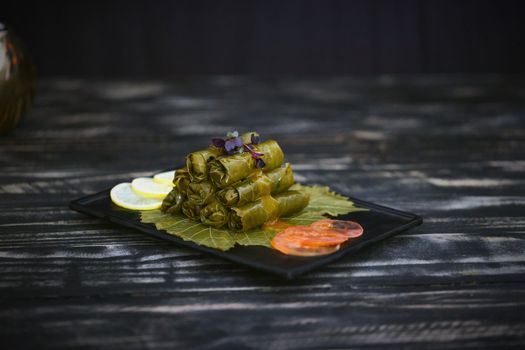
Photo: Shameel mukkath / Pexels
Levantine
Warak Enab
The diets react (see scores below)
Common Ingredients
- grape leaves
- rice
- lamb
- onion
- parsley
- mint
- lemon
- olive oil
Specific recipes may vary.
Incompatible with 6 of 11 diets
Diet Ratings
Warak Enab (stuffed grape leaves) is fundamentally incompatible with ketogenic eating due to rice being a core ingredient. Rice is a high-glycemic grain that contributes approximately 28g of net carbs per 100g cooked, and a standard serving of stuffed grape leaves contains multiple pieces each packed with rice filling. Even a modest serving of 4-6 pieces could easily deliver 30-50g of net carbs from rice alone, which meets or exceeds the entire daily keto carb budget. While the lamb and olive oil are keto-friendly, and grape leaves themselves are low in carbs, the rice filling is non-negotiable in the traditional preparation and makes this dish a keto disqualifier. Some may attempt a cauliflower rice substitution, but the traditional dish as presented must be avoided.
Warak Enab (stuffed grape leaves) as prepared in this recipe contains lamb, a direct animal product. The dish is clearly non-vegan. It is worth noting that vegetarian and vegan versions of Warak Enab exist in Levantine cuisine, stuffed with rice, herbs, and vegetables only, which would be fully vegan-compliant — but this specific preparation with lamb as the primary protein is definitively excluded.
Warak Enab (stuffed grape leaves) is a classic Levantine dish that is fundamentally incompatible with the paleo diet due to rice being a central ingredient. Rice is a grain and is explicitly excluded under paleo rules. While several ingredients are fully paleo-approved — lamb, grape leaves, onion, parsley, mint, lemon, and olive oil — the rice used as the primary stuffing component is a disqualifying grain. There is no version of traditional Warak Enab without rice that would still constitute the same dish. The grain content is not incidental but structural to the recipe.
Warak Enab (stuffed grape leaves) is a traditional Levantine dish with a mixed Mediterranean diet profile. The grape leaves, herbs (parsley, mint), lemon, onion, and olive oil are all excellent Mediterranean staples. However, lamb as the primary protein is a red meat, which the Mediterranean diet restricts to only a few times per month. The white rice filling, while traditional, is a refined grain that modern Mediterranean diet guidelines deprioritize in favor of whole grains. The combination of red meat and refined rice in a single dish pushes this toward caution territory, though the overall dish is still far more virtuous than heavily processed foods and is deeply embedded in Levantine culinary tradition.
Traditional Levantine and broader Eastern Mediterranean diets have long included lamb in small, herb-forward preparations like Warak Enab, where the meat is more of a flavoring agent than a centerpiece — some Mediterranean diet authorities argue such traditional dishes fit within the 'occasional red meat' allowance, especially when accompanied by abundant plant ingredients and olive oil. Additionally, the white rice here is used in modest quantities mixed with vegetables and herbs, which some regional interpretations consider acceptable within a traditionally balanced meal.
Warak Enab (stuffed grape leaves) is fundamentally incompatible with the carnivore diet. The dish is built almost entirely around plant-based ingredients: grape leaves (plant), rice (grain), onion (vegetable), parsley (herb), mint (herb), lemon (fruit), and olive oil (plant oil). While lamb is present as the protein source, it is a minor component surrounded by excluded ingredients. Rice alone — a grain — is a hard disqualifier, as are the grape leaves used as the wrapper. Every non-lamb ingredient violates carnivore principles. The only salvageable element is the lamb itself, which would need to be prepared separately without any of the accompanying plant ingredients.
Warak Enab (stuffed grape leaves) contains rice as a primary ingredient, and rice is explicitly excluded on the Whole30 as a grain. All other ingredients — grape leaves, lamb, onion, parsley, mint, lemon, and olive oil — are fully compliant, but the rice filling is a clear disqualifier. There is no ambiguity here: rice is on the official Whole30 excluded grains list.
Warak Enab (stuffed grape leaves) contains onion as a primary filling ingredient, which is high in fructans and must be avoided during the elimination phase — this is the critical disqualifying ingredient. Garlic is also commonly used in traditional recipes, though not listed here. Grape leaves themselves have limited Monash testing data, but the standard jarred/canned variety may contain preservatives or additives worth scrutiny. Rice and lamb are both low-FODMAP. Parsley, mint, lemon juice, and olive oil are all low-FODMAP. However, the inclusion of onion (a high-FODMAP ingredient by any standard) throughout the filling makes this dish inappropriate during elimination. Even if onion were removed, the grape leaves' FODMAP status is not well-documented by Monash.
Monash University clearly identifies onion as high-FODMAP at any culinary quantity due to fructans. Some clinical FODMAP practitioners allow dishes where high-FODMAP aromatics are cooked and then removed (like garlic-infused oil), but onion is blended throughout the filling here and cannot be separated — most practitioners would unequivocally advise avoidance. A modified version without onion (using green onion tops only) could potentially be low-FODMAP, but traditional Warak Enab as described is not suitable for elimination.
Warak Enab (stuffed grape leaves) is a mixed dish from a DASH perspective. On the positive side, it contains several DASH-friendly ingredients: grape leaves are rich in fiber and micronutrients, parsley and mint provide potassium and antioxidants, lemon juice adds flavor without sodium, and olive oil is a recommended unsaturated fat. Rice provides complex carbohydrates. However, the primary protein is lamb, which is a red meat with moderate-to-high saturated fat content — DASH guidelines advise limiting red meat. Lamb specifically is higher in saturated fat than poultry or fish, which are the preferred DASH proteins. Additionally, the dish is often prepared with salted water or brined grape leaves (canned/jarred versions are high in sodium), and seasoning can add further sodium. Portion control is important, as the lamb and refined white rice content can accumulate saturated fat and refined carbohydrates. If prepared with fresh/low-sodium grape leaves, lean lamb in small quantities, and minimal added salt, this dish can fit into DASH in moderation, but the red meat component keeps it out of the 'approve' category.
NIH DASH guidelines categorize red meat (including lamb) as a food to limit due to saturated fat content, favoring poultry and fish instead. However, some updated clinical interpretations note that lean lamb in small portions within a vegetable-rich dish like Warak Enab may be acceptable, particularly given the favorable overall dietary pattern of Levantine cuisine, which aligns broadly with Mediterranean diet principles that share overlap with DASH.
Warak Enab (stuffed grape leaves) presents a mixed Zone Diet profile. The dish contains several Zone-favorable elements — olive oil as the primary fat source (ideal monounsaturated fat), grape leaves themselves (low-calorie, fibrous wrapping with polyphenols), onion, parsley, mint, and lemon (all favorable low-glycemic carbs and polyphenol-rich ingredients). However, two components create challenges: (1) Rice is a high-glycemic, 'unfavorable' carb in Zone terminology, and it is typically the dominant carbohydrate source in this dish, which can spike insulin and disrupt the 40/30/30 balance. (2) Lamb, while a complete protein, carries more saturated fat than Zone-ideal lean proteins like skinless chicken or fish. Traditional recipes use a relatively high ratio of rice to lamb, which further skews the carb load unfavorably. With careful portion control — smaller servings, ensuring lamb content is substantial relative to rice, and pairing with additional non-starchy vegetables — Warak Enab can be incorporated into a Zone meal, but it requires active management. It is not a naturally balanced Zone food as traditionally prepared.
Some Zone practitioners and Sears' later writings place less emphasis on eliminating all white rice in context of a whole, polyphenol-rich Mediterranean meal. If the rice portion is small and the dish is served with a large green salad, the overall glycemic load of the meal can be moderated. Additionally, lamb's saturated fat content is partially offset by naturally occurring conjugated linoleic acid (CLA) and the anti-inflammatory context of the full ingredient profile (olive oil, herbs, lemon). In this view, a small, protein-forward serving could rate as borderline approve (6-7).
Warak Enab (stuffed grape leaves) presents a mixed anti-inflammatory profile. On the positive side, the dish contains several strongly anti-inflammatory ingredients: olive oil provides oleocanthal and monounsaturated fats; lemon juice offers vitamin C and flavonoids; parsley and mint are rich in antioxidants and polyphenols; onion contributes quercetin; and grape leaves themselves contain resveratrol and polyphenols. Rice is a neutral whole grain with minimal inflammatory impact. The primary concern is lamb, a red meat with moderate-to-high saturated fat content and arachidonic acid, both of which are associated with pro-inflammatory pathways and elevated inflammatory markers like CRP. Anti-inflammatory guidelines recommend limiting red meat consumption. However, lamb is not in the 'avoid' category — it's a limit/moderate food, and in this dish the lamb is typically mixed with rice, meaning the per-serving red meat quantity may be moderate rather than excessive. The overall dish reflects a traditional Mediterranean/Levantine pattern — herb-forward, olive oil-based, vegetable-wrapped — which aligns reasonably well with Mediterranean anti-inflammatory principles, despite the red meat component pulling the score down from an approval.
Some anti-inflammatory practitioners following Dr. Andrew Weil's Mediterranean-adjacent framework would view this dish favorably as part of an overall Levantine dietary pattern rich in herbs, olive oil, and plant matter, arguing that occasional red meat in modest portions within a predominantly plant-based diet is not meaningfully harmful. Conversely, stricter anti-inflammatory protocols would flag lamb's saturated fat and arachidonic acid content and recommend substituting with a leaner protein like ground turkey or lentils.
Warak Enab (stuffed grape leaves) is a mixed dish for GLP-1 patients. On the positive side, grape leaves provide fiber and are nutrient-dense; parsley, mint, and lemon add micronutrients with minimal calories; and olive oil contributes beneficial unsaturated fats in moderate amounts. The dish is also served in small, portion-friendly individual rolls. However, the primary protein is lamb, which is a fatty red meat with significant saturated fat content — a drawback for GLP-1 patients prone to nausea, reflux, and slowed gastric emptying. The rice filling adds refined carbohydrates with limited fiber and protein contribution, diluting the nutrient density per calorie. Protein yield per serving is moderate but not high relative to calorie load, making it less efficient than lean protein sources. The dish is not fried and is generally easy to digest in small portions, which helps. Overall, it is acceptable in moderation — especially if lamb is used sparingly and portion size is kept small — but it does not excel on the metrics that matter most for GLP-1 patients.
Some GLP-1-focused dietitians accept lamb in traditional dishes like Warak Enab because the fat content is distributed across many small rolls and the overall serving size tends to be small, making the saturated fat load manageable. Others recommend substituting lean ground turkey or chicken to preserve the dish's cultural familiarity while reducing fat and GI side-effect risk.
*See how scores were generated at our methodology page.
Nutritional profile
Six traits that cut across every diet.
Fiber & Plants
How much whole-plant food and fiber it delivers.
Healthy Fats
The quality of its fats (unsaturated, omega-3).
Whole / Unprocessed
How close it is to its natural, unprocessed form.
Gut Gentle
How easy it is on digestion (low FODMAP, few irritants).
Low Glycemic
How little it spikes your blood sugar.
Protein Density
How much protein it packs per calorie.
Controversy Index
Higher controversy = more disagreement between diets.
Diet-Specific Tips
 Mediterranean — 5/10
View tips
- Lamb is a red meat, limited to a few times per month in Mediterranean diet guidelines
- White rice is a refined grain, less preferred than whole grains in modern Mediterranean diet frameworks
- Grape leaves are a nutritious, plant-based wrapper strongly aligned with Mediterranean principles
- Herbs (parsley, mint), lemon, and onion add significant plant-based nutritional value
- Olive oil is the cooking fat, consistent with Mediterranean diet core principles
- Dish is traditional to Levantine Mediterranean cuisine, reflecting authentic regional eating patterns
- Lamb quantity is typically modest relative to the overall dish, used more as flavoring
 DASH — 5/10
View tips
- Lamb is a red meat high in saturated fat — DASH advises limiting red meat
- Canned or jarred grape leaves are often high in sodium; fresh leaves score significantly better
- Olive oil, lemon, herbs (parsley, mint), and onion are all DASH-compatible ingredients
- White rice is refined carbohydrate; brown rice would be more DASH-aligned
- Overall dish is vegetable-forward and portion-controlled, which is favorable
- Preparation method (salt in cooking water, brined leaves) can significantly increase sodium content
 Zone — 5/10
View tips
- Rice is a high-glycemic 'unfavorable' carbohydrate in Zone terminology, and is the primary carb source in this dish
- Lamb is higher in saturated fat compared to Zone-ideal lean proteins (chicken breast, fish)
- Olive oil is an ideal Zone fat — monounsaturated and anti-inflammatory
- Grape leaves, parsley, mint, lemon, and onion are Zone-favorable low-glycemic, polyphenol-rich ingredients
- Traditional rice-to-meat ratio typically skews the macros toward excess carbohydrate
- Dish can be partially rehabilitated by controlling portion size and pairing with non-starchy vegetables
- Mediterranean ingredient profile aligns with Sears' anti-inflammatory dietary emphasis
 Anti-Inflammatory — 5/10
View tips
- Lamb (red meat): pro-inflammatory — saturated fat and arachidonic acid, should be limited
- Olive oil: strongly anti-inflammatory — oleocanthal, monounsaturated fats
- Grape leaves: contain resveratrol and polyphenols — anti-inflammatory
- Parsley and mint: rich in antioxidants and flavonoids — anti-inflammatory
- Onion: quercetin content — anti-inflammatory
- Lemon juice: vitamin C, flavonoids — anti-inflammatory
- Rice: neutral — low glycemic impact when consumed in moderate portions
- No processed ingredients, trans fats, or added sugars — positive
 GLP-1 Friendly — 5/10
View tips
- Lamb is a fatty red meat high in saturated fat, which may worsen nausea and reflux on GLP-1 medications
- Rice filling is a refined carbohydrate with low fiber density, reducing nutrient efficiency per calorie
- Grape leaves provide fiber and micronutrients, a meaningful positive for GLP-1 dietary goals
- Olive oil contributes unsaturated fat — beneficial in moderation
- Dish is served in small individual rolls, supporting small-portion eating patterns
- Protein per serving is moderate but not high relative to total calories
- Not fried and generally easy to digest, reducing GI side-effect risk
- Lemon, mint, and parsley add micronutrients with negligible caloric cost