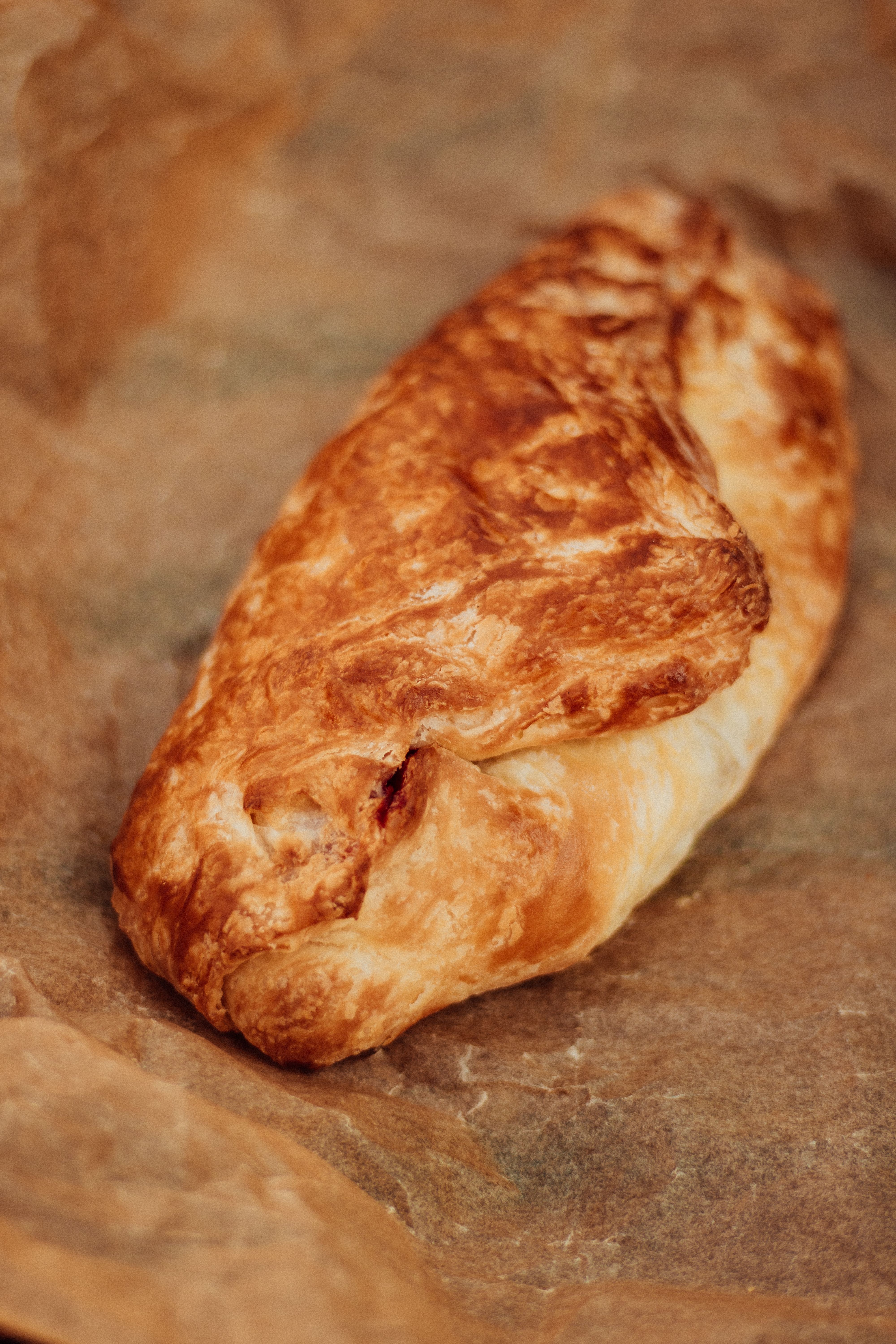
Photo: Anhelina Vasylyk / Pexels
The diets react (see scores below)
Common Ingredients
- flour
- butter
- ground beef
- lamb
- onion
- eggs
- salt
- pepper
Specific recipes may vary.
Incompatible with 10 of 11 diets
Diet Ratings
Kibinai are traditional Lithuanian pastries made with a wheat flour dough, which is the dominant ingredient and makes them fundamentally incompatible with a ketogenic diet. The filling of ground beef, lamb, onion, eggs, and butter is largely keto-friendly, but the flour-based pastry shell delivers a very high net carb load — typically 30-50g+ per serving. There is no practical portion size that makes these compatible with ketosis.
Kibinai (also known as kibinai or cybuny) are Lithuanian pastries of Karaite origin filled with meat. This version contains multiple animal products: ground beef and lamb (meat), butter (dairy), and eggs — all of which are explicitly excluded from a vegan diet. There is no plant-based version of this dish being evaluated here, and the combination of animal ingredients makes it thoroughly incompatible with veganism.
Kibinai are Lithuanian pastries (similar to Karaite meat-filled pies) whose foundation is a wheat flour dough — a grain-based wrapper that is strictly excluded from the paleo diet. While the filling contains genuinely paleo-friendly ingredients (ground beef, lamb, onion, eggs, pepper), the flour pastry shell is a dealbreaker. Butter and added salt are also non-compliant under strict paleo guidelines. The dish is fundamentally a baked grain product and cannot be made paleo without reconstructing it entirely, making it an avoid regardless of the quality of the filling inside.
Kibinai are Lithuanian pastries filled primarily with ground beef and lamb, encased in a butter-rich pastry dough. This dish contradicts Mediterranean diet principles on multiple fronts: red meat (beef and lamb) is the primary protein, which should be limited to a few times per month; butter is used as the fat source rather than olive oil; and the pastry shell is made from refined flour, a refined grain. There are no vegetables or plant-based components of significance, no olive oil, and no fiber-rich whole grains. This is a highly animal-fat- and red-meat-centric dish from a Northern European culinary tradition that is fundamentally misaligned with Mediterranean dietary patterns.
Kibinai are Lithuanian pastries (similar to Karaite-style meat pies) made with a wheat flour dough encasing a spiced meat filling. While the filling contains carnivore-approved ingredients — ground beef, lamb, onion (debatable), eggs, butter, salt, and pepper — the dish is fundamentally defined by its flour-based pastry crust. Wheat flour is a grain and a plant food, making it strictly off-limits on the carnivore diet. The dish cannot be modified while remaining 'kibinai' — the pastry shell is the defining characteristic. Even the more lenient carnivore practitioners who tolerate dairy, spices, and eggs would unanimously reject this food due to the grain-based wrapper. The meat filling ingredients alone would score much higher, but the dish as a whole is disqualifying.
Kibinai are traditional Lithuanian pastries (dumplings/hand pies) made with a wheat flour-based dough filled with seasoned ground beef, lamb, and onion. This dish contains two directly excluded ingredients: flour (a grain) and butter (dairy — only ghee/clarified butter is permitted). Beyond the ingredient violations, even if compliant substitutes were used, kibinai are a baked pastry/dumpling that falls squarely into the 'no recreating baked goods or bread-like foods' rule — the Whole30 program explicitly prohibits items like biscuits, wraps, and pastry-style foods regardless of ingredient compliance.
Kibinai are traditional Lithuanian/Karaite pastries that contain two major high-FODMAP ingredients: wheat flour (high in fructans) and onion (one of the highest-FODMAP foods, rich in fructans). These are not incidental ingredients — wheat flour forms the entire pastry dough, and onion is a core component of the meat filling. Both are high-FODMAP at any reasonable serving size during the elimination phase. The remaining ingredients (butter, ground beef, lamb, eggs, salt, pepper) are all low-FODMAP and safe, but the wheat dough and onion make this dish unsuitable for the elimination phase of the low-FODMAP diet.
Kibinai are traditional Lithuanian pastries (similar to hand pies) filled with a mixture of ground beef and lamb, making them problematic for the DASH diet on multiple fronts. The pastry crust is made with refined white flour and butter, contributing significant saturated fat. The filling combines two red meats — ground beef and lamb — both of which are high in saturated fat and discouraged on DASH. Lamb in particular is one of the fattier red meats. The combination of butter-enriched pastry dough, fatty red meat filling, and added salt results in a food that is high in saturated fat, likely high in sodium, and low in the nutrients DASH emphasizes (potassium, calcium, magnesium, fiber). As a snack category item, it also does not align with DASH-recommended snack foods such as nuts, fruits, or low-fat dairy. There is no meaningful redeeming DASH-aligned component beyond the onion and eggs, which are minor contributors in this context.
Kibinai are Lithuanian pastries (similar to Karaite meat-filled pies) made with a buttery flour dough encasing a ground beef and lamb filling with onion. From a Zone perspective, this dish presents multiple challenges. The dough is made from refined white flour — a high-glycemic carbohydrate that Zone methodology classifies as 'unfavorable.' The fat profile is dominated by saturated fat from both butter (in the dough) and the lamb/ground beef filling, which conflicts with Zone's emphasis on monounsaturated fats. The protein sources (beef and lamb) are not lean, adding further saturated fat load. The macronutrient ratio is badly skewed: the dough contributes a large, high-GI carbohydrate load, the fat content is high and predominantly saturated, and the protein is not lean. There is essentially no low-glycemic vegetable content. That said, onion does provide a small polyphenol contribution. As a snack, kibinai would be very difficult to portion into Zone blocks without significant modification — the dough-to-filling ratio makes it structurally incompatible with Zone ratios. It scores low (3) rather than in the 'avoid' range (1-2) because the beef/lamb filling does provide real protein and the dish is not nutritionally empty like pure candy or soda.
Some Zone practitioners argue that in Sears' later writings (The Anti-Inflammation Zone, Toxic Fat), occasional consumption of mixed dishes with imperfect macros is acceptable if the overall dietary pattern is Zone-compliant. A small portion of kibinai alongside a large salad with olive oil could theoretically be balanced over the meal. However, as a standalone snack — which is its traditional presentation — it remains poorly suited to Zone principles.
Kibinai are traditional Lithuanian pastries (similar to Karaite knishes) made with a butter-enriched dough filled with seasoned ground beef and lamb. From an anti-inflammatory perspective, this dish has multiple problematic elements. The pastry dough is made with refined white flour, a refined carbohydrate that spikes blood sugar and promotes inflammatory signaling. Butter is a saturated fat that, in the quantities used in a rich pastry dough, is flagged as pro-inflammatory under most anti-inflammatory frameworks. The filling combines two red meats — ground beef and lamb — both of which are associated with elevated arachidonic acid and saturated fat content, both linked to increased inflammatory markers (CRP, IL-6) when consumed regularly. There are virtually no anti-inflammatory positives: no omega-3s, no meaningful antioxidants, no polyphenols, no fiber from whole grains or legumes. Onion provides minor quercetin content, and black pepper offers a trace of piperine, but these are insufficient to offset the overall pro-inflammatory profile. This dish represents a combination of three separate 'limit' or 'avoid' categories — refined carbohydrates, saturated fat (butter), and red meat — making it a clear 'avoid' under anti-inflammatory principles.
Kibinai are Lithuanian pastries made with a butter-enriched shortcrust or lard-based dough filled with fatty ground beef and lamb. The combination of refined white flour pastry casing (low fiber, high refined carbohydrate), butter in the dough (high saturated fat), and a mixed beef-lamb filling (higher saturated fat cuts typically used) makes this a poor choice for GLP-1 patients. The dish is high in fat per serving, low in fiber, and the pastry shell contributes empty refined carbohydrate calories. Slowed gastric emptying on GLP-1 medications means heavy, fat-rich, doughy foods sit in the stomach much longer, significantly worsening nausea, bloating, and reflux. While the meat filling does contribute some protein, the overall nutrient density per calorie is poor, and the fat load from both butter pastry and fatty meats is likely to trigger GI side effects. This is not a small-portion-friendly food — a single kibinas is a substantial serving that delivers more fat and refined carbs than protein or fiber.
*See how scores were generated at our methodology page.
Nutritional profile
Six traits that cut across every diet.
Fiber & Plants
How much whole-plant food and fiber it delivers.
Healthy Fats
The quality of its fats (unsaturated, omega-3).
Whole / Unprocessed
How close it is to its natural, unprocessed form.
Gut Gentle
How easy it is on digestion (low FODMAP, few irritants).
Low Glycemic
How little it spikes your blood sugar.
Protein Density
How much protein it packs per calorie.
Controversy Index
Higher controversy = more disagreement between diets.
Diet-Specific Tips
 Zone — 5/10
View tips
- Refined white flour dough is a high-glycemic 'unfavorable' carbohydrate in Zone terminology
- Butter in the pastry contributes significant saturated fat, conflicting with Zone's monounsaturated fat preference
- Lamb and ground beef are not lean protein sources, adding additional saturated fat
- No low-glycemic vegetables in the filling; onion is a minor positive
- Macronutrient ratio is heavily skewed — high carb (high-GI) and high saturated fat, with no Zone block balance
- As a snack, portion control is structurally difficult due to dough-to-filling ratio
- Scores above 'avoid' because real protein and some whole-food ingredients are present