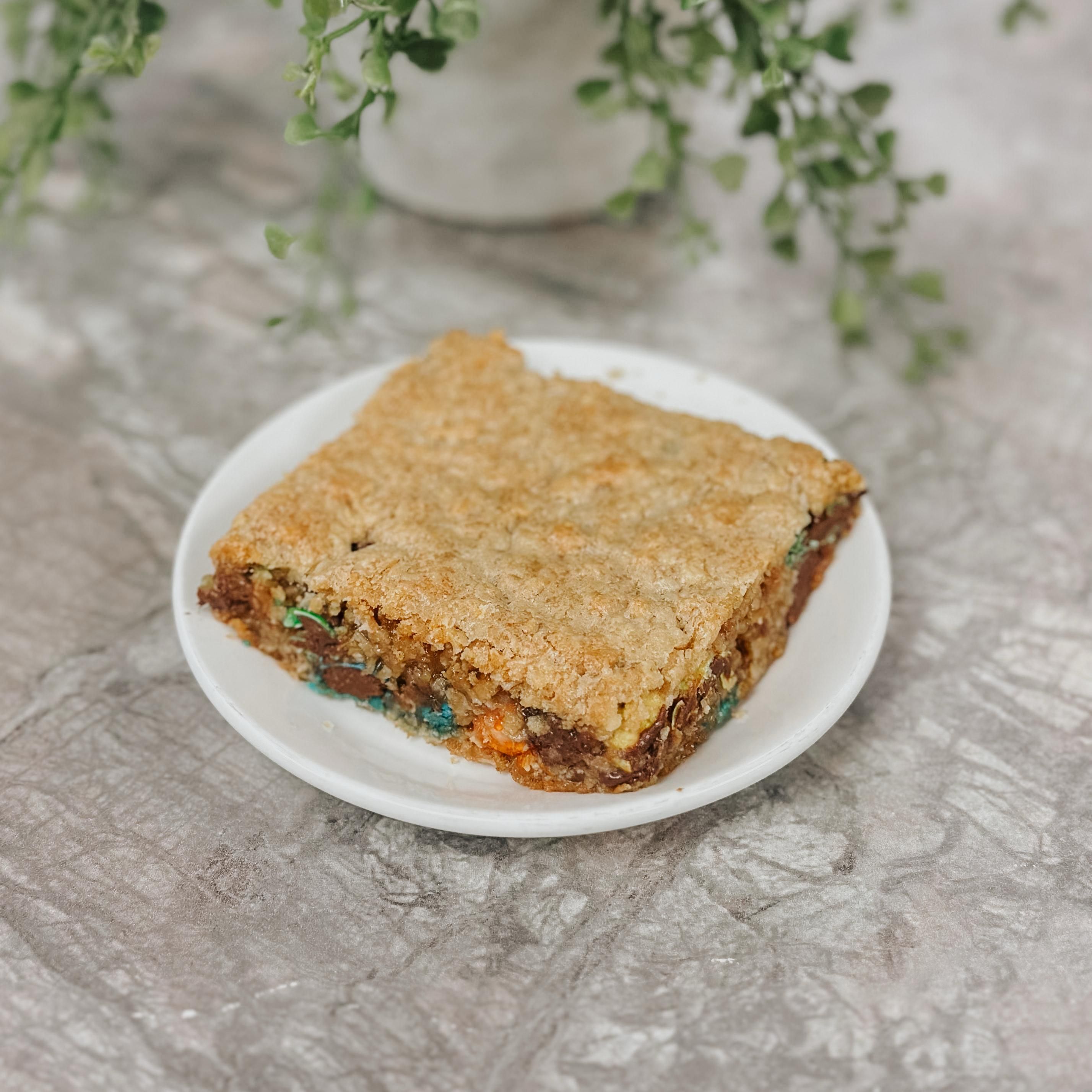
Photo: Jared Kaeb / Pexels
American
Magic Cookie Bar
The diets react (see scores below)
Common Ingredients
- graham cracker crumbs
- butter
- sweetened condensed milk
- chocolate chips
- coconut
- pecans
Specific recipes may vary.
Incompatible with 11 of 11 diets
Diet Ratings
Magic Cookie Bars are fundamentally incompatible with ketogenic eating. The recipe is built on multiple high-carb, high-sugar ingredients: graham cracker crumbs (grain-based, ~65g net carbs per 100g), sweetened condensed milk (extremely high sugar, ~54g net carbs per 100g), and chocolate chips (typically loaded with added sugar). A single bar would easily contain 40-60g of net carbs — exceeding or nearly exhausting an entire day's keto carb budget in one snack. While pecans and coconut are individually keto-friendly, and butter is excellent for keto, they cannot offset the massive carb and sugar load from the other ingredients. This dish is essentially a sugar-and-grain dessert bar with no meaningful path to keto compatibility in its standard form.
Magic Cookie Bars contain multiple animal-derived ingredients that disqualify them from vegan compliance. Butter is a dairy fat, and sweetened condensed milk is a concentrated dairy product — both are direct animal products. Graham crackers in their standard form often contain honey, and standard chocolate chips frequently contain milk solids. With butter and sweetened condensed milk as core structural ingredients, this dish is clearly not vegan as formulated. Vegan versions can be made using plant-based butter, coconut condensed milk, dairy-free chocolate chips, and honey-free graham crackers, but the traditional recipe as listed here is firmly non-vegan.
Magic Cookie Bars are fundamentally incompatible with the paleo diet. The base is graham cracker crumbs, which are made from wheat flour — a grain that is strictly excluded. Sweetened condensed milk is a dairy product heavily loaded with refined sugar, violating both the dairy and refined sugar exclusions. Chocolate chips typically contain refined sugar, dairy (milk solids), and other additives. Butter is a dairy product excluded under strict paleo guidelines. While coconut and pecans are paleo-approved ingredients, they cannot redeem a dish built almost entirely on non-paleo foundations. This is a classic processed, grain-and-dairy-based dessert with no meaningful paleo adaptation.
Magic Cookie Bars are a heavily processed American dessert that contradicts nearly every Mediterranean diet principle. The ingredient list is dominated by refined grains (graham cracker crumbs), butter (saturated fat replacing olive oil), sweetened condensed milk (high added sugar and dairy fat), and chocolate chips (added sugar). While pecans and coconut offer some plant-based fats, they are buried in a dessert matrix of sugar and refined carbohydrates. This is precisely the category of food — high in added sugars, refined grains, and saturated fat — that the Mediterranean diet explicitly minimizes. There are no vegetables, legumes, whole grains, or olive oil present.
Magic Cookie Bars are almost entirely plant-based and processed, making them completely incompatible with the carnivore diet. The ingredient list is a collection of carnivore diet violations: graham cracker crumbs (grain-based processed food), sweetened condensed milk (dairy with added sugar), chocolate chips (plant-derived sugar and cocoa), coconut (plant food), and pecans (nuts). The only animal-derived ingredient is butter, and even that is overshadowed by the sugar and plant additives. This dessert has no place in any tier of carnivore eating — not even the most lenient 'animal-based' approach would accommodate this level of plant-based, processed, sugar-laden ingredients.
Magic Cookie Bars contain multiple excluded ingredients and also fall squarely into the 'no recreating baked goods/junk food' rule. Graham cracker crumbs are a grain-based product (wheat), butter is excluded dairy, sweetened condensed milk contains both dairy and added sugar, and chocolate chips typically contain sugar and dairy. Even if every ingredient could somehow be made compliant, this is a classic dessert bar — exactly the category of baked goods/sweets the Whole30 program explicitly prohibits recreating, regardless of ingredient compliance.
Magic Cookie Bars contain multiple high-FODMAP ingredients that make this dish unsuitable during the elimination phase. Graham cracker crumbs are made from wheat (high in fructans). Sweetened condensed milk is very high in lactose. Coconut in larger amounts (shredded/desiccated coconut) becomes high-FODMAP above 1/4 cup due to polyols (sorbitol). Pecans are high-FODMAP above a small threshold (about 10 halves, and a standard bar serving likely exceeds this). Chocolate chips can be moderate-FODMAP depending on quantity and type (dark chocolate contains more FODMAPs). With at minimum two clearly high-FODMAP ingredients (wheat-based graham crackers and sweetened condensed milk providing high lactose), this dish is definitively not safe during the FODMAP elimination phase at any standard serving size.
Magic Cookie Bars are directly contrary to DASH diet principles on multiple fronts. Sweetened condensed milk contributes extremely high added sugar. Butter is high in saturated fat. Coconut (especially sweetened shredded coconut commonly used) contains saturated fat from a tropical oil source, which DASH explicitly limits. Chocolate chips add more sugar and saturated fat. Graham cracker crumbs provide refined carbohydrates with limited nutritional value. While pecans offer some beneficial nutrients (magnesium, healthy fats), they cannot offset the overall nutritional profile of this dessert. This is a high-sugar, high-saturated-fat confection with no meaningful contribution of potassium, calcium, magnesium, or fiber in DASH-relevant quantities. It represents essentially everything DASH guidelines advise against in a single dish.
Magic Cookie Bars are essentially a concentrated delivery system for everything the Zone Diet discourages. The macronutrient profile is nearly inverted from the ideal 40/30/30 Zone ratio: the bar is overwhelmingly high in carbohydrates (graham cracker crumbs, sweetened condensed milk, chocolate chips) that are high-glycemic and sugar-dense, extremely high in fat (butter, coconut, pecans, chocolate chips) with a significant saturated fat load from butter, condensed milk, and coconut, and contains virtually zero protein. Sweetened condensed milk alone is one of the most sugar-concentrated dairy products available, driving a massive glycemic spike. Graham crackers are a refined, moderate-to-high glycemic carbohydrate. Coconut contributes saturated fat. While pecans do offer monounsaturated fat and the bar has no artificial trans fats, those positive attributes are overwhelmed by the overall macro disaster. There is no lean protein component whatsoever, making it impossible to construct a Zone block from this food without radical external additions. This snack would flood the body with insulin-spiking sugars and offers no pathway to hormonal balance as defined by Dr. Sears. It qualifies as nutritionally empty from a Zone perspective — pure caloric indulgence with no Zone-favorable redeeming structure.
Magic Cookie Bars are a highly processed dessert with a strongly pro-inflammatory nutritional profile. The base is graham cracker crumbs — refined carbohydrates with added sugar — bound with butter, a saturated fat that anti-inflammatory guidelines recommend limiting. Sweetened condensed milk is the dominant ingredient by volume and contributes a large load of added sugar and full-fat dairy, both flagged for pro-inflammatory effects. Chocolate chips are typically sweetened with significant added sugar (and unless >70% cacao, offer minimal antioxidant benefit). Sweetened shredded coconut adds more sugar and saturated fat (lauric acid). Pecans are the one genuinely positive element — they contain omega-3 alpha-linolenic acid, antioxidants, and fiber — but they are a minor ingredient in a sea of pro-inflammatory components. The overall dish is high in refined carbohydrates, added sugars, and saturated fats, all of which are associated with increased inflammatory markers (CRP, IL-6) in research. This is an occasional indulgence food with no meaningful anti-inflammatory function.
Magic Cookie Bars are incompatible with GLP-1 dietary guidelines on nearly every dimension. The ingredient list is a convergence of the most problematic food categories for GLP-1 patients: sweetened condensed milk and chocolate chips deliver a high sugar load; butter, pecans, coconut, and chocolate chips contribute significant saturated and total fat per serving; graham cracker crumbs are refined carbohydrates with minimal fiber or nutritional value. There is virtually no protein. The high fat and sugar content is strongly associated with worsening GLP-1 side effects including nausea, bloating, and reflux due to slowed gastric emptying. Caloric density is extremely high with near-zero nutrient density per calorie. This is a quintessential empty-calorie, high-fat, high-sugar snack that directly conflicts with every core GLP-1 dietary priority.
*See how scores were generated at our methodology page.
Nutritional profile
Six traits that cut across every diet.
Fiber & Plants
How much whole-plant food and fiber it delivers.
Healthy Fats
The quality of its fats (unsaturated, omega-3).
Whole / Unprocessed
How close it is to its natural, unprocessed form.
Gut Gentle
How easy it is on digestion (low FODMAP, few irritants).
Low Glycemic
How little it spikes your blood sugar.
Protein Density
How much protein it packs per calorie.
Controversy Index
Higher controversy = more disagreement between diets.