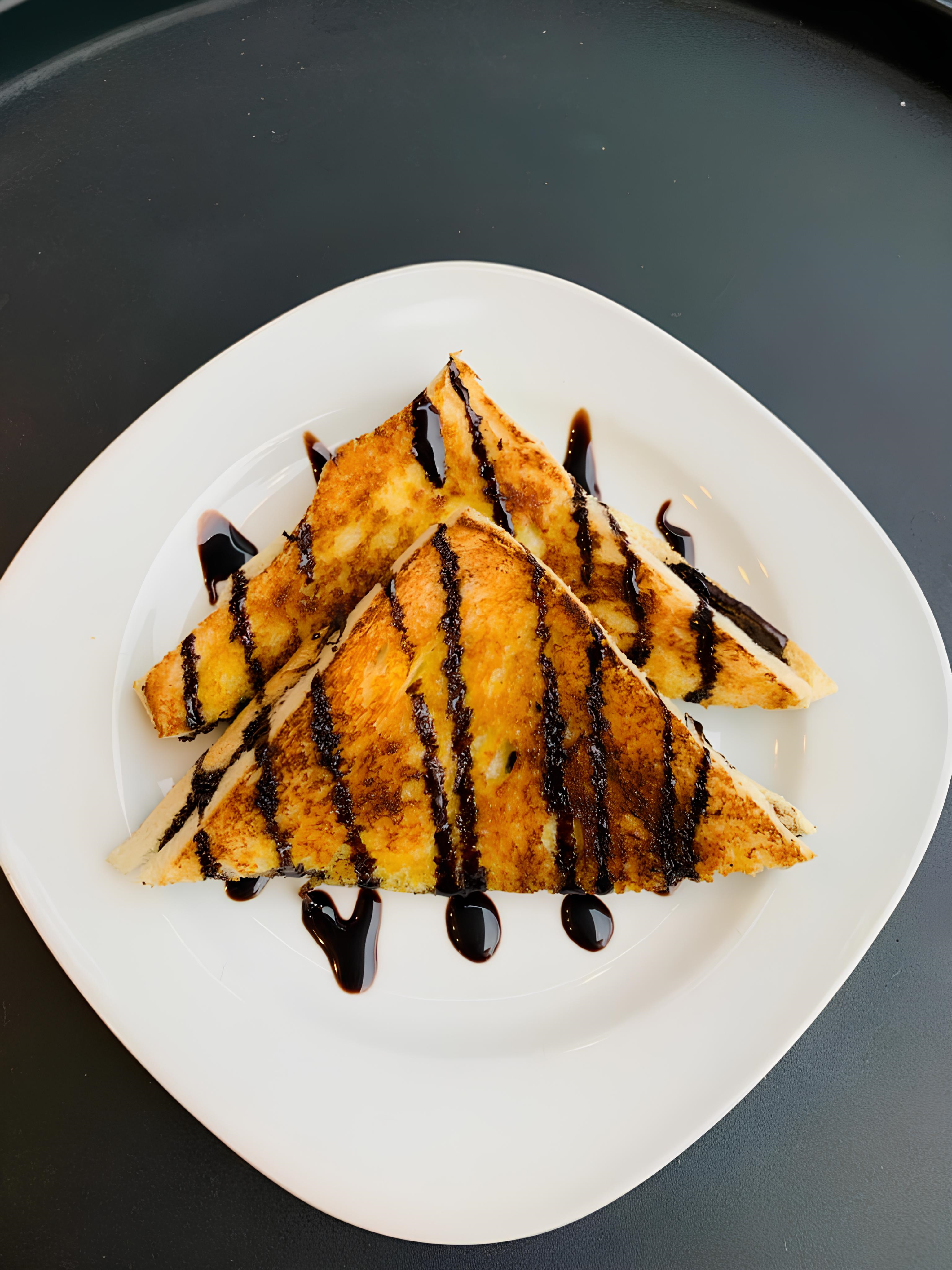
Photo: Lampalampa Indonesia / Pexels
Malaysian
Kaya Toast
The diets react (see scores below)
Common Ingredients
- bread
- kaya jam
- coconut milk
- eggs
- sugar
- pandan leaves
- butter
Specific recipes may vary.
Incompatible with 11 of 11 diets
Diet Ratings
Kaya Toast is fundamentally incompatible with a ketogenic diet. It contains two major keto-breaking components: white bread (a refined grain with very high net carbs, roughly 12-15g per slice) and kaya jam, which is a sugar-dense coconut egg jam. A standard serving of Kaya Toast alone can easily deliver 40-60g of net carbs, blowing the entire daily keto carb budget in one meal. The sugar in both the bread and the kaya jam triggers insulin response and prevents ketosis. While some individual ingredients like coconut milk, eggs, and butter are keto-friendly in isolation, they are overwhelmed by the grain and sugar content of this dish.
Kaya Toast contains multiple animal-derived ingredients that disqualify it from a vegan diet. Kaya jam is traditionally made with eggs and coconut milk (the eggs are a clear animal product), and butter is a dairy product applied to the toast. These are not trace or cross-contamination issues — eggs and butter are core, functional ingredients in both the jam and the bread preparation. Coconut milk, bread, sugar, and pandan leaves are plant-based, but the eggs and butter make this dish firmly non-vegan. Vegan versions of kaya jam do exist using aquafaba or other egg substitutes, and vegan butter can replace dairy butter, but the traditional dish as described is not vegan-compliant.
Kaya Toast is fundamentally incompatible with the Paleo diet. The dish is built on bread (wheat grain), which is one of the clearest exclusions in Paleo — a processed grain product that did not exist in the Paleolithic era. The kaya jam itself contains refined sugar and butter (dairy), both of which are explicitly excluded. While eggs and coconut milk are Paleo-approved, and pandan leaves are a natural herb, these minor compliant elements cannot redeem a dish whose core components — bread, refined sugar, and butter — are all on the avoid list. There are no meaningful gray areas here; this dish hits multiple hard exclusions simultaneously.
Kaya Toast is a poor fit for the Mediterranean diet on multiple fronts. The base is refined white bread (a refined grain), spread with kaya jam — a coconut milk, egg, sugar, and pandan confection that is high in added sugar and saturated fat from coconut milk. It is further topped with butter, another saturated fat that is not a Mediterranean dietary staple. There are no vegetables, legumes, whole grains, or olive oil present. The dish is essentially a sweet, refined-carbohydrate-based breakfast with significant added sugar and saturated fat, which directly contradicts Mediterranean diet principles emphasizing whole grains, plant-forward foods, and olive oil as the primary fat.
Kaya Toast is almost entirely plant-based and processed, making it fundamentally incompatible with the carnivore diet. The dish consists of bread (grain-based), kaya jam (made from coconut milk, eggs, sugar, and pandan leaves), and butter. While eggs and butter are animal-derived, they are minor components embedded in a predominantly plant-based, sugar-laden dish. Bread is a grain product strictly excluded from carnivore. Coconut milk is a plant oil/fat source excluded from carnivore. Sugar is a processed additive explicitly forbidden. Pandan leaves are a plant flavoring. The overall dish has no meaningful animal protein and is dominated by excluded ingredients. No modification could salvage this dish for carnivore compliance — it would need to be entirely reconstructed.
Kaya Toast contains multiple Whole30-excluded ingredients. Bread is a grain-based product explicitly excluded from the program (grains are eliminated, and bread also falls under the 'no recreating baked goods' rule). Sugar is a direct excluded ingredient (added sugar). Butter is excluded dairy (only ghee/clarified butter is the allowed exception). These three violations alone make this dish firmly non-compliant, regardless of the otherwise-compatible ingredients like coconut milk, eggs, and pandan leaves.
Kaya Toast is problematic for the low-FODMAP elimination phase primarily due to two key ingredients. First, the bread used is typically standard white or wholemeal wheat bread, which is high in fructans — a primary FODMAP trigger. Second, kaya jam itself is a concern: it is made with coconut milk, eggs, sugar, and pandan leaves, but critically uses significant quantities of eggs and sugar cooked with coconut milk into a custard-like spread. While coconut milk is low-FODMAP at small servings (up to 1/2 cup), concentrated coconut milk in a jam format may push FODMAP levels up. The eggs, butter, pandan leaves, and sugar are all individually low-FODMAP. However, the wheat-based bread alone is sufficient to classify this dish as high-FODMAP. A gluten-free bread substitution would significantly change the assessment, but as traditionally prepared, Kaya Toast cannot be recommended during the elimination phase.
Monash University has tested coconut milk and confirmed it is low-FODMAP at standard serving sizes (up to 1/2 cup), and pandan leaves and eggs are not FODMAP concerns — some clinical FODMAP practitioners may allow a kaya-like spread on gluten-free bread as a modified version. However, the standard wheat bread used in traditional Kaya Toast makes this dish high-FODMAP during elimination phase without modification, and even with GF bread, the concentrated coconut content of kaya jam warrants portion caution.
Kaya Toast is fundamentally incompatible with the DASH diet due to multiple high-concern ingredients. Kaya jam is made with coconut milk, eggs, sugar, and pandan leaves — the coconut milk is high in saturated fat from a tropical oil explicitly limited by DASH guidelines, and the sugar content adds significant empty calories. Butter is added as a spread, contributing additional saturated fat. The bread used is typically white bread, offering little fiber or whole-grain benefit. Together, these components deliver high saturated fat (from coconut milk and butter), high added sugar (from kaya jam), and low nutritional density in terms of potassium, magnesium, calcium, or fiber — the key nutrients DASH emphasizes. This dish conflicts with DASH on multiple fronts simultaneously, not just one.
Kaya Toast is a Malaysian breakfast consisting of white bread spread with kaya jam (made from coconut milk, eggs, sugar, and pandan leaves) and butter. From a Zone Diet perspective, this dish presents multiple serious problems. The base is white bread — a high-glycemic refined carbohydrate that Sears explicitly categorizes as 'unfavorable' and discourages. The kaya jam is heavily sweetened with sugar, adding another high-glycemic carbohydrate load with no fiber buffer. The fat profile is dominated by saturated fat from both coconut milk and butter, which conflicts with the Zone's emphasis on monounsaturated fats. There is virtually no lean protein (eggs are present in the jam but in negligible structural quantity). The dish has no vegetables, no omega-3s, and no polyphenol-rich components beyond trace pandan. The macro ratio is wildly skewed toward high-glycemic carbohydrates and saturated fat — essentially the inverse of what Zone targets. Even with aggressive portion control, the poor fat quality and absence of lean protein make it nearly impossible to construct a Zone-balanced meal around this dish without completely transforming its character. It falls into the narrow category of foods that genuinely warrant an 'avoid' classification under Zone methodology.
Kaya toast is a traditional Southeast Asian breakfast made of white bread spread with kaya jam (a coconut-egg-sugar spread) and butter. From an anti-inflammatory standpoint, this dish has multiple red flags. The bread is typically refined white bread — a refined carbohydrate with a high glycemic index that can spike blood sugar and promote inflammatory markers. Kaya jam is predominantly sugar and coconut milk, delivering high added sugar content and significant saturated fat from coconut. While coconut contains medium-chain triglycerides (MCTs) which are debated, the concentrated saturated fat load in this sweet spread is generally viewed as pro-inflammatory in anti-inflammatory frameworks. Butter adds further saturated fat. The only marginally beneficial elements are eggs (moderate protein, choline) and pandan leaves (a fragrant herb with modest antioxidant properties), but these are overwhelmed by the inflammatory profile of the other ingredients. The dish is high in refined carbohydrates, added sugar, and saturated fat — a combination that directly opposes anti-inflammatory dietary principles. There are no omega-3 sources, meaningful antioxidants, fiber, or polyphenols of note. This is a treat food with limited nutritional redemption in an anti-inflammatory context.
Kaya toast is a poor fit for GLP-1 patients across nearly every priority criterion. The dish is built around refined white bread (low fiber, low protein, fast-digesting refined carbohydrate), kaya jam (high sugar, coconut milk fat, minimal nutritional value), and butter — a combination that is calorie-dense, nutrient-poor, and high in saturated fat. Protein contribution is negligible for a breakfast serving. Sugar content from the jam is high and offers empty calories at a time when every calorie needs to count. The saturated fat from both butter and coconut milk can worsen GLP-1 side effects including nausea and reflux. Fiber content is minimal with white bread. This dish fails on protein density, fiber, fat quality, sugar load, and nutrient density per calorie simultaneously. Even if served with soft-boiled eggs on the side (as is traditional), the core toast and jam component remains a poor nutritional vehicle for GLP-1 patients.
*See how scores were generated at our methodology page.
Nutritional profile
Six traits that cut across every diet.
Fiber & Plants
How much whole-plant food and fiber it delivers.
Healthy Fats
The quality of its fats (unsaturated, omega-3).
Whole / Unprocessed
How close it is to its natural, unprocessed form.
Gut Gentle
How easy it is on digestion (low FODMAP, few irritants).
Low Glycemic
How little it spikes your blood sugar.
Protein Density
How much protein it packs per calorie.
Controversy Index
Higher controversy = more disagreement between diets.