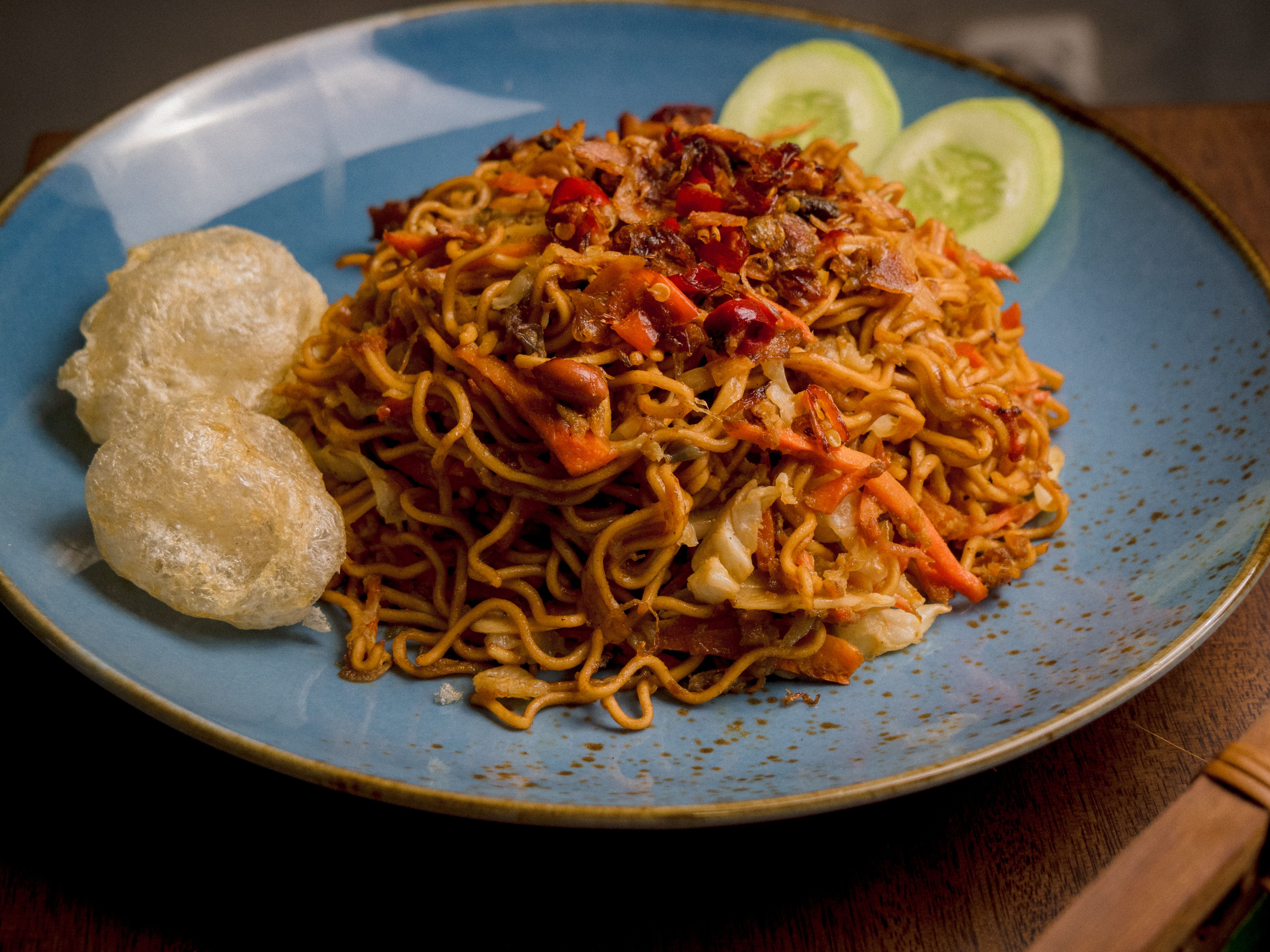
Photo: David Tumpal / Pexels
Malaysian
Mee Goreng
The diets react (see scores below)
Common Ingredients
- yellow noodles
- tofu
- eggs
- bean sprouts
- potatoes
- tomatoes
- chili paste
- soy sauce
- garlic
- scallions
Specific recipes may vary.
Incompatible with 6 of 11 diets
Diet Ratings
Mee Goreng is fundamentally incompatible with a ketogenic diet. The dish is built on yellow noodles (wheat-based, extremely high in net carbs — a single serving can contain 40-60g of net carbs from noodles alone, far exceeding the daily keto limit). Potatoes add significant additional starch and net carbs. Tomatoes and bean sprouts are relatively benign but irrelevant given the primary ingredients already disqualify this dish. Soy sauce may also contain small amounts of carbs. There is no realistic portion size that makes this dish keto-compatible without fundamentally replacing its core ingredients.
This version of Mee Goreng contains eggs, which are an animal product and therefore incompatible with a vegan diet. All other ingredients — yellow noodles, tofu, bean sprouts, potatoes, tomatoes, chili paste, soy sauce, garlic, and scallions — are plant-based. However, the presence of eggs is a clear disqualifier. A fully vegan version of Mee Goreng is achievable simply by omitting the eggs, which is a common modification.
Mee Goreng is fundamentally incompatible with the paleo diet. The dish contains multiple hard-excluded ingredients with no ambiguity: yellow noodles are a wheat-based grain product, tofu is a processed soy legume product, and soy sauce contains both wheat and soy — all of which are firmly on the paleo avoid list. Bean sprouts (from mung beans) are also legume-derived. While eggs, tomatoes, garlic, scallions, chili paste, and potatoes are individually paleo-compatible or debated, the core structural ingredients of this dish — noodles, tofu, and soy sauce — make it impossible to classify as anything other than avoid. This is not a gray-area dish; it violates multiple foundational paleo exclusions simultaneously.
Mee Goreng presents a mixed Mediterranean diet profile. On the positive side, it features tofu as the primary protein (a legume-based food, plant-forward), eggs (moderate dairy-equivalent), and several vegetables including bean sprouts, tomatoes, garlic, and scallions — all Mediterranean-compatible. However, yellow noodles are refined wheat noodles, not whole grain, which conflicts with the Mediterranean emphasis on whole grains. The dish is also typically stir-fried in vegetable or palm oil rather than olive oil, and soy sauce adds significant sodium. The overall profile is plant-heavy and vegetable-rich, which is positive, but the refined noodles and non-olive cooking fat pull it away from Mediterranean ideals. A home adaptation using whole grain noodles and olive oil would score higher.
Some Mediterranean diet interpreters focus primarily on the overall dietary pattern and macronutrient balance rather than strict ingredient sourcing; from this lens, the dish's plant-forward protein (tofu), abundance of vegetables, and low saturated fat content could be seen as broadly compatible, with refined noodles viewed as an acceptable occasional base similar to how white pasta is tolerated in some traditional Mediterranean contexts.
Mee Goreng is almost entirely plant-based and grain-based, making it fundamentally incompatible with the carnivore diet. The dish is built on yellow noodles (wheat/grain), tofu (soy — a legume), bean sprouts (plant), potatoes (starchy vegetable), tomatoes (fruit/vegetable), chili paste (plant-based condiment), soy sauce (fermented soy and wheat), garlic (plant), and scallions (plant). The only carnivore-compatible ingredient is eggs, which are a minor component here. Every core element of this dish violates carnivore principles. There is no version of this dish that could be adapted to carnivore without completely deconstructing it — it would cease to be Mee Goreng entirely.
Mee Goreng contains multiple Whole30-excluded ingredients. Yellow noodles are a grain-based pasta/noodle product, which is explicitly excluded under the 'no recreating noodles/pasta' rule as well as being a grain product. Tofu is made from soy, which is a legume and explicitly excluded. Soy sauce contains both soy (legume) and wheat (grain), both excluded. These are not edge cases — grains, soy, and grain-based noodles are core exclusions of the Whole30 program with no exceptions.
Mee Goreng contains multiple high-FODMAP ingredients that make it unsuitable during the elimination phase. Yellow noodles are made from wheat flour, which is high in fructans — a primary FODMAP trigger. Garlic is one of the highest-FODMAP foods tested by Monash University and is a significant fructan source even in small amounts. Scallions (green tops only are low-FODMAP, but the white bulb portions are high in fructans and are typically used in Malaysian cooking without distinction). Chili paste in commercial or restaurant form almost universally contains garlic and/or onion. Tofu in silken/soft form can be high-FODMAP at standard servings due to GOS, though firm tofu is safer. The cumulative FODMAP load from wheat noodles, garlic, and chili paste alone is enough to classify this dish as high-FODMAP. Bean sprouts, eggs, potatoes, and tomatoes are individually low-FODMAP, but they cannot offset the major FODMAP contributors in this dish.
Mee Goreng contains several DASH-friendly ingredients — tofu (lean plant protein), bean sprouts, tomatoes, scallions, garlic, and eggs — but the dish as commonly prepared has significant concerns. Soy sauce is high in sodium (one tablespoon contains ~900–1,000mg), and in combination with chili paste (often containing added salt), the total sodium load of a single serving can easily exceed 1,000–1,500mg, approaching or surpassing the low-sodium DASH daily limit in one dish. Yellow noodles are refined-grain noodles, lacking the fiber of whole grains emphasized in DASH. Portions are typically large. On the positive side, the primary protein is tofu (DASH-approved), vegetables are present, and there is no red meat or saturated fat from tropical oils listed. If prepared with low-sodium soy sauce, reduced chili paste, and moderate portions, this dish could score higher. As typically consumed in Malaysian cuisine, the sodium content is the primary disqualifier from full approval.
NIH DASH guidelines focus on overall dietary patterns rather than individual dishes; some DASH-oriented clinicians would note that if low-sodium soy sauce and reduced-salt chili paste are substituted, the dish's vegetable content, plant-based protein, and relatively low saturated fat profile bring it much closer to DASH compliance. Updated interpretations also recognize that tofu and bean sprout-heavy stir-fried dishes can fit within DASH when sodium is managed at the recipe level.
Mee Goreng presents significant Zone Diet challenges primarily due to its carbohydrate composition. Yellow noodles are a high-glycemic refined carbohydrate, and potatoes are explicitly categorized as 'unfavorable' (high-glycemic) carbs in Zone methodology. Together, these two ingredients create a carbohydrate-heavy, high-glycemic load that makes achieving the 40/30/30 ratio very difficult without radical portion reduction. On the positive side, tofu and eggs provide acceptable Zone protein sources, bean sprouts and tomatoes are favorable low-glycemic vegetables, and garlic and scallions add polyphenol value. The chili paste and soy sauce are minor condiment concerns (sodium, possible sugar in chili paste) but not disqualifying. The dish lacks a meaningful monounsaturated fat component unless oil is used in preparation. As typically served, the noodle and potato portions would far exceed a Zone carbohydrate block allocation, spiking insulin and breaking the Zone ratio. A Zone-adapted version would require dramatically reducing noodles and eliminating or minimizing potatoes, replacing their volume with more bean sprouts and vegetables, but this would fundamentally alter the dish. The tofu protein is vegetarian, meaning fat blocks would be calculated at 3g per block rather than 1.5g, which slightly loosens fat requirements but doesn't resolve the carb imbalance.
Some Zone practitioners argue that in very small, carefully controlled portions — treating the noodles as a single carb block and omitting potatoes entirely — Mee Goreng components can be assembled into a rough Zone meal. Sears' later writings emphasize that any carbohydrate is manageable if kept within block limits, and the tofu-egg protein base is genuinely Zone-friendly. However, the dish as traditionally prepared makes this level of portion control impractical in real dining contexts.
Mee Goreng presents a genuinely mixed anti-inflammatory profile. On the positive side, tofu (a whole soy food) is explicitly emphasized in anti-inflammatory frameworks like Dr. Weil's pyramid, providing plant protein with isoflavones. Garlic and chili paste contribute anti-inflammatory allicin and capsaicin compounds. Bean sprouts add fiber and micronutrients, tomatoes deliver lycopene (a potent carotenoid), and eggs provide choline and selenium with broadly acceptable status. However, the dish has notable concerns: yellow noodles are typically made from refined wheat flour, representing refined carbohydrates that are flagged as pro-inflammatory. Soy sauce adds significant sodium and often contains additives depending on the brand. Chili paste commercially prepared may contain added sugars or preservatives. The cooking method matters considerably — street-style Mee Goreng is typically stir-fried in high-heat seed oils (e.g., palm or refined vegetable oil), which are either inflammatory in themselves or oxidized at high temperatures, though this ingredient isn't listed explicitly. Potatoes are a nightshade with moderate glycemic impact. The dish is not inherently damaging but the refined noodle base and likely cooking oil make it a 'caution' rather than an endorsement.
Some anti-inflammatory practitioners following the Autoimmune Protocol (AIP) would flag multiple ingredients here — tomatoes, chili paste, and potatoes are all nightshades, which AIP protocols exclude on the basis that solanine and lectins may trigger inflammation in sensitive individuals, particularly those with autoimmune conditions. Mainstream anti-inflammatory authorities like Dr. Weil, however, consider nightshades beneficial due to their antioxidant density (lycopene, capsaicin) and would not restrict them for the general population.
Mee Goreng is a mixed bag for GLP-1 patients. On the positive side, it contains tofu and eggs for protein, bean sprouts and tomatoes for hydration and fiber, and garlic and scallions as low-calorie aromatics. However, the dish has several notable drawbacks. Yellow noodles are refined wheat noodles — low in fiber and high in rapidly digestible carbohydrates, which reduces nutrient density per calorie and offers little satiety per gram. Potatoes add starchy carbohydrate bulk with moderate fiber but displace higher-value ingredients in a small-stomach context. The chili paste is a meaningful concern — GLP-1 patients are prone to acid reflux and nausea due to slowed gastric emptying, and spicy ingredients can worsen both. Protein content from tofu and eggs is real but modest in a typical street-food serving — likely 12–18g per portion, possibly falling short of the 15–30g per meal target unless portions are generous. The dish is typically stir-fried in oil, adding fat that can worsen GI side effects. Soy sauce contributes high sodium, which may affect fluid retention. Overall, this is an acceptable occasional meal with modifications — reducing chili paste, requesting extra tofu or an additional egg, and keeping portion size moderate — but is not an ideal GLP-1 staple.
Some GLP-1-focused dietitians would rate this more favorably, noting that tofu plus eggs together can meet per-meal protein targets, and that the vegetables and legume sprouts provide meaningful micronutrient density. Others would rate it lower due to the refined noodle base and spice content, arguing that the carbohydrate-to-protein ratio is unfavorable for patients eating significantly reduced volumes.
*See how scores were generated at our methodology page.
Nutritional profile
Six traits that cut across every diet.
Fiber & Plants
How much whole-plant food and fiber it delivers.
Healthy Fats
The quality of its fats (unsaturated, omega-3).
Whole / Unprocessed
How close it is to its natural, unprocessed form.
Gut Gentle
How easy it is on digestion (low FODMAP, few irritants).
Low Glycemic
How little it spikes your blood sugar.
Protein Density
How much protein it packs per calorie.
Controversy Index
Higher controversy = more disagreement between diets.
Diet-Specific Tips
 Mediterranean — 5/10
View tips
- Tofu as primary protein is plant-based and Mediterranean-compatible
- Yellow noodles are refined, not whole grain — conflicts with Mediterranean guidelines
- Bean sprouts, tomatoes, garlic, scallions, and chili are vegetable-rich additions
- Eggs included in moderate amounts — acceptable in Mediterranean diet
- Cooking oil likely not olive oil — traditional Malaysian preparation uses palm or vegetable oil
- Soy sauce adds high sodium, not a Mediterranean staple
- No red meat or processed meat — positive factor
 DASH — 4/10
View tips
- High sodium from soy sauce (~900–1,000mg per tablespoon) is the primary concern
- Chili paste adds additional sodium, compounding the issue
- Yellow noodles are refined grains, not DASH-preferred whole grains
- Tofu as primary protein is DASH-approved and low in saturated fat
- Bean sprouts, tomatoes, scallions, and garlic add vegetables and DASH-friendly micronutrients
- No red meat or tropical oils listed — favorable for saturated fat profile
- Low-sodium soy sauce substitution would significantly improve DASH compatibility
- Portion size is typically large for noodle dishes, requiring control
 Zone — 4/10
View tips
- Yellow noodles are high-glycemic refined carbohydrates, classified as 'unfavorable' in Zone terminology
- Potatoes are explicitly unfavorable/avoid-tier carbs in Zone — high glycemic index and banned from the favorable list
- Tofu and eggs are acceptable Zone protein sources, with tofu being a preferred lean vegetarian protein
- Bean sprouts and tomatoes are favorable low-glycemic Zone carbohydrate contributors
- Traditional serving sizes would produce a carbohydrate-heavy macro ratio far exceeding 40%, breaking Zone balance
- No inherent monounsaturated fat source present; dish would need olive oil or avocado added
- Chili paste may contain added sugars, adding to unfavorable carbohydrate load
 Anti-Inflammatory — 5/10
View tips
- Tofu (whole soy food) is anti-inflammatory and explicitly encouraged by Dr. Weil's pyramid
- Garlic and chili provide anti-inflammatory allicin and capsaicin
- Tomatoes deliver lycopene, a potent antioxidant carotenoid
- Yellow noodles are refined carbohydrates — a pro-inflammatory concern
- Cooking oil not listed but likely refined seed or palm oil at high heat — potentially pro-inflammatory
- Soy sauce adds high sodium and possible additives depending on processing
- Nightshade ingredients (tomatoes, chili, potatoes) may be problematic for autoimmune-sensitive individuals
 GLP-1 Friendly — 5/10
View tips
- Refined yellow noodles are low in fiber and high in rapidly digestible carbs — poor nutrient density per calorie
- Tofu and eggs provide real but modest protein; may fall short of 15–30g per meal target in standard serving
- Chili paste is a concern — spicy ingredients can worsen reflux and nausea in GLP-1 patients with slowed gastric emptying
- Stir-frying adds oil and fat, which can exacerbate GLP-1 GI side effects including bloating and nausea
- Bean sprouts and tomatoes add hydration support and modest fiber — a positive
- Potatoes add starchy carbohydrate bulk, displacing higher-protein or higher-fiber ingredients in a small-capacity stomach
- High sodium from soy sauce is a secondary concern for fluid balance
- Dish can be improved with chili reduction, extra eggs or tofu, and portion moderation