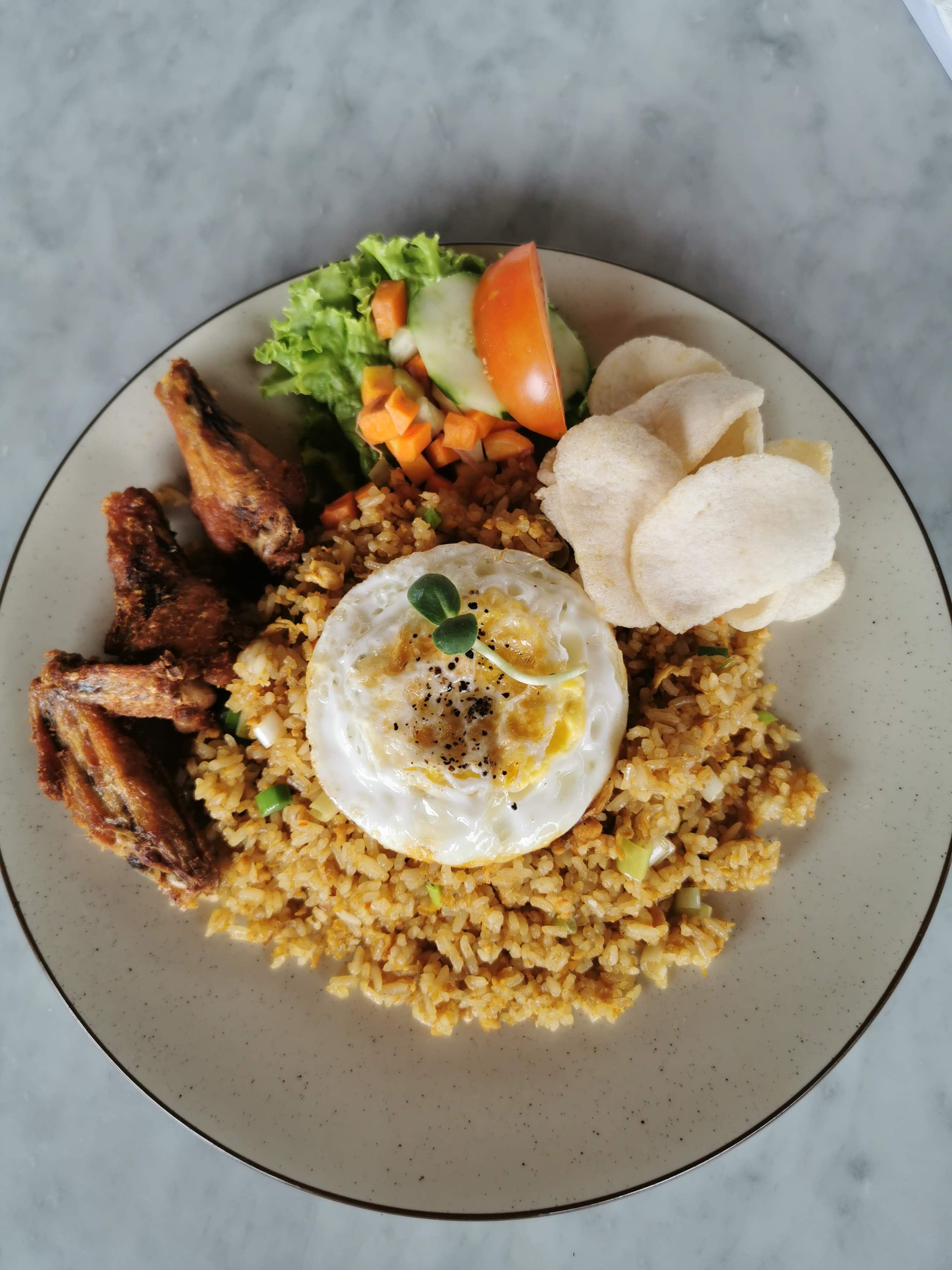
Photo: Monakha laden / Pexels
Malaysian
Nasi Kandar
The diets react (see scores below)
Common Ingredients
- rice
- chicken
- okra
- eggs
- curry gravy
- chili
- turmeric
- garlic
- ginger
- onion
Specific recipes may vary.
Incompatible with 7 of 11 diets
Diet Ratings
Nasi Kandar is fundamentally built around white rice, which is a high-glycemic grain and the primary carbohydrate source in this dish. A standard serving of rice (150-200g cooked) contains approximately 45-55g of net carbs, which alone exceeds or maxes out the entire daily keto carb budget. The dish cannot be made keto-compatible without removing its defining base ingredient. The accompanying elements — chicken, okra, eggs, curry gravy, and spices — are individually keto-friendly or neutral, but they are always served over and combined with rice in this dish. The curry gravy may also contain added sugars or starch-based thickeners depending on preparation. This is not a portion-control problem; rice is the structural foundation of Nasi Kandar and cannot be meaningfully reduced without the dish ceasing to be what it is.
Nasi Kandar as listed contains multiple animal products that are categorically excluded from a vegan diet. Chicken is direct animal flesh, and eggs are an animal product. The curry gravy in traditional Nasi Kandar is typically made with meat-based stock and may contain dairy (evaporated milk or ghee). These ingredients make this dish entirely incompatible with vegan dietary standards.
Nasi Kandar is fundamentally built around rice, a grain that is excluded from the paleo diet. While several ingredients — chicken, okra, eggs, chili, turmeric, garlic, ginger, and onion — are paleo-approved, rice forms the central and inseparable base of this dish. Additionally, traditional curry gravy often contains added salt and may include legume-based ingredients or processed components. The presence of a non-negotiable grain as the primary carbohydrate foundation makes this dish a clear avoid under paleo guidelines.
Nasi Kandar contains several elements that align partially with Mediterranean principles — chicken as a moderate protein, okra as a beneficial vegetable, and spices like turmeric, garlic, ginger, and onion which are anti-inflammatory and share overlap with Mediterranean herb-forward cooking. However, the dish is built on white rice (a refined grain not favored in Mediterranean guidelines), and the curry gravy is likely prepared with coconut milk or palm oil rather than olive oil, introducing saturated fats inconsistent with Mediterranean fat sources. The eggs add acceptable moderate protein. Overall, the dish has a reasonable vegetable and spice profile but the white rice base and non-olive-oil fat source temper its compatibility.
Some Mediterranean diet interpreters note that white rice appears traditionally in certain Mediterranean cuisines (e.g., Spanish paella, Turkish pilaf), and the rich spice profile with alliums and turmeric could be seen as broadly health-positive; under a more flexible interpretation this dish might score slightly higher if portion sizes of rice are controlled and the gravy fat source is moderated.
Nasi Kandar is fundamentally incompatible with the carnivore diet. The dish is built on a rice base — a grain and therefore entirely plant-derived — which alone disqualifies it. Beyond rice, it contains multiple plant foods: okra (vegetable), chili, turmeric, garlic, ginger, and onion (all plant-derived spices/aromatics). The curry gravy is typically made with plant-based spice blends and often contains vegetable oils. While chicken and eggs are carnivore-acceptable animal foods, they are minor components embedded in a dish that is predominantly plant-based. No reasonable modification could make this dish carnivore-compliant — the entire structure and flavor profile depends on excluded ingredients.
Nasi Kandar is a Malaysian rice dish, and rice is explicitly excluded on the Whole30 program. This is a disqualifying ingredient regardless of the other components. While many other ingredients (chicken, okra, eggs, chili, turmeric, garlic, ginger, onion) are fully Whole30-compliant, and the curry gravy *could* be compliant depending on its ingredients, the rice base makes this dish non-compliant. Additionally, commercial curry gravies used in Nasi Kandar often contain non-compliant additives, thickeners, or sweeteners that would require careful scrutiny.
Nasi Kandar is a Malaysian mixed rice dish that contains multiple high-FODMAP ingredients that cannot be mitigated by portion control. Garlic and onion are the primary offenders — both are very high in fructans and are used extensively in the curry gravy base, making this dish essentially unavoidable as a high-FODMAP meal. Even small amounts of onion and garlic (as little as 1/4 clove of garlic or a slice of onion) can trigger symptoms during the elimination phase. The curry gravy typically involves cooking garlic and onion directly into the sauce, meaning FODMAPs leach into the liquid and permeate the entire dish — unlike garlic-infused oil, where FODMAPs remain in the solids. Beyond onion and garlic, the dish may also contain high-FODMAP elements in the curry gravy (e.g., legume-based additions, wheat-thickened sauces). The rice itself is low-FODMAP, plain chicken is low-FODMAP, eggs are low-FODMAP, okra is low-FODMAP at standard servings, ginger is low-FODMAP, and turmeric is low-FODMAP — but these individually safe components cannot offset the fructan load from the garlic and onion cooked into the gravy. This dish is not suitable during the elimination phase.
Nasi Kandar is a Malaysian rice dish served with rich curry gravies that are typically high in sodium, saturated fat, and often coconut milk-based. The curry gravy — the defining component — is generally prepared with coconut milk or full-fat dairy, high levels of salt, and multiple high-sodium condiments, making the dish problematic for DASH adherence. While individual ingredients like chicken, okra, eggs, turmeric, garlic, ginger, and onion are DASH-compatible, the overall dish as commonly consumed in Malaysian cuisine delivers excessive sodium (often 1,500–2,500mg+ per serving) and saturated fat from the gravy. The white rice also lacks the fiber benefits of whole grains. The positive elements — okra (potassium, fiber), spices with anti-inflammatory properties, lean chicken protein — are undermined by the preparation method and gravy composition.
NIH DASH guidelines would flag this dish primarily due to its high sodium and saturated fat content from curry gravy. However, an updated clinical interpretation might note that if the gravy is prepared with minimal coconut milk, low-sodium stock, and heart-healthy oil (e.g., canola), and served with brown rice, individual components like chicken, okra, and aromatic spices align reasonably well with DASH principles — making a modified home-cooked version potentially acceptable in moderation.
Nasi Kandar is a Malaysian mixed rice dish that presents significant Zone Diet challenges but is not categorically unavoidable. The primary carbohydrate base is white rice — a high-glycemic, 'unfavorable' carbohydrate in Zone terminology that causes rapid blood sugar spikes and is explicitly discouraged by Dr. Sears. A typical serving of Nasi Kandar contains a large rice portion that would dominate the carbohydrate blocks, making it very difficult to hit the 40/30/30 ratio without serious modification. On the positive side, the dish contains genuinely Zone-friendly elements: chicken is a lean protein, okra is an excellent low-glycemic vegetable (favorable carb), and spices like turmeric, ginger, and garlic are polyphenol-rich and anti-inflammatory — a secondary but valued aspect of Sears' later Zone writings. Eggs add additional lean protein. The curry gravy is the wildcard: it may contain coconut milk (high in saturated fat) or seed oils (omega-6 heavy), both of which complicate the fat profile. If one were to order a modified version — small rice portion, extra okra, chicken, and a measured gravy — it could be worked into Zone blocks, but as traditionally served, the carbohydrate load is heavily skewed toward unfavorable, high-GI sources and the macronutrient ratio is unlikely to approximate 40/30/30.
Some Zone practitioners argue that in the context of a mixed meal with substantial protein and fat from chicken, eggs, and curry gravy, the glycemic impact of white rice is moderated (the 'glycemic load' argument that Sears himself acknowledges in later writings). Additionally, if rice is kept to a very small portion (e.g., 1/3 cup cooked = roughly 1 Zone carb block), Nasi Kandar's favorable components — lean chicken, okra, and anti-inflammatory spices — could make it a workable Zone meal with careful assembly. Strict early-Zone adherents, however, would flag the white rice as a fundamentally unfavorable carb to be avoided regardless of portion.
Nasi Kandar is a Malaysian rice dish with a complex anti-inflammatory profile. On the positive side, the spice base is genuinely impressive: turmeric (curcumin), ginger, garlic, chili, and onion are all well-documented anti-inflammatory agents supported by Dr. Weil's Anti-Inflammatory Pyramid. Okra provides fiber, polyphenols, and antioxidants. Chicken as the primary protein is a 'moderate' category lean protein, and eggs add choline and selenium. These are meaningful anti-inflammatory contributions. However, the dish's overall profile is complicated by several factors: (1) White rice is the dominant carbohydrate base — refined, high glycemic, and pro-inflammatory when consumed in the portions typical of Nasi Kandar. (2) The curry gravy in Nasi Kandar is traditionally rich in coconut milk or ghee, adding significant saturated fat — a category the anti-inflammatory framework limits. The gravy may also be made with palm oil in commercial preparations. (3) Restaurant/hawker versions commonly involve reheated, long-simmered gravies that may use lower-quality oils with degraded fatty acid profiles. (4) Sodium load from the gravy can be high. The spice foundation is genuinely anti-inflammatory, but the white rice base, saturated fat in the gravy, and typical portion sizes in practice pull the score toward the middle. A home-prepared version with brown rice and a leaner, olive-oil-based gravy would score higher.
Some anti-inflammatory practitioners would rate this more favorably, arguing that the potent anti-inflammatory spice blend (turmeric, ginger, garlic, chili) is the dominant nutritional signal and that traditional whole-food curry preparations have been associated with lower chronic disease rates in South and Southeast Asian populations. Others, particularly those aligned with low-glycemic or autoimmune anti-inflammatory protocols, would rate it more harshly, citing white rice's glycemic load and the saturated fat content of coconut milk-based gravies as meaningful inflammatory drivers.
Nasi Kandar is a Malaysian mixed-rice dish that has genuine nutritional strengths but several meaningful drawbacks for GLP-1 patients. On the positive side, chicken provides a solid lean protein source, okra and eggs add fiber and additional protein, and the spice base (turmeric, ginger, garlic, onion) is anti-inflammatory and digestively active. However, the defining feature of Nasi Kandar is its curry gravy — typically a rich, heavily spiced, high-fat sauce made with coconut milk or rendered fats that is ladled generously over white rice. White rice is a refined grain with low fiber and high glycemic load. The curry gravy often contains significant saturated fat and can be quite spicy, both of which worsen GLP-1 side effects including nausea, reflux, and bloating. Chili in the dish adds further reflux risk. Portions are typically large and rice-heavy, which conflicts with the small-portion, protein-first approach recommended for GLP-1 patients. The dish can be made more compatible by requesting less gravy, prioritizing the chicken and okra, and reducing rice volume — but as typically served, it scores in the caution range.
Some GLP-1-focused dietitians would note that the chicken, eggs, and okra components are genuinely protein- and fiber-rich, and that turmeric and ginger may actually help with GI comfort — arguing the dish is workable if the gravy is minimized and rice is reduced to a small portion. Others would rate it closer to avoid given that the high-fat, high-spice curry gravy is inseparable from the dish as traditionally served and is a reliable trigger for nausea and reflux in GLP-1 patients.
*See how scores were generated at our methodology page.
Nutritional profile
Six traits that cut across every diet.
Fiber & Plants
How much whole-plant food and fiber it delivers.
Healthy Fats
The quality of its fats (unsaturated, omega-3).
Whole / Unprocessed
How close it is to its natural, unprocessed form.
Gut Gentle
How easy it is on digestion (low FODMAP, few irritants).
Low Glycemic
How little it spikes your blood sugar.
Protein Density
How much protein it packs per calorie.
Controversy Index
Higher controversy = more disagreement between diets.
Diet-Specific Tips
 Mediterranean — 4/10
View tips
- White rice is a refined grain not encouraged by Mediterranean guidelines
- Curry gravy likely contains coconut milk or palm oil, not olive oil — incompatible primary fat
- Chicken is an acceptable moderate protein within Mediterranean principles
- Okra is a beneficial vegetable aligned with Mediterranean plant-forward emphasis
- Spices (turmeric, garlic, ginger, onion) are anti-inflammatory and broadly health-positive
- Eggs add moderate acceptable protein
- No red meat or processed ingredients present
- Dish is not traditionally Mediterranean but can be partially adapted
 Zone — 4/10
View tips
- White rice is the dominant carbohydrate — high-glycemic and explicitly 'unfavorable' in Zone methodology
- Traditional serving sizes feature a large rice portion that destroys the 40/30/30 ratio
- Chicken is a lean, Zone-favorable protein source
- Okra is an excellent Zone-friendly low-glycemic vegetable with fiber
- Curry gravy composition is unknown — possible coconut milk (saturated fat) or seed oils (omega-6) complicate the fat profile
- Turmeric, ginger, garlic, and chili are polyphenol-rich and anti-inflammatory — positives under Sears' extended Zone framework
- Eggs contribute additional lean protein favorably
- Dish can theoretically be Zone-adapted with a drastically reduced rice portion and extra vegetables
 Anti-Inflammatory — 5/10
View tips
- Strong anti-inflammatory spice base: turmeric (curcumin), ginger, garlic, chili, onion
- Okra adds fiber, polyphenols, and antioxidants
- Chicken is an acceptable lean protein in the anti-inflammatory framework
- White rice is a refined, high-glycemic carbohydrate — pro-inflammatory at typical serving sizes
- Curry gravy likely contains coconut milk or ghee — saturated fat that the framework limits
- Commercial/hawker versions may use palm oil or degraded cooking oils
- High sodium content from rich gravy
- Eggs contribute choline and selenium but add arachidonic acid considerations
 GLP-1 Friendly — 4/10
View tips
- White rice base is a refined carbohydrate with low fiber and high glycemic load
- Curry gravy is typically high in saturated fat, worsening nausea and reflux on GLP-1s
- Chili and heavy spicing increase reflux and GI discomfort risk
- Chicken and eggs provide meaningful protein — a genuine strength
- Okra contributes fiber and is easy to digest
- Large, rice-heavy portions conflict with small-serving GLP-1 guidance
- Dish can be partially rehabilitated by reducing rice, minimizing gravy, and emphasizing protein components