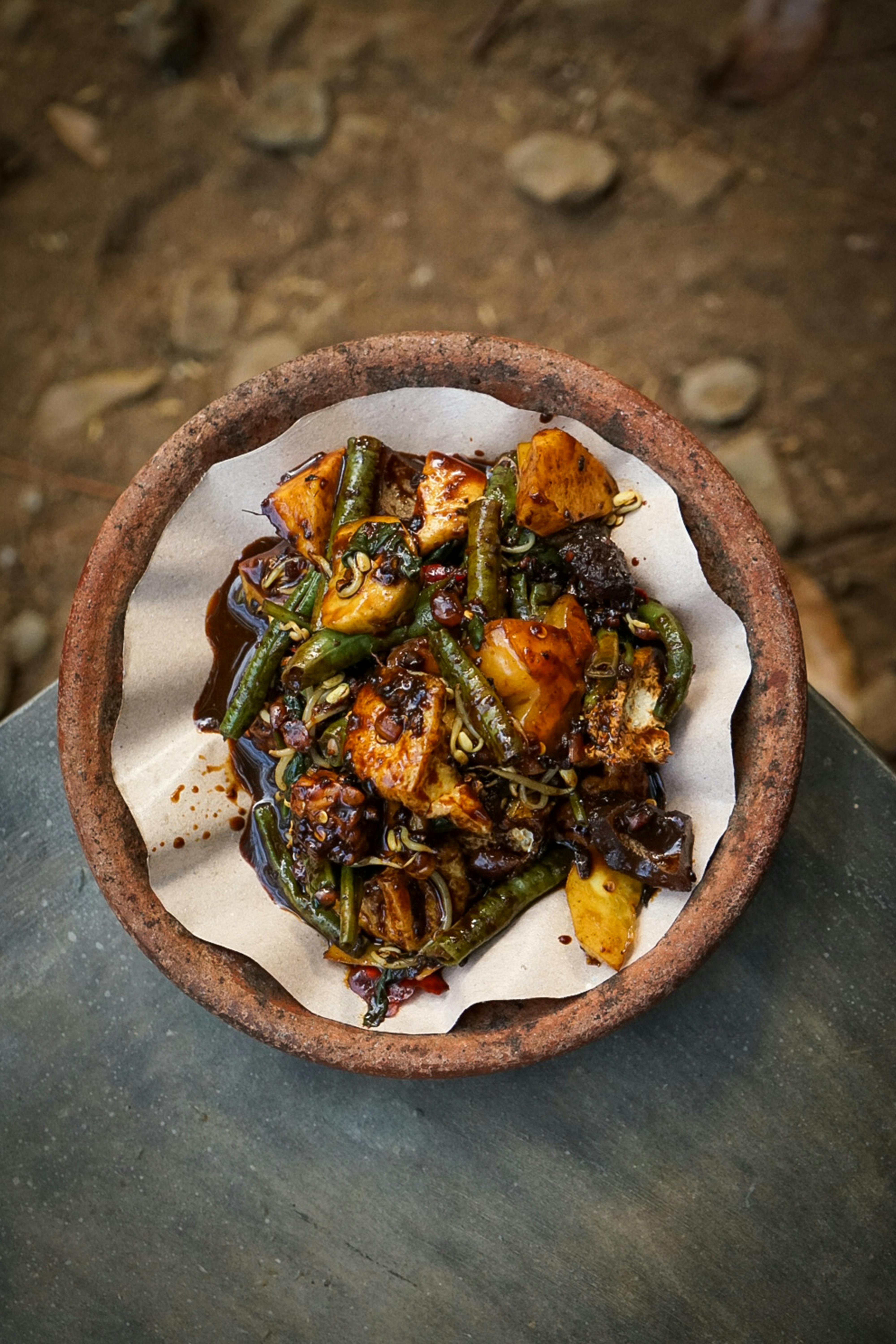
Photo: Tyas Wahyu P. / Pexels
The diets react (see scores below)
Common Ingredients
- jicama
- cucumber
- pineapple
- green mango
- bean sprouts
- shrimp paste
- tamarind
- palm sugar
- peanuts
- chili
Specific recipes may vary.
Incompatible with 6 of 11 diets
Diet Ratings
Rojak is fundamentally incompatible with a ketogenic diet. The dish is built around multiple high-sugar, high-carb ingredients: pineapple and green mango are high-glycemic fruits with significant net carbs, jicama has moderate net carbs in typical serving sizes, and palm sugar is a direct added sugar used liberally in the dressing. Tamarind paste also carries substantial natural sugars. The shrimp paste dressing is sweetened with palm sugar, making the sauce itself a sugar delivery vehicle. A standard serving of Rojak could easily contain 30-50g of net carbs from the fruits and sugar dressing alone, far exceeding a single-meal keto budget. Peanuts and bean sprouts are borderline keto ingredients that would otherwise be manageable, but they cannot compensate for the carb load of the rest of the dish. There is no practical way to portion-control this dish into keto compliance without fundamentally deconstructing and reformulating it.
Rojak as listed contains shrimp paste (belacan), which is an animal-derived ingredient made from fermented shrimp. This is a core component of the traditional Malaysian rojak sauce and disqualifies the dish from being vegan. The remaining ingredients — jicama, cucumber, pineapple, green mango, bean sprouts, tamarind, palm sugar, peanuts, and chili — are all plant-based, meaning the dish could easily be made vegan by substituting or omitting the shrimp paste. However, as described with shrimp paste included, this dish is not vegan-compatible.
Rojak contains multiple non-paleo ingredients that make it incompatible with the Paleolithic diet. Bean sprouts (legume — mung beans) and peanuts (legumes) are explicitly excluded from paleo. Shrimp paste (belacan) is a heavily fermented, processed condiment with added salt and preservatives. Palm sugar is a refined/processed sugar that falls into the avoid category. While several ingredients are paleo-friendly — jicama, cucumber, pineapple, green mango, tamarind, and chili are all whole plant foods — the dish as traditionally prepared cannot be considered paleo due to the legumes, processed condiment, and refined sugar forming core structural components of the dish rather than minor additions.
Rojak is a plant-forward dish built on vegetables and fruits (jicama, cucumber, pineapple, green mango, bean sprouts) with peanuts, which aligns well with Mediterranean diet principles emphasizing whole plant foods. However, several elements complicate the assessment. Palm sugar is an added sugar, and the dressing is sweetness-forward, which runs counter to Mediterranean principles of minimal added sugars. Shrimp paste, while fermented and umami-rich, is a highly processed, high-sodium condiment not typical of Mediterranean eating. Tamarind and chili are acceptable flavor agents. Peanuts provide plant-based healthy fats analogous to other legumes and nuts encouraged in the diet. Overall, the dish is predominantly plant-based and nutrient-dense, but the palm sugar content and shrimp paste processing level warrant moderation rather than full endorsement.
Some Mediterranean diet authorities emphasize the pattern's core principle of abundant plant foods and would view Rojak's fruit-and-vegetable base as fundamentally compatible, accepting the palm sugar as a modest condiment quantity similar to honey used in traditional Mediterranean preparations. The shrimp paste parallels fermented anchovy-based condiments (like Worcestershire or fish sauce) used in some Southern Mediterranean and Middle Eastern culinary traditions.
Rojak is entirely plant-based with zero animal products. Every single ingredient — jicama, cucumber, pineapple, green mango, bean sprouts, tamarind, palm sugar, peanuts, and chili — is plant-derived and explicitly excluded from the carnivore diet. Even the shrimp paste, the only ingredient with any animal connection, is a heavily fermented condiment mixed with plant-based sauce components and sugar, making it unsuitable in this context. The dish is also loaded with fruit sugars (pineapple, mango, palm sugar), plant antinutrients (peanuts, bean sprouts), and inflammatory plant compounds (chili, tamarind). This dish is fundamentally incompatible with carnivore principles at every level.
Rojak contains two clearly excluded ingredients that make it non-compliant with Whole30. First, peanuts are legumes, which are explicitly excluded from the program. Second, palm sugar is an added sugar, also explicitly excluded. These two ingredients alone disqualify the dish regardless of the otherwise compliant components (jicama, cucumber, pineapple, green mango, tamarind, chili, and shrimp paste are all acceptable). Bean sprouts, while from mung beans (a legume), are generally considered compliant by Whole30 in their sprouted form, but that benefit is moot given the peanuts and palm sugar. The dish as traditionally prepared cannot be made Whole30-compliant without fundamentally altering its character — removing peanuts and palm sugar would make it unrecognizable as Rojak.
Rojak contains multiple high-FODMAP ingredients that make it problematic during the elimination phase. Pineapple is high-FODMAP at standard serving sizes (low-FODMAP only at ~1 cup/140g, but rojak typically piles it on). Green mango is high-FODMAP due to excess fructose. Shrimp paste (belacan) often contains onion and garlic or fermented ingredients that may trigger symptoms. Palm sugar in the dressing adds fructose load. Bean sprouts are low-FODMAP at small amounts (~65g) but portions in rojak salads can exceed this. Peanuts are generally low-FODMAP at small servings (~32 nuts). Jicama, cucumber, tamarind, and chili are typically low-FODMAP. However, the combination of green mango (excess fructose), potentially high pineapple portions, and shrimp paste dressing with unknown FODMAP-triggering additives makes this dish a consistent avoid during elimination. The cumulative FODMAP load from multiple moderate-risk ingredients compounds the risk significantly.
Monash University rates pineapple as low-FODMAP at 1 cup and tamarind paste as low-FODMAP at small amounts, so a carefully portioned rojak with low-FODMAP shrimp paste and minimal pineapple could theoretically be tolerated; however, most clinical FODMAP dietitians would advise avoiding rojak during elimination given the near-impossibility of controlling individual ingredient portions in a restaurant or traditional preparation, and the high-FODMAP status of green mango at any standard serving.
Rojak features many DASH-friendly ingredients — jicama, cucumber, pineapple, green mango, and bean sprouts are all nutrient-dense, high-fiber, low-sodium vegetables and fruits that DASH strongly encourages. Peanuts provide healthy unsaturated fats, magnesium, and protein consistent with DASH's nut allowance. However, the dressing components are problematic: shrimp paste (belacan) is very high in sodium, which conflicts with DASH's core sodium restriction (<2,300mg/day standard, <1,500mg/day low-sodium variant). Palm sugar adds significant free sugars, which DASH advises limiting. The overall dish sits in 'caution' territory — the produce base is excellent but the dressing substantially undermines DASH compatibility. A modified version using reduced-sodium shrimp paste, limiting palm sugar, and controlling portion size would score considerably higher.
NIH DASH guidelines do not address Rojak specifically, and the fruit-and-vegetable base aligns well with DASH principles; some DASH-oriented clinicians might argue that if shrimp paste is used in small quantities as a condiment, the overall sodium load may remain manageable within a daily 2,300mg budget, making this closer to an 'approve with caution' for non-hypertensive individuals. However, in practice the shrimp paste and palm sugar dressing is used in meaningful quantities, supporting a 'caution' rating for most DASH adherents.
Rojak presents a mixed Zone profile. On the positive side, it contains several low-glycemic vegetables (jicama, cucumber, bean sprouts) and includes peanuts which provide monounsaturated fat. However, the dish has meaningful Zone challenges: pineapple is a moderately high-glycemic fruit, and green mango adds additional sugar load. The real concern is the dressing — palm sugar is essentially a high-glycemic concentrated sugar that would spike insulin, tamarind adds more sugar, and shrimp paste adds sodium but minimal protein value. The peanuts provide some fat and protein but are omega-6 heavy, which conflicts with Sears' anti-inflammatory emphasis. The dish has no lean protein source (listed as 'none'), making it incomplete as a Zone meal — it would need a significant protein addition (chicken, shrimp, tofu) to achieve the 30% protein ratio. The vegetable base is Zone-friendly, but the sweet, sugar-heavy dressing is the primary problem. As served traditionally, the palm sugar content likely makes this a high-glycemic dish despite the favorable vegetable components. A modified version with reduced palm sugar and added lean protein could work, but as traditionally prepared it is difficult to Zone-balance.
Some Zone practitioners would argue that the vegetable-forward base (jicama, cucumber, bean sprouts) is highly favorable, and that peanuts provide reasonable fat blocks. The palm sugar portion in a typical serving may be small enough in absolute grams that the glycemic load is manageable — Sears' block system could theoretically accommodate a small amount of palm sugar as a carbohydrate block. In later writings, Sears emphasized polyphenols and anti-inflammatory foods, and chili and tamarind do offer polyphenol value.
Rojak presents a genuinely mixed anti-inflammatory profile. On the positive side, the dish is built largely on whole fruits and vegetables: jicama (fiber, prebiotic), cucumber (hydrating, low-inflammatory), green mango and pineapple (vitamin C, antioxidants, bromelain in pineapple has documented anti-inflammatory properties), bean sprouts (folate, low calorie), and peanuts (resveratrol, polyphenols, some anti-inflammatory fats). Chili contains capsaicin, a well-recognized anti-inflammatory compound, and tamarind provides antioxidants and tartaric acid. These ingredients collectively supply meaningful fiber, antioxidants, and polyphenols. However, palm sugar is a significant concern — it is a refined/concentrated sugar source that, even though it has a slightly lower glycemic index than white sugar, contributes added sugar that drives inflammatory pathways (elevated blood glucose, AGE formation). The quantity of palm sugar in traditional rojak sauce is substantial, not incidental. Shrimp paste (belacan) is high in sodium and is a fermented processed condiment — not strictly pro-inflammatory but not a positive contributor. Peanuts, while beneficial in some anti-inflammatory frameworks, have a relatively higher omega-6 content than tree nuts like walnuts or almonds, a minor concern. The dish lands in 'caution' territory: the vegetable and fruit base is genuinely health-supportive, but the heavy palm sugar dressing drags the overall profile toward neutral-to-mixed.
A more permissive reading would note that pineapple's bromelain and the polyphenol-rich fruit base dominate the dish's functional nutrition, and that palm sugar in traditional cooking quantities is contextually minor compared to the antioxidant payload — some integrative nutrition practitioners would approve this as a vegetable-forward, whole-food salad. Conversely, stricter anti-inflammatory protocols (e.g., those focused on glycemic control or autoimmune management) would flag the palm sugar more severely and potentially rate this closer to 'avoid' due to the added sugar load in the dressing.
Rojak is a Malaysian fruit-and-vegetable salad with genuinely mixed nutritional signals for GLP-1 patients. On the positive side, the base ingredients — jicama, cucumber, bean sprouts, green mango, and pineapple — are hydrating, fiber-rich, low-fat, and easy to digest, all of which align well with GLP-1 dietary needs. The tamarind and shrimp paste dressing adds flavor with minimal fat. However, the dish falls short in two key areas. First, it has no meaningful protein source, making it a poor standalone meal for GLP-1 patients who need 15–30g of protein per sitting to prevent muscle loss. Second, the dressing is typically heavy in palm sugar, making it a significant source of added sugar and refined carbohydrates with limited nutritional return — a problem when every calorie needs to count. The chili content may also worsen reflux or nausea in GLP-1 patients with GI sensitivity. The peanuts add some protein and healthy unsaturated fat but in quantities too small to meaningfully offset the protein gap, and they add caloric density in a dish where palm sugar is already driving empty calories. As a side dish or starter paired with a high-protein main, Rojak is acceptable. As a standalone meal, it fails GLP-1 nutritional priorities.
Some GLP-1-focused dietitians may view Rojak more favorably as a low-fat, plant-forward dish with high water content and fiber from its vegetable and fruit base, particularly for patients in early stages managing nausea who need gentle, easy-to-tolerate foods. Others would flag the palm sugar dressing as a meaningful concern given the reduced caloric budget on GLP-1 medications, and would recommend avoiding or significantly modifying the dish.
*See how scores were generated at our methodology page.
Nutritional profile
Six traits that cut across every diet.
Fiber & Plants
How much whole-plant food and fiber it delivers.
Healthy Fats
The quality of its fats (unsaturated, omega-3).
Whole / Unprocessed
How close it is to its natural, unprocessed form.
Gut Gentle
How easy it is on digestion (low FODMAP, few irritants).
Low Glycemic
How little it spikes your blood sugar.
Protein Density
How much protein it packs per calorie.
Controversy Index
Higher controversy = more disagreement between diets.
Diet-Specific Tips
 Mediterranean — 5/10
View tips
- Rich variety of whole vegetables and fruits as the primary base — strongly Mediterranean-aligned
- Peanuts provide plant-based protein and healthy fats consistent with legume/nut emphasis
- Palm sugar is an added sugar, conflicting with the diet's minimal added sugar principle
- Shrimp paste is a highly processed, high-sodium fermented condiment — not Mediterranean-traditional
- No olive oil; dressing is tamarind/palm sugar/shrimp paste-based — lacks the primary Mediterranean fat source
- No refined grains or red meat — avoids the most penalized categories
 DASH — 4/10
View tips
- High-sodium shrimp paste (belacan) significantly raises sodium content, conflicting with DASH sodium limits
- Palm sugar adds substantial free/added sugars, which DASH recommends limiting
- Jicama, cucumber, pineapple, green mango, and bean sprouts are DASH-approved fruits and vegetables rich in fiber, potassium, and micronutrients
- Peanuts align with DASH nut allowance for healthy fats, magnesium, and protein
- Dish could be made more DASH-compatible with reduced-sodium shrimp paste and less palm sugar
- No saturated fat or cholesterol concerns; no red meat or full-fat dairy
 Zone — 4/10
View tips
- Palm sugar in the dressing is a high-glycemic concentrated sugar that conflicts with Zone principles
- No lean protein source — dish is incomplete for Zone macronutrient balance
- Vegetable base (jicama, cucumber, bean sprouts) is Zone-favorable and low-glycemic
- Pineapple and green mango add moderate glycemic load
- Peanuts provide fat but are omega-6 heavy, conflicting with Sears' anti-inflammatory emphasis
- Dish would require significant modification (reduced sugar, added lean protein) to achieve Zone ratios
 Anti-Inflammatory — 5/10
View tips
- HIGH palm sugar content in dressing — significant source of added sugar, pro-inflammatory at typical serving quantities
- Pineapple contains bromelain, an enzyme with documented anti-inflammatory effects
- Chili provides capsaicin, a well-established anti-inflammatory compound
- Strong base of fiber-rich vegetables and fruits (jicama, cucumber, bean sprouts, green mango) supports gut health and antioxidant intake
- Tamarind contributes antioxidants and tartaric acid
- Peanuts offer polyphenols but have higher omega-6 content compared to anti-inflammatory preferred tree nuts
- Shrimp paste is high in sodium; fermented but not a meaningful anti-inflammatory contributor
- No omega-3 rich protein, refined grains, trans fats, or seed oils present
 GLP-1 Friendly — 4/10
View tips
- No meaningful protein source — fails the 15–30g per meal protein target
- Palm sugar dressing contributes significant added sugar and empty calories
- Chili ingredient may worsen GLP-1-related reflux or nausea in sensitive patients
- High water content from jicama, cucumber, and bean sprouts supports hydration — a GLP-1 benefit
- Fiber-rich vegetable and fruit base supports digestive health and blood sugar stability
- Peanuts provide unsaturated fat and trace protein but insufficient to address protein gap
- Acceptable as a side dish paired with lean protein; poor choice as a standalone meal