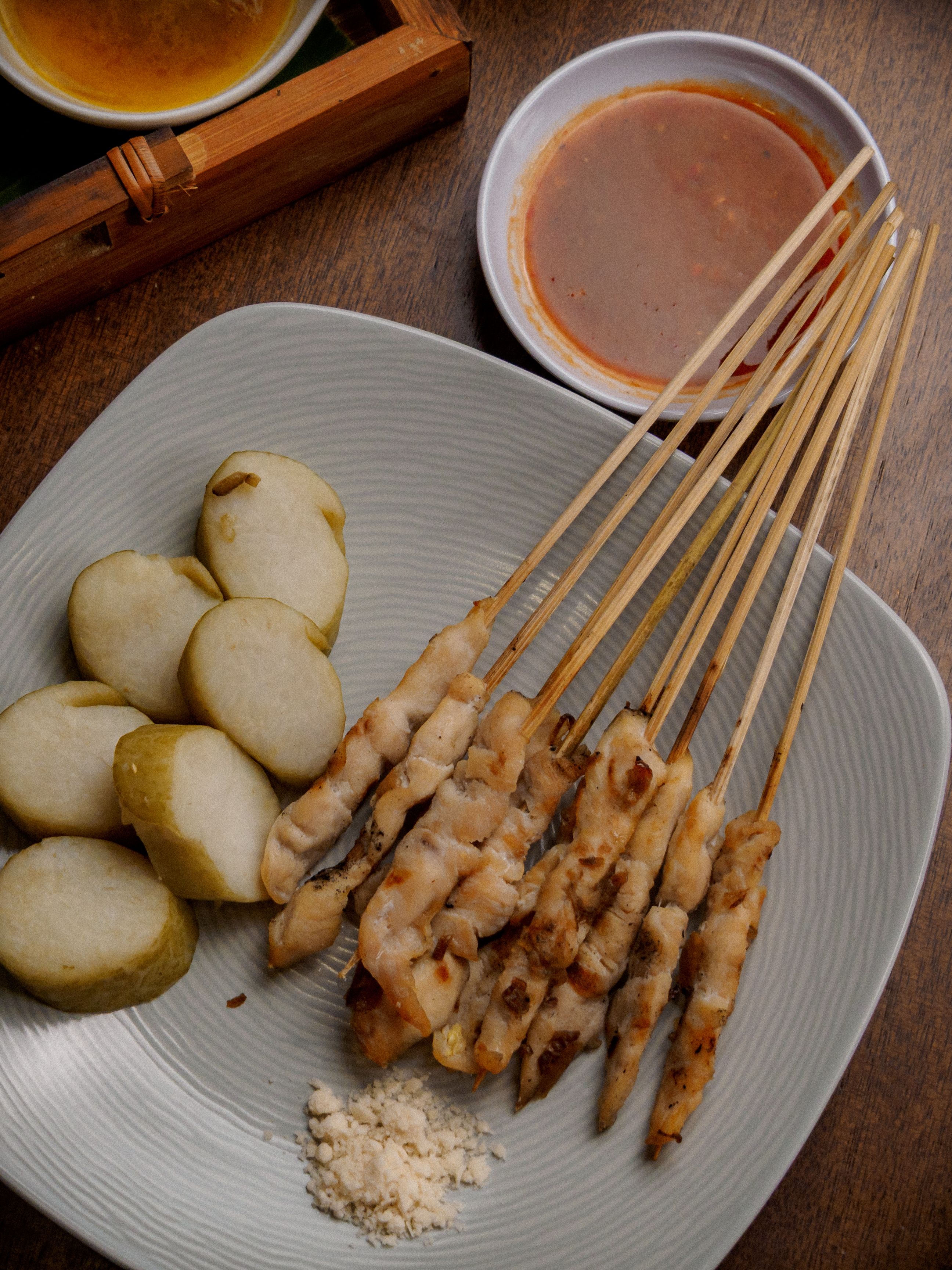
Photo: David Tumpal / Pexels
The diets react (see scores below)
Common Ingredients
- chicken
- beef
- peanuts
- lemongrass
- turmeric
- garlic
- shallots
- coriander
- palm sugar
- chili
Specific recipes may vary.
Incompatible with 5 of 11 diets
Diet Ratings
Satay is grilled meat (chicken/beef) on skewers, which is inherently keto-friendly in terms of protein and fat content. However, the marinade typically contains palm sugar, and the dish is almost always served with a peanut sauce that includes additional sugar and sometimes sweetened condensed milk. The peanuts themselves are moderate in carbs but acceptable in small portions. Lemongrass, shallots, and coriander add minor carbs. The primary concern is the palm sugar in the marinade and accompanying sauces. A standard serving of 3-4 skewers with sauce could push 10-15g net carbs depending on preparation. The grilled meat itself is fine, but traditional satay as a complete dish with sauce warrants caution rather than approval.
Some lazy keto practitioners consider satay broadly acceptable, arguing the small amount of palm sugar in the marinade is negligible when spread across multiple skewers and that the high protein and fat content makes it a reasonable keto snack — particularly if peanut sauce is skipped or minimized.
Malaysian satay as described contains chicken and beef as primary ingredients, both of which are animal flesh and strictly excluded under vegan dietary rules. The marinade and spice blend (lemongrass, turmeric, garlic, shallots, coriander, chili) are plant-based, but the presence of animal protein makes this dish entirely incompatible with a vegan diet. There is no ambiguity here — this is a meat-based dish by definition.
Satay is disqualified primarily by peanuts, which are legumes — explicitly excluded from the paleo diet. Peanuts are a core disqualifying ingredient and a staple component of satay, both in the marinade and the signature peanut sauce served alongside. The remaining ingredients — chicken, beef, lemongrass, turmeric, garlic, shallots, coriander, and chili — are all paleo-approved. Palm sugar is a natural sweetener that would fall into caution territory on its own, but the presence of peanuts pushes the dish firmly into avoid. Without the peanuts (and peanut sauce), a stripped-down version of satay could be paleo-friendly, but as traditionally prepared, it cannot be approved.
Satay contains a mix of Mediterranean-compatible and less compatible elements. The chicken component is acceptable in moderation (poultry is allowed a few times per week), and the spice blend of lemongrass, turmeric, garlic, shallots, coriander, and chili aligns well with Mediterranean emphasis on herbs and aromatics. Peanuts (legumes) are a positive element. However, the beef component conflicts with Mediterranean principles, as red meat is limited to a few times per month. Palm sugar adds refined/added sugars, and palm oil (commonly used in satay marinades and peanut sauce) is not a Mediterranean-approved fat. The dish is not processed per se, but the combination of red meat and added sugars pulls the score down. A chicken-only version without palm sugar would score higher.
Some Mediterranean diet interpreters may score this lower due to the dual protein (chicken + beef) making red meat unavoidable, and the palm sugar and non-olive oil fats being clearly non-Mediterranean. Others might note that the anti-inflammatory spice profile (turmeric, garlic, chili) and legume-based peanuts partially redeem the dish when consumed occasionally.
Satay is fundamentally incompatible with the carnivore diet. While the dish contains animal proteins (chicken and beef), it is marinated and prepared with an extensive array of plant-based ingredients: lemongrass, turmeric, garlic, shallots, coriander, chili, and palm sugar. The peanut sauce — a defining component of satay — is plant-derived and completely excluded on carnivore. Palm sugar is a processed plant sugar, and the spice marinade coats the meat thoroughly, making it impossible to separate the animal from the plant components. This dish is not carnivore-adaptable in its traditional form without a complete recipe overhaul.
This satay recipe contains two excluded ingredients: peanuts (a legume, explicitly banned on Whole30) and palm sugar (an added sugar, also explicitly banned). These are not edge cases — both are clearly in the excluded category per official Whole30 rules. The peanut-based sauce is a defining component of satay, and the palm sugar is used to marinate/flavor the meat. Even if you removed the peanuts (dipping sauce), the palm sugar in the marinade itself still disqualifies the dish as commonly prepared. The remaining ingredients — chicken, beef, lemongrass, turmeric, garlic, shallots, coriander, and chili — are all Whole30-compliant, but the two excluded ingredients are integral to the dish's identity.
Malaysian satay contains multiple high-FODMAP ingredients that make it unsuitable during the elimination phase. Garlic is one of the highest-FODMAP foods tested by Monash University (high in fructans even at very small amounts). Shallots are also high-FODMAP due to fructans. These two ingredients are typically used in significant quantities in satay marinades and are fundamental to the dish's flavor profile — they cannot be reduced to a safe serving without fundamentally altering the recipe. The peanut sauce (if included) adds further concern due to potential GOS at larger servings. While individual ingredients like chicken, lemongrass, turmeric, chili, and small amounts of peanuts are low-FODMAP, the garlic and shallots alone are sufficient to classify this dish as high-FODMAP and unsuitable during elimination.
Malaysian satay presents a mixed DASH profile. The lean chicken component is DASH-friendly as a lean protein source, but the dish also includes beef, which DASH limits due to saturated fat content. The marinade contains beneficial DASH-aligned spices (turmeric, lemongrass, garlic, coriander) with anti-inflammatory properties. The primary concerns are: (1) peanut sauce is calorie-dense and often high in added sodium; (2) palm sugar adds refined/added sugar; (3) beef as a secondary protein conflicts with DASH's red meat limitation; (4) peanuts themselves are DASH-acceptable in moderation as nuts/legumes but contribute significant calories and fat when consumed as a sauce in larger quantities. The dish is not heavily processed or inherently high in sodium from packaged sources, and the spice-forward marinade replaces salt somewhat, which is favorable. Served in typical snack portions (4-6 skewers), it can fit within DASH as an occasional moderate choice, but the beef inclusion and peanut sauce push it toward caution rather than approval.
NIH DASH guidelines explicitly limit red meat and added sugars, which would push satay toward a lower score. However, some DASH-oriented clinicians note that when beef is a minor component and portion sizes are controlled, satay's overall nutrient profile — lean protein, beneficial spices, moderate unsaturated fat from peanuts — can be compatible with a DASH-style eating pattern, particularly when chicken-only skewers are chosen and peanut sauce is used sparingly.
Satay is a grilled skewered meat dish that has several Zone-friendly qualities but also notable concerns. The primary protein (chicken or lean beef) is grilled, making it a lean protein source well-suited to Zone blocks. The marinade ingredients — lemongrass, turmeric, garlic, shallots, coriander, and chili — are polyphenol-rich and anti-inflammatory, aligning well with Sears' later emphasis on omega-3s and polyphenols. However, two ingredients create friction: palm sugar (a moderate-to-high glycemic sweetener used in the marinade, contributing unfavorable carbs) and peanuts (typically served as a peanut sauce accompaniment, adding significant fat that is primarily omega-6-heavy, not monounsaturated in the Zone-ideal sense — peanut oil has a poor omega-6 to omega-3 ratio). Beef satay also introduces more saturated fat than chicken. As a snack, a small portion of chicken satay skewers without peanut sauce could fit reasonably into Zone blocks, but the typical serving with peanut sauce skews fat composition toward omega-6s and adds glycemic load from palm sugar. Portioning is key: 2-3 chicken skewers without peanut sauce is workable; the full dish with sauce requires careful balancing.
Some Zone practitioners in later Sears methodology would be more lenient on peanuts given their modest protein contribution and relatively low glycemic impact, and might view small amounts of palm sugar in a marinade as negligible. Sears' later work (The OmegaRx Zone) places greater emphasis on omega-3/omega-6 ratios, which would make the peanut sauce component more concerning than earlier Zone frameworks suggested.
Satay is a mixed dish from an anti-inflammatory perspective. On the positive side, it contains several strongly anti-inflammatory ingredients: turmeric (curcumin), garlic, lemongrass, chili, and coriander are all well-supported anti-inflammatory spices. Chicken (lean poultry) is in the 'moderate' category and is far preferable to red meat. Peanuts provide some beneficial monounsaturated fats and polyphenols, though they are legumes with a relatively high omega-6 content. The inclusion of beef, however, is a notable concern — red meat is in the 'limit' category due to saturated fat and arachidonic acid content, and grilling/charring beef can produce heterocyclic amines and advanced glycation end-products (AGEs) that are pro-inflammatory. Palm sugar is a refined sugar that should be limited, though the quantities used in a marinade are typically small. The peanut sauce (a common accompaniment) often introduces additional palm oil, added sugar, and high omega-6 peanut oil, which would further lower the score if included. The spice profile is genuinely impressive and partially offsets the concerns around red meat and palm sugar. On balance, chicken-only satay with the spice marinade would rate higher (6-7), but the beef inclusion and palm sugar keep this in caution territory.
Some anti-inflammatory practitioners (particularly those following Dr. Weil's more permissive framework) would view satay's rich spice blend — turmeric, garlic, lemongrass, chili, coriander — as a meaningful anti-inflammatory benefit, and would consider small amounts of grilled red meat acceptable in an otherwise plant-forward diet, potentially rating this more favorably. Conversely, stricter anti-inflammatory and autoimmune protocol adherents would flag the grilled/charred meat (AGEs), peanuts (omega-6, common allergen, mild lectin content), and palm sugar more aggressively, potentially scoring this lower.
Malaysian satay is a mixed picture for GLP-1 patients. The chicken skewers themselves are a lean, high-protein base — grilled preparation is ideal for digestibility and low fat. However, the dish as typically served includes a peanut dipping sauce, which adds significant fat (predominantly unsaturated, but calorie-dense and easy to overconsume in small portions). The presence of beef as a co-protein introduces saturated fat concerns. Palm sugar in the marinade adds modest refined sugar. Chili content may worsen nausea or reflux in sensitive GLP-1 patients. On the positive side, the spice blend (turmeric, lemongrass, coriander, garlic, shallots) is anti-inflammatory and digestively supportive in moderate amounts, and the grilled format avoids the fried-food penalty. As a snack category, portion size is naturally smaller, which helps. Chicken-only skewers with minimal peanut sauce represent the better end of this rating; beef skewers with generous peanut sauce push toward the lower end.
Some GLP-1-focused dietitians would approve chicken satay skewers outright as a high-protein, grilled snack, arguing that the peanut sauce fat load is manageable in the small quantities typical of a snack serving and that unsaturated fats from peanuts are preferable to processed alternatives. Others caution more firmly against it due to the combination of chili, fat, and palm sugar potentially compounding GI side effects, particularly in early weeks of GLP-1 therapy.
*See how scores were generated at our methodology page.
Nutritional profile
Six traits that cut across every diet.
Fiber & Plants
How much whole-plant food and fiber it delivers.
Healthy Fats
The quality of its fats (unsaturated, omega-3).
Whole / Unprocessed
How close it is to its natural, unprocessed form.
Gut Gentle
How easy it is on digestion (low FODMAP, few irritants).
Low Glycemic
How little it spikes your blood sugar.
Protein Density
How much protein it packs per calorie.
Controversy Index
Higher controversy = more disagreement between diets.
Diet-Specific Tips
 Keto — 5/10
View tips
- Palm sugar in marinade adds net carbs and spikes insulin response
- Traditional peanut sauce typically contains added sugar, raising total net carbs significantly
- Grilled chicken and beef base is inherently keto-compatible
- Peanuts are moderate-carb legumes — acceptable in small portions but not zero-carb
- Shallots and lemongrass contribute minor but non-zero carbohydrates
- Dish can be made more keto-compliant by minimizing marinade sugar and avoiding sweet dipping sauces
 Mediterranean — 5/10
View tips
- Chicken is acceptable poultry protein in moderation
- Beef included — red meat should be limited to a few times monthly
- Peanuts are a legume and align with Mediterranean plant-forward principles
- Spices (turmeric, garlic, lemongrass, coriander) are anti-inflammatory and Mediterranean-compatible
- Palm sugar adds unnecessary added sugars
- Palm oil (implicit in traditional preparation) is not a Mediterranean-approved fat
- Dish is not heavily processed, but ingredients mix moderate and problematic components
 DASH — 5/10
View tips
- Beef inclusion conflicts with DASH red meat limitation
- Peanut sauce adds significant calories, fat, and potentially sodium
- Palm sugar contributes added sugar which DASH limits
- Chicken component is DASH-approved lean protein
- Beneficial spices (turmeric, garlic, lemongrass) support anti-inflammatory profile
- Peanuts are DASH-acceptable as nuts/legumes but portion-dependent
- No heavily processed or packaged high-sodium ingredients in base recipe
- Sodium content varies significantly by preparation and dipping sauce quantity
 Zone — 5/10
View tips
- Grilled chicken or lean beef is a favorable Zone protein source
- Palm sugar adds unfavorable high-glycemic carbohydrates to the marinade
- Peanut sauce is high in omega-6 fats, conflicting with Zone's anti-inflammatory fat goals
- Lemongrass, turmeric, garlic, and chili are polyphenol-rich and anti-inflammatory — a Zone plus
- Beef version adds saturated fat, making chicken version preferable
- As a snack, portion control is critical — 2-3 skewers without sauce can fit Zone blocks
- Peanuts provide some protein but are classified as 'unfavorable' fat in Zone methodology
 Anti-Inflammatory — 5/10
View tips
- Turmeric, garlic, lemongrass, chili, and coriander are potent anti-inflammatory spices
- Chicken (lean poultry) is acceptable in moderation under anti-inflammatory guidelines
- Beef inclusion is pro-inflammatory — red meat should be limited due to saturated fat and arachidonic acid
- Palm sugar is a refined sugar and adds unnecessary inflammatory load
- Peanuts provide some beneficial fats but have relatively high omega-6 content
- Grilling/charring protein can generate AGEs and heterocyclic amines, which are pro-inflammatory
- Peanut sauce (if included) often adds palm oil and extra sugar, worsening the profile
 GLP-1 Friendly — 5/10
View tips
- Chicken is a lean, high-quality protein source — grilled preparation is GLP-1 friendly
- Beef skewers add saturated fat, lowering the overall rating
- Peanut dipping sauce is calorie-dense and high in fat — even unsaturated fat can worsen nausea and bloating in GLP-1 patients
- Palm sugar in marinade introduces modest refined sugar content
- Chili content may trigger or worsen reflux and nausea, a known GLP-1 side effect
- Grilled format avoids fried-food penalty and supports digestibility
- Anti-inflammatory spice blend (turmeric, lemongrass, coriander) is a positive nutritional factor
- Snack category and skewer format support small, portion-controlled eating
- Low fiber content — no vegetable or grain components to support the 25-30g daily fiber target