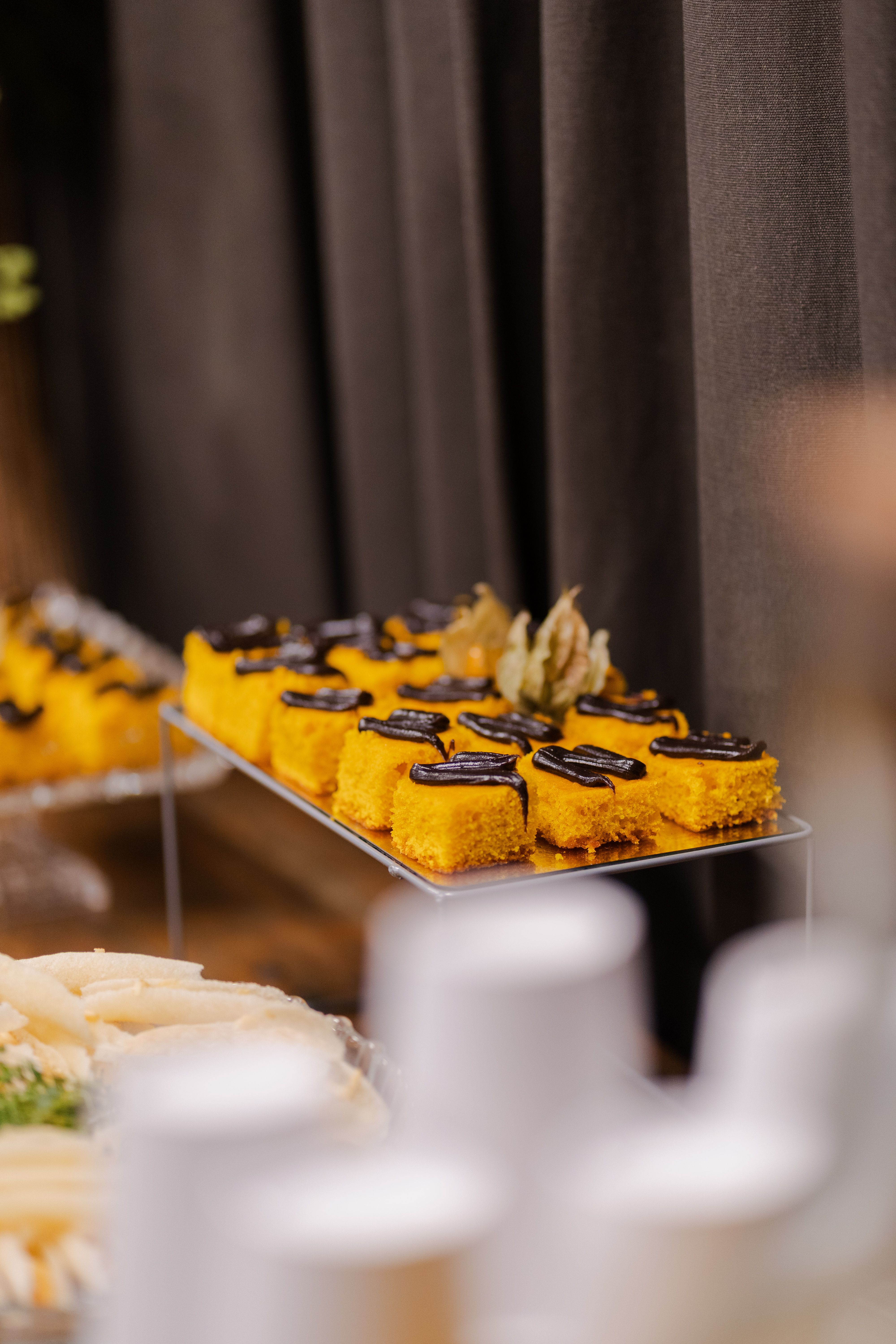
South-African
Malva Cake
The diets react (see scores below)
Common Ingredients
- flour
- sugar
- butter
- eggs
- baking powder
- salt
- apricot jam
- evaporated milk
- brown sugar
- vanilla extract
Specific recipes may vary.
Incompatible with 11 of 11 diets
Diet Ratings
Malva Cake is a traditional South African dessert that is fundamentally incompatible with a ketogenic diet. It is built almost entirely on high-carb, high-sugar ingredients: wheat flour, white sugar, brown sugar, apricot jam, and evaporated milk. A single serving would contain an enormous amount of net carbs — easily exceeding the entire daily keto limit of 20-50g in one slice. There are no redeeming low-carb elements in this recipe. The butter and eggs are keto-friendly in isolation, but they are completely overwhelmed by the carbohydrate load from the other ingredients.
Malva Cake contains multiple animal-derived ingredients that disqualify it from a vegan diet. Butter is a dairy product, eggs are an animal product, and evaporated milk is a dairy product. These three ingredients are core to the recipe and cannot be overlooked. The remaining ingredients (flour, sugar, baking powder, salt, apricot jam, brown sugar, vanilla extract) are plant-based, but the presence of butter, eggs, and evaporated milk makes this dish clearly non-vegan. Vegan adaptations using plant-based butter, flax eggs, and coconut evaporated milk would be possible, but the dish as described is not vegan-compatible.
Malva Cake is fundamentally incompatible with the Paleo diet. The recipe is built on multiple core non-Paleo ingredients: wheat flour (a grain, strictly excluded), refined white sugar and brown sugar (processed refined sugars), butter and evaporated milk (dairy products), baking powder (a processed additive), and added salt. Apricot jam typically contains refined sugar and preservatives. Nearly every foundational ingredient in this dish violates Paleo principles, making it one of the clearest possible avoid verdicts.
Malva Cake is a South African dessert that fundamentally contradicts Mediterranean diet principles. It is built on refined white flour and multiple forms of added sugar (white sugar, brown sugar, apricot jam), uses butter as its primary fat rather than olive oil, and contains evaporated milk adding further saturated fat and sugar. There are no whole grains, vegetables, legumes, or other plant-forward components. The dish is a highly processed, sugar-dense baked good with negligible nutritional value from a Mediterranean diet perspective.
Malva Cake is a traditional South African dessert that is fundamentally incompatible with the carnivore diet. The dish is composed almost entirely of plant-derived and heavily processed ingredients: flour (grain), sugar (processed plant), apricot jam (fruit-based), baking powder (plant/chemical leavening), brown sugar, and vanilla extract. While it does contain eggs and butter — both animal-derived — these are entirely subordinate to a base of prohibited plant foods and refined sugars. There is no meaningful animal protein, and the ingredient list reads as a textbook example of everything the carnivore diet excludes. No carnivore framework — not Baker's, Saladino's, nor the Lion Diet — would permit this food.
Malva Cake violates Whole30 on multiple levels. It contains flour (a grain, excluded), sugar and brown sugar (added sugars, excluded), and butter (dairy, excluded — only ghee/clarified butter is permitted). Apricot jam typically contains added sugar as well. Even setting aside the individual excluded ingredients, Malva Cake is a classic baked dessert/cake, which falls squarely under the Whole30 prohibition on recreating baked goods and junk food — even if all ingredients were somehow compliant, making a cake violates the spirit of the program.
Malva Cake is a traditional South African sticky sponge dessert that contains multiple high-FODMAP ingredients. The primary concern is wheat flour, which is high in fructans and is the dominant ingredient in this cake. Apricot jam is a significant additional problem — apricots are high in polyols (sorbitol), and jam concentrates the fruit, making it a high-FODMAP ingredient even in moderate quantities. Evaporated milk, while lower in lactose than regular milk due to concentration processes, still contains lactose and is used in substantial amounts in the sauce. The combination of wheat flour (fructans) and apricot jam (polyols/sorbitol) makes this dish unsuitable during the elimination phase. Sugar, butter, eggs, baking powder, salt, brown sugar, and vanilla extract are individually low-FODMAP, but they cannot offset the clearly high-FODMAP components. There is no straightforward substitution that preserves the authentic dish character while making it low-FODMAP.
Malva Cake is a traditional South African sticky sponge cake soaked in a rich cream sauce. Its ingredient profile is fundamentally incompatible with DASH diet principles. The dish combines refined white flour (not a whole grain), multiple sources of added sugar (white sugar, brown sugar, apricot jam), saturated fat from butter, and evaporated milk — all of which DASH explicitly limits or discourages. There is no meaningful source of potassium, magnesium, calcium, or dietary fiber. The high sugar content and refined carbohydrates contribute to elevated caloric density with minimal nutritional benefit. As a dessert-style snack, it represents exactly the category of sweets and indulgent foods that DASH recommends minimizing. The butter-based sauce soaked into the cake also contributes significant saturated fat, directly conflicting with DASH's emphasis on limiting saturated fat to reduce cardiovascular risk.
Malva Cake is a traditional South African dessert defined by high-glycemic, high-sugar ingredients that make it nearly impossible to incorporate into any Zone-balanced meal or snack. The ingredient list is dominated by white flour (high-GI refined carbohydrate), white sugar, brown sugar, apricot jam (concentrated sugar), and butter (saturated fat), with evaporated milk adding additional sugars. The dish provides essentially no lean protein, no favorable monounsaturated fats, no fiber, and no low-glycemic carbohydrates. Eggs offer a small protein contribution, but they are vastly outweighed by the sugar and refined carb load. The macronutrient ratio would be heavily skewed toward high-glycemic carbohydrates and saturated fat — the opposite of the Zone's 40/30/30 target. Even a very small portion would deliver a glycemic spike that disrupts the eicosanoid balance Dr. Sears' protocol is designed to prevent. This is one of the rare cases where a food is genuinely difficult to fit into any Zone context regardless of portion size, as there is no meaningful protein or favorable fat to counterbalance the sugar and refined flour content.
Malva Cake is a classic South African dessert built almost entirely on pro-inflammatory ingredients. Refined white flour provides fast-digesting carbohydrates with no fiber or phytonutrients. Multiple sugar sources — granulated sugar, brown sugar, and apricot jam (which is predominantly sugar) — create a high glycemic load that drives insulin spikes and elevates inflammatory markers like CRP and IL-6. Butter and evaporated milk contribute saturated fat, which is flagged as a 'limit' ingredient in anti-inflammatory frameworks. There are no redeeming anti-inflammatory components: no omega-3 sources, no meaningful antioxidants, no polyphenols, no fiber-rich whole foods, no beneficial spices. The vanilla extract is present in negligible amounts. The overall nutritional profile — refined carbs, multiple added sugars, and saturated fat — is precisely the combination that anti-inflammatory nutrition research consistently associates with increased systemic inflammation.
Malva Cake is a traditional South African sticky sponge dessert soaked in a rich cream sauce made from butter, evaporated milk, and brown sugar. It is essentially pure empty calories: very high in refined sugar (white sugar, brown sugar, apricot jam), high in saturated fat (butter), and built on refined flour with negligible fiber and minimal protein. Every ingredient works against GLP-1 dietary priorities. The dense sugar and fat load is likely to worsen nausea, bloating, and reflux — core GLP-1 side effects. The sauce absorption makes it particularly high-fat and high-sugar per serving. There is no meaningful protein, no fiber, and no micronutrient density to justify the caloric cost. For patients eating significantly reduced volumes, this dish delivers almost zero nutritional return and actively conflicts with muscle-preservation and GI-comfort goals.
*See how scores were generated at our methodology page.
Nutritional profile
Six traits that cut across every diet.
Fiber & Plants
How much whole-plant food and fiber it delivers.
Healthy Fats
The quality of its fats (unsaturated, omega-3).
Whole / Unprocessed
How close it is to its natural, unprocessed form.
Gut Gentle
How easy it is on digestion (low FODMAP, few irritants).
Low Glycemic
How little it spikes your blood sugar.
Protein Density
How much protein it packs per calorie.
Controversy Index
Higher controversy = more disagreement between diets.