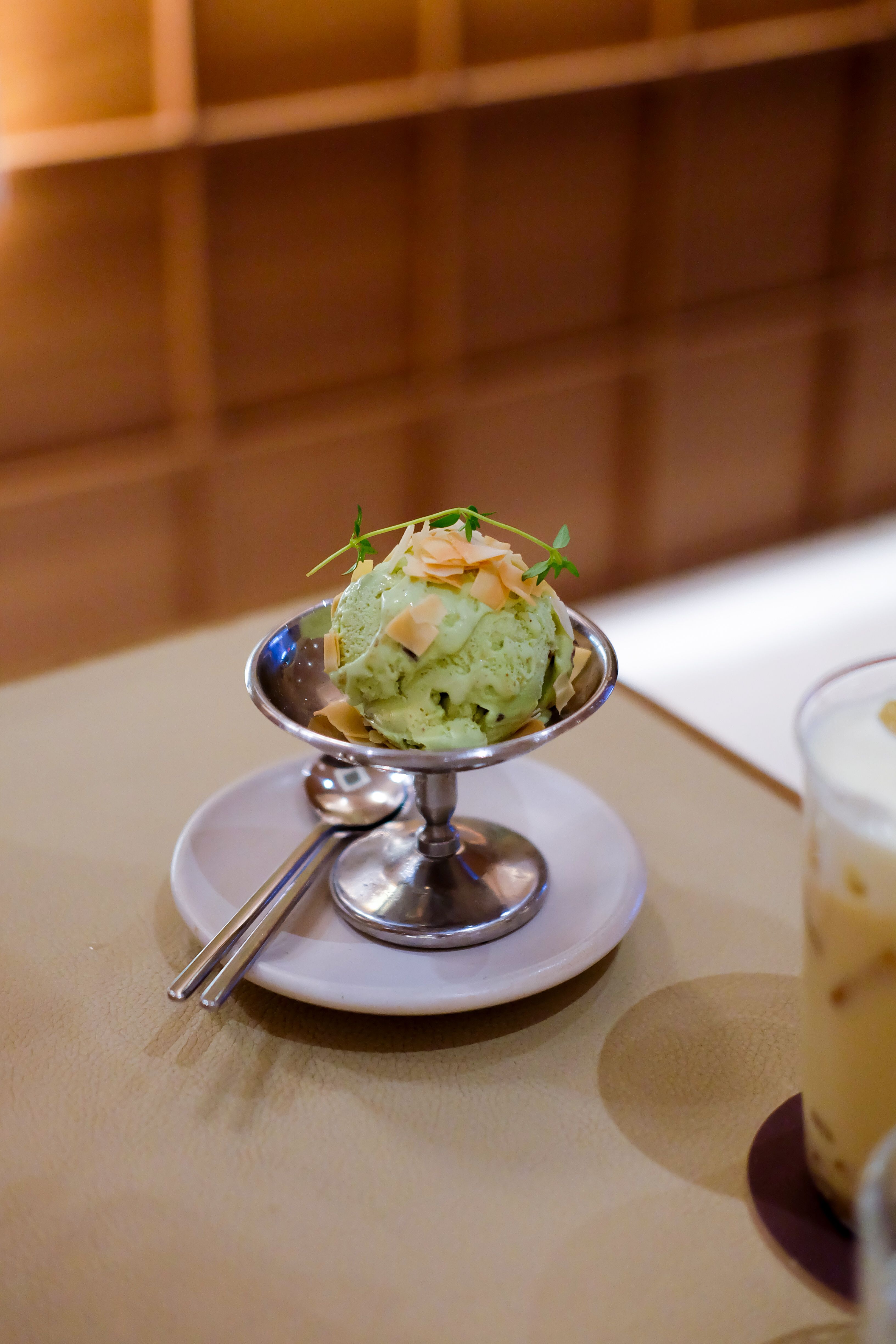
Photo: bynamnamnam / Pexels
Japanese
Matcha Ice Cream
The diets react (see scores below)
Common Ingredients
- matcha powder
- milk
- heavy cream
- sugar
- egg yolks
- vanilla extract
Specific recipes may vary.
Incompatible with 9 of 11 diets
Diet Ratings
Matcha ice cream in its traditional form contains significant added sugar as a primary ingredient, combined with milk (which adds lactose/carbs). A standard serving (1/2 cup) typically contains 20-30g of net carbs, almost entirely from sugar. This single serving can blow an entire day's keto carb budget. While matcha powder itself is keto-friendly and heavy cream and egg yolks are excellent keto foods, the sugar content makes this incompatible with ketosis. A keto-adapted version using a sugar substitute and omitting milk in favor of more heavy cream could be made keto-compliant, but the dish as described with sugar is a clear avoid.
Matcha ice cream in this traditional Japanese preparation contains multiple animal-derived ingredients that are strictly excluded from a vegan diet. Milk and heavy cream are dairy products, egg yolks are an animal product, and together they form the custard base of this ice cream. Matcha powder, sugar, and vanilla extract are the only plant-based ingredients present. There is no ambiguity here — this dish is clearly non-vegan. Vegan versions of matcha ice cream do exist using coconut milk, oat milk, or other plant-based bases with no eggs, but this recipe as stated is not one of them.
Matcha Ice Cream contains multiple non-paleo ingredients that are clearly excluded under paleo guidelines. Milk and heavy cream are dairy products, which are excluded from the paleo diet due to their casein and lactose content. Refined sugar is explicitly banned as a processed, non-ancestral sweetener. While matcha powder, egg yolks, and vanilla extract are paleo-compatible, the core structure of this dish — dairy-based ice cream sweetened with refined sugar — is fundamentally incompatible with paleo principles. There is no meaningful way to consider this dish paleo-friendly in its standard form.
Matcha ice cream is a highly processed dessert that conflicts with core Mediterranean diet principles on multiple fronts. While matcha powder itself is a beneficial antioxidant-rich ingredient, the overall dish is dominated by heavy cream, sugar, and egg yolks — a combination delivering high saturated fat and significant added sugar. The Mediterranean diet minimizes added sugars and does not include ice cream as any kind of regular food. Dairy in the Mediterranean diet typically means yogurt, cheese, or milk in modest amounts, not a high-fat, high-sugar frozen dessert. This is not a Japanese cuisine issue per se — any cuisine's ice cream would similarly conflict with Mediterranean principles.
Matcha ice cream is fundamentally incompatible with the carnivore diet. While it contains some animal-derived ingredients (milk, heavy cream, egg yolks), the dish is disqualified by multiple plant-based and processed components: matcha powder is a plant-derived ingredient (green tea), sugar is excluded from all tiers of carnivore eating, and vanilla extract is plant-derived. Even setting aside the plant ingredients, this is a heavily processed, sugar-laden dessert that violates the core carnivore principle of minimally processed animal foods. The dairy components alone would place it in 'caution' territory, but the matcha, sugar, and vanilla extract make this a clear 'avoid' with high confidence.
Matcha Ice Cream contains multiple ingredients that are explicitly excluded on the Whole30 program. Dairy (milk and heavy cream) is prohibited — ghee and clarified butter are the only dairy exceptions. Added sugar is explicitly excluded. Even if those ingredients were somehow substituted, ice cream falls squarely into the 'no recreating junk food/treats' rule that prohibits recreating indulgent frozen desserts with compliant ingredients. This dish fails on multiple hard rules simultaneously.
Matcha ice cream contains several ingredients that require careful evaluation. Matcha powder itself is low-FODMAP in typical culinary amounts (1-2 tsp). Heavy cream is low-FODMAP as it is primarily fat with minimal lactose. Egg yolks, sugar, and vanilla extract are all low-FODMAP. The primary concern is milk, which is high in lactose and high-FODMAP. However, in a standard ice cream recipe, milk is used in a smaller proportion relative to heavy cream, and the total lactose per serving (approximately 1/2 cup or 2-3 scoops) may be reduced compared to drinking a glass of milk. The lactose content per serving depends heavily on the recipe ratio — if milk is a minor component and cream dominates, a small serving (1/2 cup) could fall within a moderate lactose range. However, this cannot be assumed without specific formulation details. Commercial matcha ice cream versions vary widely. During strict elimination, dairy-based ice cream is generally approached with caution due to lactose from the milk component.
Monash University rates regular cow's milk ice cream as high-FODMAP at standard servings (e.g., 1/2 cup) due to lactose content, and clinical FODMAP practitioners typically advise avoiding dairy-based ice cream during the elimination phase. Some practitioners allow small portions (1/4 cup) where the milk component is minimal relative to cream, but this requires careful portion control that most consumers do not practice.
Matcha ice cream is a high-fat, high-sugar frozen dessert that conflicts with core DASH principles on multiple fronts. Heavy cream is a full-fat dairy product explicitly discouraged by DASH guidelines, which emphasize fat-free or low-fat dairy. Egg yolks contribute saturated fat and cholesterol. The substantial added sugar content places this squarely in the 'sweets' category that DASH recommends limiting to 5 or fewer servings per week, and a typical serving of ice cream represents a significant portion of that allowance. While matcha powder itself offers antioxidants and a modest amount of potassium and magnesium, and vanilla extract is benign, these minor positives are overwhelmed by the saturated fat from heavy cream and egg yolks combined with high added sugar. Sodium is relatively low, which is one minor point in its favor, but does not redeem the overall nutritional profile for DASH purposes.
NIH DASH guidelines clearly restrict full-fat dairy and added sweets, placing traditional ice cream in the avoid category. However, some updated clinical interpretations note that emerging research on full-fat dairy has not consistently shown adverse cardiovascular outcomes, and a small occasional portion of a dessert like this can fit within a DASH-adjacent eating pattern for individuals who are otherwise highly adherent — some DASH practitioners frame it as an occasional treat within the 5-sweets-per-week allowance rather than a categorically forbidden food.
Matcha ice cream presents significant challenges for Zone compliance. The primary issues are: (1) high sugar content as a main ingredient, driving a high glycemic load that disrupts insulin response — the central concern of the Zone Diet; (2) heavy cream contributes predominantly saturated fat rather than the preferred monounsaturated fats (olive oil, avocado, almonds); (3) egg yolks add additional saturated fat; (4) the carbohydrate-to-protein-to-fat ratio is deeply unfavorable — this dessert is dominated by fat and sugar with minimal lean protein, making it nearly impossible to incorporate into a balanced 40/30/30 block meal. The only redeeming element is matcha powder, which provides polyphenols and anti-inflammatory compounds that Sears actively champions. However, matcha's benefits are overwhelmed by the sugar and saturated fat delivery vehicle. A very small portion (a few tablespoons) could technically appear in a Zone meal if the surrounding blocks are carefully balanced, but this is impractical and not in the spirit of Zone eating. This scores at the low end of 'caution' rather than 'avoid' only because it is a real food (not pure junk), contains polyphenols via matcha, and small portions are theoretically manageable.
Matcha ice cream presents a genuinely mixed anti-inflammatory profile. On the positive side, matcha powder is one of the most celebrated anti-inflammatory foods — it contains high concentrations of EGCG (epigallocatechin gallate), a potent catechin polyphenol with well-documented anti-inflammatory and antioxidant effects. Matcha is explicitly emphasized in Dr. Weil's anti-inflammatory framework. However, the delivery vehicle here is traditional ice cream, which is built around heavy cream and sugar — two ingredients that actively work against anti-inflammatory goals. Heavy cream is high in saturated fat, which at elevated intake is associated with increased inflammatory markers like CRP and IL-6. Added sugar is a primary driver of inflammatory response, spiking insulin and promoting oxidative stress. Egg yolks contribute some arachidonic acid but also provide beneficial choline and fat-soluble nutrients, making them a minor concern. The net result is that the anti-inflammatory benefits of matcha are significantly diluted and partially offset by the heavy cream and sugar base. This is not a food to avoid outright — the matcha content provides real bioactive value — but it cannot be approved as an anti-inflammatory food in this form. Consumed occasionally and in small portions, it is a more defensible treat than most desserts due to the matcha, but it is not a health food.
Some anti-inflammatory practitioners would rate this closer to 'avoid' given that heavy cream and added sugar are explicitly flagged as pro-inflammatory ingredients regardless of context — the matcha benefits are seen as insufficient to offset them. Conversely, advocates of Japanese food culture and culinary anti-inflammatory eating (including some interpreters of Dr. Weil's framework) argue that small portions of high-quality matcha preparations, even in dessert form, deliver meaningful polyphenol value and are culturally moderate in sugar content compared to Western desserts.
Matcha ice cream is a poor fit for GLP-1 patients across nearly every rating criterion. It is high in saturated fat from heavy cream and egg yolks, high in sugar (empty calories), and provides minimal protein per serving despite being dairy-based. The high fat content is likely to worsen GLP-1 side effects including nausea, bloating, and reflux, particularly because slowed gastric emptying means fatty foods linger in the stomach longer. It offers negligible fiber, low nutrient density per calorie, and the sugar content contributes to blood glucose spikes that work against the metabolic goals of GLP-1 therapy. The one marginal positive — matcha contains antioxidants and a small amount of caffeine — does not meaningfully offset these drawbacks. A small occasional taste might be tolerated, but as a snack category food it scores very poorly against GLP-1 dietary priorities.
*See how scores were generated at our methodology page.
Nutritional profile
Six traits that cut across every diet.
Fiber & Plants
How much whole-plant food and fiber it delivers.
Healthy Fats
The quality of its fats (unsaturated, omega-3).
Whole / Unprocessed
How close it is to its natural, unprocessed form.
Gut Gentle
How easy it is on digestion (low FODMAP, few irritants).
Low Glycemic
How little it spikes your blood sugar.
Protein Density
How much protein it packs per calorie.
Controversy Index
Higher controversy = more disagreement between diets.
Diet-Specific Tips
 Zone — 5/10
View tips
- High sugar content creates significant glycemic load, disrupting insulin control — the Zone's primary concern
- Heavy cream and egg yolks provide predominantly saturated fat, not Zone-preferred monounsaturated fat
- Macronutrient ratio is heavily skewed toward fat and carbohydrates with negligible lean protein
- Matcha powder provides beneficial polyphenols and anti-inflammatory compounds, a rare positive
- No practical block structure — cannot realistically serve as a Zone-compliant snack even in small portions
- Classified as a dessert/treat food; Zone discourages high-sugar processed foods as snacks
 Anti-Inflammatory — 4/10
View tips
- Matcha powder: high in EGCG catechins, one of the strongest anti-inflammatory polyphenols known
- Heavy cream: high saturated fat content, a primary concern in anti-inflammatory eating
- Added sugar: pro-inflammatory, promotes insulin spikes and oxidative stress
- Egg yolks: minor arachidonic acid concern, offset by choline and fat-soluble nutrients
- Milk: moderate dairy, less concerning than heavy cream but adds saturated fat
- Net effect: anti-inflammatory benefits of matcha are real but substantially diluted by the dessert base
- Portion size and frequency are critical — occasional small servings are more defensible than regular consumption